
Welcome to Modern Agriculture!

 Ficus Audrey is also known as Ficus Benghalensis. This charming house plant is the national tree of India and became a darling of the gardening world only a few years ago.
Finding these plants in your local nursery or garden center is often a challenge due to their current popularity. The Ficus Audrey has brilliant green foliage with thick, creamy, or white veins. The lush leaves accentuate the attractive pale trunk and roots.
Gardeners who are looking to add a unique plant to their collection will learn how to care for, grow, and propagate this immensely popular plant with this guide. Whether you are searching for a beautiful young tree to add shade to your yard or you are a bonsai enthusiast looking to start a dramatic new plant, the ficus Audrey is a wonderful choice.
You will learn everything you need to know to successfully grow Ficus Audrey in your home.
Ficus Audrey originates from India, where it is sacred. Legend tells of finding enlightenment within the ideals of Buddhism beneath the massive canopy of the Banyan fig tree. The iconic Audrey ficus tree is truly impressive in the natural environment.
The Guinness Book of World Records acknowledges the Ficus Audrey as the largest tree in the world by canopy coverage. The glorious canopy of the Thimmamma Marrimanu tree covers more than 4.7 acres.
Growing this holy tree at home is fun and a great way to practice finding peace and relaxation through tending a young Ficus Audrey plant. When you care for this plant well, it provides a beautiful bunch of bright green to your indoor houseplant collection. Many parts of the southern United States can grow this tree outdoors, where it will provide wonderful shade from the ever-extending canopy.
One of the common names for this plant, the Strangler Fig, provides you with an idea of the ideal conditions for growing the Ficus Audrey. Like many other species of ficus that originate in Southeast Asia, these trees typically do not start growing in soil. Rather, the seeds are distributed by birds where young plants start in the crooks of other trees. Roots grow down the trunk of the host tree until they find soil.
These plants are called Strangler Figs because the roots can encircle and overwhelm the host tree, eventually killing it. Specimens have been found with roots growing inside dead, hollow trees.
The home gardener can improve the health of the Ficus Audrey by providing the optimal conditions for natural growth. The Ficus Audrey adapts well to urban and suburban gardens where aerial roots readily climb fences and walls.
Many species of plants that originate in jungle environments have surprisingly easy care requirements. You will be happy to know that the Ficus Audrey is similarly easy to care for, and it is even harder than the Fiddle-leaf fig, a close cousin that is also hugely popular with US gardeners. The Ficus Audrey can be a finicky houseplant when it lacks the proper growing conditions.
Almost any quality potting soil will work well for growing these plants. The main key is to mix your soil so that it is airy and has good drainage. These little trees don’t grow well when they sit in wet soil. A good way to improve drainage is by adding pumice or perlite to the mixture. These components keep the soil light and allow air to penetrate to the roots.
The Ficus Audrey can also grow well in a bark mix that contains little or no soil at all. This accurately reproduces the conditions in nature these plants grow in well. You can improve the dramatic appearance of the plant by periodically removing some of the potting mixes, exposing roots that will continue to grow in search of soil. This is how bonsai artists craft Ficus Audrey into beautiful and amazing houseplants.
The Ficus Audrey benefits from regular, light fertilizing during warm weather when the plant is vigorously growing. Experts recommend using a gentle fertilizer with a higher proportion of nitrogen to improve root and leaf production. Fertilize once per month, preferably with a liquid fertilizer you add to the water. Avoid fertilizing young plants, new root cuttings, and plants that are dormant, as the nutrients can damage the root structure.
In nature, these plants take advantage of host trees to out-compete other species for light that filters through the leaves of taller trees.
As a houseplant, you want to provide bright, indirect light. A good location to put your young Ficus Audrey is near a south-facing window. You can encourage strong root growth by augmenting natural light with artificial grow light bulbs. Avoid putting Ficus Audrey in bright, direct sunlight because the leaves can burn.
This is not a good plant choice for growing in dark or dimly lit rooms. It will tolerate less-than-ideal light but will grow slowly, and the development of leaves will be stunted, leading to small, less-effective leaves and a greater likelihood of disease problems. You should use artificial lighting to give the Ficus Audrey ideal lighting when your home can’t provide the best lighting.
These plants originate in tropical regions where the temperature tends to stay fairly stable throughout the year. You will have the greatest success growing Ficus Audrey in normal room temperature environments.
The plant does best when kept between 60 degrees and 85 degrees. It will tolerate hotter conditions but will not survive frost. Temperatures below 55 degrees will result in leaf dropping.
The Ficus Audrey prefers slightly moist soil, but you must always be cautious to avoid too much moisture staying in the pot. Smaller plants are easier to gauge; you will usually wait until the top inch or two are dry before watering.
Larger containers are more difficult, particularly since the soil in a large pot can remain wet near the bottom while the top is completely dry. Use a wooden dowel to gauge how wet the soil is. You should replant your Ficus Audrey with better draining soil if the top is drying out too fast.
When these plants are small, you can place them in the sink and gently run water over the soil until it runs clear from the bottom. Larger pots should be watered slowly and deeply, ensuring that enough drainage exists to prevent pooling in the pot.
Generally, less is more with these plants. You should avoid using tap water, as the additives are not good for your plant. It is also good practice to use room temperature water rather than cold water to prevent shock.
It can be helpful to pay attention to the leaves of the Ficus Audrey for signs the plant needs more or less water. The leaves may curl inward when the plant is thirsty, while they will droop when there is too much moisture in the pot. Learning to gauge how much water your Ficus Audrey requires will take a little practice, so it is best to start watering slowly and watch for signs of underwatering.
These plants are less sensitive to humidity differences than many types of houseplants.
They typically thrive in average humidity of between 30 and 60 percent. During the winter and summer, you should pay attention to your Ficus Audrey to make sure it is not in front of AC or heater vents. These sources of air are dry and can create improper humidity conditions.
The leaves of the Ficus Audrey will tell you when the humidity is wrong- typically by rapidly dropping leaves. If your plant suddenly starts losing leaves, make sure it has the proper humidity levels. You may need to provide an evaporative tray of stones that is filled with water to increase the humidity. Just make sure the pot is above the waterline at all times to prevent overwatering.
These plants don’t require frequent repotting. In general, you should expect to repot every two years. The best way to tell when the plant is ready is to examine the roots. When they begin to wrap around the bottom of the pot and grow out of the drainage holes, you know it is time. The best time to replant your Ficus Audrey is in the spring or early summer, when the plant is growing vigorously.
These plants prefer being slightly root-bound due to their natural growth habit of developing from the crook of a tree. You may see roots growing out of the top of the pot when the plant is ready for repotting.
Select a pot that is only slightly larger than the previous pot to prevent root shock. You should water your plant 24 hours before repotting. If you do not want a larger pot, you can propagate new Ficus Audrey plants through root trimming.
There are two effective methods of propagating these plants.
The first is the stem-tip cutting method, while the second is the root division method. Regardless of the method you choose, propagation is best done in the spring when the plant is showing new growth. As always, make sure you have everything on hand and ready to use before beginning the process.
*A Note of Caution: The Ficus Audrey, like most ficus plants, is considered toxic to humans. Do not eat the plant or allow children or pets to eat it. The sap can cause allergic reactions if it comes in contact with your skin. Wear gloves when you are handling cuttings to prevent a reaction.
Sterilize your scissors or pruning knife with an alcohol wipe prior to use to prevent spreading infections.
Spotting the signs of a problem early is the best way to prevent serious damage to your plant. These little trees are somewhat finicky and can cause many gardeners a good deal of stress. The best way to handle issues is prevention, but once a problem exists, you’ll need to know what to do.
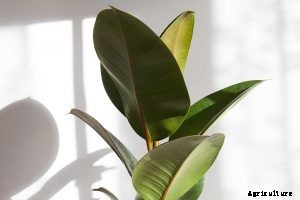 Ficus Audrey is native to India and Southeast Asia, where it grows into a massive tree.
The Ficus Audrey is sort of a trophy to find these days. Buyers snap them up as fast as they come to market, so if you are fortunate enough to have one, this guide gives you the best information available to promote excellent growth and a healthy plant.
These plants are easy to care for once you have the ideal conditions and will provide you with many years of enjoyment and beauty. You may even find enlightenment beneath the canopy of your beloved Ficus Audrey someday.
In the meantime, you’ll know that you have one of the “it” plants of the day.


