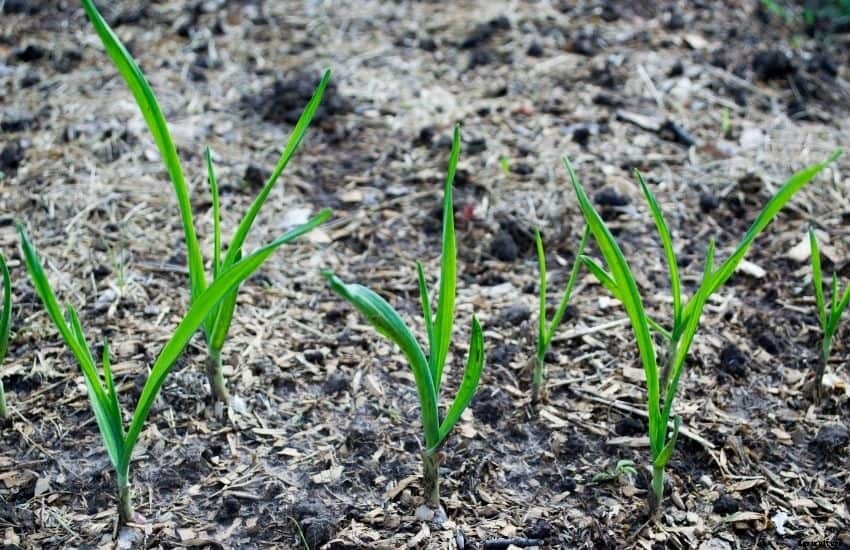
Garlic is a special vegetable that has many uses including providing health benefits and enhancing your food’s flavor. It’s very easy to grow and needs only a little space in your garden. This is all about how to grow garlic in soil.
Preparing to Grow Garlic
There are certain things you need to know and consider before growing garlic. That’s why preparation is very important. When, where, and how to grow garlic are important factors to consider before growing the plant.
Generally, the best time to grow garlic is during early spring and mid-autumn. However, this plant grows well in a variety of climates. It can be grown in areas where there are heavy rainfall and places with high heat or humidity.
Garlic thrives where there is a lot of heat from the sun but partial shade may be useful once in a while.
The type of soil for the growth of garlic is another important factor to consider. Sandy loam soil is the best for growing garlic, whereby it should be well dug, have good drainage, and able to break easily into small fragments.
It is important to do a soil test so that you may know the nutrients that are already there in the soil. You can then add missing or inadequate nutrients into the soil before planting garlic.
Wooden Raised Bed for Planting Vegetables and Herbs
Choose natural and fresh garlic from a farm or a local farmer’s market. Garlic is grown by planting its cloves. Garlic from supermarkets may not be that good because some of them are treated with a sprout inhibitor to prevent them from growing.
The bigger the cloves, the bigger the bulbs, and the smaller the cloves the smaller the bulbs. Here are the two main subspecies of garlic:
Hard neck garlic varieties– they have a stiff stem that grows from the center of the bulb. They have a stronger flavor compared to the soft neck garlic varieties. They are capable of enduring harsh weather conditions and that’s why they are suitable for places with cold winter. Once they are harvested, they have a shorter shelf life compared to the soft neck garlic varieties.
Soft neck garlic varieties– they have a lighter flavor and are found mostly in supermarkets. These are the best choices for places with mild winter. Unlike the hard neck garlic varieties, the soft neck garlic varieties do not have a stiff middle stem.
Note that the number of cloves you plant determines the number of garlic you get. One clove is equal to one bulb.
Factors to Consider when Choosing Garlic to Plant
Don’t use soft garlic
Choose garlic that has large cloves
You can also use sprouted garlic from home
You can go to a nursery to get advice on local conditions for garlic or get garlic bulbs for planting. Nurseries also offer good garlic bulbs for planting.
Finally, it is important that you go for organic garlic one that has not been interfered with by chemicals.
Planting the Garlic
These are the steps to follow when you are planting your garlic:
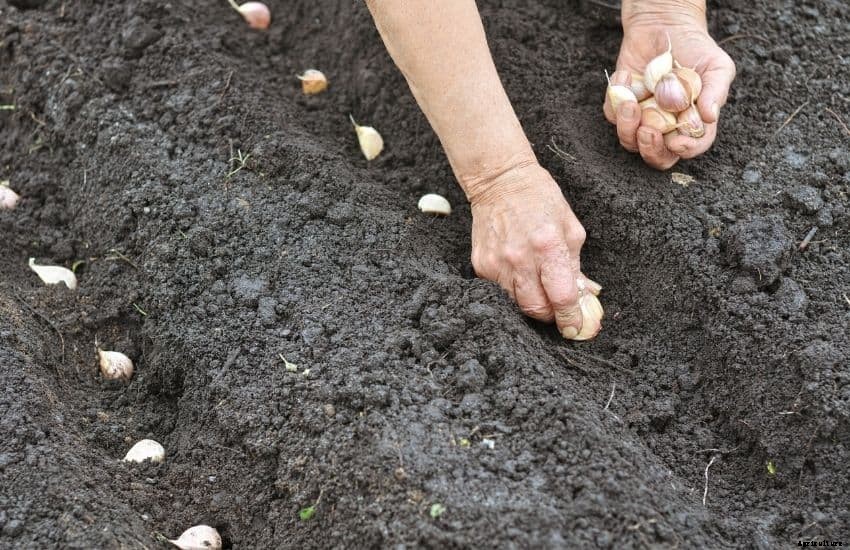
Separate the cloves from a fresh garlic head being careful not to destroy the cloves at the base by leaving some piece behind. if the base is spoilt, then the garlic won’t grow. Do this 24 hours before you plant the cloves
Remember to plant the larger cloves because they are the ones that will produce big bulbs
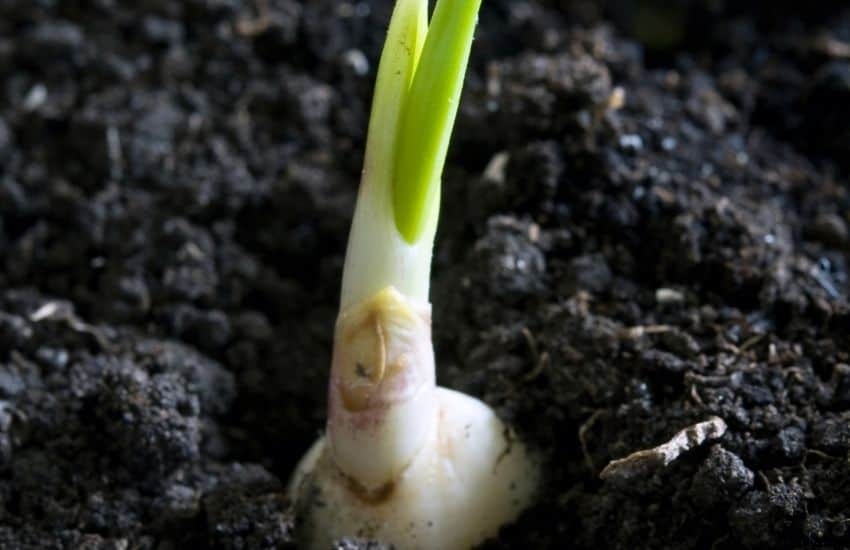
The tip of the clove should point upward and the cloves should be placed 20 cm apart from each other and 5cm deep into the soil
Cover your cloves with mulch. You can use dry leaves, hay, compost, or straw for the mulch
Finally, fertilize your cloves at the time of planting
You may like, Easy Fruits and Vegetables To Grow In Pots.
How to Tend to your Plants
It doesn’t just end at planting. You have to take care of your garlic plant. Below are some of the ways to take care of your garlic plants:
Newly planted garlic needs moisture to help the roots grow well. Water your plants daily especially in dry seasons. However, do not pour a lot of water because it will make the plant rot or not grow well
Garlic doesn’t do well in wet soil so watering is only necessary during dry seasons.
Garlic also needs the sun to allow the bulbs to mature. So as the season warms up, reduce the amount of water you use to water the plant
Mice, insects, and other creatures may be a threat to your plants. Use insecticides to get rid of insects
Aphids like garlic leaves and flower buds but are easy to get rid of. You can easily crush them between your hands or use a pesticide
You can also plant roses on top of your garlic cloves to prevent the aphids from coming close to your garlic
If you have a mice problem around your garden area, use plastic mulch instead
Harvesting the Garlic
The most challenging part of growing the garlic plant is knowing whether it is ready for harvesting. You don’t want to harvest it before its due time. These are the signs to look out for to know if your garlic is ready for harvesting:
Check for the cloves. If you feel the individual cloves in the bulb, then it is ready. Otherwise, if you don’t notice individual cloves in the bulb, you might as well keep waiting
The leaves should be brown or yellow
Check out the scapes. Scapes are the green stalks that appear as soon as the bulb begins growing. When the scapes become dry, harvest the garlic or the head will break and the cloves will fall apart
How to Harvest your Garlic
You should begin harvesting at the end of summer though you can continue till autumn.
Use a shovel to loosen the area around each bulb and pull the bulbs out. Be very careful not to bruise the garlic because they are really sensitive
Hang up the plant for two weeks for curing purposes. In these two weeks, do not wash them because that will lengthen the curing process and make the garlic rot. The suitable temperature for curing is 26.7ºC.
After curing, remove the outer skin so as to remain with clean skin.
Finally, store your garlic in a cool dry place
You may also like:
How to grow garlic hydroponically
How to Grow Garlic in Pots
How to grow garlic from seed
How to grow garlic in water bottle
Do not forget to remove weeds from your garden to ensure that your plants grow well with no distraction. Make sure you don’t harvest your garlic too early or it will be premature. Also, don’t harvest too late because your bulbs may rot in the ground.