How to use floating row cover in your organic garden
What is floating row cover? It’s a type of material that is placed over plants. Use it to exclude pests, act as a wind barrier and extend the vegetable growing season. It does these things by creating a micro-climate under the row cover. In addition, it’s a good tool to use if you are growing an organic garden because it’s an alternative to pesticide usage. In this article, we will explore the types of material and learn how to use a floating row cover.
Types of material
Polypropylene Fabric
Polypropylene fabric allows air, sunlight and water to penetrate. Sold in various lengths/widths such as 50 feet long by 10 feet wide. Cut the fabric to fit the length of your garden bed. With care, the fabric can be used for 2-3 years. There are two primary types of fabric.
Use the spun-bonded design for frost protection and insect control. There are two things to consider in spun-bonded fabric. First, is the amount of frost protection and second is the amount of sunlight filtering. Frost and sunlight filtering are based upon the weight of the fabric. For example, the 0.45 oz./sq.yd. weight allows 90% light transmission and offers 2-3°F of frostprotection (e.g. protects down to temperatures of 29°F). While the 0.9 oz./sq.yd. weight allows 70% light transmission and provides 4-6°F of frost protection (e.g. protects down to temperatures of 26°F). A popular brand of spun-bonded fabric is Agribon.
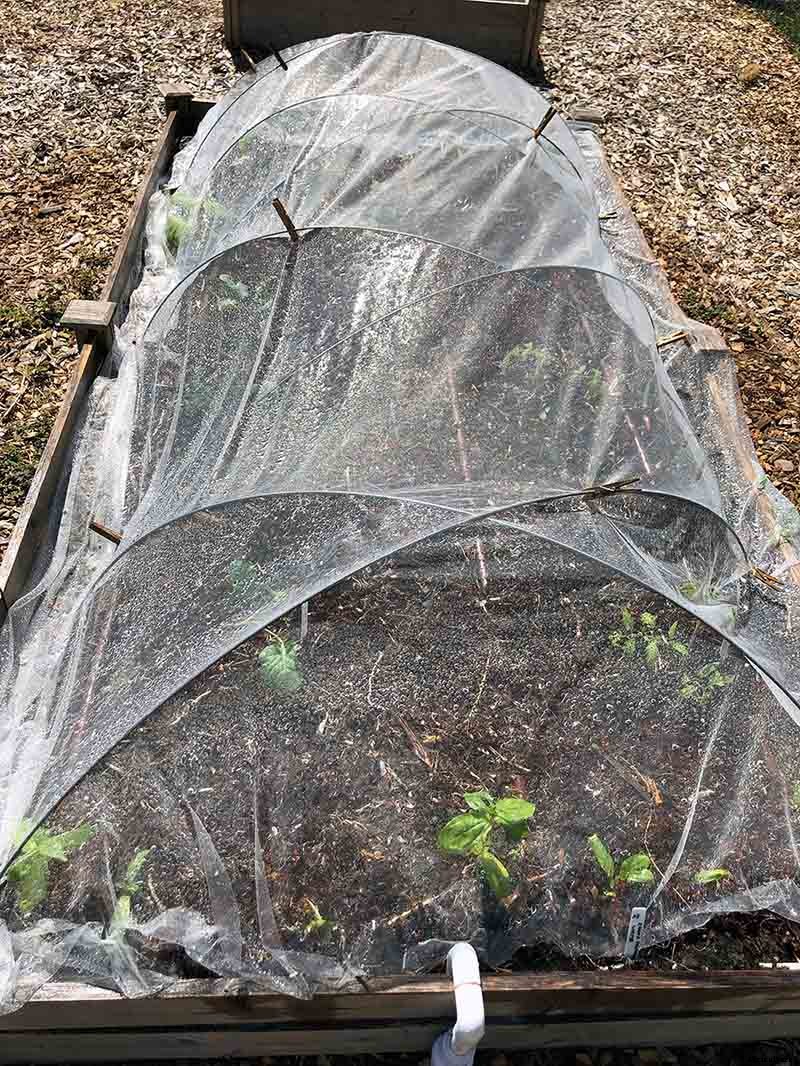
Use the single thread mesh for insect control. It allows sunlight, water and air to circulate under the row cover. In addition, because this type of mesh is see-through you can watch your plants growing. Use it on heat-tolerant plants such as tomatoes and eggplant. Used correctly, this mesh will reduce pesticide usage on insects including aphids, whitefly, cabbage root fly, and thrips. A popular brand of mesh is Proteknet. A less expensive alternative to mesh is bridal tulle.
Clear Plastic Fabric
Use clear plastic fabric for better temperature control and wind protection. Temperatures under these row covers can be elevated an average of 10-30°F on a sunny day. For example, if the outdoor temperature is 55°F, the temperature under the plastic cover could reach 85°F. Because of this, you must monitor the temperature under the plastic. There are 3 types of clear plastic row cover.
Slitted plastic has ‘slits’ that open and close depending upon the outdoor temperature.
Perforated plastic has permanent holes spaced evenly throughout the cover
Solid plastic, as the name implies, has no slits or perforation.
How to use row cover
Principles for how to use row cover
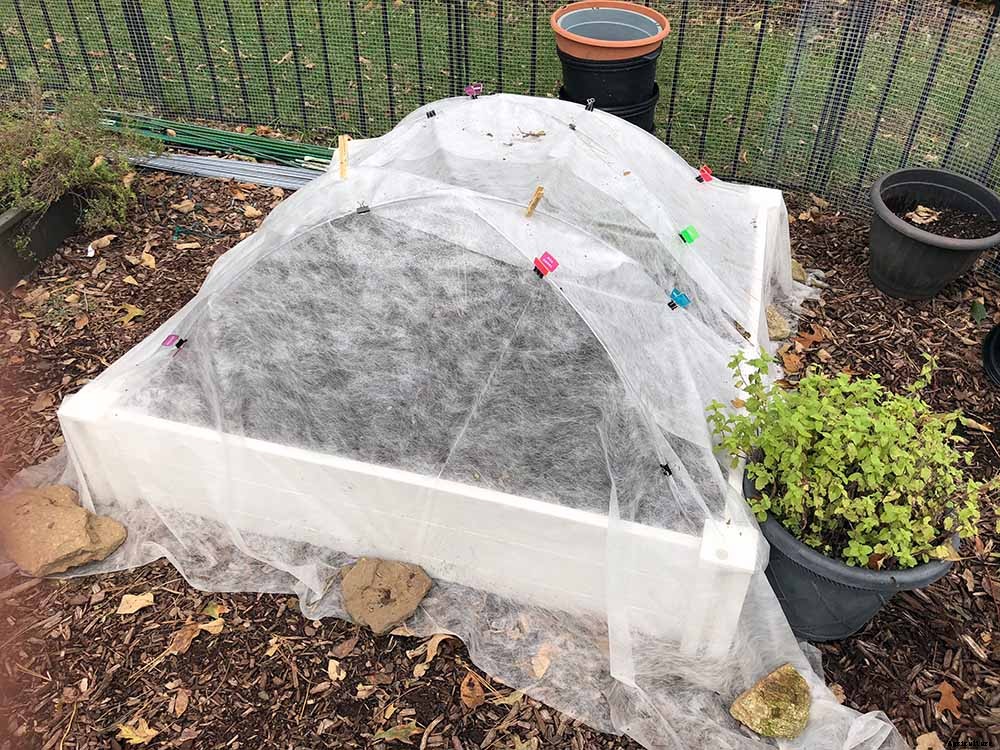
Lay fabric row cover directly over plants or use supports (thin-gauge smooth galvanized wires or PVC piping).
Anchor row cover around the length and width. Common anchors include stones, bricks, lumber and metal staples. In addition, you can bury the edges of the fabric in the dirt. I use stones because they are plentiful in my yard.
Regularly monitor the temperature and growth progress of the plants.
Allow slack when covering plants to allow for growth.
Place the row cover over transplants or seeding immediately after planting for the best control.
The heavier the fabric, the less light and water gets through.
Consider labeling the lengths/widths/weights of row cover that you cut. This will save time.
Considerations
To determine what row cover is best to use in your home garden, consider the following questions and most importantly experiment.
Do you want to plant your crops early in spring (e.g. before your last frost date)?
Plastic-type row covers will allow you to plant your transplants on average 10 days earlier (e.g. based upon the last frost date). Thus, harvests will be earlier. Plastic is usually left on the crops for no more than 3-4 weeks.
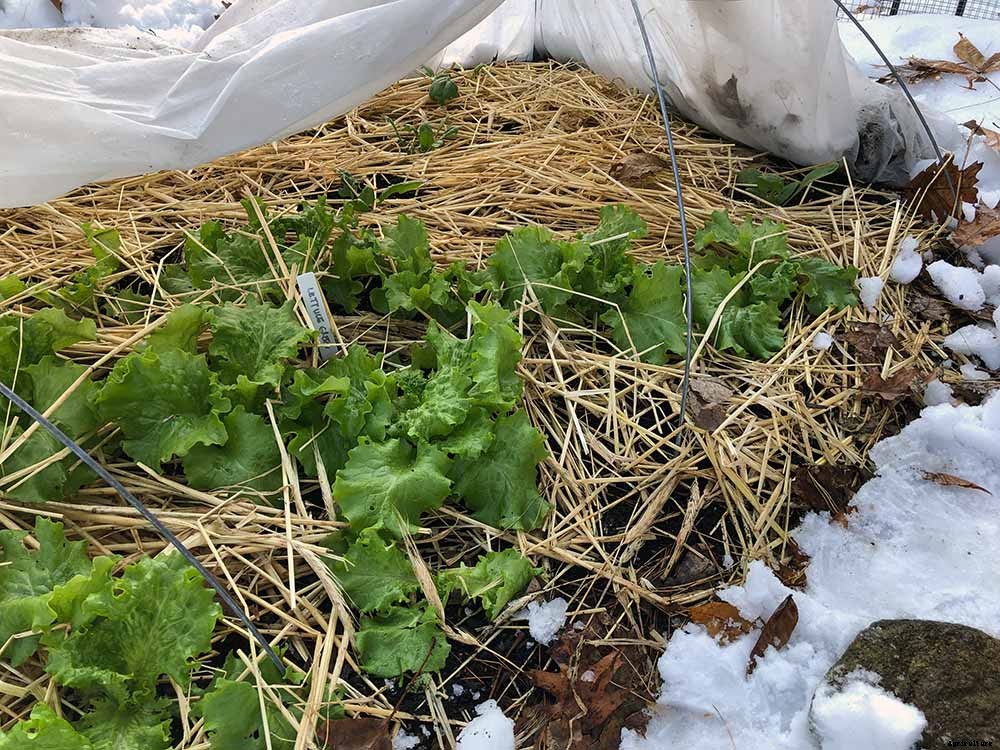
Lightweight (0.45 oz./sq.yd.) fabric row covers will protect your fragile seedlings from temperature variability during transplant in early spring. I use lightweight fabric to cover lettuce, spinach and kale in early spring.
I cover eggplant with a lightweight row cover to provide both temperature protection and protection from flea beetles.
Do you want to extend your growing season into the fall?
Heavyweight (0.9-1.5 oz./sq.yd.) fabric row cover will provide better frost protection than the lightweight fabric and is a good option if temperatures don’t routinely dip below 0°F in your area. I have found lettuce and spinach to be more fragile and thus require a heavier fabric or doubling up on a mid-weight fabric. I recommend experimenting and seeing how the plants grow as temperatures become cooler.
Plastic row covers should be used if temperatures are routinely below 0°F in your USDA garden zone.
Do you want to protect against insects during the growing season?
Single thread mesh is great for this use. To protect against the cabbage worm, I cover all brassica crops (kale, cabbage, broccoli) during the growing season with mesh.
Cover garlic in early spring with lightweight (0.45 oz./sq.yd.) fabric row cover. This will prevent damage from the adult flight and egg-laying of the Alium Leaf Miner. Remove row cover 4-6 weeks before harvest.
Use mid-weight fabric to protect transplanted onions from the onion maggot. I leave the cover over the onion all winter up until 2-3 weeks before harvest in late spring.
Challenges of using row covers
Row covers provide many benefits as noted above. However,
there are also challenges to consider.
While the fabric row cover can be laid directly on the plants, plastic requires supports. Supports also make the management of row covers (both fabric and plastic) easier and allow better air circulation. Make supports from PVC piping or from galvanized wire. In my 6b zone, I use mostly fabric row cover with wire supports.
Access to your plants is more difficult under row cover. You need to pull off the row cover to check the growth of the plants and to harvest. This takes time to both remove and put the row cover back in place.
Monitor the temperature under plastic. Because temperatures can rise quickly on a sunny day, take action to remove the cover.
Protection against insects will only be effective if the insects don’t emerge from the soil (e.g. flea beetles, onion maggots). For this reason, it is important to follow a crop rotation schedule. To learn more about crop rotation, read my blog post titled Crop Rotation for the Home Gardener.
For plants that require insects for pollination (cucumbers, eggplant, strawberries), row cover must be removed when the flowers appear.
Weeds tend to grow quicker under row cover.
Row cover rips easily.
When row cover is used, the beauty of the plants can not be easily seen. Therefore, it’s important to set your goals or expectations.
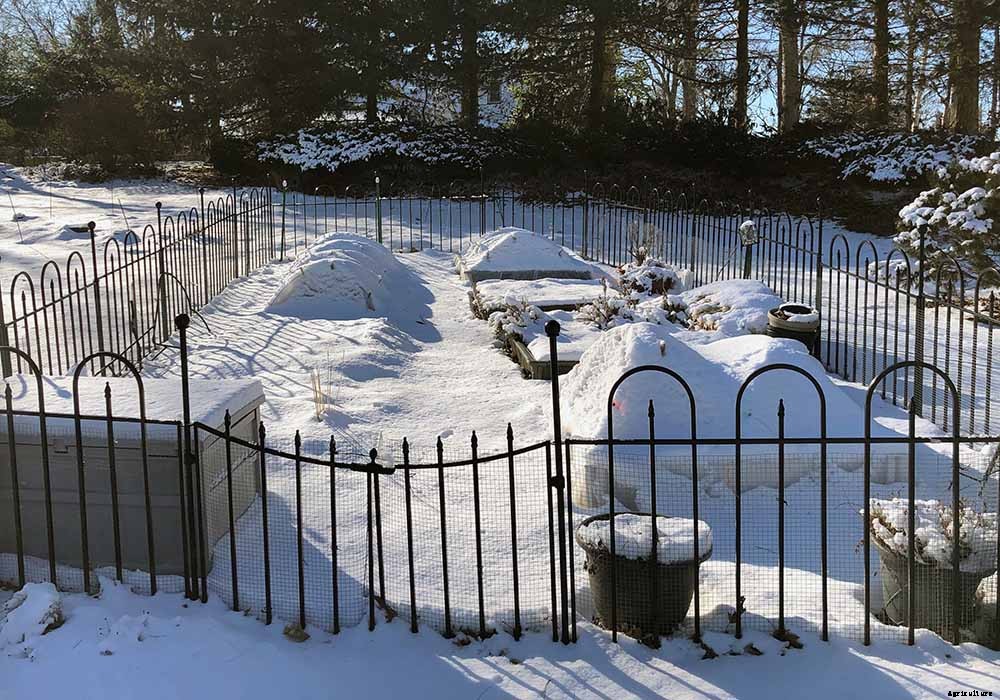
I believe that row covers are an essential element of my garden management plan in both spring and winter. It’s magical to peek under the row cover and see healthy plants developing. Good luck with your experimentation!