
Welcome to Modern Agriculture!

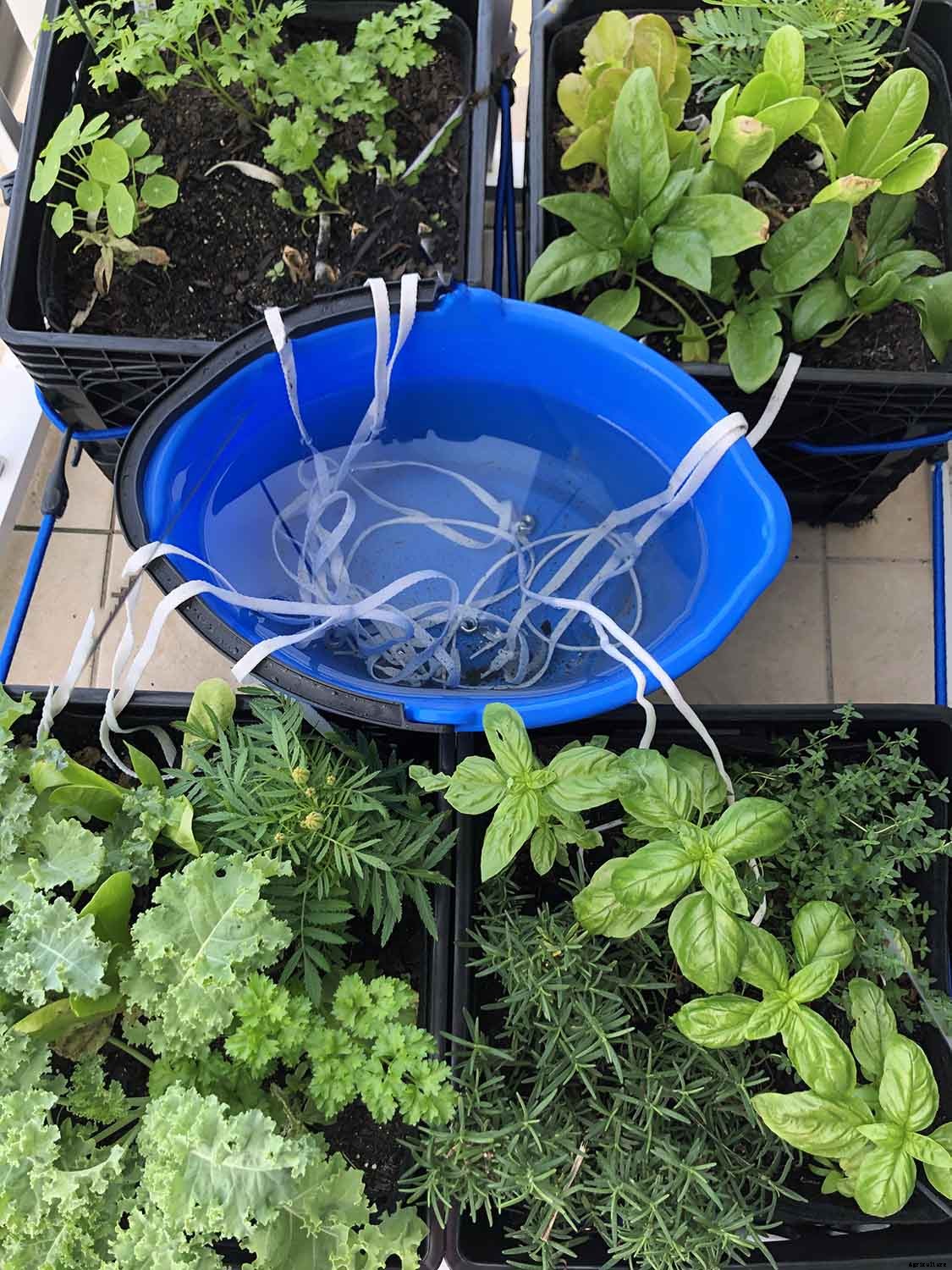
Here’s the situation. Seedlings are planted in a container garden. Then, you leave for a two-week vacation. How do you keep your tender plants watered? That was the dilemma I faced over the December holiday. I needed an easy solution that would keep my tender new seedlings sufficiently hydrated while I was away. The answer is a DIY wick watering system.
While there are many different methods of wick watering, I was looking for something simple, effective and quick to set up. I know I caught your attention with ‘simple’. Anyway, here is a description of the system I set up. This system exceeded my expectations for being simple, effective and quick to set up.
Ok, if the science isn’t your thing, feel free to skip this section. However, it’s interesting to understand. The simplest example of a liquid wicking system is a paper towel soaking up water. Capillary action is the scientific term that describes this wicking phenomenon. According to Wikipedia, “Capillary action (sometimes capillarity, capillary motion, capillary effect, or wicking) is the ability of a liquid to flow in narrow spaces without the assistance of, or even in opposition to, external forces like gravity.” Pretty cool.
Let’s look at the materials you will need for this DIY wick watering system:
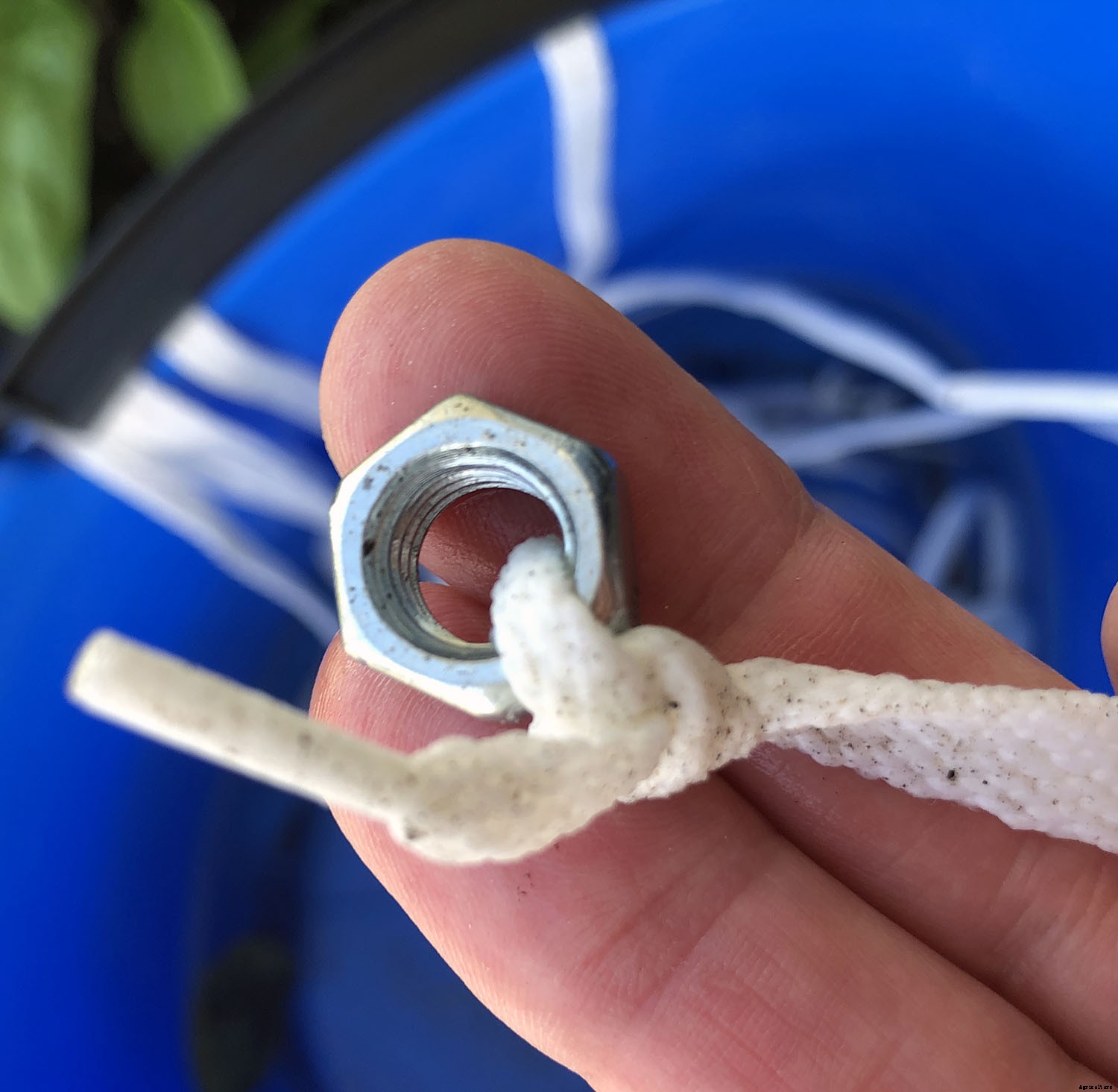
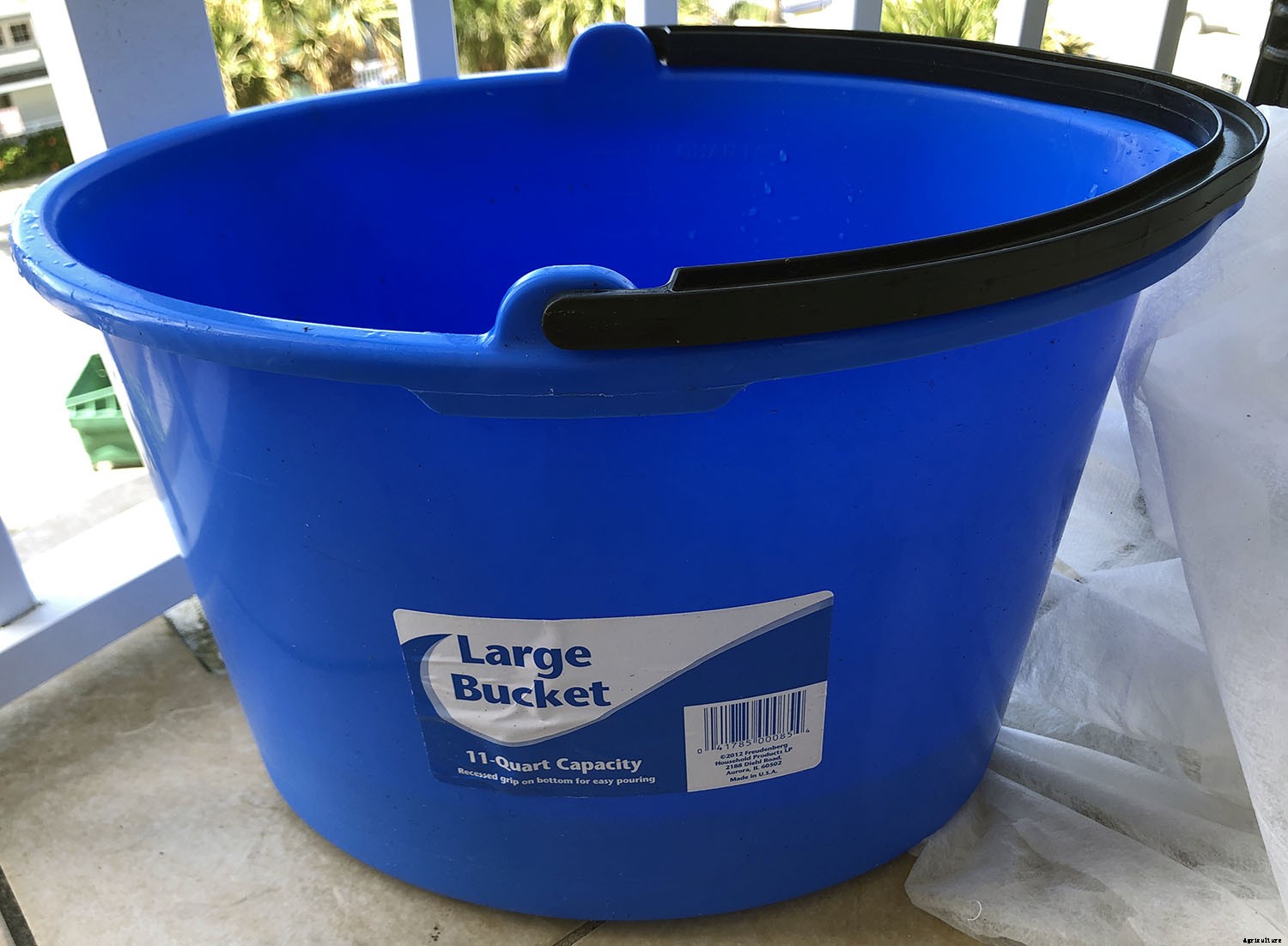
I mentioned earlier that there are different types of wicking systems. This system is referred to as an ‘outside’ reservoir as opposed to a reservoir that sits directly under the container.
That’s it!
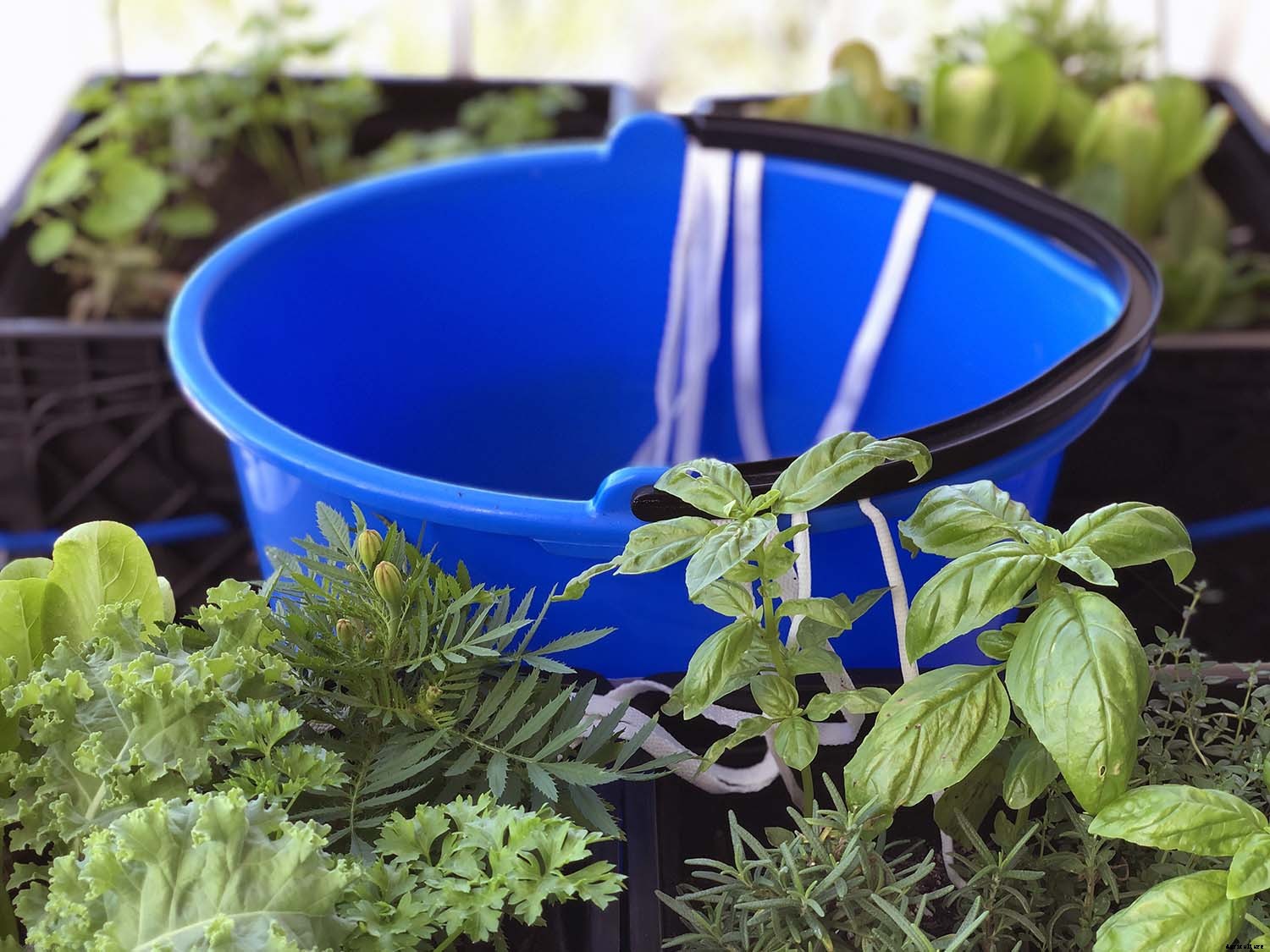
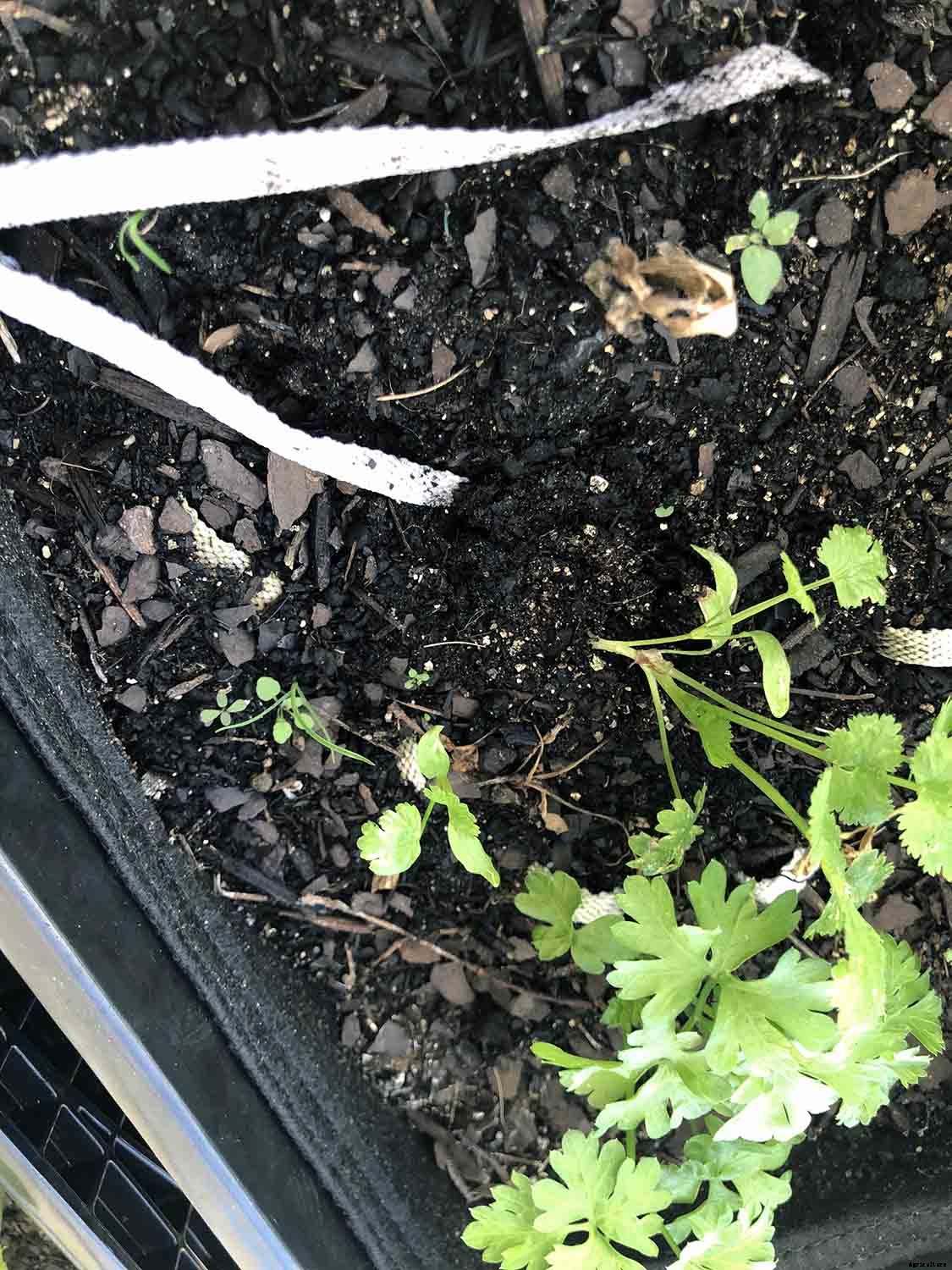
The soil draws water from the wick as needed. Once the soil is saturated with enough water, the drawing of water will stop. If you have time, I encourage you to experiment. Set up your wicking system and observe the system while you are still around. Adjust based upon your observations. For instance, maybe you will need a larger reservoir if the water is absorbed too quickly.
In addition to setting up the wicking system, I also covered my containers with row cover cloth. I did this because of the volatility of weather in Florida in December. Row cover protected the tender new plants from rain, wind and cold. To learn more about row cover, check out my blog titled How to use floating row cover in your garden.
Beware of the following potential issues with a DIY wick watering system.
This system worked great for me. When I returned home after two weeks, there was still one quart of water left in the bucket. The soil was damp and the plants healthy. In fact, the system worked so well, that I continue to use even though I’m home.
Good luck with your DIY wick watering system and I would love to hear from you.


