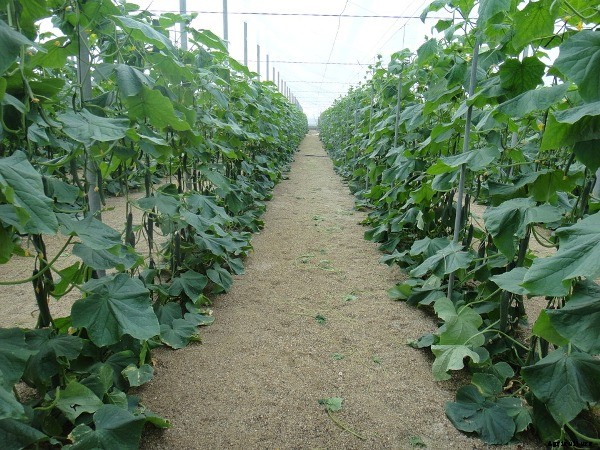
Welcome to Modern Agriculture!

The following content details Greenhouse Cucumber Production / Polyhouse Cucumber Production.
Introduction of Greenhouse Cucumber Production:- Growing cucumber in the greenhouse is a fun and profitable business. Most people are showing interest in the greenhouse production of cucumbers as they can be grown in a controlled environment throughout the year. Apart from this, there are subsidies and loans available for building greenhouse and Polyhouse. As demand for organic vegetable farming is growing, greenhouse cultivation of vegetables also increasing rapidly. One can obtain decent profits under a protected environment (For example greenhouse/Polyhouse/shade net) conditions. Cucumbers can also be grown hydroponically in the greenhouse. Cucumbers can be grown in backyards, containers, pots, balconies, and home gardens. With proper standing support, you can expect them to creep fast and yield more.
The cucumber is one of the widely grown plants in the gourd family for its dark green vegetable. When it comes to cucumber plant description, It is a creeping vine that roots in the ground and grows up trellises or other supporting frames, structures, spiraling tendrils. The cucumber plant may also root in a soil-less medium such as a hydroponic system. The cucumber vine will sprawl along the ground if it t provided any support to grow vertically. Usually, The cucumber vine has large leaves with a form of canopy over the fruits. The cucumber fruits are in a cylindrical shape and elongated with tapered ends. The size of cucumbers depends on the variety. However, cucumbers can be as large as 60 centimeters long and 10 centimeters in diameter. In the upcoming sections, let us talk more about greenhouse cucumber production/Polyhouse cucumber cultivation.
Scientific Name Cucumber:- Cucumis sativus.
Family Name of Cucumber:- Cucurbitaceae.
Genus of Cucumber:- Cucumis.
Cucumber in Indian Languages:- Cucumber is being called with different names in Indian languages.
English: Cucumber.
Hindi : Khira / Kheera / Kakdi.
Tamil: Vellarikka.
Telugu: Keera Dosakaya.
Malayalam: Vellarikka.
Kannada: Savatekai.
Konkani: Thaushe.
Bengali: Sasha / Sausha.
Marathi: Sitalchinni.
Gujarati: કાકડી (Kakdi).
Urdu: Kakdi.
Kashmiri: laer.
Oriya: Kakudi.
Punjabi: ਖੀਰਾ/ Khīrā.
Health Benefits of Cucumber:- Well, most of the time vegetables grown in the greenhouse are organic and they have excellent health benefits when compared to vegetables grown in the traditional way. The following are some of the health benefits of cucumber vegetables grown in a greenhouse.

Varieties / Types (Cultivars) in Greenhouse Cucumber Production:- Well there are many improved varieties available for greenhouse/Polyhouse cultivation depending on the region and market demand.
Actually, there are 3 main varieties of cucumbers
Most of the varieties are being created from above stated main cultivars.
Continental cucumbers:
Lebanese (or) mini cucumbers:
Note: Varieties of cucumber may vary with quality, yields, disease tolerance, cold condition tolerance. One should understand that cucumbers have different varieties for both warm and cold seasons.
Growing Conditions for Greenhouse Cucumber Production:- The following conditions are ideal for growing cucumbers in a Greenhouse/Polyhouse/any protected environment.
Propagation in Greenhouse Cucumber Production:- Cucumbers are propagated by seeds.
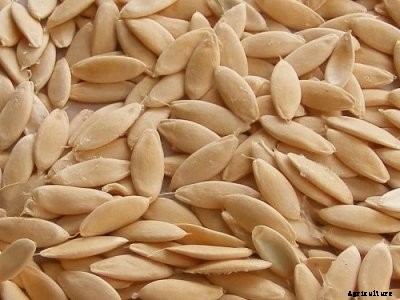
Season and Seed Rate in Greenhouse Cucumber Production:- In the greenhouse, they can be cultivated throughout the year. Seed rate depends on variety, planting method.
Seeding/Sowing/Transplanting in Greenhouse Cucumber Production:- Before transplanting in the greenhouse, seedlings must be raised in seed trays.
In case if you miss this: Vegetable Farming At Home.
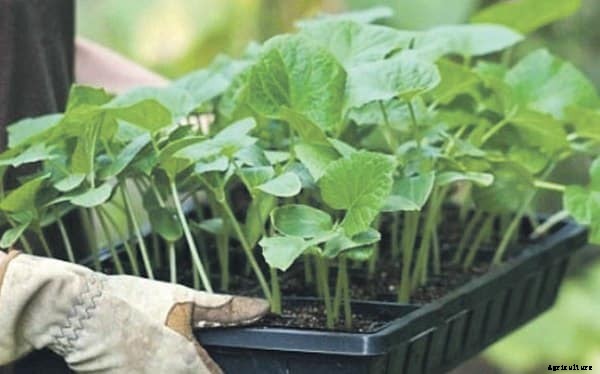
Spacing in Greenhouse Cucumber Production:-
Irrigation / Nutrient Supply in Greenhouse Cucumber Production:- For organic cucumbers, you must use organic fertilizers, micro-nutrients, and plant growth regulators for nutrients supply through irrigation.
Cropping Schedules in Greenhouse Cucumber Production:-
Training, Fruit Thinning, and Pruning in Greenhouse Cucumber Production:-
Manures and Fertilizers in Greenhouse Cucumber Production:- For growing cucumbers in soil beds, carry out the required potassium (K2O) and phosphorus (P2O5) and a little amount of nitrogen (N) before planting. The optimal fertilizer amounts of pre-planting per acre are 52 kilograms of nitrogen (N), 68 kilograms of phosphorus (P2O5), and 112 kilograms of potassium (K2O). Any micro-nutrient deficiencies in the soil, indicated by soil test or plant analysis, should be supplemented by incorporating them into the soil before planting.
In the case of soil-less farming or hydroponic growing of cucumbers, plants are grown with a complete nutrient solution. Should supply with a complete N:P:K slow-release fertilizers.
Flowering in Greenhouse Cucumber Production:- Cucumbers under greenhouse / Polyhouse conditions produce fruits without pollination. However, pollination can take place from nearby fields cucumbers which are monoecious (both male and female flowers). If flowers are pollinated in the greenhouse, seeds form in the fruit and the fruit becomes bitter and unmarketable.
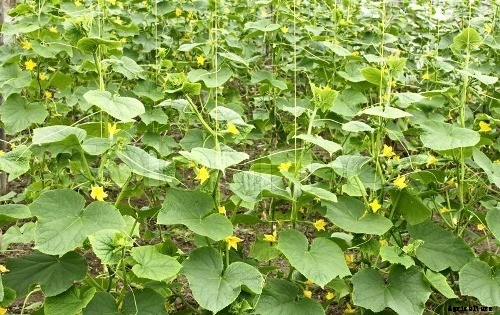
Diseases in Greenhouse Cucumber Production:- Symptoms on plant leaves begin as small dark water spots which enlarge and become light brown and finally a pale bleached colour affecting the plant growth and yield. Some of the diseases found in greenhouse cucumber production are
Other diseases that may occur are:
As a preventive measure, you must use certified organic inputs (manures/organic fertilizers) to control this type of disease.
Harvesting in Greenhouse Cucumber Production:- The harvesting time can be 4 to 6 weeks after seedling in summer and 10 to 11 weeks in winter. Usually, summer cucumbers are ready for harvesting 2 weeks after flowering for the long varieties and 8 to 10 days after flowering for the Lebanese varieties.
With the help of a sharp knife or a sickle, cut the cucumbers by leaving 1 to 2 cm of the stalk at the end of the fruit. It is recommended to harvest the fruits in the early morning.
The frequency of harvesting cucumbers depends on the variety. In the case of Lebanese varieties, you may need to pick the days and whereas in the case of Continental varieties, you may need to pick the fruits every 2 days. Cucumbers should be picked carefully without any damage or marks. As we mentioned earlier, usually there are 3 crops per year in greenhouse farming. However, there may be a situation with 2 crops even with 1 crop per year.
Cucumbers thrive best in the warmer season or summertime. Long-term crops in a greenhouse in the warmer months (summer) may produce 35 to 40 fruit per plant. The average weight for Continental cucumbers is 550 to 600 grams but may weigh up to 1.5 kg.
Yield in Greenhouse Cucumber Production:- Yield of cucumber crop depends on variety, disease control, organic inputs, soil quality, irrigation, and other greenhouse management practices. On average, one can obtain a yield of 500 to 550 tonnes/ha/year, with about 85 to 90 fruit/ sq.meter/year. Lebanese cucumbers yield more than Continental cucumbers.
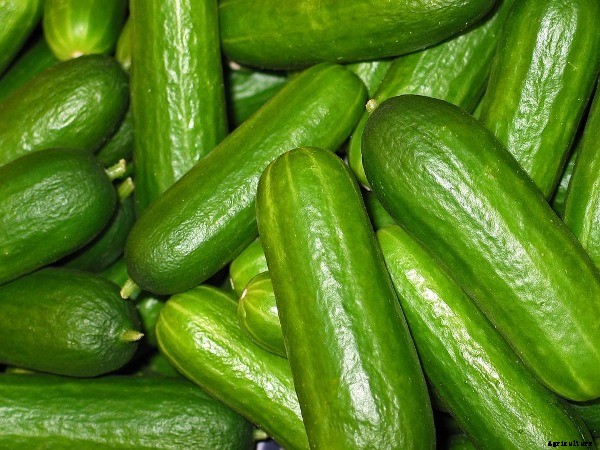
Marketing in Greenhouse Cucumber Production:- Freshly harvested cucumbers may be transported to local vegetable markets or can sell in bulk to any vegetable vendors. Most of the time, greenhouse vegetables are sold at the farm gate.
Tips in Greenhouse Cucumber Production:- Some tips to consider while growing cucumbers in a Greenhouse/Polyhouse.