
Welcome to Modern Agriculture!

The Colorado potato beetle can wipe out much of a potato plant in short order. If you’re struggling with potato bugs, then you’re not alone, and you don’t have to use harsh pesticides to get some relief! Try these natural pest control methods to help get rid of potato beetles.
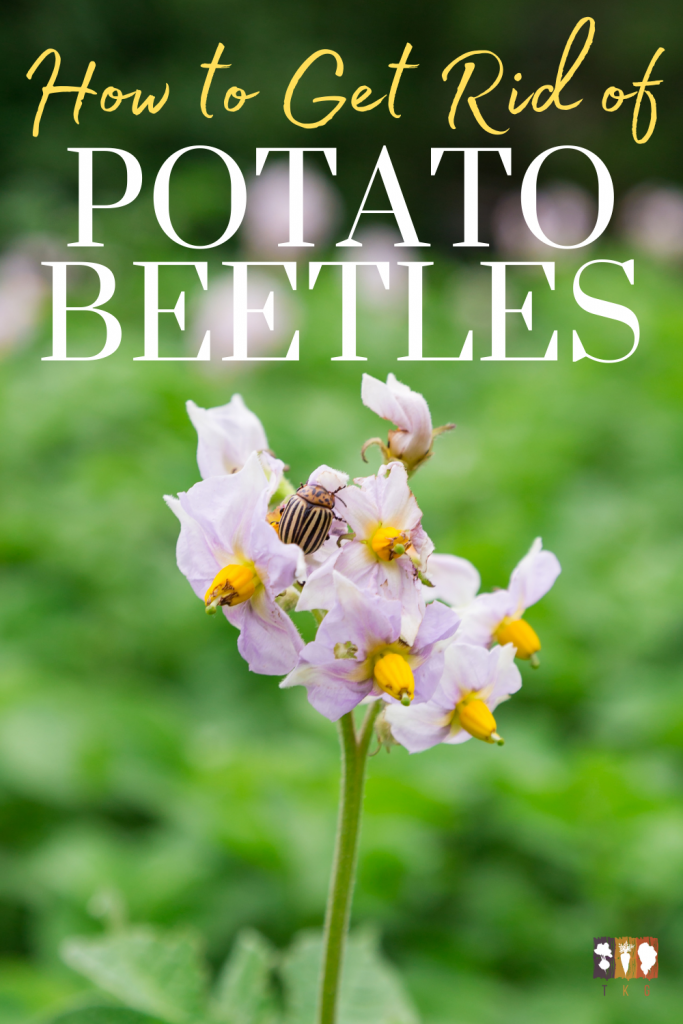
The Colorado potato beetle is one of the most common pests of potato plants. The adult beetle is about ¼ inch long and has a bright yellow body with black stripes. These potato pests lay eggs on the undersides of potato leaves, and the hatched larvae feed on the leaves. Heavy infestations can heavily damage or kill potato plants.
This post may contain affiliate links, which simply means I may earn a commission off of links at no extra cost to you. Thank you for supporting my site!
Potato beetles arrive in gardens in late spring or early summer, depending on where you live, and they can be active until the first hard frost hits. To add insult to injury, the adult potato beetles then overwinter in the ground to emerge the next spring and mate. So, getting rid of the potato beetles you do see will help reduce their numbers the following year.
Need help growing potatoes? Be sure to check out my articles:
Though they are called potato beetles, potato plants aren’t the only ones at risk from this pest. These other plants can also fall victim to the Colorado Potato Beetle:
If you’d like a handy guide for all things natural pest control, then be sure to check out my Natural Pest Control for the Home Garden E-book. It’s a great resource to have on hand for those trying to keep pesticides out of the garden.
If you are trying to get rid of potato beetles in your garden or on your plants, then there are some easy techniques that you can employ. These include:
You may also want to try the King Harry variety of potatoes which are resistant to potato beetles due to their “hairy” leaves.
I’ve only had limited success with my favorite go-to natural pest control sprays such as neem oil, insecticidal soap, or BT (bacillus thurengiensis). The methods I’ve outlined above are the most effective, especially if you’re trying to avoid traditional pesticides like Sevin dust in your garden area.
If there’s another method that you’ve tried and like to share, drop a comment below and let me know. As gardeners, we’re always learning from one another! It’s one of the things I love about being in the larger community of gardeners.


