
Welcome to Modern Agriculture!

Do you love olives or olive oil? If you aren’t living in a place that has similar weather to the Mediterranean area, you can’t grow olives. A greenhouse, however, can help you with this problem.
This evergreen fruit tree loves the warmth of the sun. Growing olives in a greenhouse will give them the heat that they need.
This how-to-grow guide will make it a lot easier for you to grow your olive tree in your greenhouse.
You’ll likely grow your olive tree in a pot. In this case, it’s very important to choose a variety that has compact roots. In addition, you need a self-pollinating variety unless you can grow more than one olive tree.
Here are some suggestions:
The perfect soil for olive trees is well-draining, rocky soils with pH values of 6.5 – 8.5. If your soil ph levels are low, adjust it as necessary.
You can raise your soil pH with limestone or lower it with sulfur. Olive trees only tolerate mild saline conditions, avoid overly acidic soils. They grow better in fine-textured soil ranging from sandy to loamy. Read this article for more details!
Olive trees require at least 6 to 7 hours of sunlight to grow well. To achieve this, you’ll have to put them in the sunniest part of your greenhouse. You can use grow lights if your greenhouse doesn’t get enough sunlight.
Be careful not to give your plant too much light. This can hinder its growth.
Olives are warmth-loving plants but they don’t like heat or constant temperatures. They need variable daytime and nighttime temperatures. How high or low depends on the olive variety.
Generally speaking, you want to keep the temperature of your greenhouse around 60-65°F during the day and 35-40°F at night in order to achieve flowering.
Olive trees need it cool in winter but they hate permanent frost. Most varieties can take short periods of freezes as low as 0°F.
Keeping the greenhouse around 45°F in winter (for at least 13 days), will result in a blooming olive tree in Spring. Some varieties need a long winter, though.
Olive trees are drought tolerant, but since you’ve got them in a greenhouse it’s important you water them adequately. But be careful, don’t let them get soggy. Try to check the moisture level before watering. Also, make sure your container drains well. Normally, a minimum of 1 inch of water per week is perfect for your plant.
Olive trees don’t need much fertilizing. In fact, too much fertilizer can damage your plant or result in little fruits. Olive trees naturally grow in spaces where the soil quality is poor. So, this fruit tree is used to it.
If you decide to feed your plant, fertilizers containing nitrogen will be very effective for olive trees. They affect the fruits and a nitrogen deficiency is quite common.
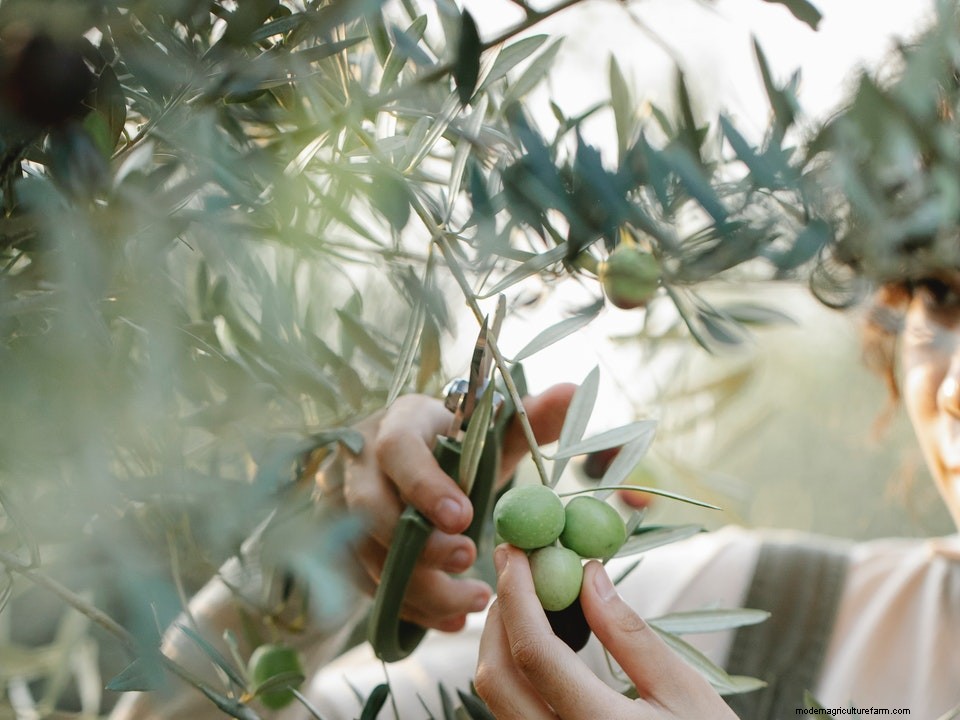
You don’t need to bother much with olive trees. They are slow-growing, so they don’t need much of your time. Simply remove any dead or diseased branches at the end of winter or in early spring (before new growth appears). This will keep your plant healthy and let your leaves get enough light.
Slightly cut off the tips of the shoots of your olive tree once it reaches 5 ft tall. This will enable branching.
You can also trim out crowded branches to allow for air in the middle of the tree. Once in a while, you can also cut out the tips of the shoots so you’ll get them to be in your desired shape.
Just like most indoor plants, olive trees are also attacked by a few pests and diseases. Scale can be a serious problem for olive trees. Scale is a certain kind of insect that weakens plants by sucking their sap. If you find white deposits on your leaves or scaly substance on the stem, you’ll need to use insecticide soap to deal with these pests.
Woolly aphids are another disturbing pest for these plants. They also feed on sap and leave your plant prone to infections. There are several chemical treatments to deal with these pests. Washing the bark with soapy water and a brush can help.
Olive peacock spot and scab disease can hamper the growth of your olive tree and cause deformity to its leaves. They both cause dark spots on leaves and premature loss of leaves and fruits. You must act immediately when you notice these signs. Olive peacock spots spread very easily.
Simply spray your olive tree with a fungicide to keep peacock spots in check. Scab diseases can also be controlled by removing affected leaves in winter and pruning the affected parts as well.
Certain diseases that attack olive plants are a result of poor drainage. Diseases like
verticillium wilt, honey fungus, and phytophthora root rot can easily be prevented by making sure your soil is well-draining.
If you find yellow or dying leaves on your plant, it could be a symptom of these diseases. You’ll need to make sure your soil is not infected, so you don’t spread these diseases. Chemicals are not recommended for treating them, all you have to do is to ensure good drainage for your plant.
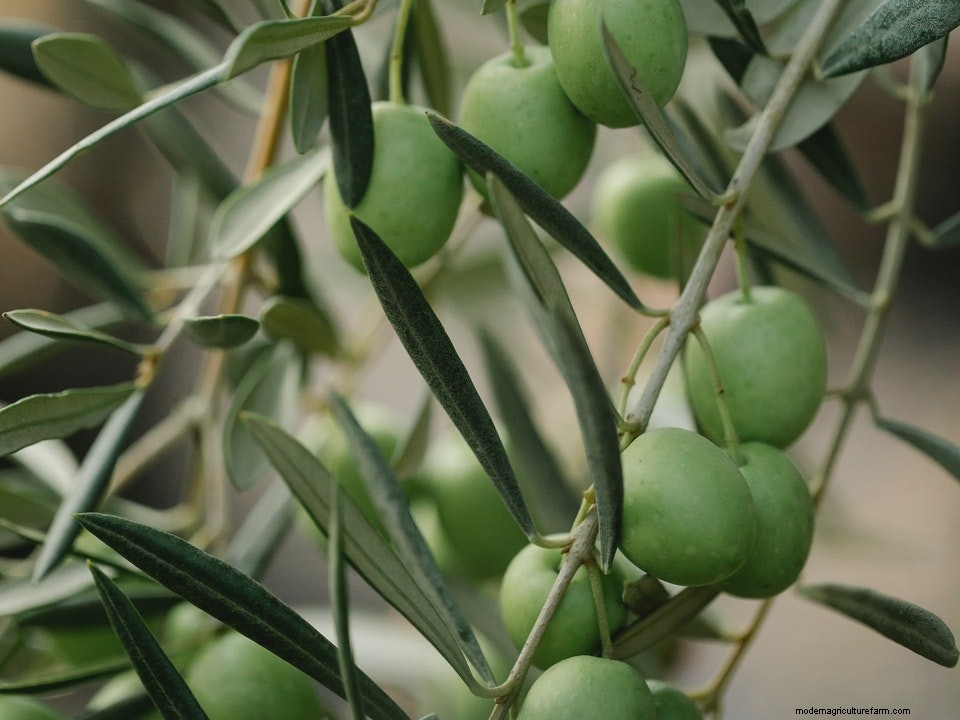
Normally, it takes about 3-5 years for olive trees to start fruiting. Most olive varieties are self-fertile, the olives come out green and then turn black as they ripen.
Not all olive varieties yield fruits. Some are purely ornamental. Some fruits are great for olive oil, while others are better for curing.


