
Welcome to Modern Agriculture!

Growing lemon trees from seed is simple, and they thrive with minimal care indoors (or outside in warm locations).
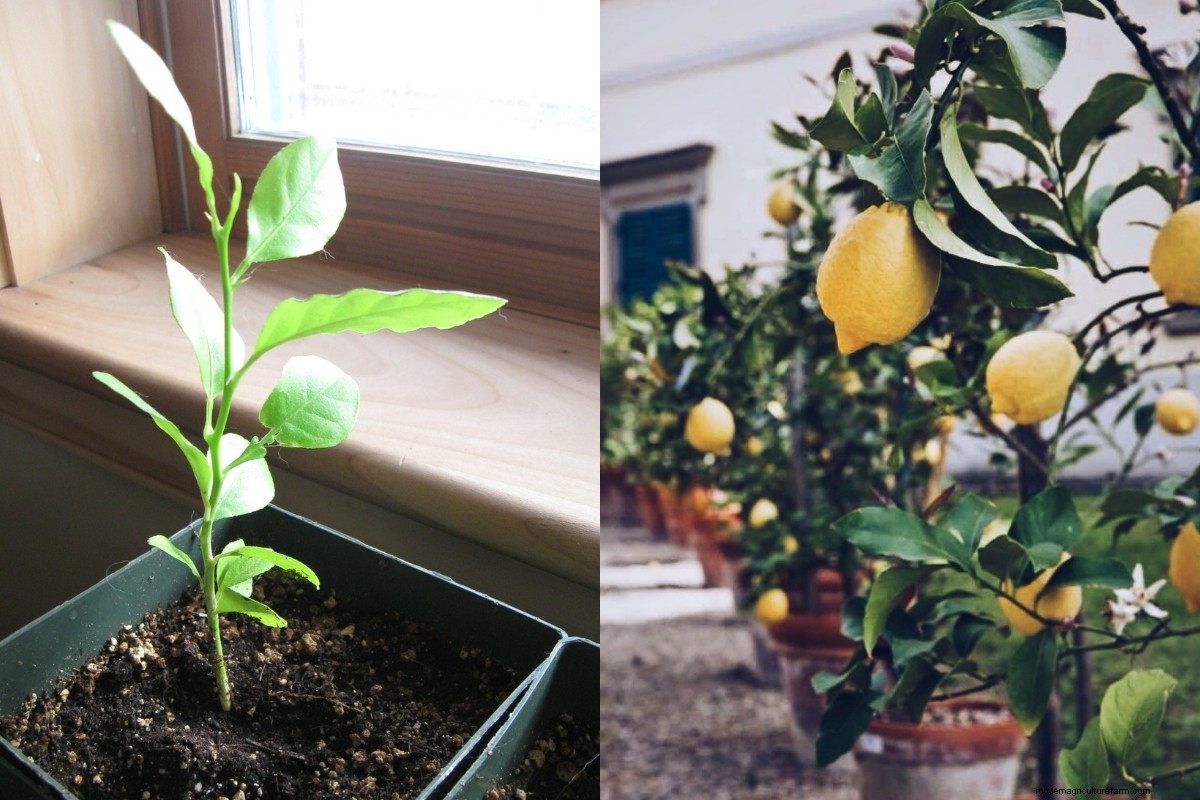
Lemons are a great way to add flavor and bright acidity to home-cooked meals. Beyond our everyday cooking, I use them by the dozen making homemade limoncello. I also usually add a squeeze of fresh lemon juice to homemade jam recipes, to both balance the sugar and add pectin to help the jam set.
All of that adds up to a lot of lemons in a year, which in turn means a lot of lemon seeds.
I always felt bad just composting them. Why not plant lemon seeds instead?
It turns out, lemon trees are incredibly easy to grow from seed. The seeds germinate so easily that some people plant them by the cup full and grow them as a potpourri (since the young leaves are so fragrant).
Lemon leaf potpourri might be a nice novelty, but I’m more interested in growing lemon trees from seed. About a decade ago I started planting lemon seeds and raising lemon trees at home so I could harvest our own homegrown lemons.
The trees aren’t exactly hardy here in Vermont, but growing lemon trees in pots allows you to bring them indoors during the winter months.
These fast-growing trees go from seedling to producing full-sized lemons in about 3 years, so it’s well worth the effort.
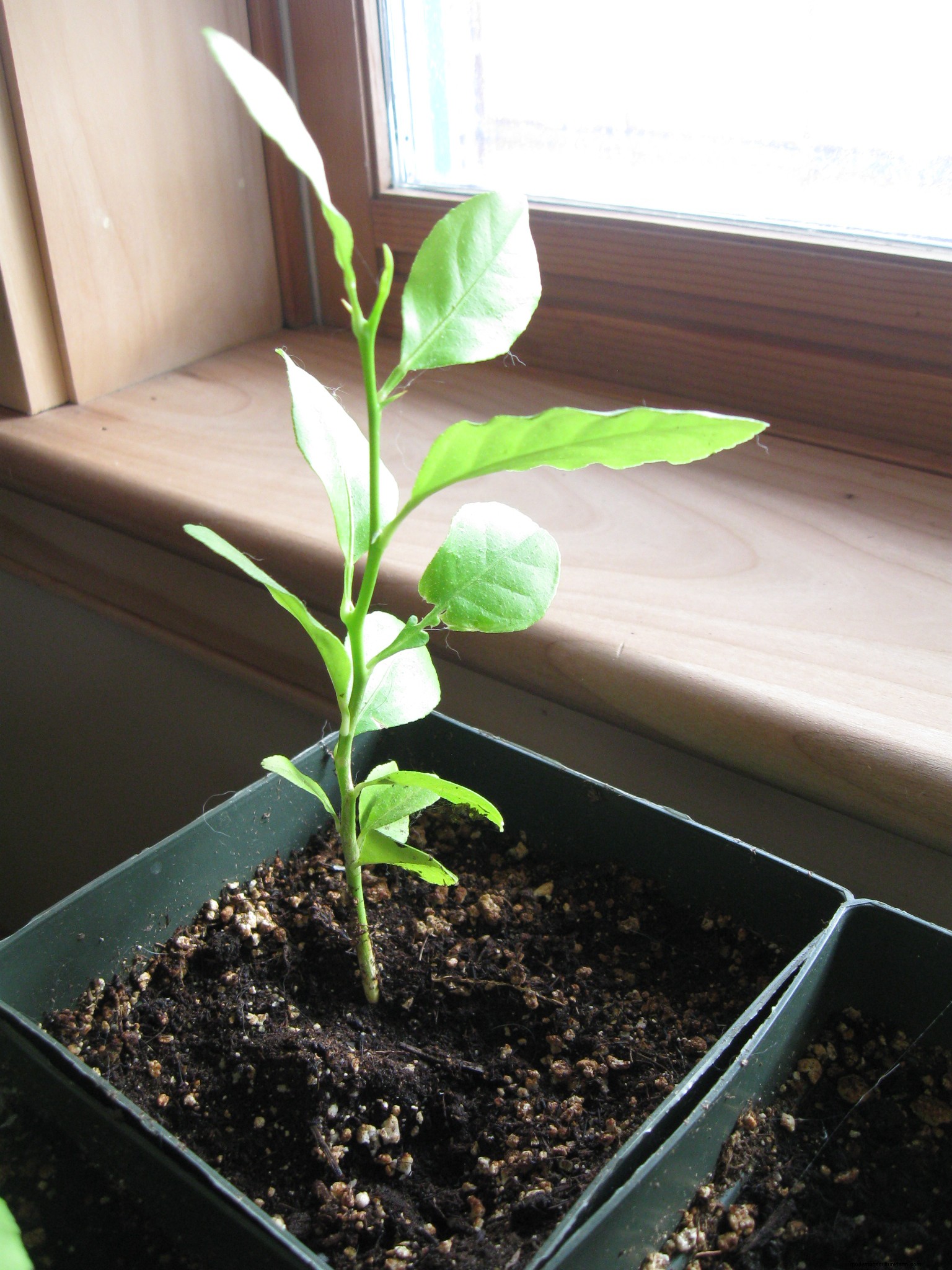
A young lemon tree seedling on our windowsill. This one’s just a few months old, but it’s already about 6-8” tall.
Growing a lemon tree from seed, whether it eventually produces fruit or not, is a worthwhile endeavor if you’re curious about propagating seeds or learning how citrus trees grow. They’re fun houseplants that are not only beautiful but the leaves and foliage smell wonderful.
The actual fruit is just the icing on the cake, but it doesn’t take much to get them to produce.
Grown indoors, lemon trees will typically produce fruit after 2 to 3 years. Sometimes you’ll get a tree that doesn’t end up growing lemons, but that doesn’t mean the tree itself is a lemon, so to speak, as tending to a fruit-less lemon plant is still a pleasant and rewarding experience.
All you need to get started is a healthy-looking, juicy lemon (more specifically, its seeds). If possible, choose an organic lemon, or one that hasn’t been treated with pesticides.
Remove the seeds from a cut lemon carefully, they need to be intact (read: no cuts) when planted. I use my fingers to remove them from the fruit and then rinse them off using cool water, you want to get rid of any remaining pulp as the residual sugar causes fungus to grow, which in turn leads to seed rot.
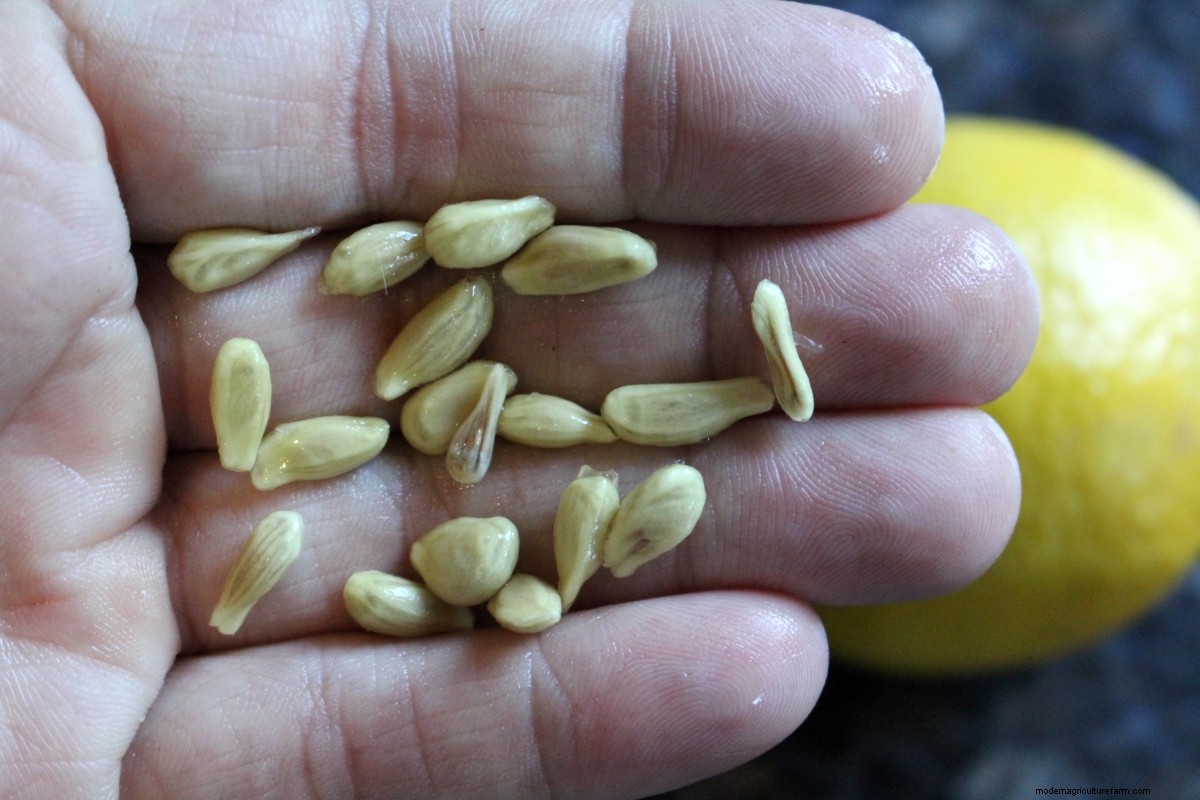
Lemon seeds pulled out of a fresh organic lemon.
Unlike some seeds that require a germination period in paper towel or water, lemon seeds should be planted as soon as they’ve been rinsed.
Try not to let them dry out, they should still be wet when planted.
Plant the wet lemon seeds in a small pot with drainage holes, using pasteurized soil mix (the pasteurization part is important, as it improves the likelihood your lemon seeds will grow without issue).
At this point in the process, you can plant several seeds in a single pot. The seeds only need to be planted a 1/2-inch deep to successfully propagate, the soil should be gently moistened with water and the container covered with plastic wrap to keep the growing environment damp but not wet.
The growing lemon seeds need to be kept in warm environment, about 70° F, during the initial germination period. If your house runs cold, the top of the refrigerator is a good place to keep the pots.
Depending on the seeds and growing conditions, you should see growth in 1 to 3 weeks.
As soon as you notice the seedlings poking through the soil, remove the plastic wrap and place the pot in a warm, bright location. When the seedlings have grown several leaves, it’s time to transplant them to larger potting containers.
Using the same pasteurized soil mix as before, carefully move the seedings into containers that are 4 to 6 inches in diameter.
As the tree grows, replant it in a larger container to match its size and give the plant a good pruning in the spring.
The planted, germinated seedlings should be placed in a location where they’ll receive at least 6 hours of sunlight during the day, at a temperature between 60° and 70° F.
Keep the soil moist by watering when the top 2 to 3 inches feels dry, you can test this by sticking your finger directly into the soil and feeling for wetness. Like other plants, when lemon trees need water the leaves will begin to droop.
Unless you live in a truly cold climate, bring your lemon trees outside when the warm weather hits. Even if this is only for a few months, the steady, direct sun will make it so your trees are more likely to eventually produce fruit.
I’m fortunate, also, that we have a small greenhouse built off of the side of the house, which is where we keep our potted lemon trees throughout the spring and autumn months. The greenhouse extends their “outdoor” time, but we still have to bring them indoors for the coldest part of winter.
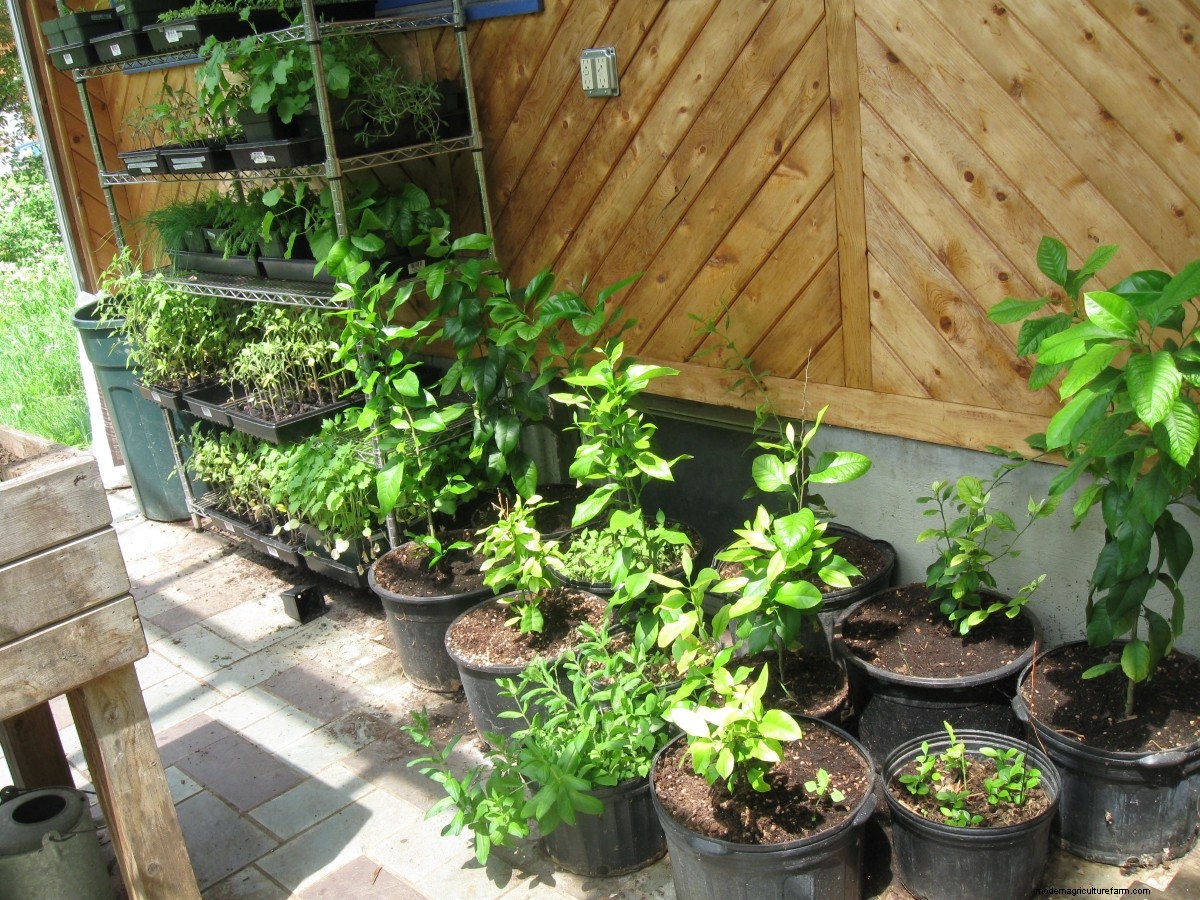
Lemon trees growing in our attached greenhouse in spring, next to our annual garden starts. They’re about ready to go outdoors for the summer season, once the risk of frost is past.
Lemon trees are usually hardy to zone 9, meaning they can handle a very occasional light frost. They’ll take damage if the temps go below 32 F (or 0 C), but most can survive to 28 F (or -2 C). Some trees are a bit tougher and can make it as low as 22 F (or -5 C), but it’s best not to risk it.
When you see a frost warning in your area, it’s time to bring your lemon trees indoors for the season.
You can keep your lemon trees happy during the warmer months by feeding them a water-soluble nitrogen- and potassium-rich fertilizer every two to four weeks, making sure the surrounding soil stays nice and moist (but not overwatered or soggy).
A common mistake is to apply fertilizer to lemon trees in winter when they’re indoors. People see the trees dropping leaves and panic. They start watering more and add fertilizer, which is just the opposite of what the trees need.
If the trees start to drop leaves indoors in the winter, reduce watering, stop fertilizing and allow the trees to go dormant. They’ll perk right back up in the spring once they’re in bright light again.
The type of lemon tree winter care your plants need is entirely dependent on where you live, ambient temperature, and light exposure. So, for example, if you’re from a warm locale such as California or Florida, you can keep lemon tree plants outside in their pots all year long.
On the other hand, if you’re living in a cooler climate where the days get very short during the winter, it’s vital that the plants are brought indoors during that time. Keep the trees in a warm, draft-free location inside.
Reduce the watering schedule and cease fertilizer applications, waiting to resume until the following spring.
Here in Vermont, we keep our lemon trees indoors for the winter for about 4 months of the year.
As you can see in the photos, the greenhouse is an ideal place to grow citrus trees indoors during the shoulder seasons. The main idea is to avoid frost, so bring in the lemon trees before the first frost and after the (hopefully) last frost of the winter.
It’s normal, and in fact healthy, for plants to undergo a state of dormancy during this time. You might find the lemon tree stops growing or it loses some of its leaves; this is your plant’s way of conserving its energy and isn’t something to be worried about.
Once the weather warms up and the sunlight increases your lemon tree will begin to grow with gusto once more.
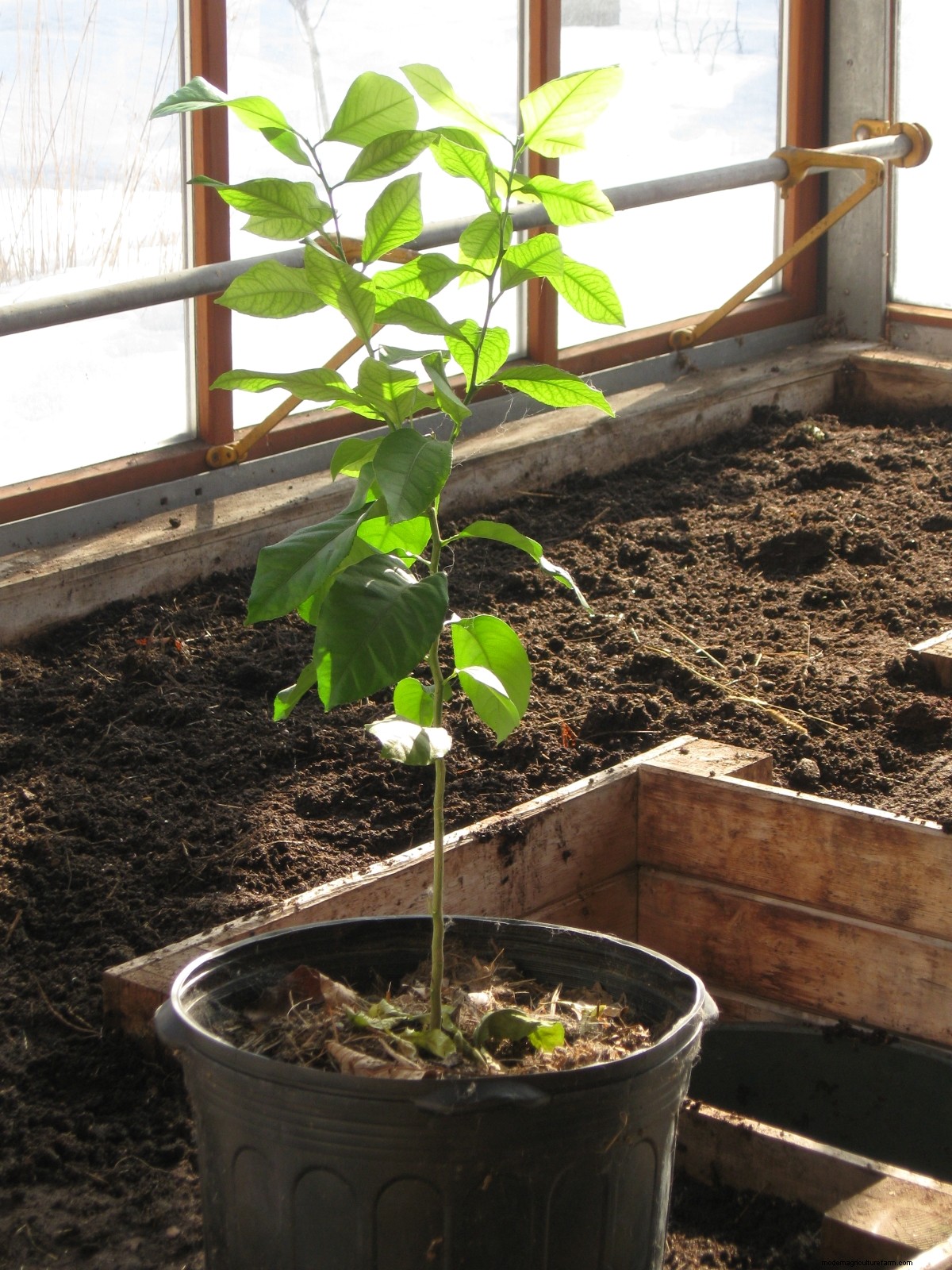
This 18-month-old lemon tree seedling is just going out to our attached greenhouse in the late winter. You can still see snow on the ground outside, but the greenhouse will allow the lemon tree to get a jump start on the growing season before it moves outdoors in the summer.
After a period of 1 to 3 years, your lemon tree might begin to produce fruit. Lemons can take up to 6 month to ripen, depending on the variety, and are ready to be picked when they have firm, glossy skin and are 2 to 3 inches in size.
If you’re growing lemons from seed in a colder climate, your lemon crop will be small.
If, however, you lived in warmer part of the United States (or any other warm climate), you’ll be able to harvest lemons by the bucketload.
In either case, preserving lemons by one means or another is a fantastic way to hang on to that “fresh from the tree” flavor. My favorite and most hands-off way of preserving lemons is to make limoncello, a traditional sweet-tart Italian digestif that can be sipped on its own after a meal or mixed into a cocktail (like this effervescent drink made with limoncello, prosecco, and sparkling lemon soda).


