
Welcome to Modern Agriculture!

Salmonberries are a tasty edible berry in the rose family. Unlike regular raspberries which produce canes, salmonberries grow on perennial bushes and produce stunning floral displays followed by juicy sweet fruit.
I’m always on the hunt for new edible berries to add to our permaculture homestead, and eventually, I hope to have every square inch covered in something delicious. It can be tricky to find crops that thrive in certain microclimates, and finding edibles that grow in wet/shady locations is a particular challenge.
Salmonberries, unlike other fruit in the rubus genus, actually thrive in wet boggy soil. While regular raspberries can’t stand wet feet, salmonberries don’t mind one bit.
They’re lower maintenance too.
Raspberries grow on biennial canes, which live for 2 years before dying back as new canes sprout. Salmonberries on the other hand grow on perennial bushes, and there are no dead canes to trim out of the patch.
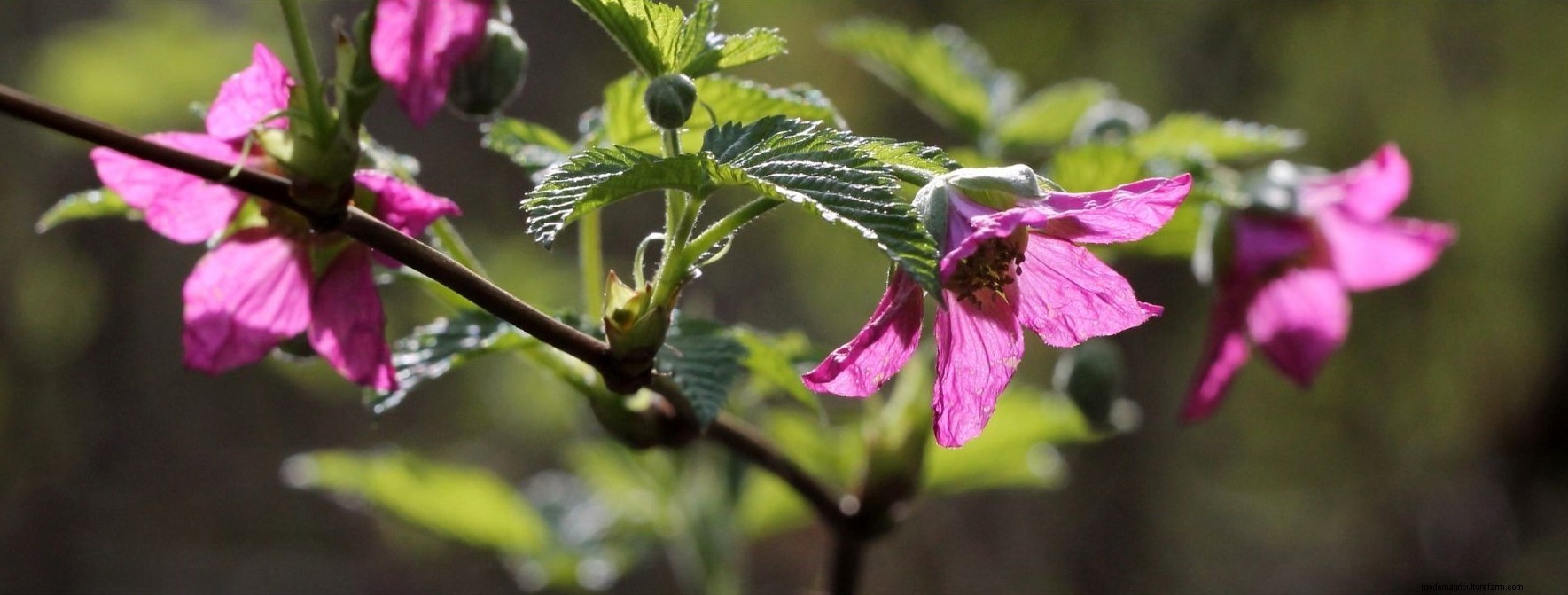
Beyond their delicious fruit, salmonberry plants also produce stunning displays with their flowers each spring, meaning that they’re both beautiful and delicious.
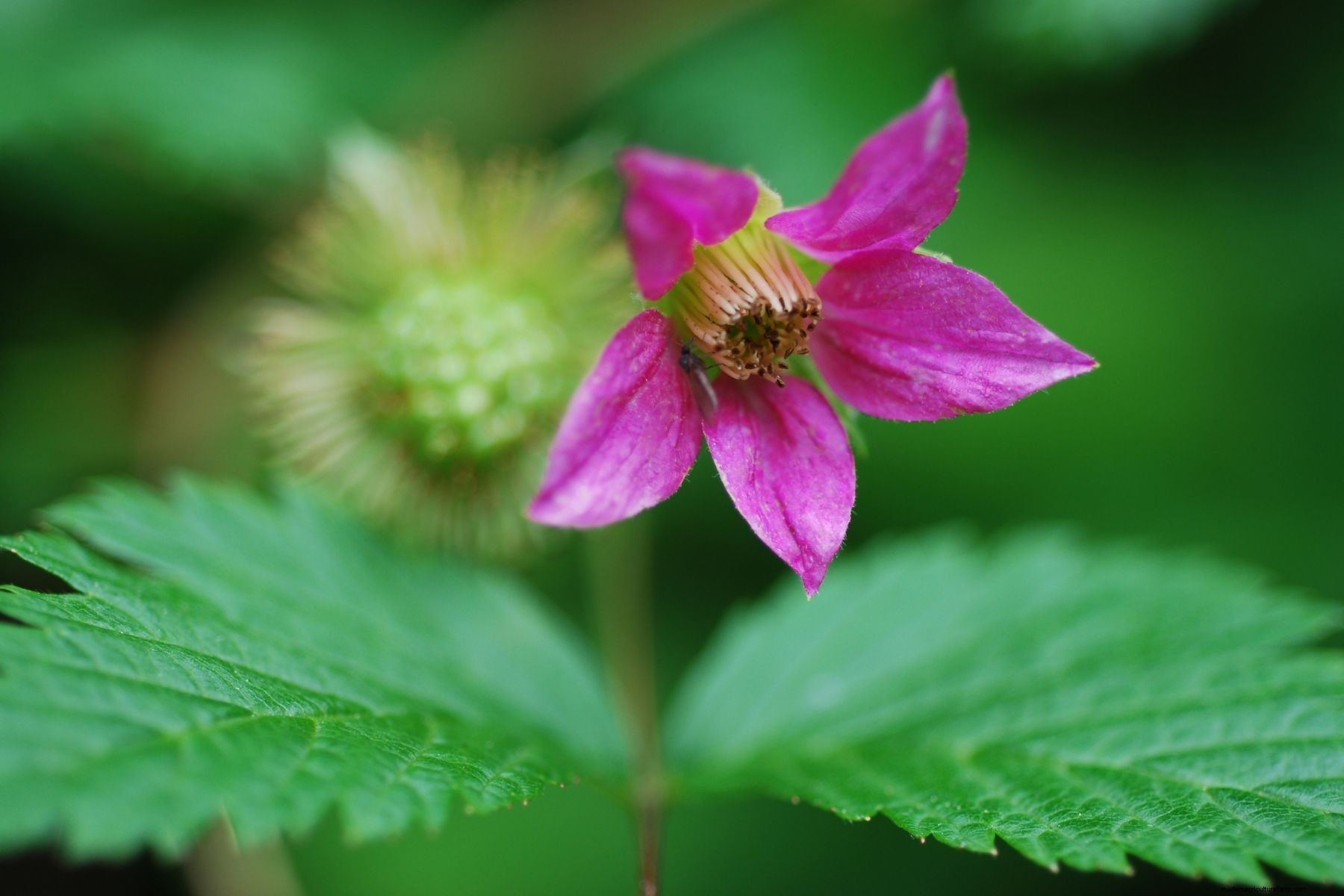
Salmonberry bushes belong to the Rubus genus of brambles, related closely to raspberries and blackberries. It’s native along the west coast of the United States, growing wild from Alaska to California. These bushes also grow inland towards Idaho.
These bushes have grown in this region for centuries. We know that the Native American tribes ate them raw or mixed them with the salmon that they caught. That’s how they received their name.
Gardeners living in USDA hardiness zones 5-9 can grow salmonberries in moist conditions. Make sure you consider the space that these bushes require. One bush reaches up to six feet tall with large leaves.
Once you decide to grow salmonberries, the first thing you need to do is find a good location for the bushes. These aren’t small shrubs, and they’re perennials, so their spot is permanent. Moving salmonberry bushes isn’t an option due to their deep roots.
In the wild, these bushes love moist places or wetlands. Unlike raspberries, they like having wet feet, so take a look at your property and see if you can find a similar location. Streams or ponds are ideal for salmonberries; they also protect the soil from erosion.
The bushes grow best in partial to full shade, which is different from other Rubus species that love full sun. Believe it or not, salmonberries cannot handle living in full sunlight, and along with currants and gooseberries, they’re some of the few fruiting plants that prefer wet soil and shade.
We happen to have both in abundance on our woodland homestead, which is why I’m particularly excited about growing salmonberries.
Think about how these plants grow in the wild. They find areas with a lot of water and shade, like the areas along a creek in the woods.
Not everyone has a pond or a stream in their backyard, and that’s okay. Pick a spot that offers partial shade and add plenty of compost to the soil, which will help it retain moisture. Just remember to water them very regularly and you be the “stream” adding plenty of moisture throughout the season.
Salmonberries love rich, nutrient-dense soil. Apply a thick layer of compost, typically six to eight inches, to the area where you want to grow salmonberries and mix well into your soil. If you don’t have compost, well-rotted manure works well too.
These bushes have a lot of growing to do in the first year, requiring a lot of nutrients. They use it up fast.
Salmonberries aren’t known for being picky about pH ranges, but in general, Rubus shrubs grow best in neutral to slightly acidic soil. Try to keep your soil in between 6.0 and 7.0 for ideal growth. If you need to amend your soil, lime increases your pH level, and sulfur lowers it.
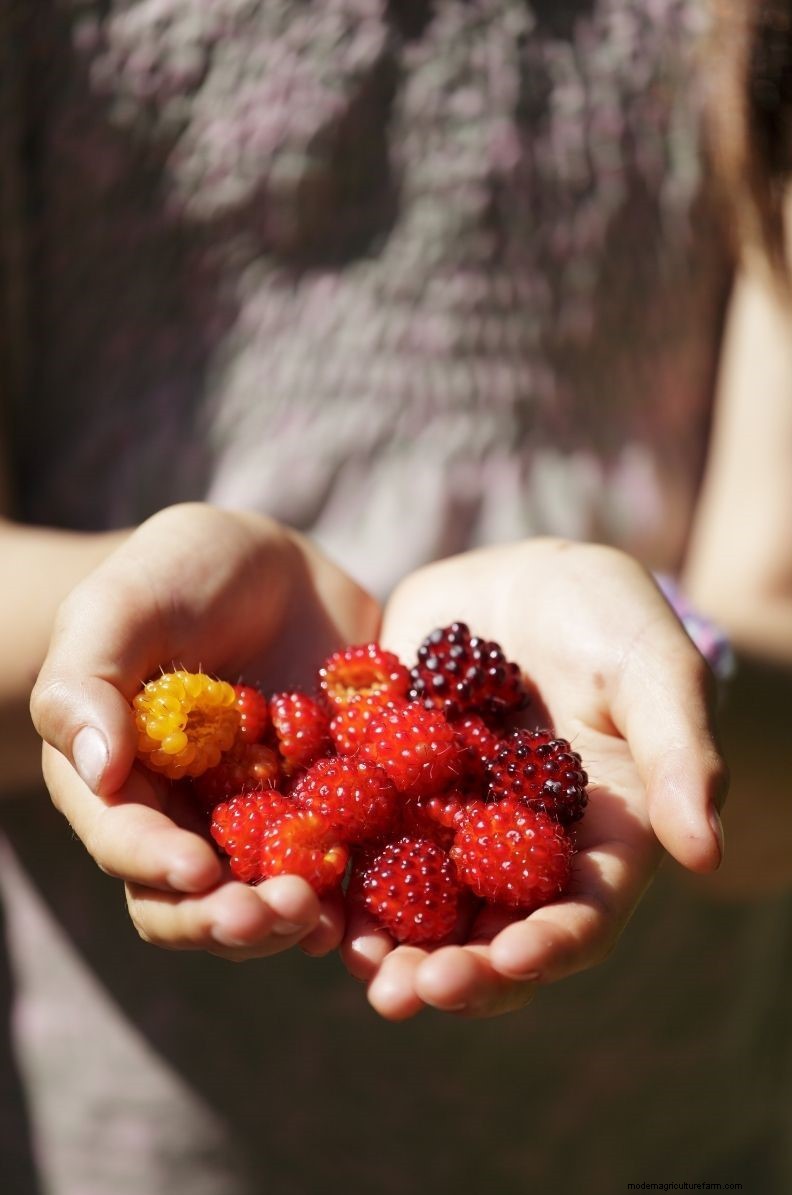
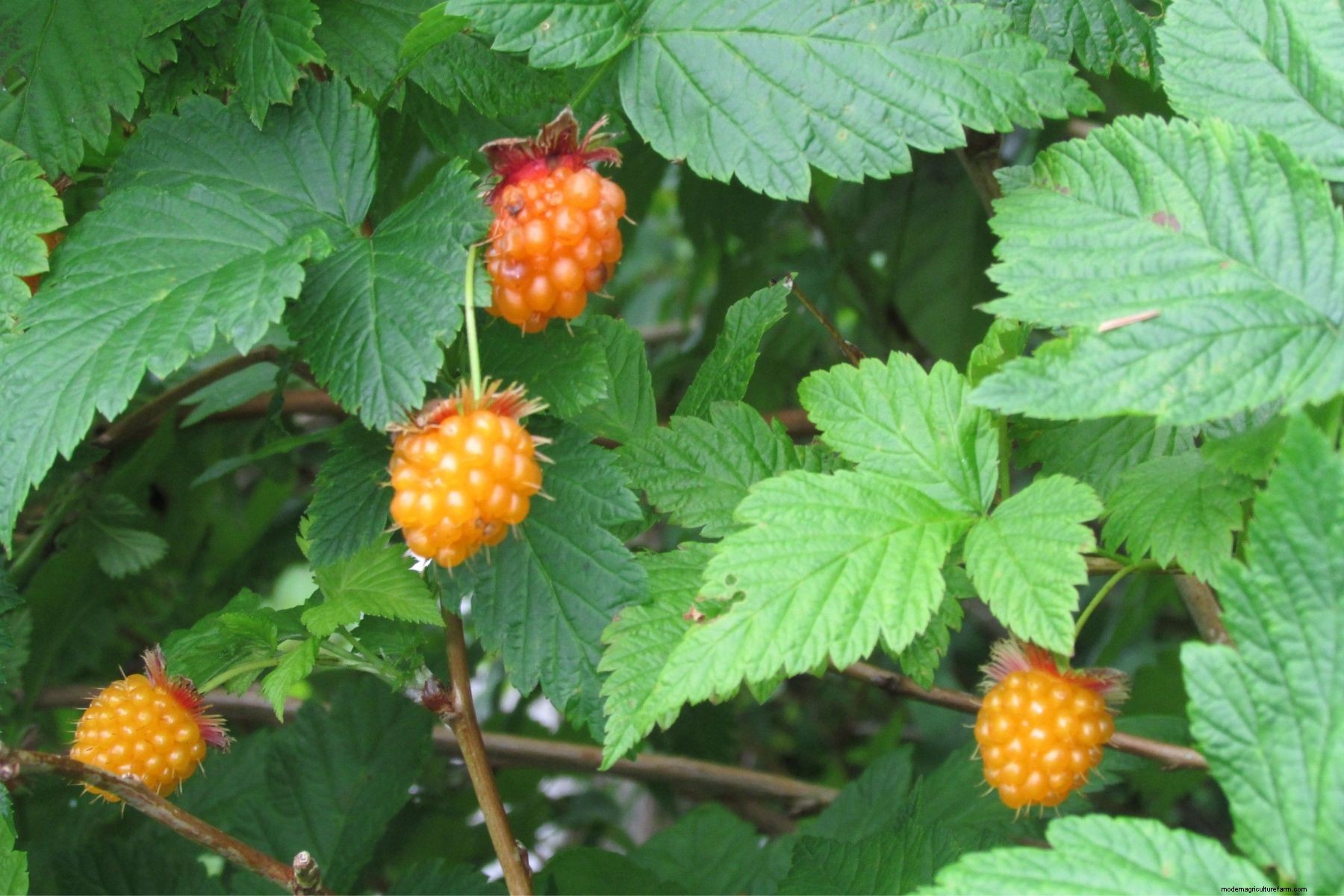
Salmonberries come in a variety of colors
The easiest way to plant salmonberries is by taking a cutting from an established plant.
If you live in an area that they grow wild, this should be an easy task. In the fall or winter, take a four to eight-inch long branch with four or more buds present and plant it in a container with moist sand. Then follow these simple instructions for propagating elderberries from cuttings, since the process is the same for salmonberries.
It takes several months for the roots to grow; it might not start until the spring, and you need to wait a full year to plant them into your garden.
Not everyone has the luxury of going out and taking a cutting from a wild salmonberry plant, especially outside of the pacific northwest. I happened to find them for sale at Raintree Nursery and ordered 6 salmonberry plants.
When it’s time to plant your salmonberries, dig a hole that is twice as deep and wide as the pot that it’s currently growing. Make sure you add compost at the bottom of the hole and any soil amendments that help the shrub grow.
Fill the hole back in with soil, pressing firmly to keep the dirt in place. Then, water deeply to start the root establishment process and spread mulch around the plant’s base. Remember, you have to do everything you can to retain moisture in the soil, and spreading mulch is key to that.
If you take good care of your salmonberry shrubs, they’ll grow for years, producing tons of fruits to enjoy.
The most important part of taking care of salmonberries is providing plenty of moisture. Check the soil as often as possible to make sure it’s still moist. The shrubs need at least one inch of water per week, but you need to provide more when the berries set and ripen.
Also, make sure you water the plants more often during dry and hot periods. Hot weather affects these plants, even if you plant them in the shade. Do not let the soil dry out!
Since salmonberries are heavy feeders, consider applying fertilizer around the shrubs as well. A slow-release fertilizer works best, such as a 10-10-10, but make sure you use it in the early spring when new growth appears.
One of the benefits of growing salmonberries rather than raspberries is that they grow on perennial bushes (rather than biennial canes like raspberries). That means less pruning and maintenance, but you’ll still need to occasionally cut back dead branches to keep your salmonberries healthy.
The plants tend to have uncontrolled growth, so pruning should be done in the winter if you need to keep them to a specific size or shape. Pruning also encourages new spring growth.
Towards the end of the season, when the plants stop producing fruits, remove any old, unproductive stems from the plant. Check your plant for dead branches and any that might be crossing. When branches cross, it increases the risk that they’ll wound each other, leading to an opening for diseases and pests.
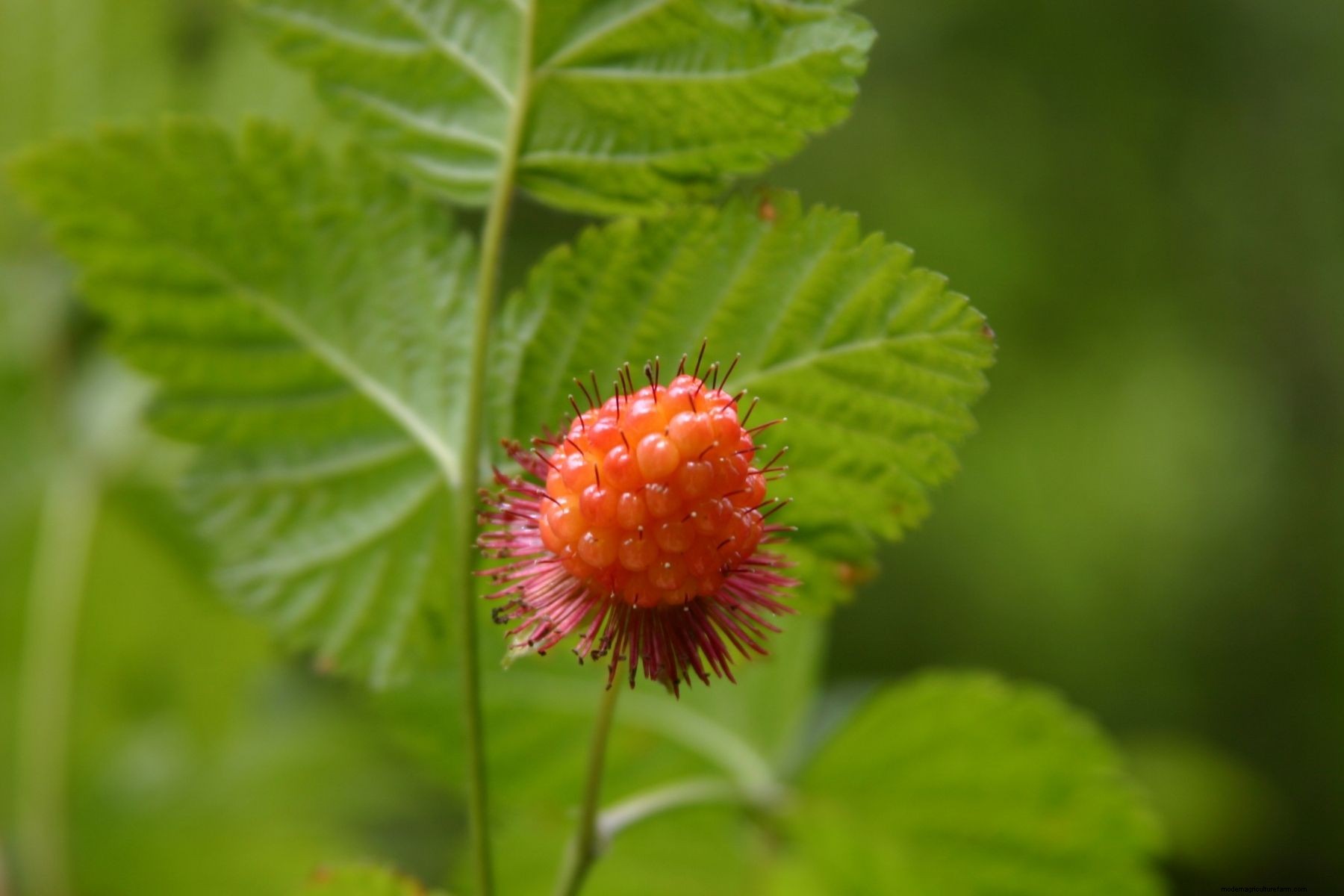
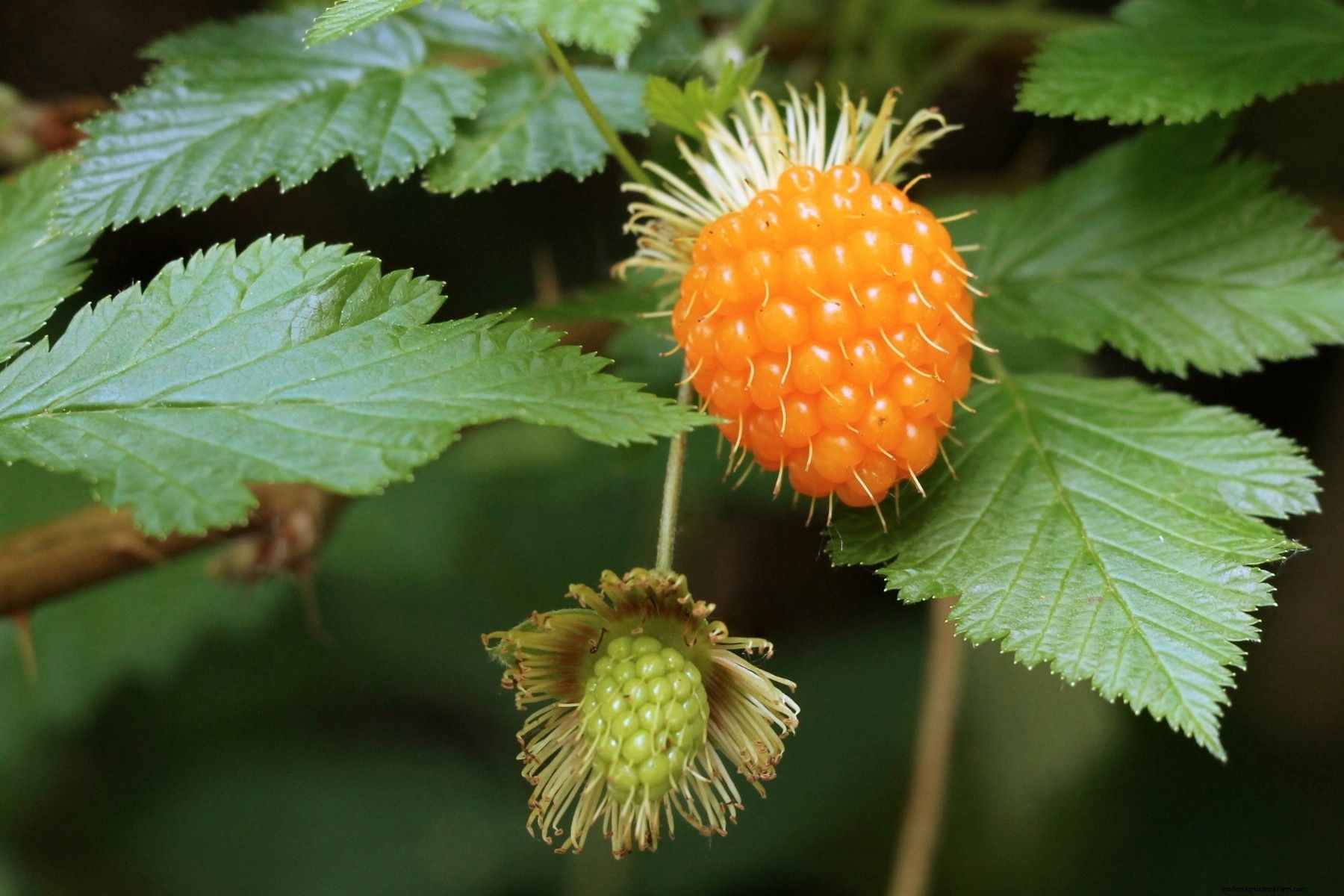
Salmonberry Fruit Developing
Expect a harvest two to three years after planting salmonberries on your property. The berries start to ripen throughout the summer; they’re some of the earliest berries that ripen.
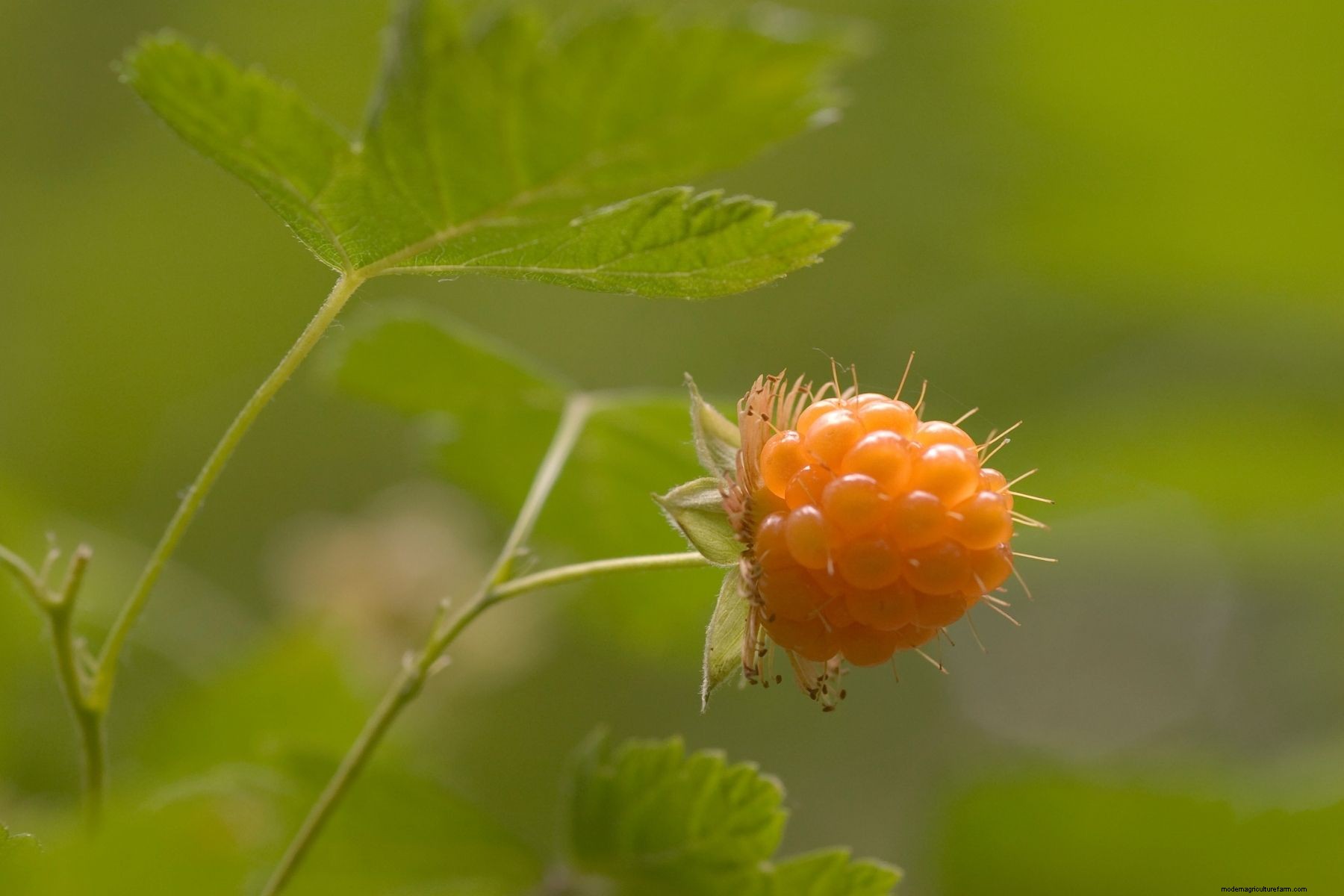
When salmonberries are ripe, most fruits have a pink-orange color, but others have more of a red undertone. It varies a bit by variety, and since it’s often propagated from the wild, individual plants can be slightly different.
You’ll know that they’re mature by taking a bite. Once you know the ripe color for a particular bush, it won’t change, so you’ll know when to harvest year after year.
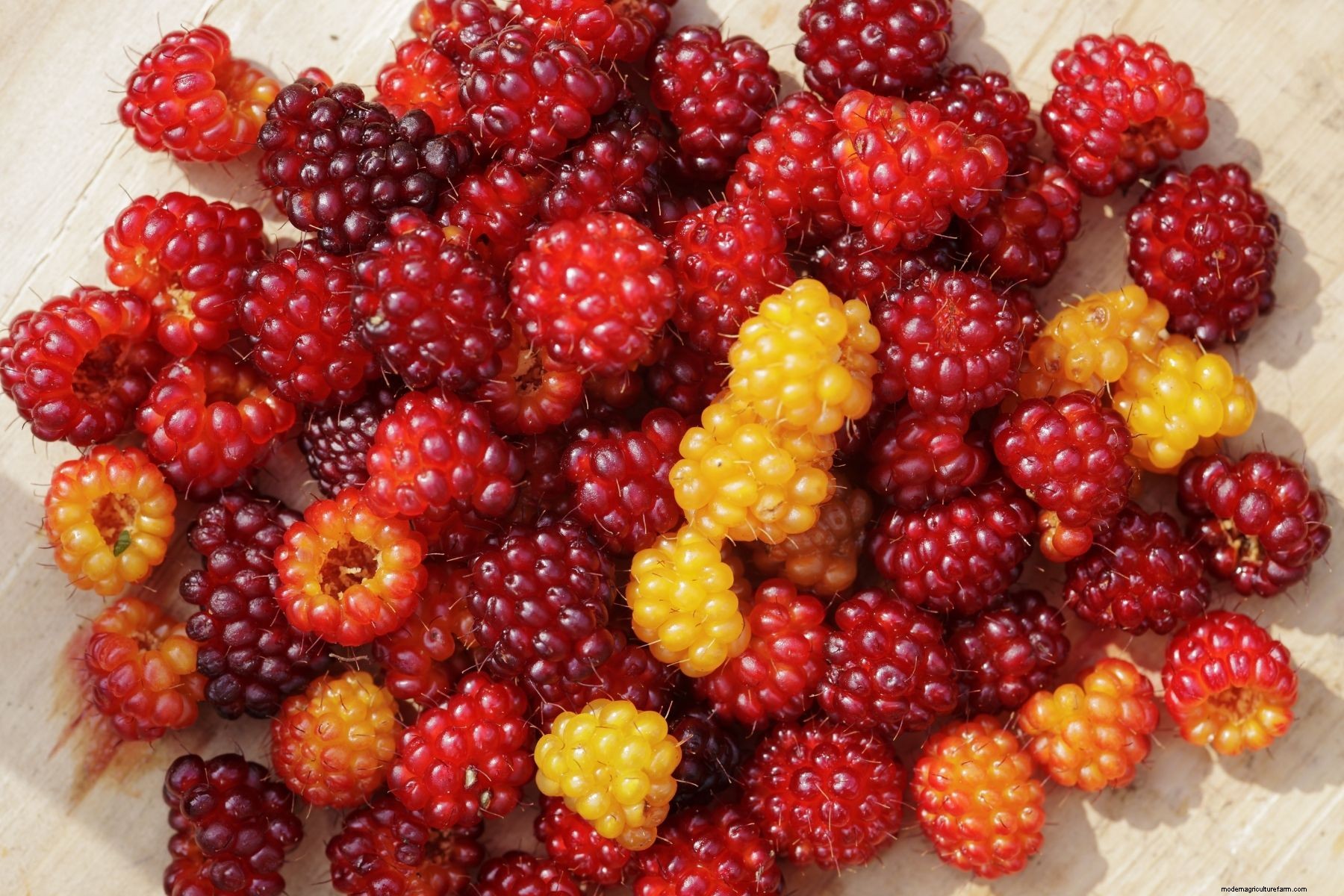
A selection of ripe salmonberries from yellow to red
Salmonberries are safe to eat raw and have a delicious flavor that people love. You can freeze them, turn them in a jam, or make other yummy recipes. Don’t expect to dehydrate these berries because they contain a lot of water (more than raspberries and blackberries).
They don’t last too long in the refrigerator, so you need to do something with them.
Eat them fresh, turn the berries into a pie, or freeze them for use later. Expect salmonberries to last no more than five days in the refrigerator, and often they’ll only last 1-2 days when dead ripe.
Here are some delicious ways to use salmonberries when they’re in season:


