
Welcome to Modern Agriculture!

One of the common problems with homegrown grapevines is that they have far too many grapes, both in number of bunches and per bunch. This results in small fruit of low quality. The secret is to prune them hard every year, aiming to ensure your vine bears far fewer grapes than it’s capable of producing.
Find out how and when to prune grapevines, below.
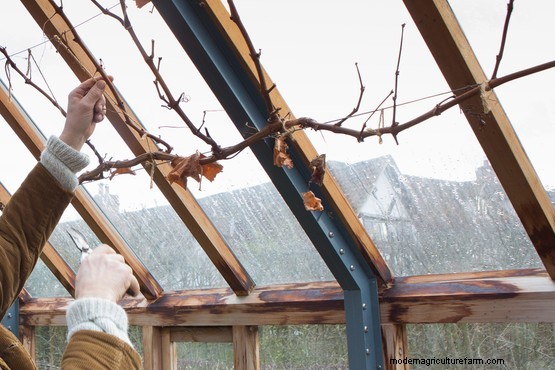
Grapes form on new wood so need to be pruned every year to a framework. In other words, anything left when the leaves have fallen will not produce grapes. So, during the vine’s winter dormancy, remove everything but the most basic structure.
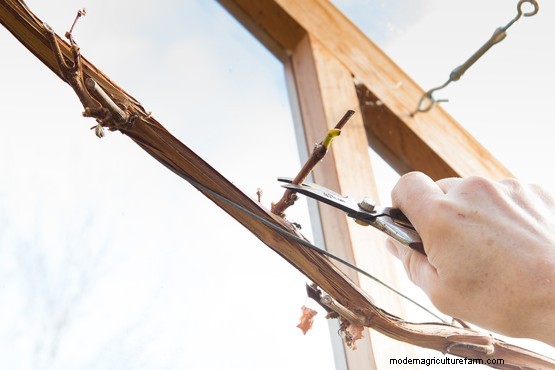
Don’t be frightened to cut hard – vines grow strongly and always fruit on new growth. Cut all fruiting sideshoots back to just two buds. You can also use this method for ornamental vines such as Ampelopsis brevipedunculata, or porcelain berry, and virginia creeper, which can be cut back to create spurs from which vigorous, flowering shoots will be produced in summer.

In May, when there’s been a lot of new growth, cut out everything apart from developing stems that will create future structure, and your sideshoots that should be carrying pinhead-sized grapes. Then reduce the latter to just two bunches per sideshoot.
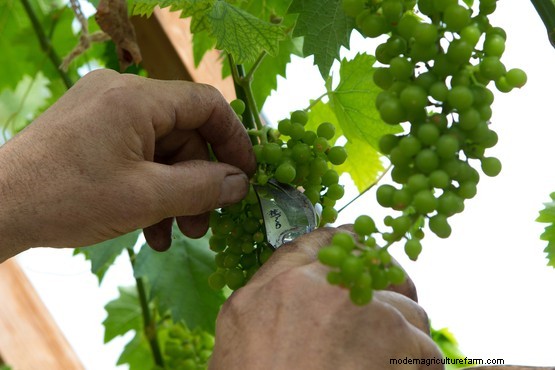
In midsummer, cut back excess growth again, to make sure that the grapes get as much ventilation as possible to avoid fungal problems. To ensure nice big individual grapes, thin each bunch by at least half, cutting out young fruit so that none is touching. This is an extremely fiddly job but is well worth the effort.


