Welcome to Modern Agriculture!

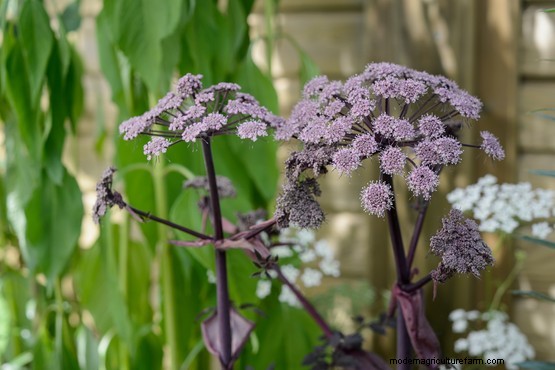
Most ornamental angelicas are tall biennials with huge, domed umbelliferous flowerheads followed by delicate seed pods.
The ribbed, hollow stems are flushed pink and are traditionally candied for use in baking. As a plant, angelica makes a strong architectural statement, and works at the back of a border or in a wild part of the garden, alongside grasses and flowering perennials. All parts of angelica are highly aromatic and it has traditionally been used for medicinal as well as culinary purposes.
It’s good for including in wildlife planting as the flowers are attractive to pollinators and the seeds are eaten by birds.
More Grow Guides:
Find out how to grow gorgeous angelicas in this handy Grow Guide.
Grow angelica in moist soil in partial shade. Mulch annually with well-rotted manure or compost.
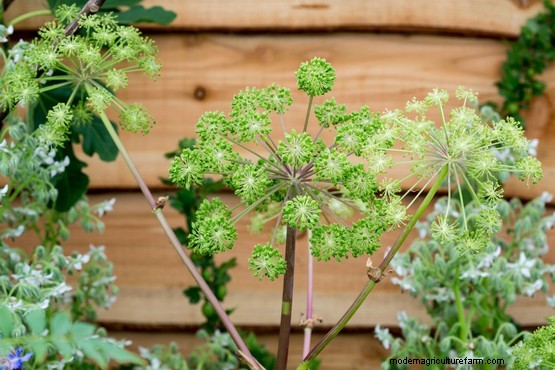
Sow seeds in autumn or late spring in modules or directly into the soil. Sow onto the surface of the soil or compost as the seeds need light to germinate. Cut back the stems and dig up the plant in the autumn of its second year, dividing the roots with a sharp knife. Repot these divisions into compost or directly into the soil where they are to grow.
If you want to make your own candied angelica, pick the tender young stems in spring, before June.
There are various recipes for candying angelica, but essentially, stems need to be cut into small lengths around 4cm long and blanched in a sugar syrup. After drying they can be stored in air tight jars.
Fresh stems also make a tasty addition to stewed fruit and angelica seeds can be used to flavour liqueurs.
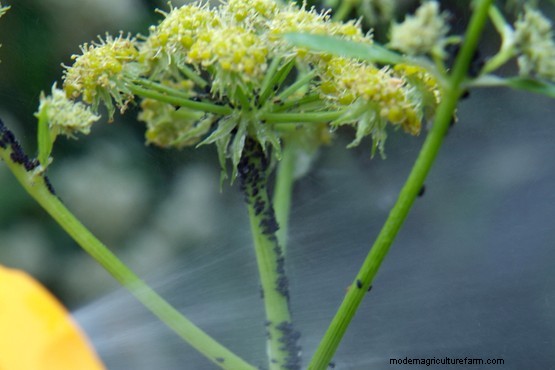
Young seedlings and plants are good fodder for slugs and snails so they should be protected accordingly. Plants may be susceptible to powdery mildew in dry weather, so keep them well watered. Aphids often cluster around the flowerheads and can be blasted off with a hose, as long as any beneficial predators like ladybirds or their larvae aren’t present.