
Welcome to Modern Agriculture!

Begonias are flamboyant, mostly tender perennials that are used in bedding, pot and hanging basket displays. They have a reputation for being a little old fashioned, but the bold new varieties are very different to the dainty plants that were traditionally used in bedding schemes. Some have masses of long-lasting, showy flowers in neon shades that are great for pots and hanging baskets, while others are grown for their spectacular, eye-catching foliage. All begonias do best out of direct sun, so are a welcome addition to a shady patio or border.
Begonias can be categorised as follows:
Grow begonias in peat-free, multi-purpose compost in dappled sunshine to partial shade. Plant tubers of tuberous begonias in spring. Only plant begonias outside in May, when no more frosts are forecast. Water regularly and feed weekly with a high potash fertiliser like tomato feed. In autumn, dig up tuberous begonias and store the tubers in a cool, frost-free spot for winter. Bring fibrous-rooted types indoors over winter, or treat as annuals and throw on the compost heap. Foliage begonias are grown as house plants but can enjoy time outdoors in summer.
More on growing begonias:
Begonias: jump links
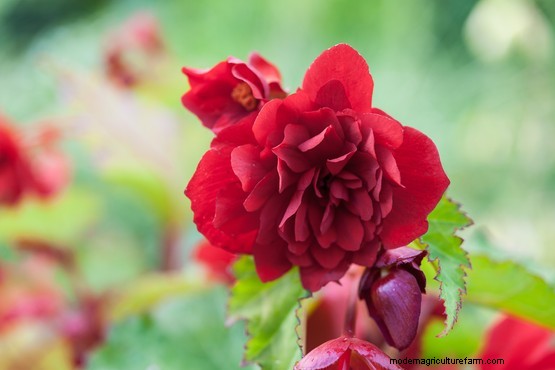
Begonias grow well in dappled or partial shade – avoid south-facing spots as the foliage can burn in direct sunlight. If you’re growing begonias in a greenhouse, shading may be required.
Tuberous begonias are ideal for growing in pots and hanging baskets. They have fairly brittle stems and heavy flowers, so grow them in a sheltered spot. Flowers will go over very quickly if they’re too hot. Fibrous rooted begonias can be packed quite tightly into mixed summer displays of other bedding plants.
Foliage begonias are best grown as house plants, in dappled shade. They will enjoy a holiday in the garden in summer, in dappled shade.
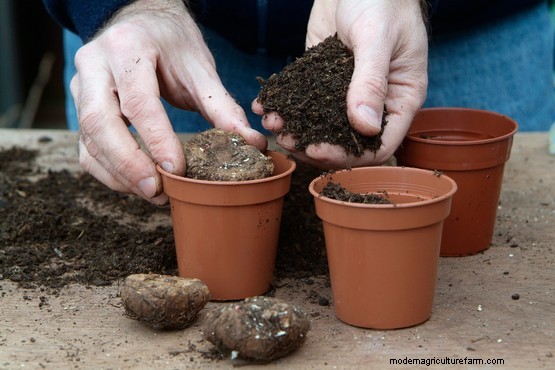
In March or April, you can buy begonia tubers at the garden centre or online. Plant the tubers into individual pots or into a seed tray, hollow side up. Plant 2.5cm deep and keep in a warm spot that is at least 18°C. Once the leaves begin to show, pot on into larger pots filled with John Innes No. 2 compost or peat-free, multi-purpose compost.
Harden off the plants before planting them out in the garden in May, when no further frosts are forecast. You can also buy tuberous begonias as fully grown plants, although this is a more expensive option.
Other begonia types can be bought as pot-grown plants or plugs. Grow them in a greenhouse or sunny windowsill and harden off after all risk of frost has passed before planting outdoors.
Foliage begonias can also be divided – this keeps the plant growing healthily, as well as giving you a new plant for free.
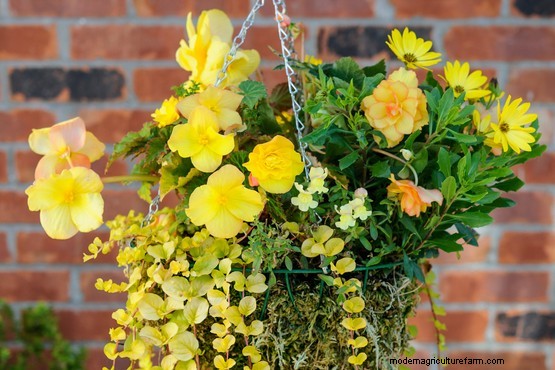
Powdery mildew can be a problem for begonias from May – especially for yellow-flowering types. This fungal disease spreads by spores, so good hygiene should reduce the chances of attack. To prevent the problem space plants out well and ventilate greenhouses. Some gardeners spray plants with a systemic fungicide in May to prevent the problem.
Vine weevil can be a problem with pot-grown begonias.
Find out how to prevent begonias and other bedding plants from becoming leggy, in our Quick Tips video:
Begonia x tuberhybrida ‘Giant Picotee Mixed’ – tender perennial with serrated leaves and large ruffled pink, apricot or yellow flowers from July to October. H x S: 30cm x 30cm
Begonia ‘Illumination Series’ – cascading flowers in bright colours, weather-resistant flowers. Ideal for a hanging basket. H x S: 60cm x 60cm.
Begonia semperflorens – tender perennials grown as annuals. Small plants with fibrous roots ideal for summer bedding displays. Pink and white flowers. Leathery, shiny green leaves. H x S: 15cm
Begonia rex – grown for its large silver and green foliage that has a rusty brown underside. Tender so needs to be grown as a house plant. H x S: 50cm x 50cm
Begonia luxurians – the palm-leaf begonia. It can be grown as an impressive house plant in a shaded conservatory, and can be put outside in the summer. H x S: 3m x 1m


