Welcome to Modern Agriculture!

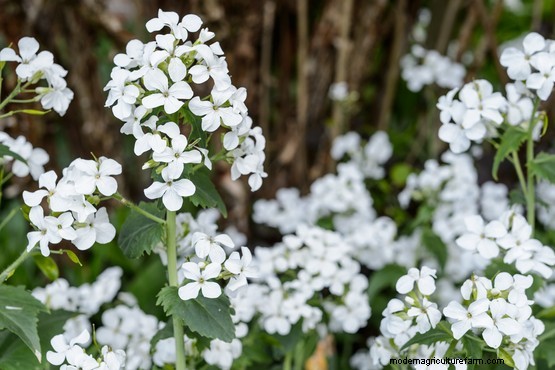
Honesty, Lunaria, is an old-fashioned cottage garden plant, known more for its seeds than its flowers.
The distinctive flat, translucent papery pods, which hold the dark seeds, are often used in dried flower arranging but, if left on the plant, they’re good for adding winter interest to the garden. However, the purple or white fragrant flowers in spring and early summer are very attractive in their own right and are also attractive to pollinating insects.
As well as providing flowers for pollinators, honesty is used as a caterpillar food plant by the orange-tip butterfly. Look out for green caterpillars on the stems of plants in summer, and the almost triangular pupae, which remain on the plant throughout winter, before the new season’s butterflies hatch in mid-spring.
Most honesty is biennial. Sow seeds in early summer to flower the following spring. Grow in moist but well-drained soil in sun to partial shade. Let the flowers develop seedheads for attractive winter displays.
More on growing honesty:
Find more detailed advice on growing honesty, below.
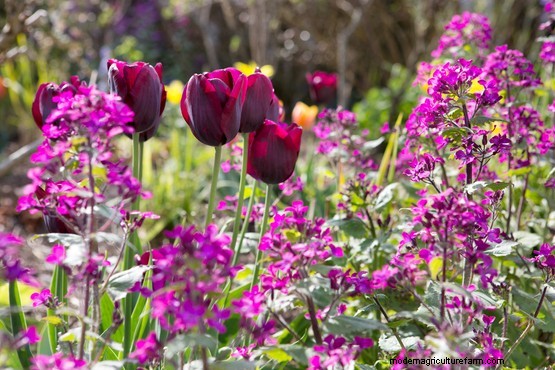
Honesty thrives in fertile, moist and well-drained, slightly alkaline soil. It does best in partial shade. Pair it with spring-flowering bulbs like tulips (pictured) or as part of a spring woodland border.
Honesty can be grown from seed or young plants. Sow in pots or a seed tray in early summer and transplant into larger pots when plants are large enough to handle. Plant out into their final growing positions in autumn. As honesty is biennial it has a large taproot and therefore is best planted out when young – larger plants tend not to establish as well as younger ones.
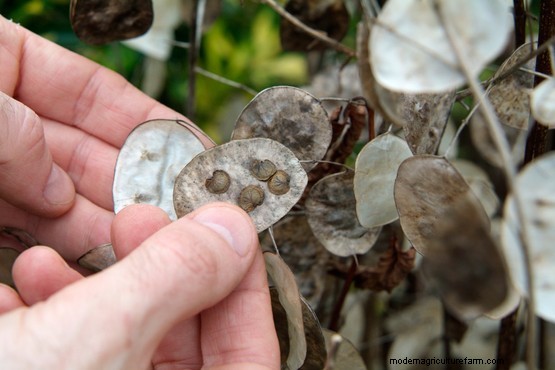
Honesty will self-seed easily if not cut back. However you can also collect seeds for propagation by saving a few of the seed pods. Sow in early summer for planting out in autumn, and flowering the following spring.
Follow our No Fuss Guide with Alan Titchmarsh, on how to save honesty seed:
Honesty is a low-maintenance plant and doesn’t require feeding or cutting back. Allow plants to go to seed, harvesting a few pods for sowing and leaving the remaining ones on the plant to provide winter interest.
Honesty is a member of the Brassica family and therefore is susceptible to the same diseases as many cabbages, such as the fungal disease, club root. This will cause distorted roots and stunted top growth.