
Welcome to Modern Agriculture!

Aloe vera (or Aloe barbadensis, or Barbados aloe) is an attractive house plant with spiky, fleshy leaves that are serrated at the edges. It’s a succulent that hails from hot, arid regions of the world, and stores water in its leaves. It therefore doesn’t need much watering, which makes it an excellent, low maintenance plant for beginners.
Aloe vera is also known as the first aid plant, as its sap is used to soothe burns, scalds, sunburn, skin irritations and insect bites. Cut away a leaf at the base, cut down its length and rub the sap directly on to skin.
Aloes look good on their own but combine really well with other succulents and cacti in a bright spot. In summer, you can put your aloe outside. It may produce a yellow tubular flower, but it’s mostly grown for its attractive shape.
Grow your aloe in a bright spot. Aloes are killed by overwatering, so water sparingly. Water only when the top few centimetres of compost have dried out, allowing any excess to drain away fully, and don’t water at all in winter.
More on growing Aloe vera:
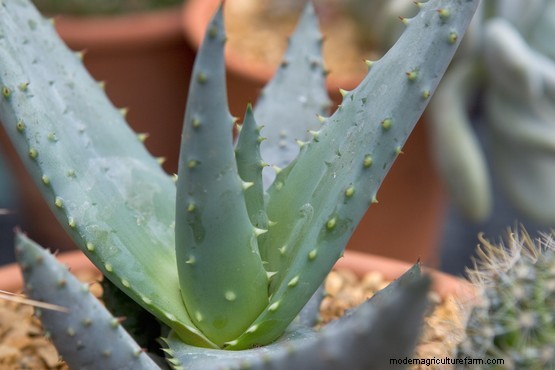
A terracotta pot is ideal for an Aloe vera – it is porous, so allows the soil to dry out between watering. Ensure that it has a drainage hole. Choose a pot that’s the same size as the root ball. Use house plant or cactus compost, or ordinary peat-free multi-purpose compost with some horticultural grit or perlite added. You could top the compost with a layer of grit, too – this will keep the base of the plant dry and will prevent it rotting.
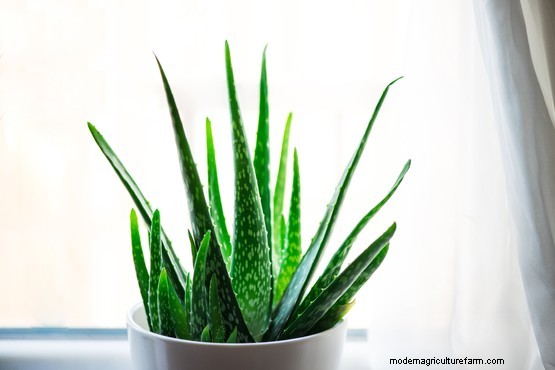
A bright windowsill or shelf is the ideal spot for an Aloe vera. It can take a little direct sunshine, but too much will burn the leaves.
Aloe vera are succulents, so they store water in their leaves. It is important not to overwater them – water whenever the top few centimetres of compost to dry out between waterings. Make sure you let the water drain away fully – do not let the plant sit in water as this may cause the roots to rot. Aloes need very little water in winter.
Aloes are slow growing so repot when the plant has outgrown its pot, usually every two or three years.
Feed every couple of months from April to September with a weak plant food. Wipe the leaves occasionally, to prevent dust building up.
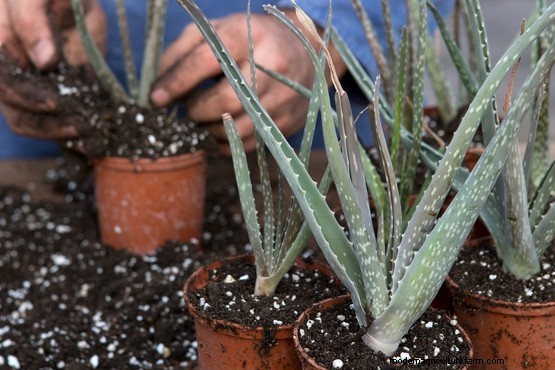
Aloes are very easy to propagate, from the baby plants, called offsets, that appear at their base.
Red leaves leaves indicate that your plant is getting too much direct sunlight. Move it to a bright spot that is out of direct sun.
Wrinkled leaves are a sign that your plant is very short of water. Water lightly over a period of a few days, and mist the leaves. Don’t saturate the compost – aloes do not enjoy sitting in cold, wet compost.
Pale or yellow leaves could mean that your aloe has been overwatered, or it isn’t getting enough light.
Brown or mushy leaves are due to overwatering.
You may notice scale insects on the leaves – they look like brown blobs, about 5mm long. Remove with a cotton pad soaked in organic insecticide.
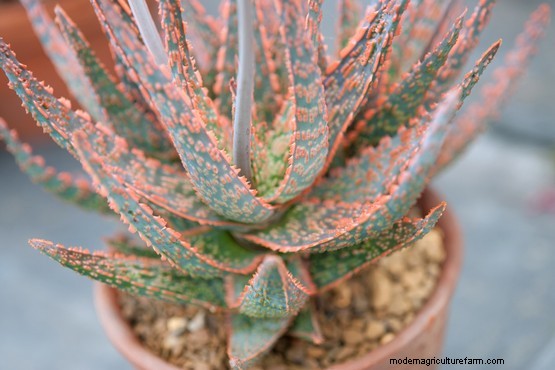
Aloe ‘Lime Fizz’ – an unusual, compact plant with orange, raised markings on the sides and edges of the leaves. Height x Spread: 15cm x 30cm


