
Welcome to Modern Agriculture!

Peace lily, Spathiphyllum wallisii, is a popular, low maintenance house plant with glossy green leaves and white flowers, called spathes. Native to central America, it’s used to a warm, humid environment and is perfect for growing in a bright bathroom. Peace lilies are easy to grow and relatively trouble-free.
The name ‘peace lily’ relates to its white flowers, which are thought to look like white flags (a symbol of peace). Peace lily isn’t actually a lily but an arum, and is in the same family as Zantedeschia and Lords and ladies (Arum maculatum), as well as less obvious plants such as Swiss cheese plant (Monstera) and dumb cane (Dieffenbachia). Peace lilies are easy to grow, don’t need a lot of light, and help to clean and purify the air.
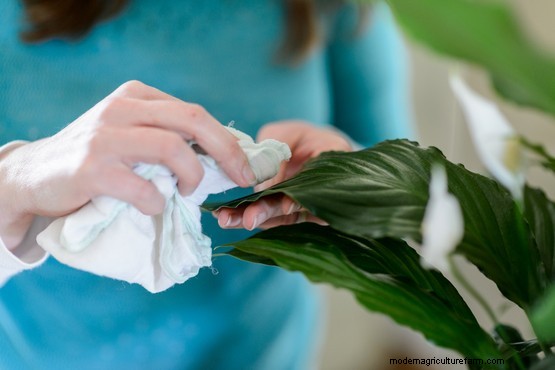
Grow peace lily in a bright spot out of direct sunlight. Water regularly, keeping the compost moist but not wet. In spring and summer, feed fortnightly with a liquid house plant food. Deadhead spent blooms and dust or wipe the leaves regularly to ensure they photosynthesise well. In dry rooms, you may need to mist around the leaves every so often to raise humidity.
Bear in mind that, if ingested, peace lily leaves can cause swelling of the tongue or even vomiting.
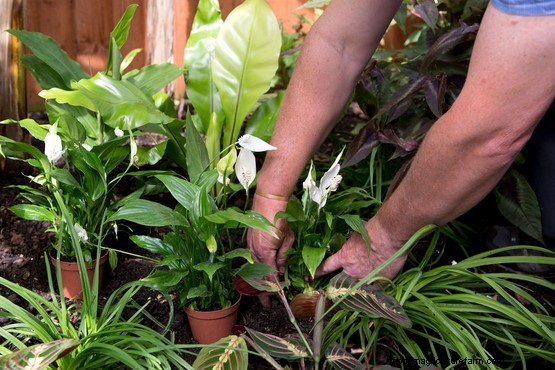
Bright, indirect light is best for peace lilies, ideally sheltered from cold draughts, so choose a spot away from doors and fire places. peace lilies are used to a tropical environment so a humid room, such as a bathroom, is best.
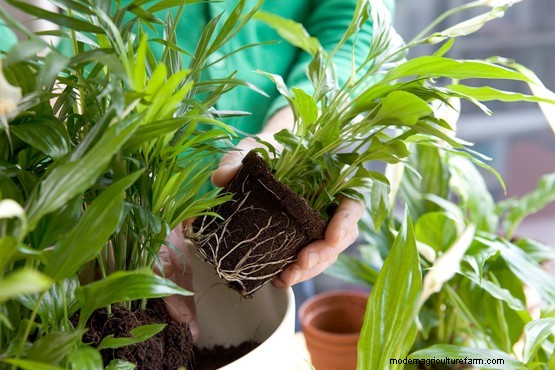
Choose a pot no more than a third larger than the root ball. Fill the pot two-thirds with peat-free multi-purpose or house plant compost, and then plant your peace lily, filling around the rootball with more compost. Water well and allow to drain.
Water your peace lily regularly, ideally so the compost never completely dried out but is also not waterlogged. As a general rule, wait until the top few centimetres of compost have dried out before watering again. If you don’t water them often enough you’ll soon be able to tell – peace lilies wilt when dehydrated. Simply water again and keep up your watering regime.
In spring and summer, feed your peace lily fortnightly with a liquid plant food, following the instructions on the back of the bottle.
Repot your peace lily into a slightly larger pot, with fresh compost, every few years. Peace lilies actually do well when their roots are a bit restricted, but recurrent wilting, despite regular watering, is a sign that the plant has outgrown its pot.


