Welcome to Modern Agriculture!

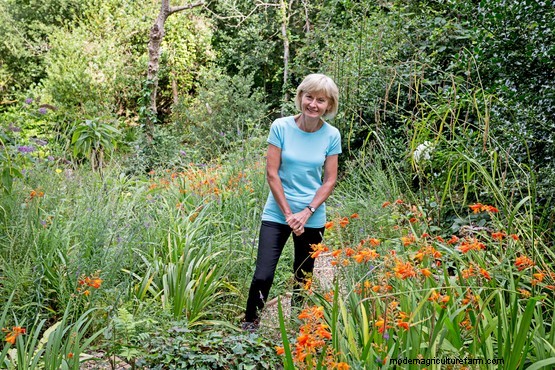
When Pam Woodall moved into her Dorset house, the garden was an unloved, overgrown mess and crying out for a bit of TLC. But after years of living in large cities like London and Hong Kong, where outdoor space is at such a premium, Pam jumped at the challenge of transforming the space into her dream garden. A few months later, it was completely unrecognisable.
By splitting the third-acre garden into two halves, she has created somewhere that works for her, but also the insects, amphibians and mammals who love to visit.
The upper, more traditional part, is densely planted with exotics and dominated by a large rockery with agaves, aloes, yuccas and acers. Whereas the lower half, which is on a steep slope, dropping eight metres from top to bottom, has been designed with wildlife in mind.
The upper garden was neat but rather boring, with few flowers, a rather ugly concrete Koi carp fish tank, and stark, bare fences. The lower half, which is partly woodland, was an impenetrable jungle of brambles, rhododendrons, fallen trees, old furniture and polystyrene rubbish. We bought the house without knowing what was down there because it was impossible to get through the jungle.
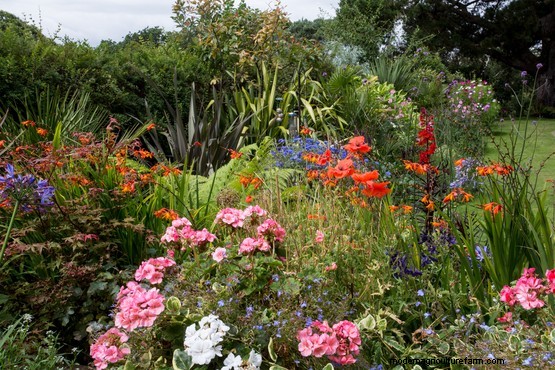
In the upper garden, a boring rectangular lawn has been replaced by wavy borders, planted with colourful flowers and exotics, such as palms, bananas, cordylines, tree ferns and echiums. It looks lush and interesting all year round thanks to lots of evergreen architectural plants. The concrete Koi carp tank has been replaced by an attractive pond with a gentle trickling waterfall.
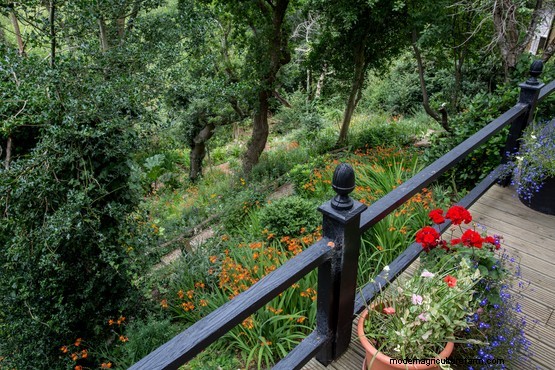
However, the biggest transformation has been in the lower half, which has been turned into a beautiful wildlife garden. I have slowly cleared the mess, while preserving the natural wildness. The design takes advantage of the steep slope to offer stunning vistas from a decking at the top, which also allows wildlife to be observed undisturbed. Down below, pine-needle paths now meander around four ponds and a bog garden. Contrasting leaf textures such as gunnera, large ferns and flag iris have been planted to provide architectural interest.
I have also created a huge range of wildlife habitats: rotting tree trunks are planted with ferns; my ‘nectar café’ is a riot of colour in summer; and I am particularly proud of my homemade ‘bug alpine chalet’ made entirely from garden materials.
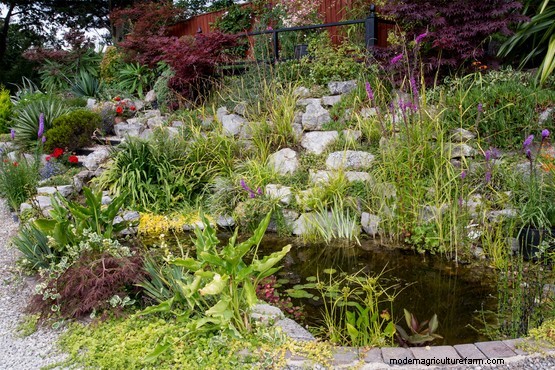
There have been so many challenges, it’s impossible to narrow it down to one. The bottom of the garden is very boggy and originally impassable without getting wet, so I dug four natural unlined ponds, both to drain water and to attract frogs, newts, dragonflies, etc. I then built raised paths using the abundance of fallen branches, twigs and pine needles. This not only allows access through the bog, but also makes use of garden waste.
Another challenge is that I have been a little too successful in attracting wildlife! Badgers dig up the lawn in the upper garden and deer munch my plants. It’s frustrating, but the garden is meant to be for them not just for me. I now favour deer-resistant plants and I put netting over the lawn in winter to deter badgers.
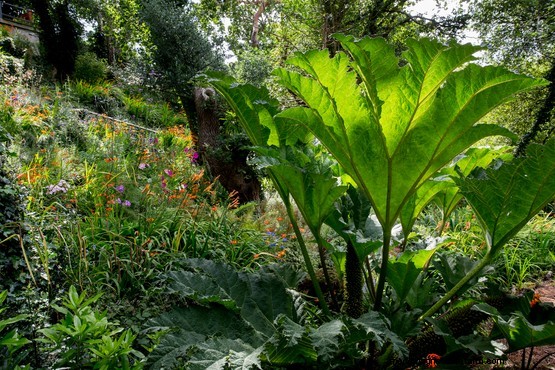
Early on I planted lots of different types of ferns, which have since grown massively and spread widely thanks to the perfect damp conditions. Together with the large gunnera they create a sensation of a lush jungle. On the upper slopes of the wildlife garden honesty, foxgloves, evening primroses and the majestic blue echium freely self-seed.
My biggest success is the wealth of wildlife in my garden. I have two motion-activated cameras and it is wonderful to watch the badgers and deer visiting at night. All sorts of birds nest in the trees (woodpeckers are my favourite) and a pair of mallard ducks have recently moved into my ponds.
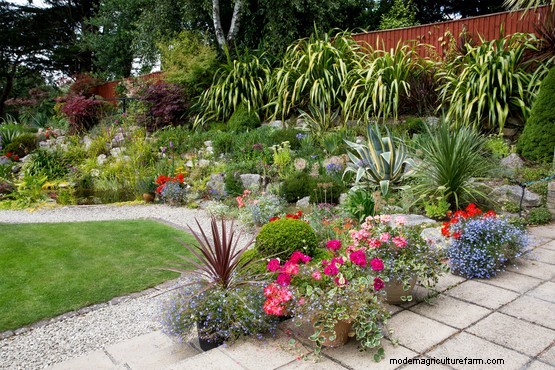
I love the tropical look of the upper garden. It’s wonderful to sit out there in the evening, sipping a glass of wine. At the same time, I love sharing my lower garden with all the wildlife. All my working life I lived in small flats and only now that I’m retired have I discovered the pleasures of a larger garden. It has been hard physical work but I find it so relaxing. I’ve created a beautiful haven for wildlife as well as for humans. It has real wow factor.
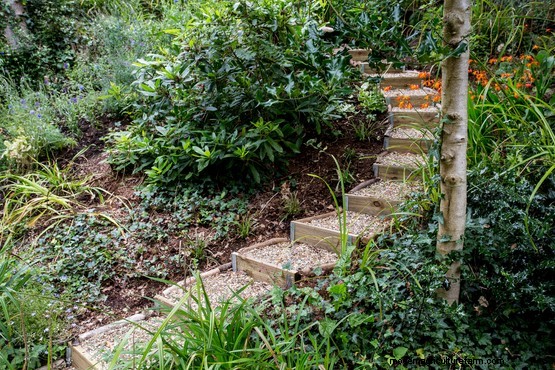
My garden is always changing. It is an ongoing project, still evolving. Working down in the lower garden among the wildlife (and often getting very muddy) is the fun of it. Since winning the BBC Gardeners’ World Magazine ‘Wildlife Garden of the Year’ in 2016, I have made lots of improvements, such as enlarging the ponds, building natural woven fences from fallen branches and introducing new shade-loving plants, such as angelica and Aruncus (goat’s beard). The garden now looks even more beautiful.
I’ve also built a fence to stop Derek the deer munching everything in the upper garden!