Welcome to Modern Agriculture!

Potatoes are easy to grow in bags or containers if you don’t have space in the ground or if you have very alkaline soil.
You can also get crops extra early, or late, in the year by putting the container in a sheltered spot or greenhouse.
You can grow your spuds in purpose-made potato bags, made of woven plastic or polythene; large deep pots, or even an old compost bag. When growing in containers, chitting potatoes will get them growing faster, but isn’t vital.
Here’s how to get your best-ever crop of potatoes in a bag or container.
Start planting under cover in February. Plant where you want the bag or container to be, so that you don’t have to move it when it is full and heavy. Site where excess water can drain away. Fill to about one third with potting compost.

Mix in some granular fertiliser for big crops. Position the seed potatoes around around 25cm apart: the smallest bags will only need one potato each.
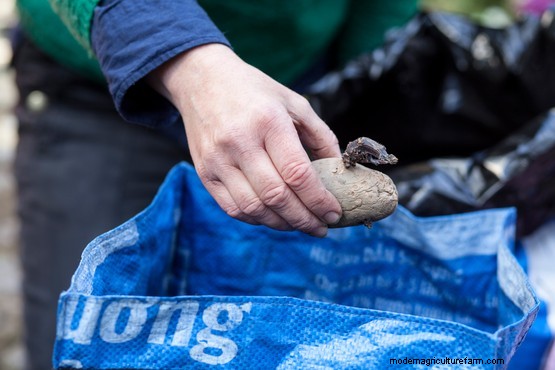
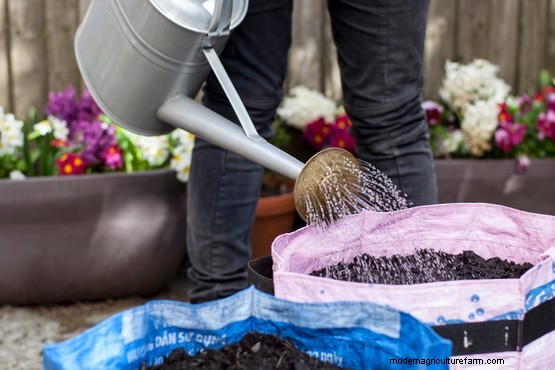
Top up with compost and start by watering very sparingly. Increase according to weather, and amount of growth, to keep evenly moist. Water directly onto the compost, keeping emerging leaves dry.
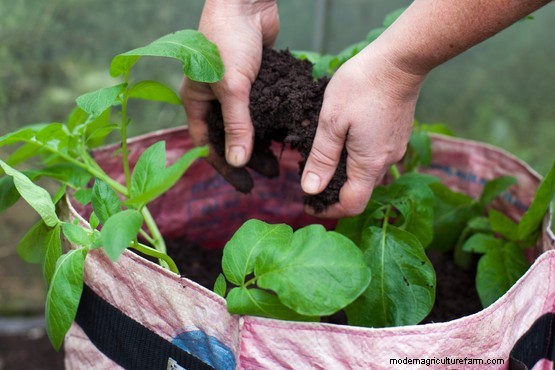
Either completely fill the container with compost when planting, or top up with compost as the plants grow, until the bag is full. If frost threatens, cover plants overnight with fleece or move to a sheltered spot.
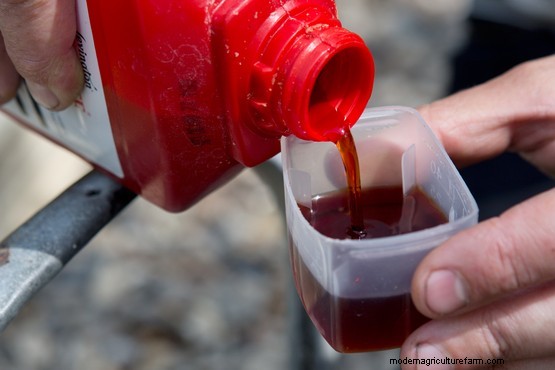
Feeding really boosts crop quantity and quality. Either add granular potato fertiliser or apply a high-potash liquid feed, such as tomato fertiliser, up to 1-2 times a week.
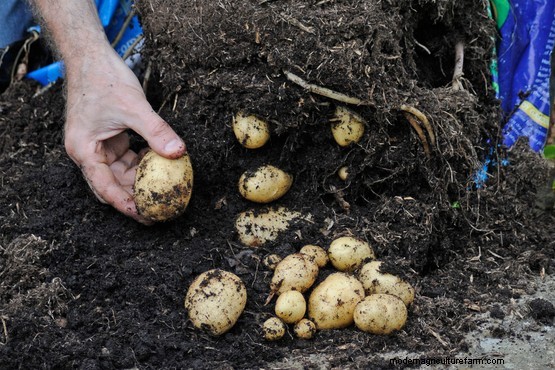
The first tubers should be ready when the flowers start to open. Check size by gently scraping away the compost, then harvest as need to eat straight away.