
Welcome to Modern Agriculture!

Are you wondering how to hang a tree swing? Then you've come to the right place. They're a classic way to keep children happily occupied, but only if they're installed correctly and safely.
Not only are tree swings a great backyard feature if you're after garden activities for kids, but they're also relatively inexpensive too – often costing much less than swing sets suspended from frames. Visually, they're also less obvious in a garden, blending in more cohesively with the surrounding natural features.
Of course, the delight of gently swaying beneath a canopy of leaves isn't solely reserved for little ones, either. As the team at Solvej Swings (opens in new tab) say, 'Swings are wonderful. They provide stimulation and relaxation and the pop of fun in everyday life we all crave.'
You'll be pleased to know that putting one up isn't too tricky, as long as you've got the know-how. To help you on your way, we've brought together tons of advice on how to hang a tree swing below, along with plenty of top tips from the experts.
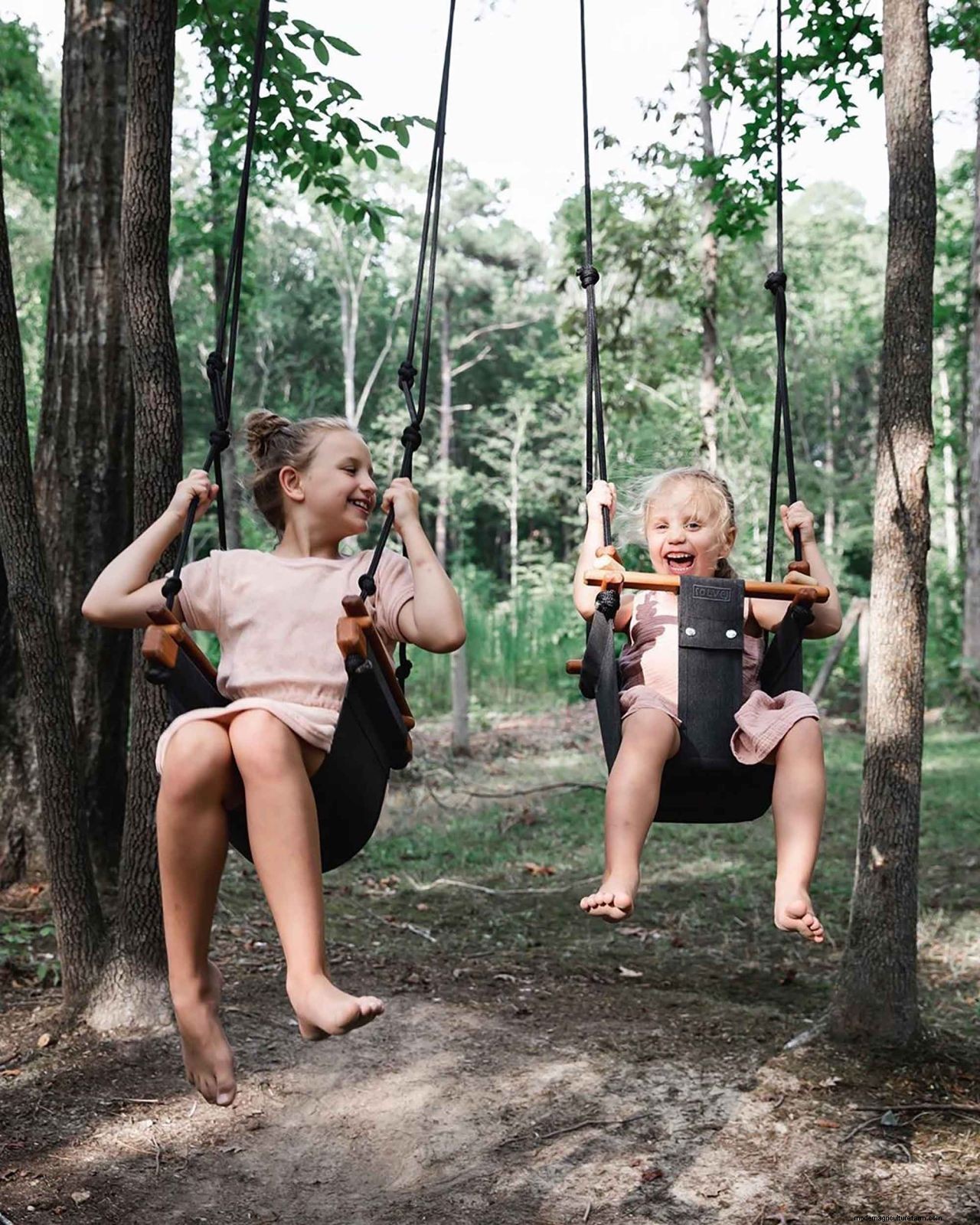
The experts from Solvej Swings share their advice on how to hang a tree swing:
If you're looking for more advice on how to design a child friendly garden, our dedicated guide is full of ideas.
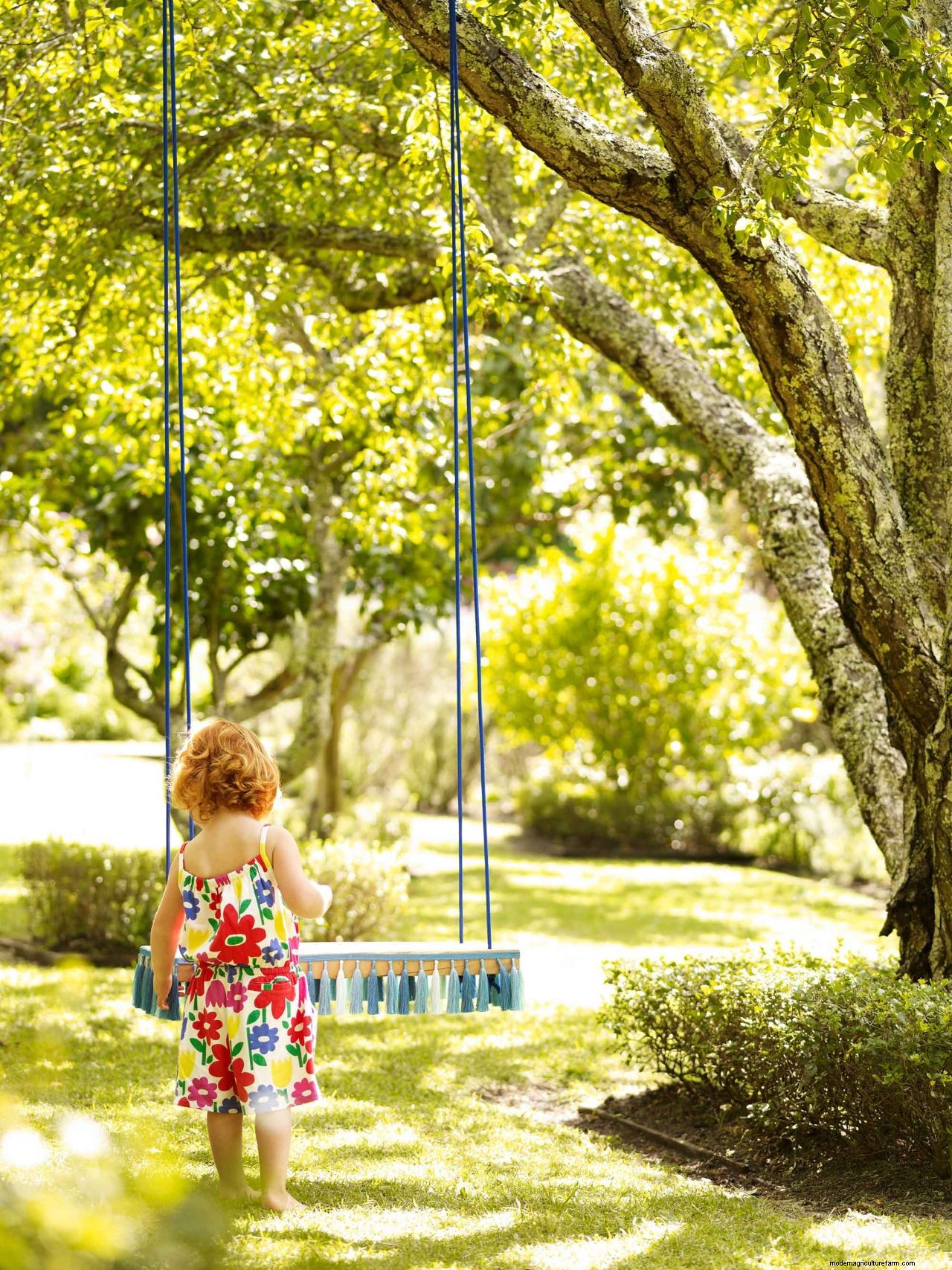
Sometimes, you may not have the luxury of a sturdy branch that's horizontal to the ground for hanging your swing from. If your swing is the kind that just requires a single rope (for instance, a vertical tire swing) then this won't be a problem. But, for normal swings, attaching them to an angled branch can make them crooked.
When learning how to hang a tree swing, bear in mind that 'it's always best to try and find a branch that's as level as possible,' as says Simon Dean of Chorley Oak on Etsy (opens in new tab), who creates handmade wooden swings. 'An angled branch will always mean uneven lengths of rope and the swing may track in an arc rather than straight.'
'If it's the only branch available then I'd recommend to hang the swing slightly further out from the trunk than normal to avoid collision,' he continues.
'The other problem with angled branches is slippage,' Simon says. If you've secured your swing by tying a rope around the branch, then the ropes will gradually try to wriggle their way down towards the trunk. 'This can be avoided one of two ways,' he adds. First, you can put an extra wrap of rope around the branch so it cinches down when in use (and still slackens when there's no load on it, allowing tree growth). Alternatively, you can fix the rope down to the top of the branch with a large 'U'-shaped nail. 'This goes over the rope, never through it,' he continues. 'It doesn't need to squash the rope, it's only there to prevent sideways movement.'

If you can't reach the branch easily, then it's always best to get a professional to hang the swing for you, especially if there's going to be drilling involved.
'It's more about safety concern than technique,' says Simon Dean of Chorley Oak. If you're happy to install it yourself, remember basic ladder safety. For instance, don't climb without somebody footing for you, and stabilize the ladder against the branch before you start working (ensuring the ladder is well-positioned, to avoid over-reaching or things getting in the way). Simon also suggests to have the swing rested at the desired height before you haul the ropes up, such as on a chair or stack of books. This avoids the temptation for whoever is helping you to leave the foot of the ladder to hold the swing seat up.
If you want to secure the swing simply by tying the rope directly around the branch, then you may not need a ladder. Bigyardfun.com (opens in new tab) have a trick you can use:

Swings make a lovely addition to family garden ideas, or alongside one of the best climbing frames. However, the team at Solvej Swings explain the need to consider strength and space when installing one.
In terms of strength, 'Whatever the swing hangs from needs to be structurally strong – strong enough to hold not only the weight of the swing and its occupant downwards, but also the multi-directional forces of swinging.' This means picking a branch that is healthy – free of disease and rot – and thick enough (generally around eight inches).
'There also needs to be enough space around the swing for it to swing without hitting anything around or above it,' adds Solvej Swings.
According to the experts at The Oak & Rope Company (opens in new tab), you'll need to hang your tree swing at least three to five feet away from the trunk of the tree. They also suggest to install the swing a little higher (around 8–12 inches) than you might think – ropes tend to stretch a bit during the first use.
If your plot is lacking in trees but you'd still love to add a swing, then consider other options. With the appropriate hardware, your swing may also be hung from timber or concrete, says Solvej Swings. Popular choices include verandas, or why not introduce one to your pergola ideas?
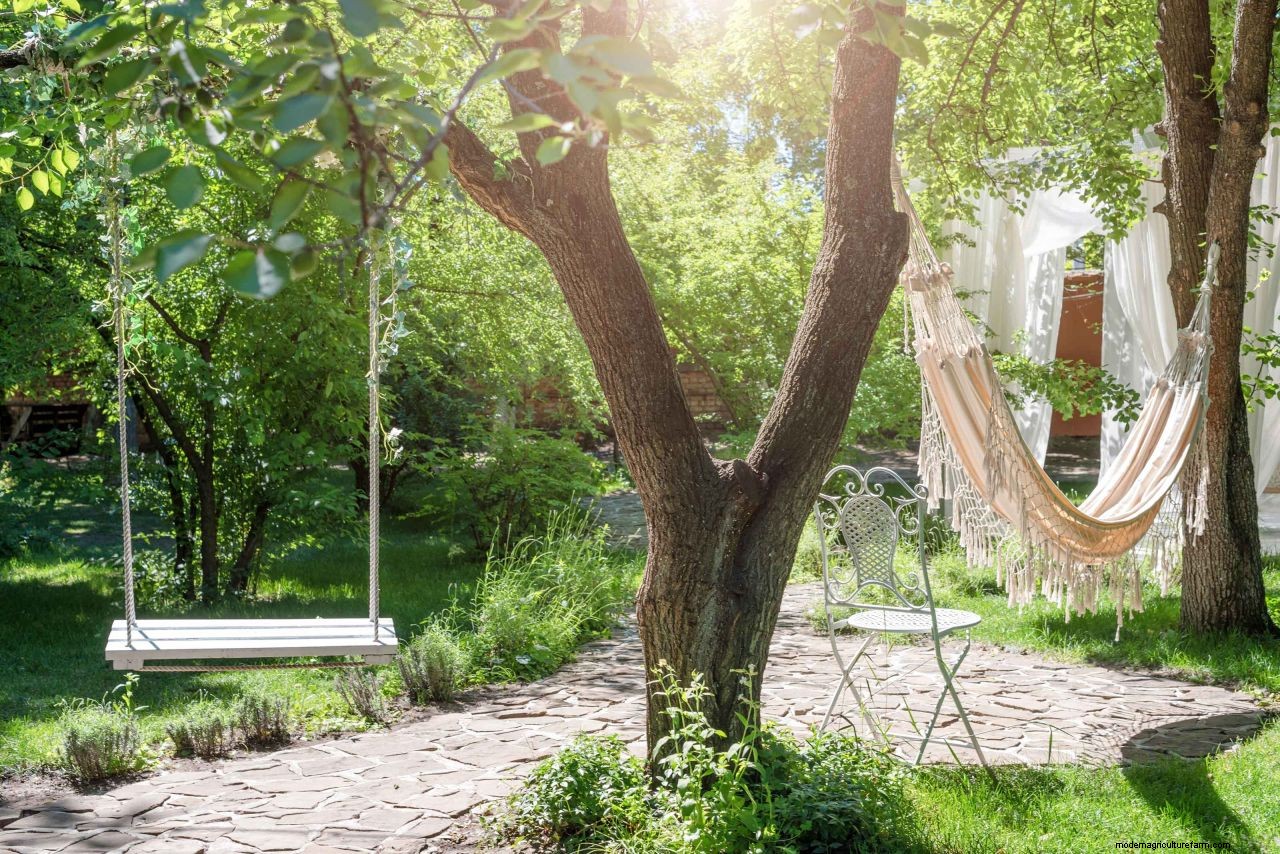
Ready to add a fun activity for the kids (and adults!) to your outside space? Our guide to garden tree swings has plenty of stylish buys, or shop today's best deals below.


