
Welcome to Modern Agriculture!

When learning how to plant flowers in pots, success relies upon following a few key guidelines. First, balancing the size of a container with the spread of the plants once fully grown is important. You also need to ensure that no single plant grows too big to overwhelm the others. Checking plant labels when making a selection will help as these will give you the height and spread the plant will grow to.
For good container gardening ideas you'll also need to select plants which favor similar growing conditions. As they will all be growing together in the same soil and sun conditions. Unless the plants require special mixtures, such as succulents who need soil with extra drainage properties, a multi purpose compost is often sufficient. You can add water retentive gel to help retain moisture in hot spells if you wish.
Whether you prefer a pretty mix of flowers to suit a cottage garden scheme or a more contemporary look for a modern patio, our step-by-step guides will show you how to plant flowers in pots and create beautiful arrangements you'll love.
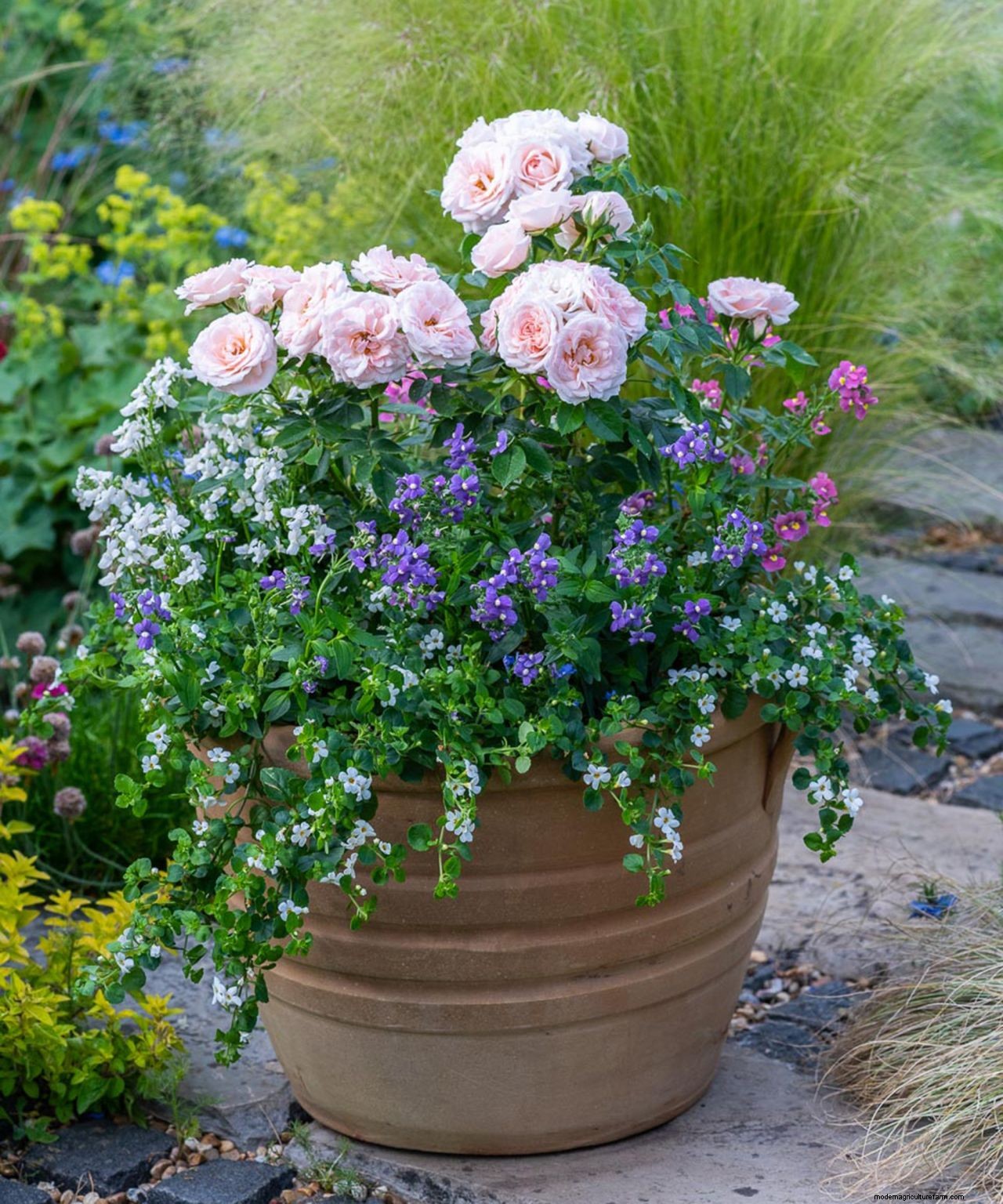
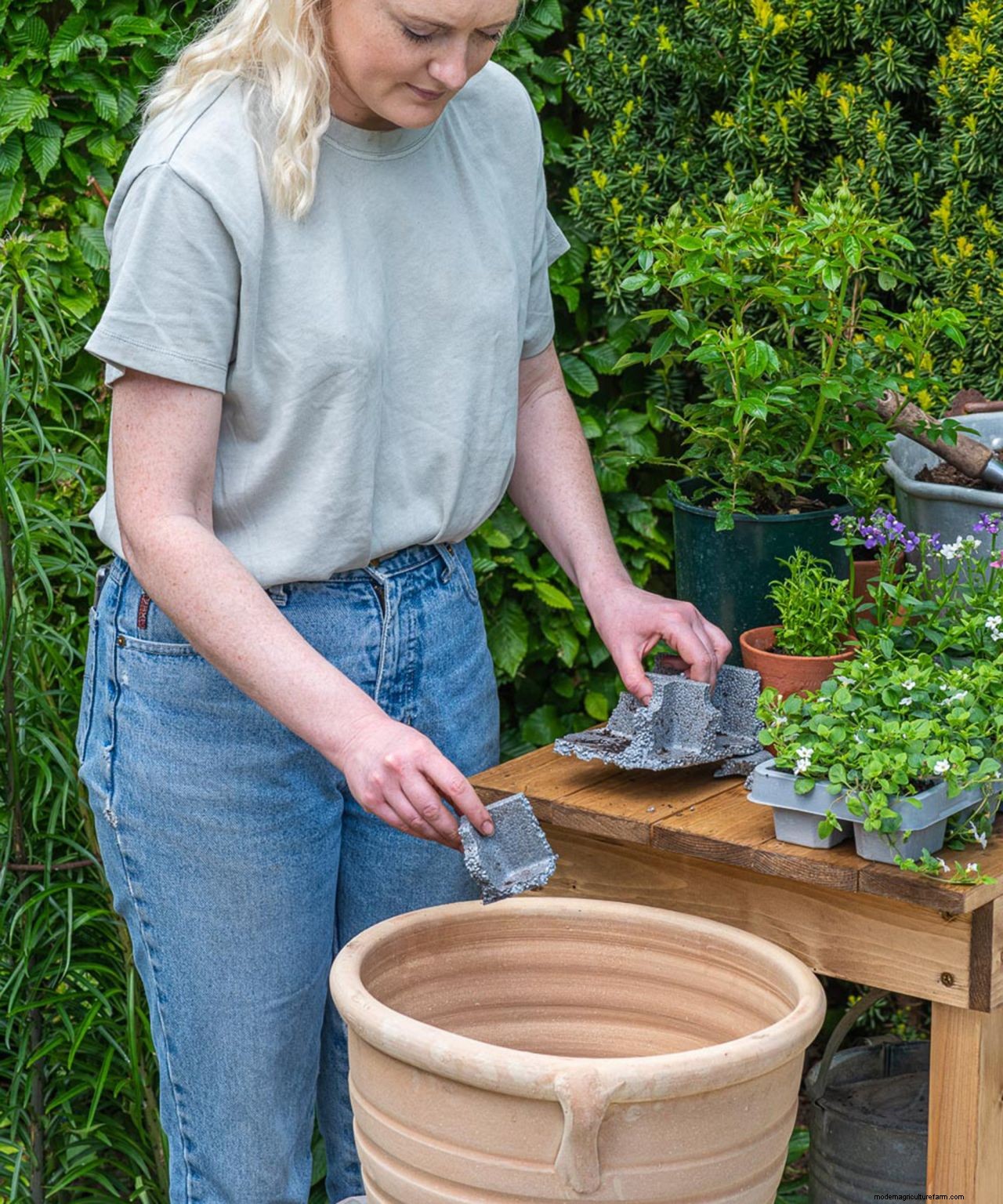
Choose a good-sized pot that’s big enough to take a rose and some smaller plants around the edge. We've gone for a traditional look with a terracotta pot, which would suit classic cottage garden ideas. Cover the bottom with some crocks for drainage - we’re using some broken-up polystyrene plug plant trays to line our pot.
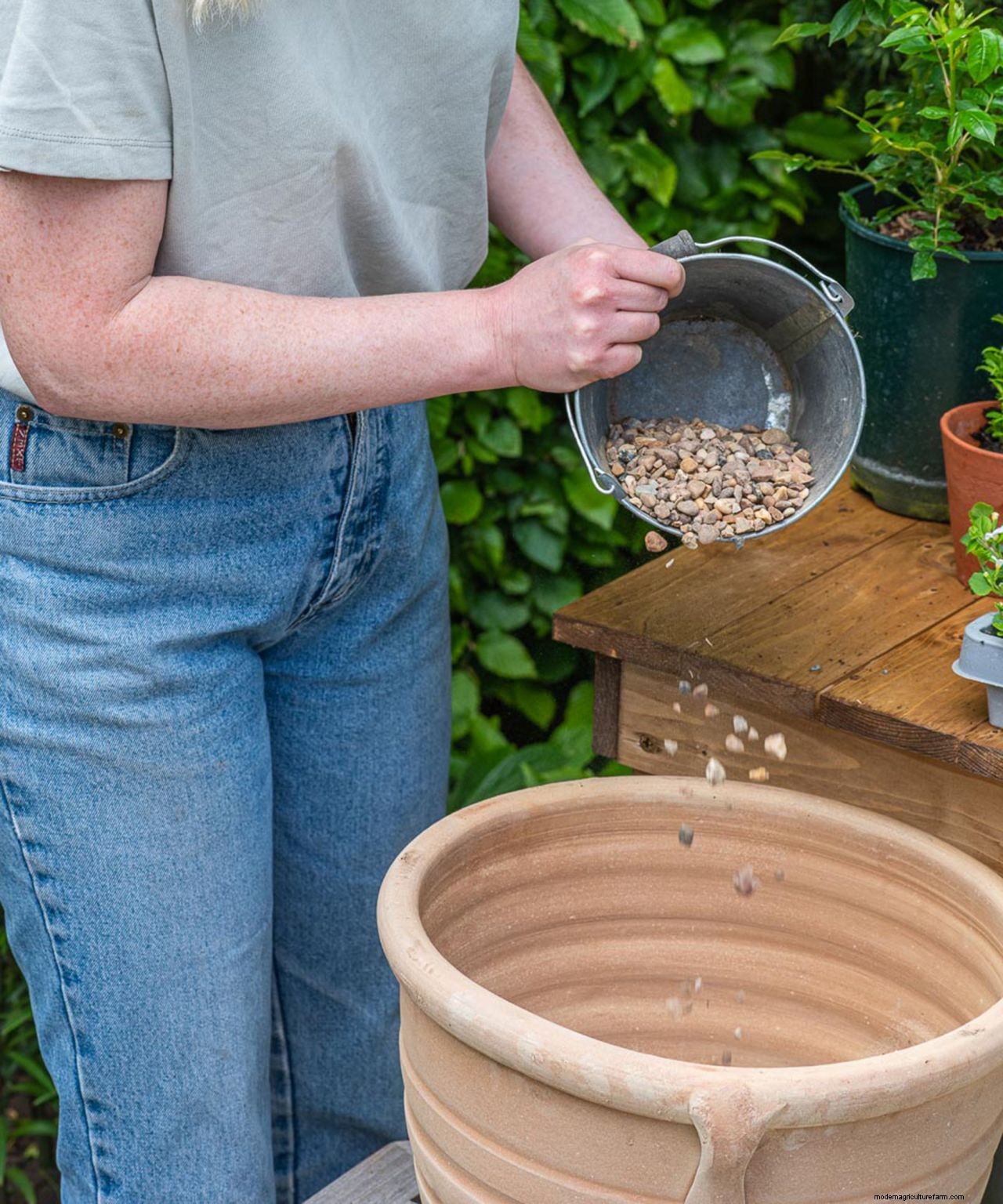
The plants we have chosen will thrive better in well-drained soil. The crocks will help drainage as well as a sprinkling a layer of gravel on top. Add enough to cover the base and some of the crocks.
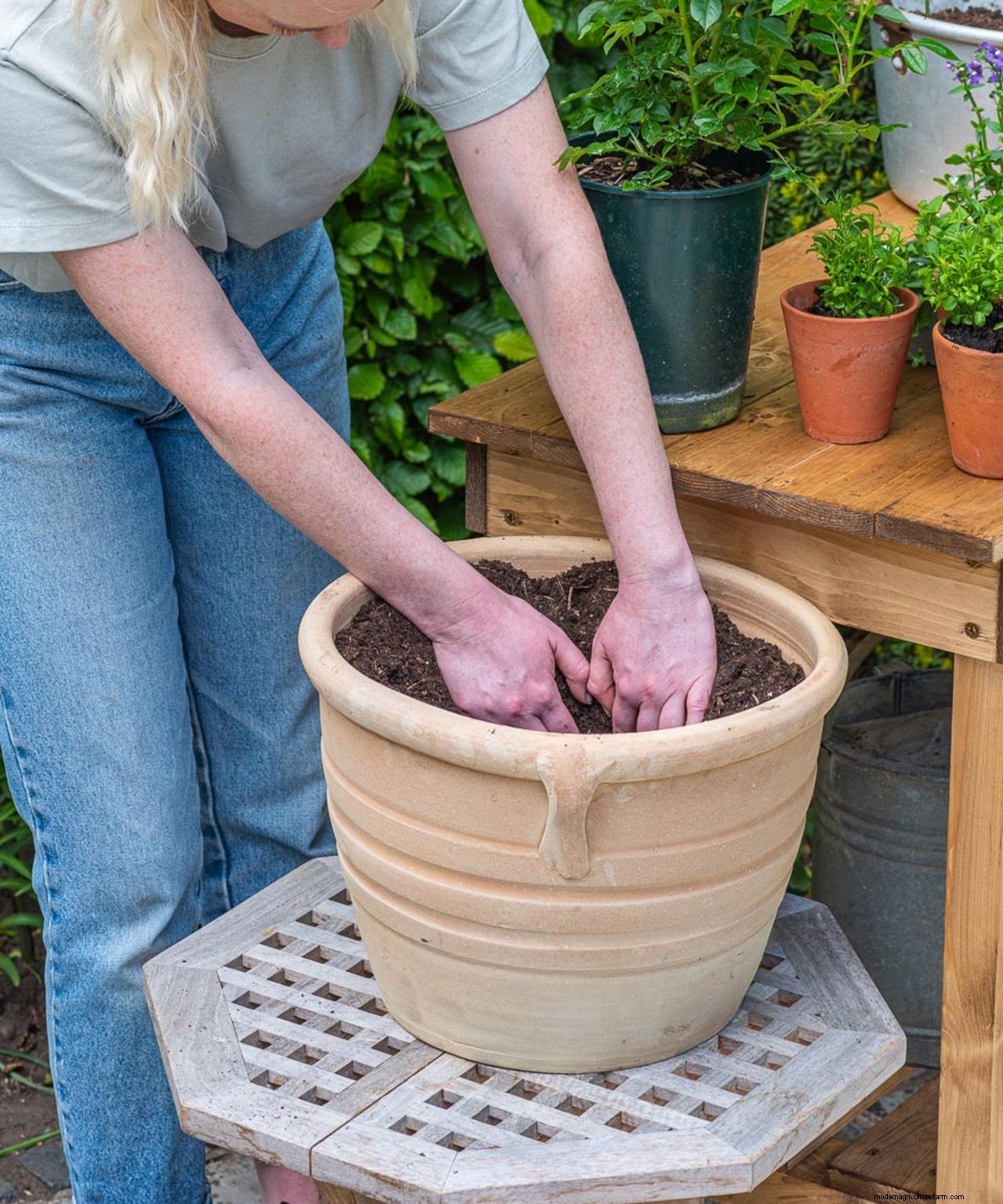
Next you need to fill the pot to around ¾ full with a good all-purpose peat-free compost. Then, using your hands, dig a hole in the centre of the pot, packing the soil firmly to the outside so that it stays in place. This will be where the central rose will be placed
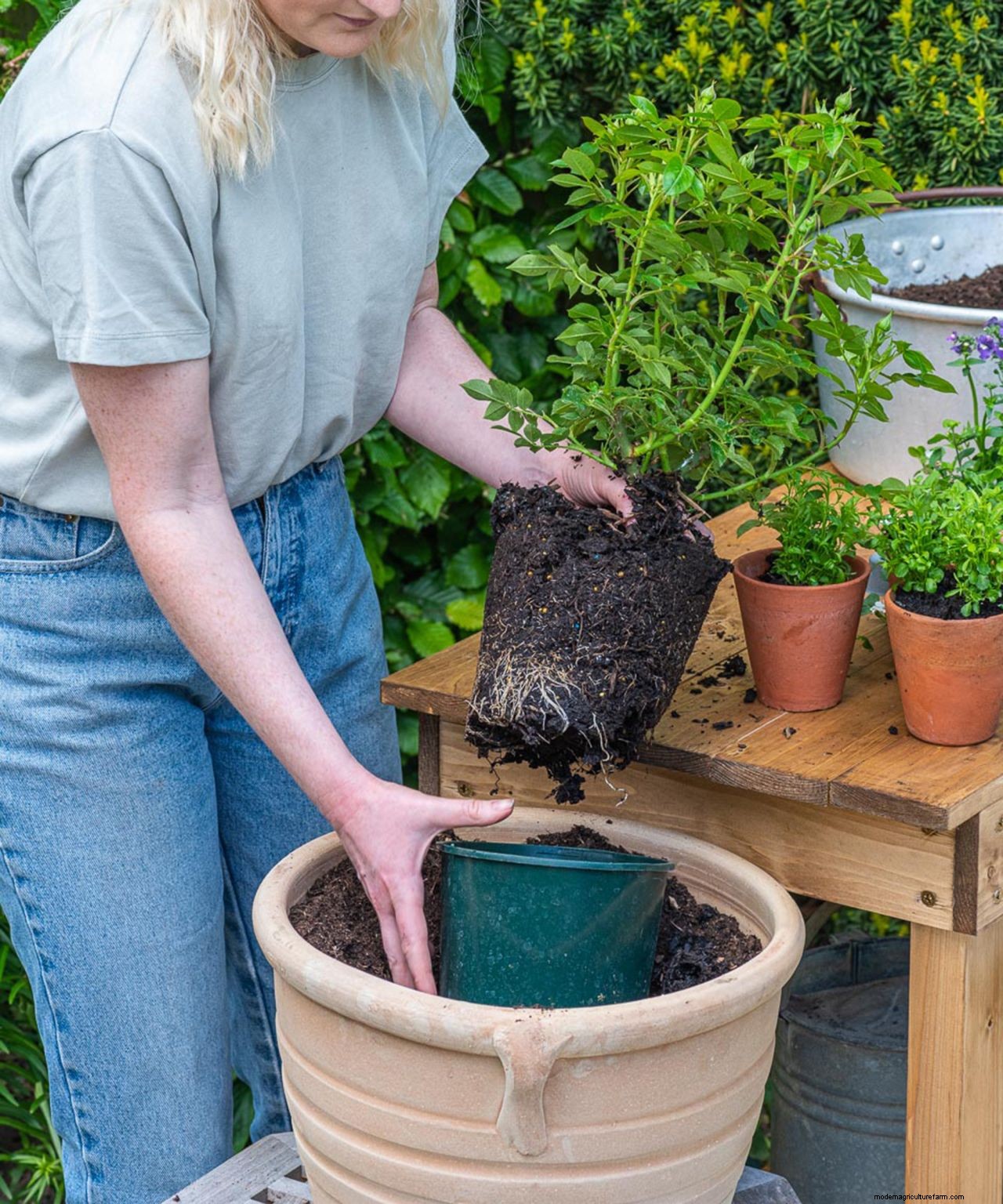
Check the hole is sufficiently deep for the patio rose. Then carefully inch out the patio rose from its pot, leaving just the pot in the hole. Now you can plant around it ensuring you leave enough space at the end. But without fear of being scratched by the rose's thorns! Build up and firm the soil around the pot, ready to plant annuals around the edge.
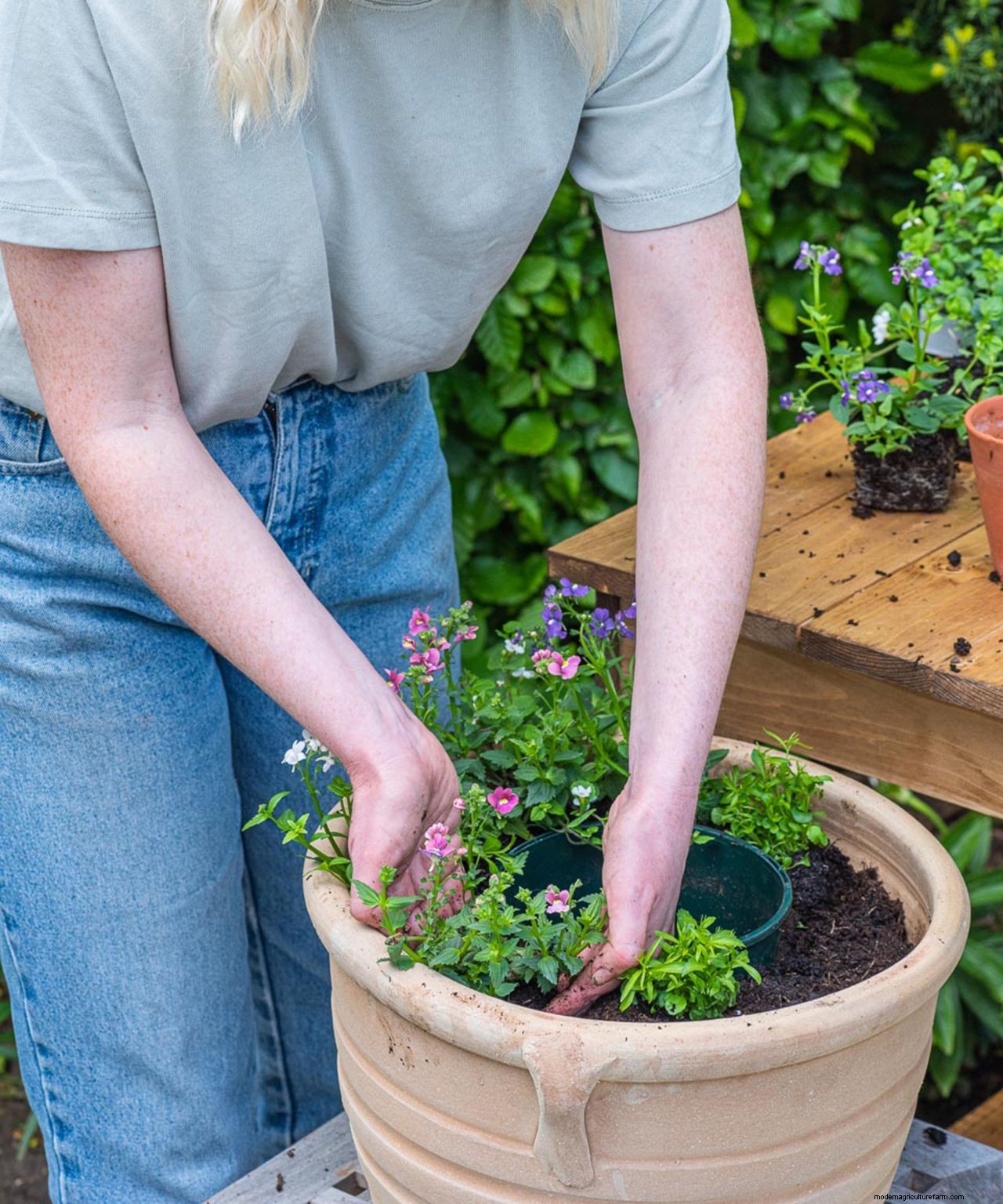
Plant lobelia tight around the sides of the pot. Space the nemesias evenly around the pot. Intersperse with white bacopa to tumble over the edges. Fill any remaining gaps with additional nemesias.
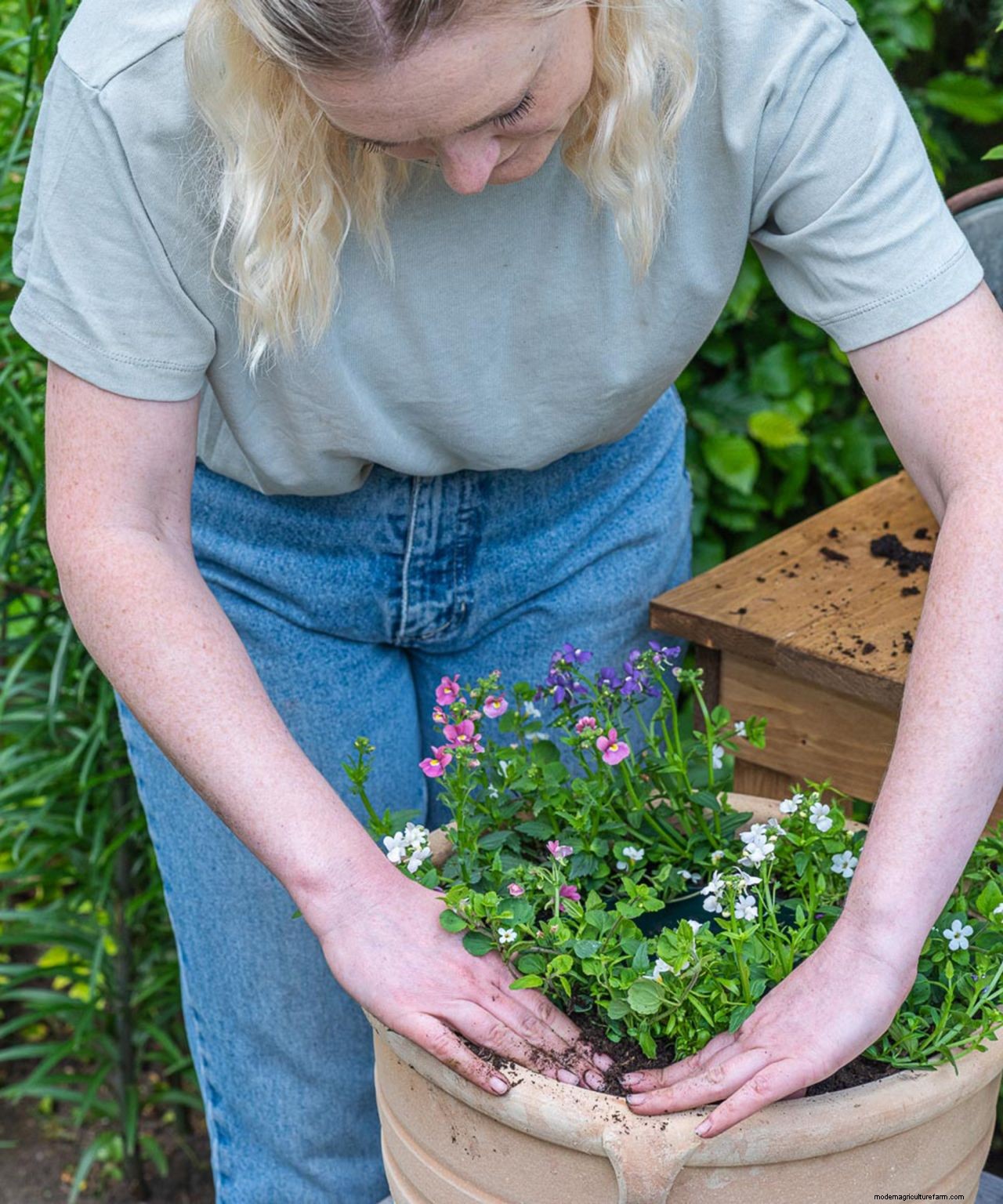
Pack extra compost around each plant, ensuring the rootball is thoroughly immersed in the soil. Firm down the compost around the plants. A tight fit is just fine. The plants around the edge will eventually grow and spill over the edge of the pot.
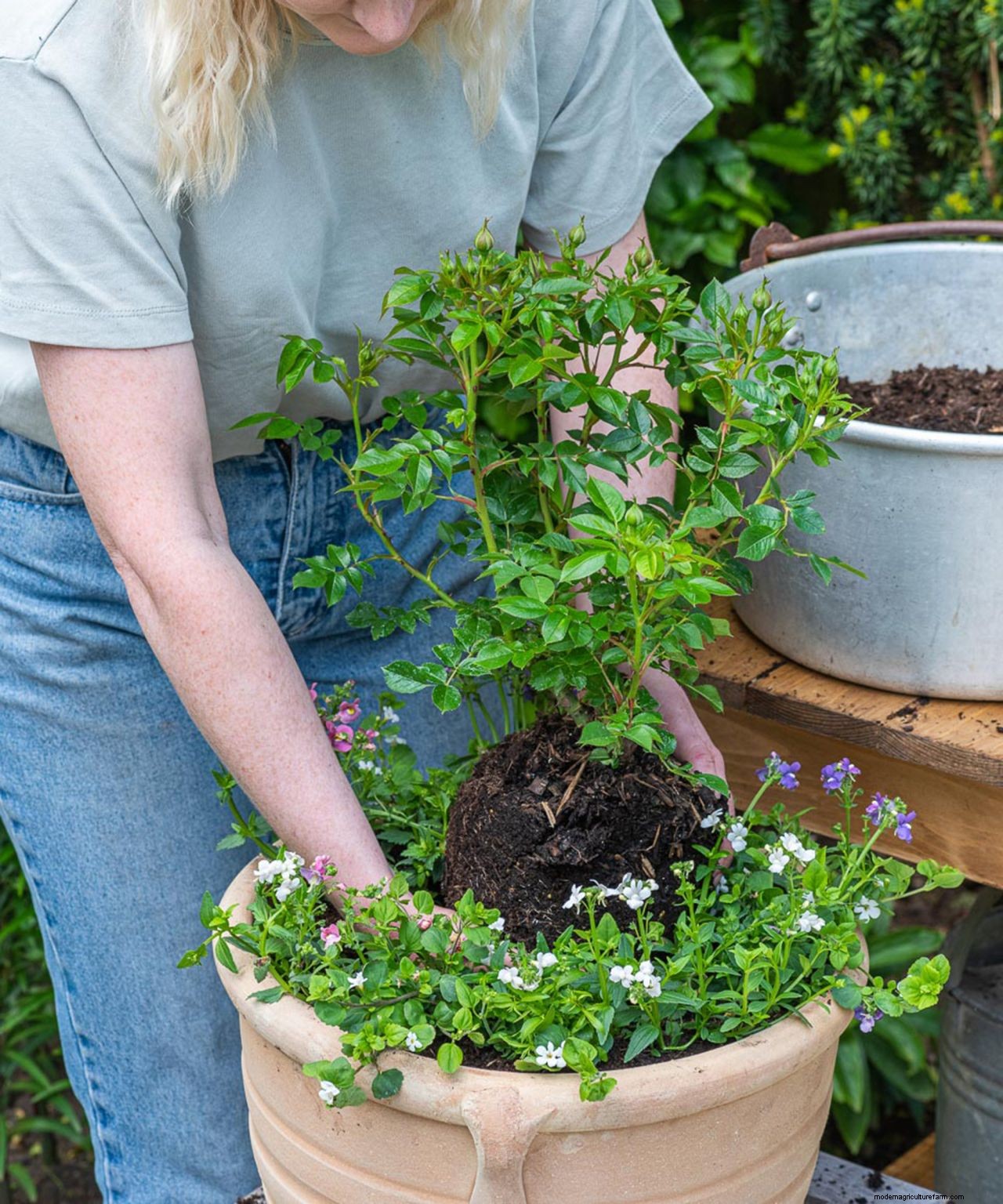
Next, remove the rose pot from the central hole. Taking care to ensure that the soil doesn't crumble. Lower the rose gently into position. Firm it into place and add a little more soil to ensure it’s properly planted in.
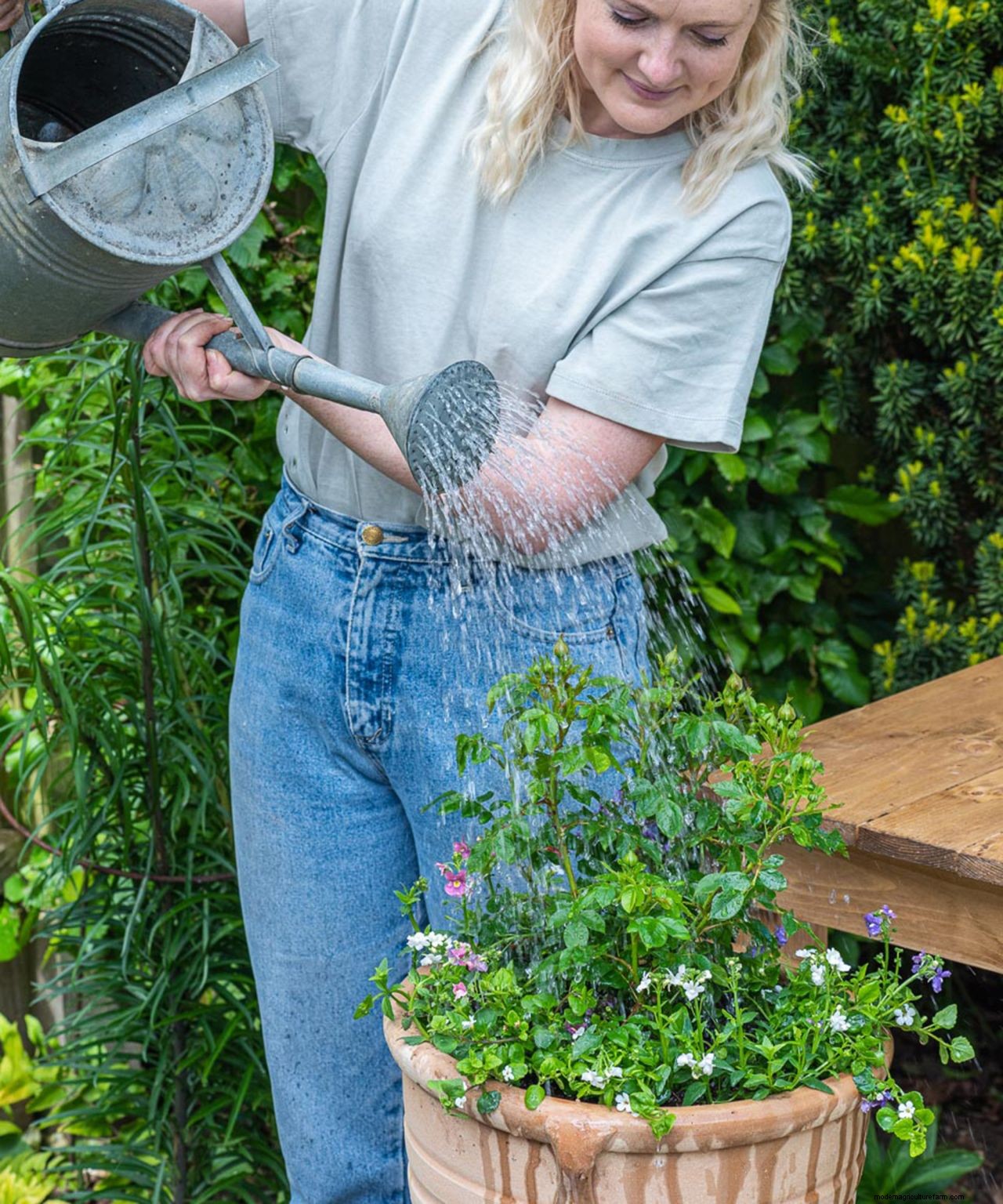
Once you are happy that all the plants are firmly in position, give your finished container a good soaking with the watering can using a rose head. When learning how to plant flowers in pots, it's essential to keep watering your container regularly and never allow the compost to dry out completely.
Keep deadheading throughout the season and some plants will give you a second flush of flowers. If any perennials you’ve used get too big, lift and divide them to grow your plant collection and prevent overcrowding. They could be planted in a separate pot, or you could find a permanent home for them in a well chosen spot in a border.
If you want to learn how to grow roses so you can add more stunning choices to your pots, there's plenty of tips in our expert guide.
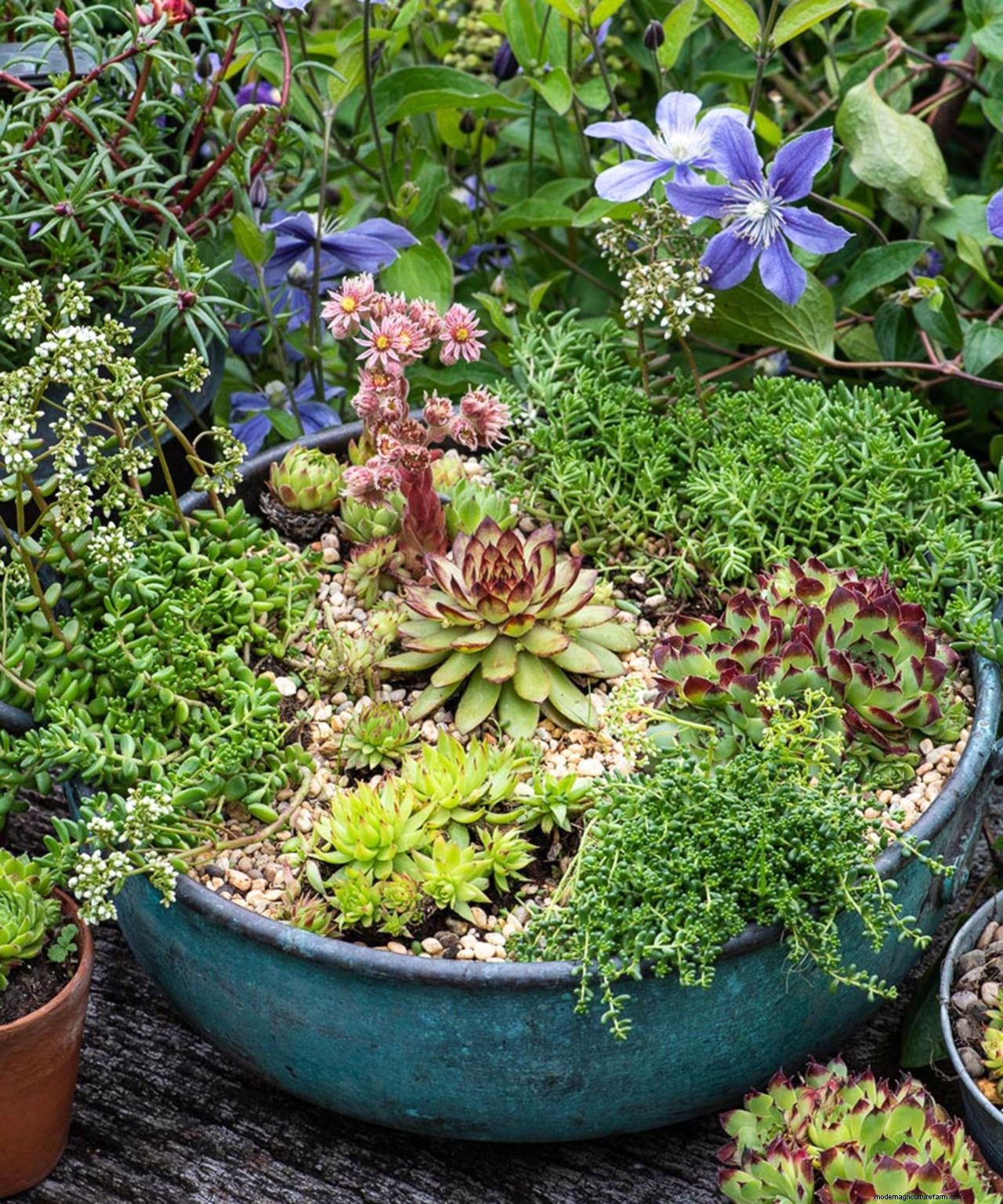
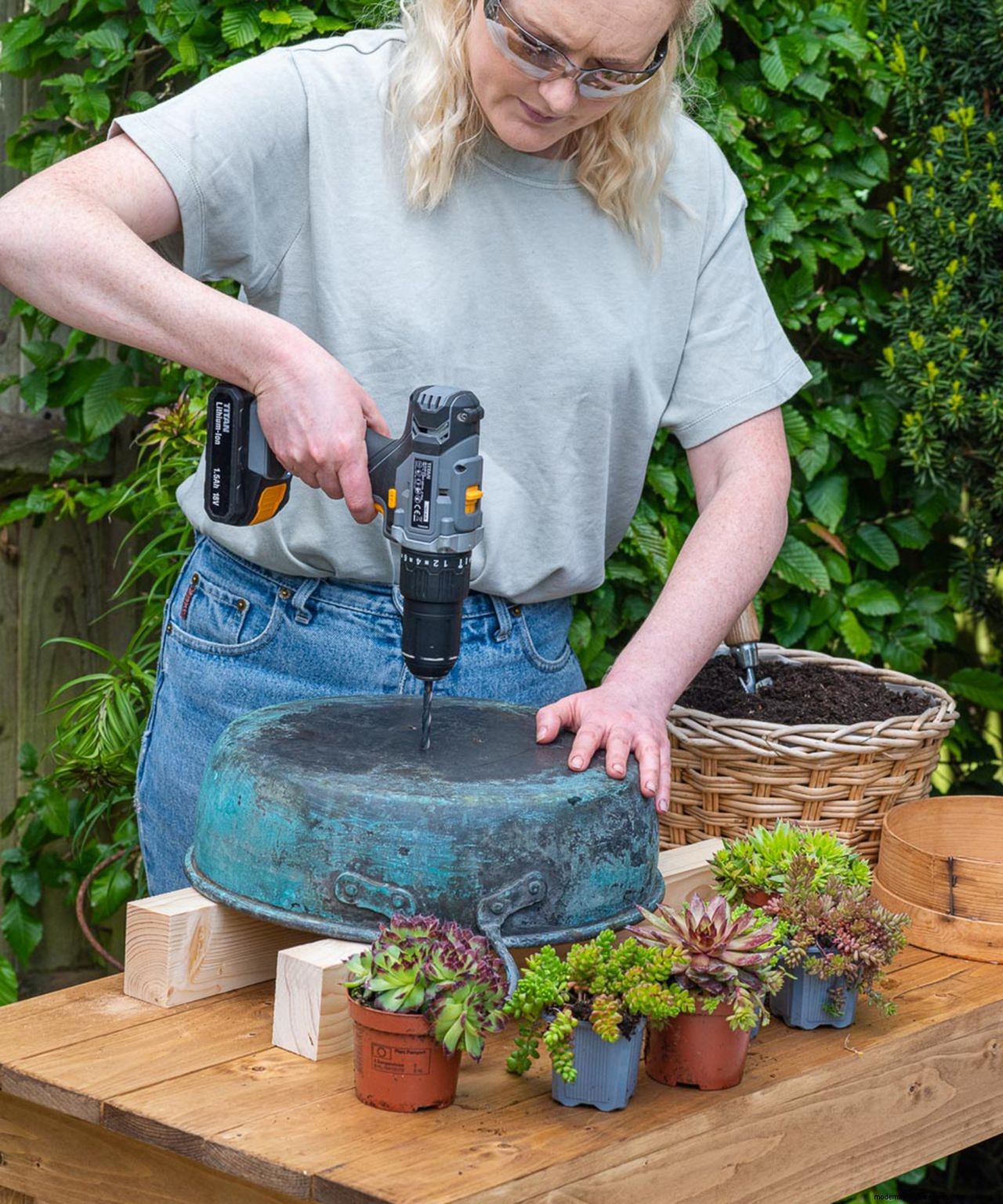
Place your copper bowl upside down on a steady surface. Be sure to wear safety glasses for this part of the project.
Drill drainage holes in the base of the copper bowl. These are essential when you're learning how to plant flowers in pots, but particularly with succulents which require good drainage.
If you don't have a copper bowl, you could use any large, shallow bowl to create a similar look with succulents. Keep it contemporary if you're planning to use this planter as a focal point in your modern garden ideas.
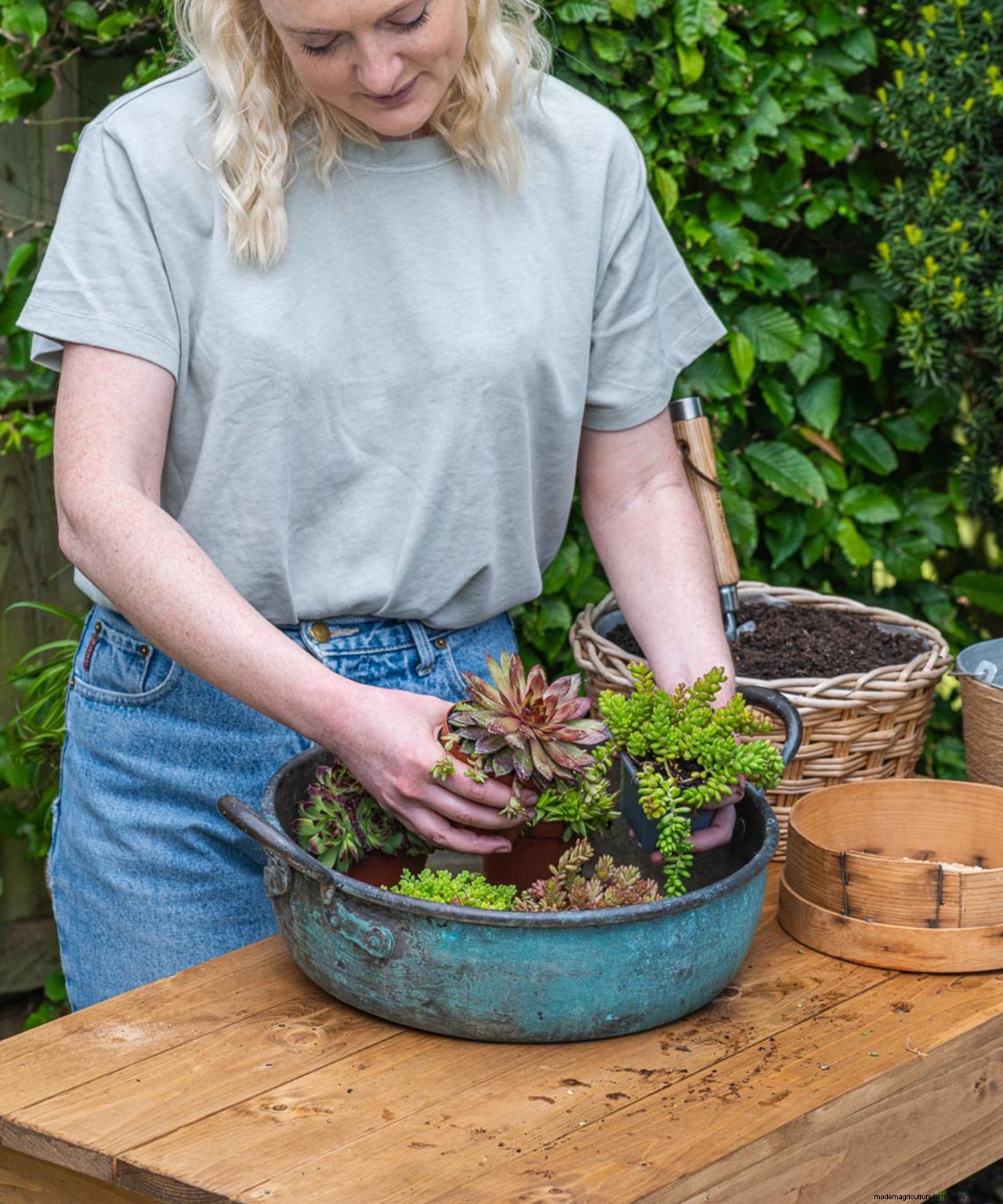
Before adding anything to the pot, keep the succulents in their plastic pots and arrange them in the bowl. This will ensure you can create your desired balance between the different shapes and shades of the leaves before you plant them.
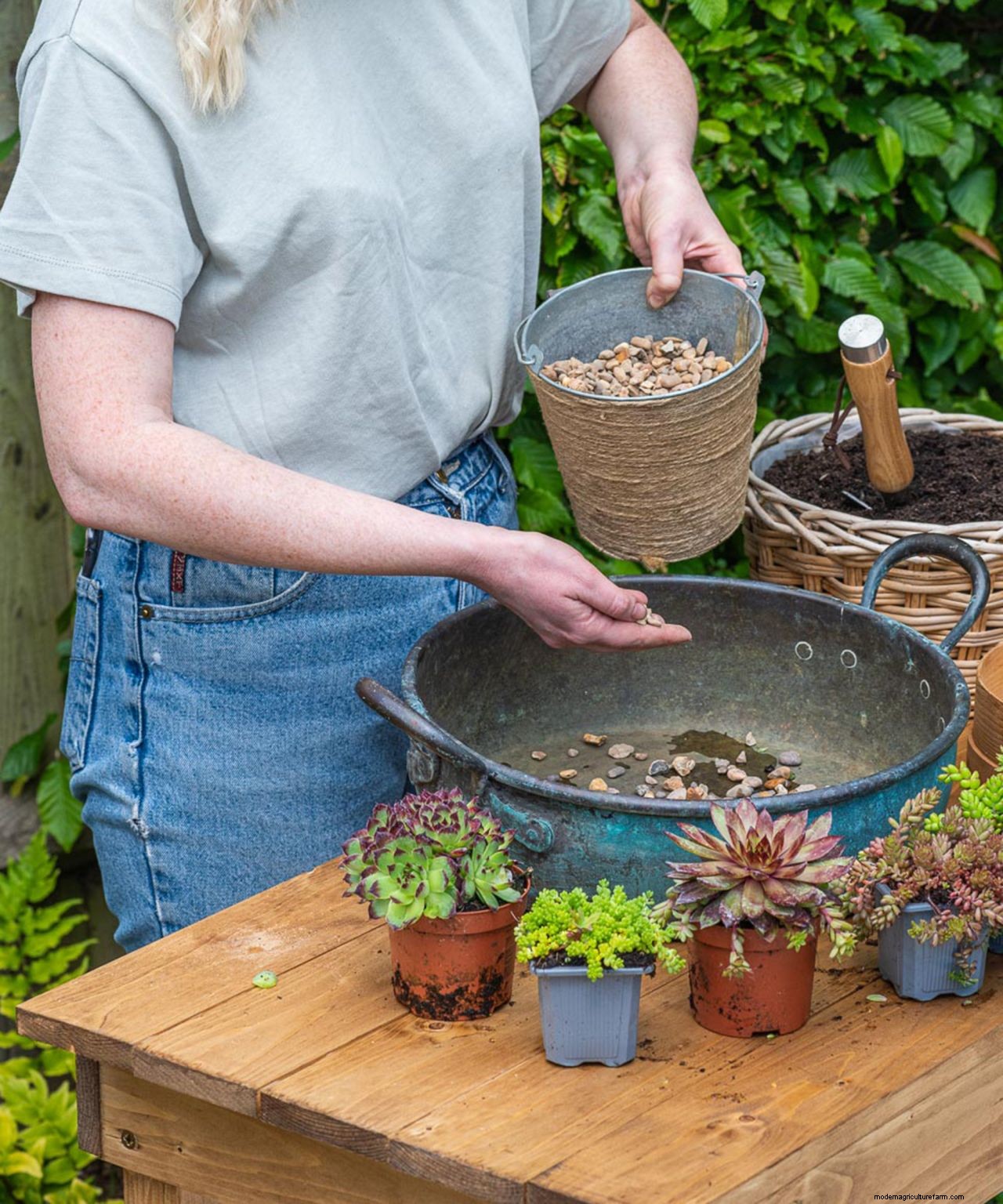
Next, you need to cover the drainage holes with a layer of gravel to prevent the compost leaking out. Next add compost specially formulated for how to grow succulents. Alternatively use your own mix which is a blend of compost and horticultural grit to a ratio of 6:1.
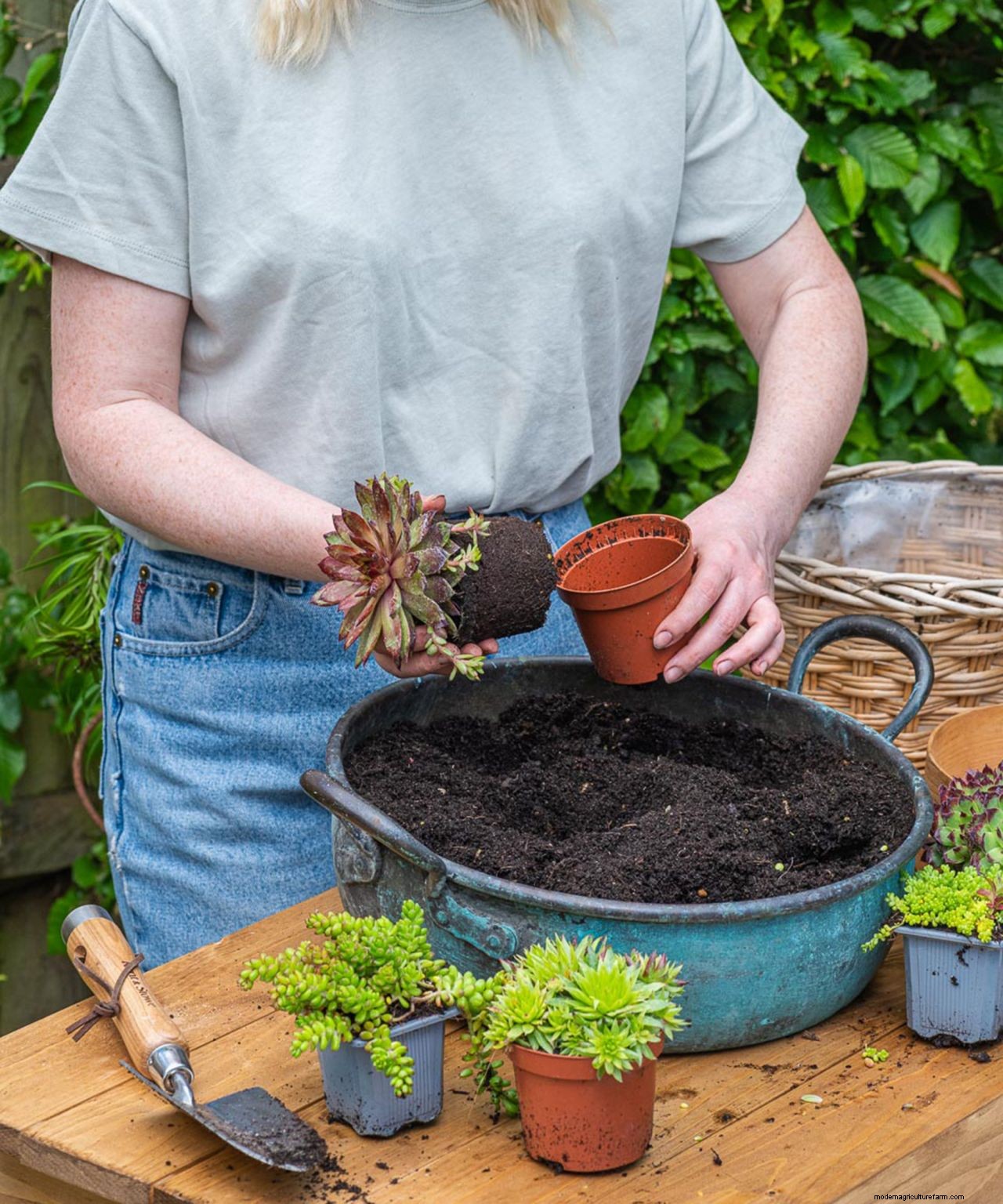
For the next stage of how to plant flowers in pots, replace each succulent in position, still in the plastic pot, and make a deep indent in the compost which forms the planting hole for each plant. Next, ease the succulents out of their pots one-by-one and place in their planting hole. Do this with care so as not to disturb the rootball.
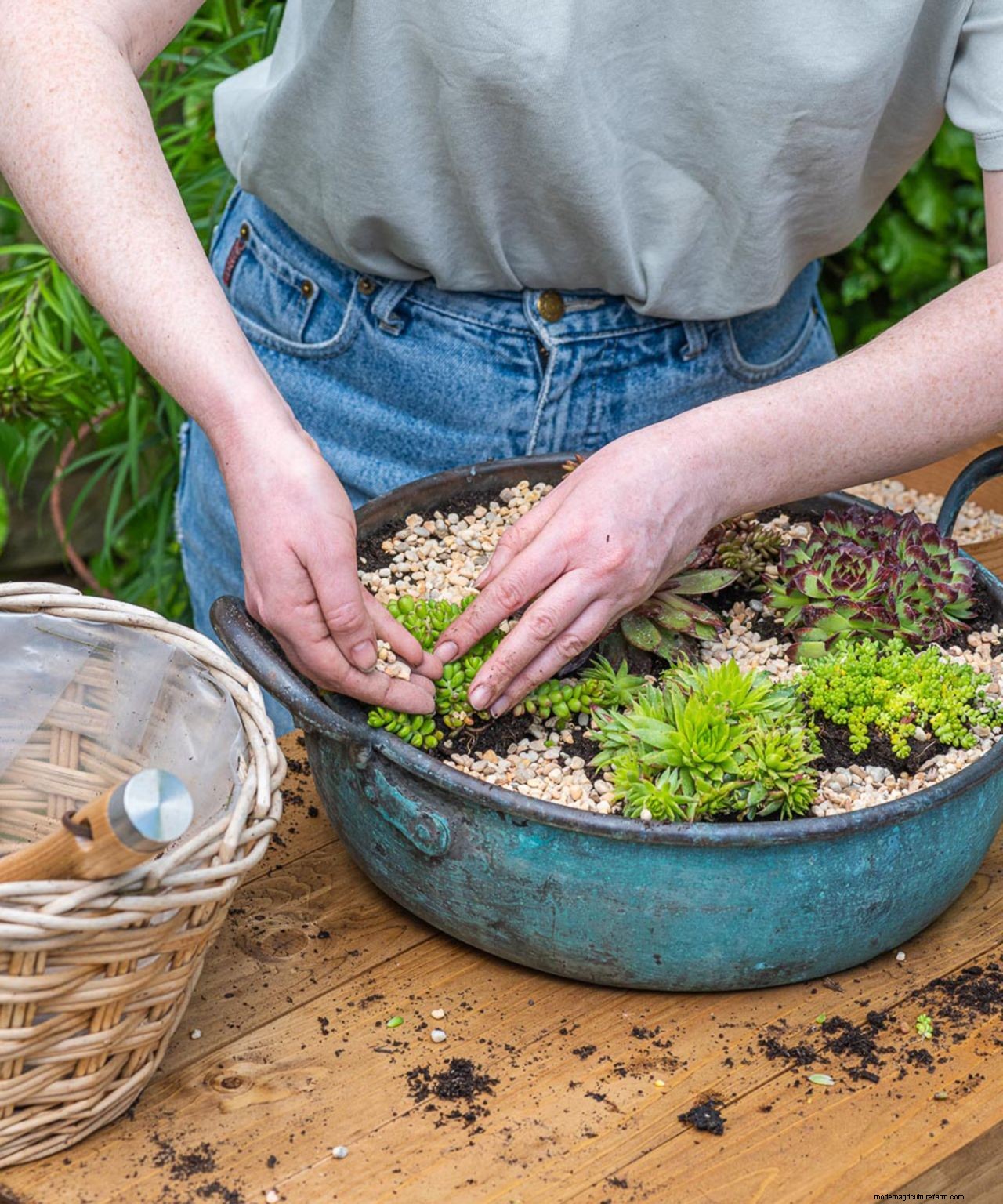
Firm the compost round each succulent, ensuring the soil does not cover the neck of the plant. Next sprinkle a mulch of fine grit on the surface of the compost. Ensure there’s a layer of grit beneath each succulent, building up around the neck of the plant. This prevents the leaves being in contact with damp soil which could cause them to rot.
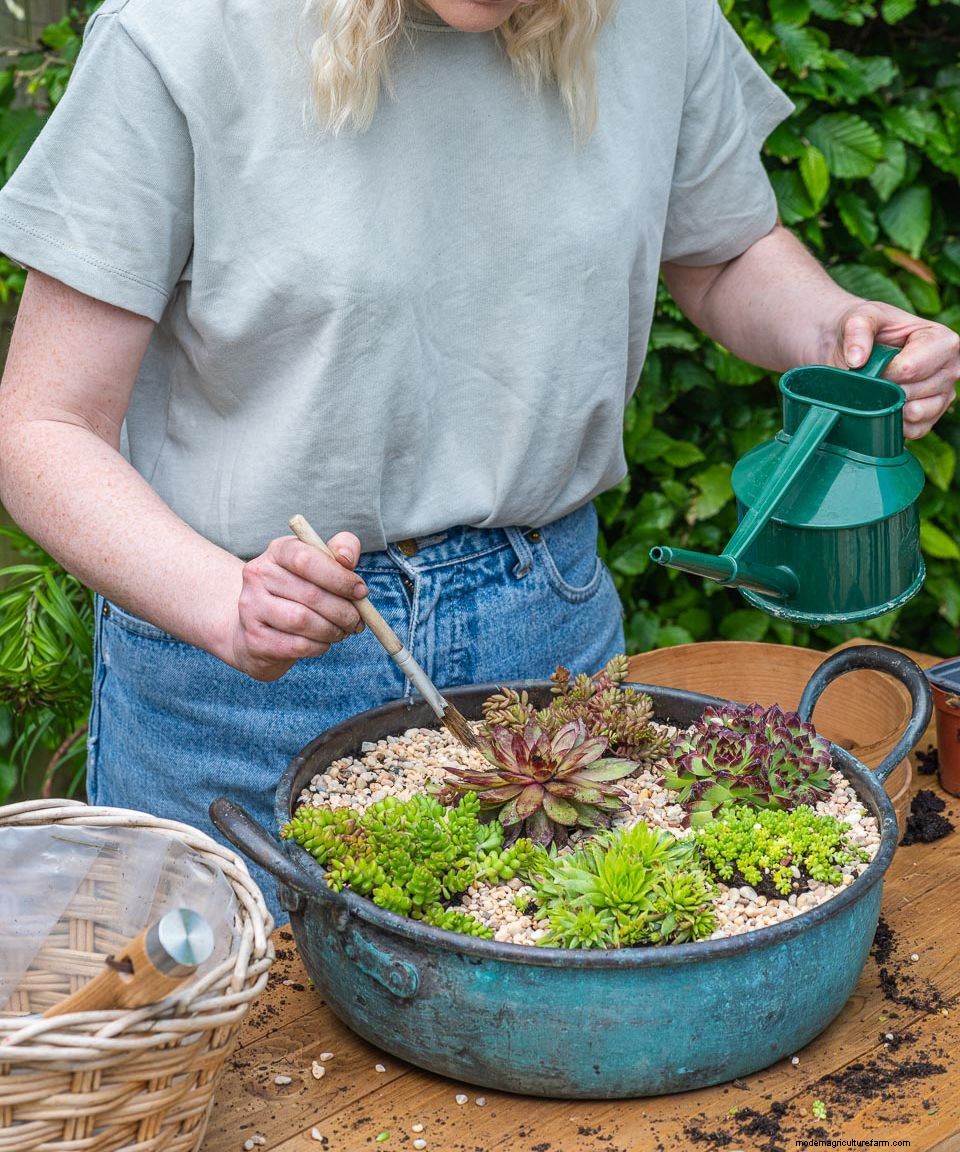
Water your arrangement thoroughly with a watering can which has a narrow spout. This way you can avoid the leaves. Brush away any droplets and excess grit on the leaves with a brush.
Once you’ve finished your container make sure you position it out of direct sunlight as the leaves of succulents can get scorched by the sun. We think it would work brilliantly on a garden table as the centerpiece for your outdoor dining ideas.
When it comes to watering plants, it’s just as easy to over water as it is to underwater, so allow your container to dry out between waterings. Check the soil regularly as the period between watering will be shorter during hot weather. If the leaves are looking shrivelled then they aren’t getting enough water, whereas translucent leaves indicate over watering.
Don't forget, there's more tips on how to care for succulents in our guide.


