
Welcome to Modern Agriculture!

Vines form a natural partnership with vertical structures in the home landscape, such as a mailbox or lamppost. By skirting these objects with a small planting bed, you can create space for a flowering vine. Follow these tips when adding vines:
Favorite Flowering Vines
Not sure where to get started? Try a few of these vining beauties to drape a mailbox or lamppost with climbing color.
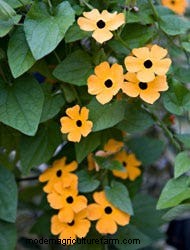
Black-Eyed Susan Vine (Thunbergia alata)
Annual in all but warmest regions
Cheery, tubular flowers in white, orange or yellow. Many selections have a contrasting dark throat. Direct seed after danger of frost is past. USDA Zones 9-11.
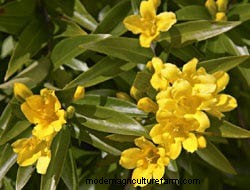
Carolina Jasmine, Yellow Jessamine (Gelsemium sempervirens)*
Perennial
Evergreen native vine bears tubular yellow flowers for four to six weeks starting in late winter/early spring. Prune as needed to control or direct growth. USDA Zones 6-9.
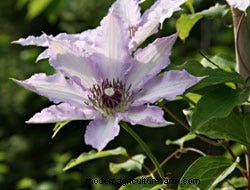
Clematis (Clematis)
Perennial
Clematis that flower on new wood offer easy pruning – cut vines back to 6 inches in early spring. Choices include: Clematis x jackmanii*, C. paniculata, C. integrifolia and Clematis hybrids, such as Ernest Markham, Hagley Hybrid, Comtesse de Bouchaud, Niobe and Etoile Violette. USDA Zones 3-11.
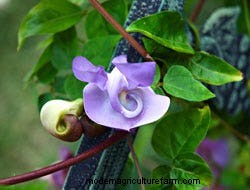
Corkscrew Vine (Vigna caracalla)
Annual in all but warmest regions
Long-blooming tropical with fragrant flowers in pink, lavender and silver. Can be invasive in warmer zones. Direct seed after danger of frost is past. USDA Zones 9-11.
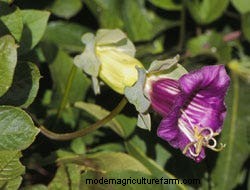
Cup-And-Saucer Vine (Cobaea scandens)
Annual in all but warmest regions
Unusual blooms with a lavender-tinged cup perched atop a green "saucer." Vigorous grower; will engulf small objects like birdbaths. Attracts hummingbirds. USDA Zones 9-11.
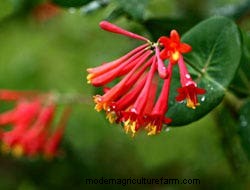
Coral Honeysuckle, Trumpet Honeysuckle (Lonicera sempervirens)*
Perennial
Native vine with red and bright yellow blooms that beckons hummingbirds. Prune to shape after flowering. Deciduous; evergreen in southern zones. USDA Zones 4-10.
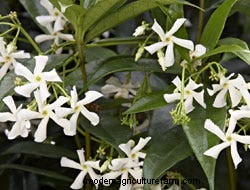
Confederate Jasmine, Star Jasmine (Trachelospermum jasminoides)*
Perennial
Fragrant flowers open heavily in spring with intermittent blooms throughout the growing season. Monitor vine growth; pull or prune shoots from latching onto trees, hedges, structures, etc. USDA Zones 8-11.
Mandevilla (Mandevilla splendens)
Annual in all but warmest regions
Trumpet-shaped flowers in pink, white and red; double form available. Heaviest flowering in full sun. To overwinter in cold zones, cut plants back to 6 inches, dig and drop into a pot. Pinch growing tips through winter to promote thicker growth. USDA Zones 10-11.
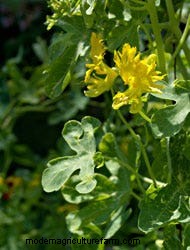
Canary Creeper (Tropaeolum peregrinum)
Annual in all but warmest regions
Bright yellow, Orchid-like blooms have fringed upper petals skirted with large lower petals. Edible leaves are deeply lobed, resembling fingers on a hand. Grow from seed sown into poor soil; rich soil yields all leaves, no flowers. USDA Zones 9-11.
*Will flower in part shade. Flowers best in full sun.
