
Welcome to Modern Agriculture!

Mushrooms eat all kinds of organic material and feed on anything organic that provides the nutrients they need to grow.
But, not all mushrooms obtain their food in the same way.
Different types of mushrooms feed differently and use specific organic materials or food to get their nutrients.
In this article, we look at different types of mushrooms and how they feed. You’ll discover the answer to the question, “What does a mushroom eat?” and much more.
But first, let’s take a quick look at what a mushroom is and why they’re so unique.
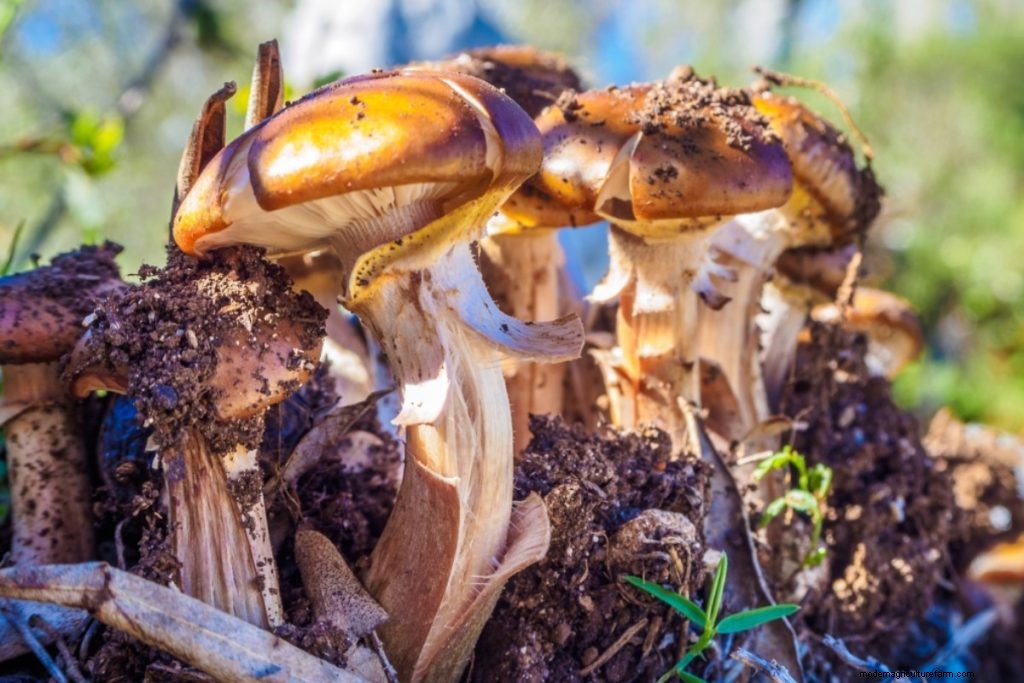
Mushrooms are unique because they’re not plants, animals or bacteria. They belong to a separate kingdom, all their own.
The delicious mushrooms that you know and enjoy are the fleshy fruit of an underground fungus.
Originally, Scientists considered fungi members of the plant kingdom as their appearance is often similar, and both have cell walls and are immobile.
Today, we no longer classify fungi as plants. Scientists now know the unique, chemical, physical and genetic traits that set them apart from plants, animals and bacteria.
An important way that fungi differ from plants is how they get nutrition. While plants make their food using photosynthesis, fungi absorb organic compounds from the environment around them.
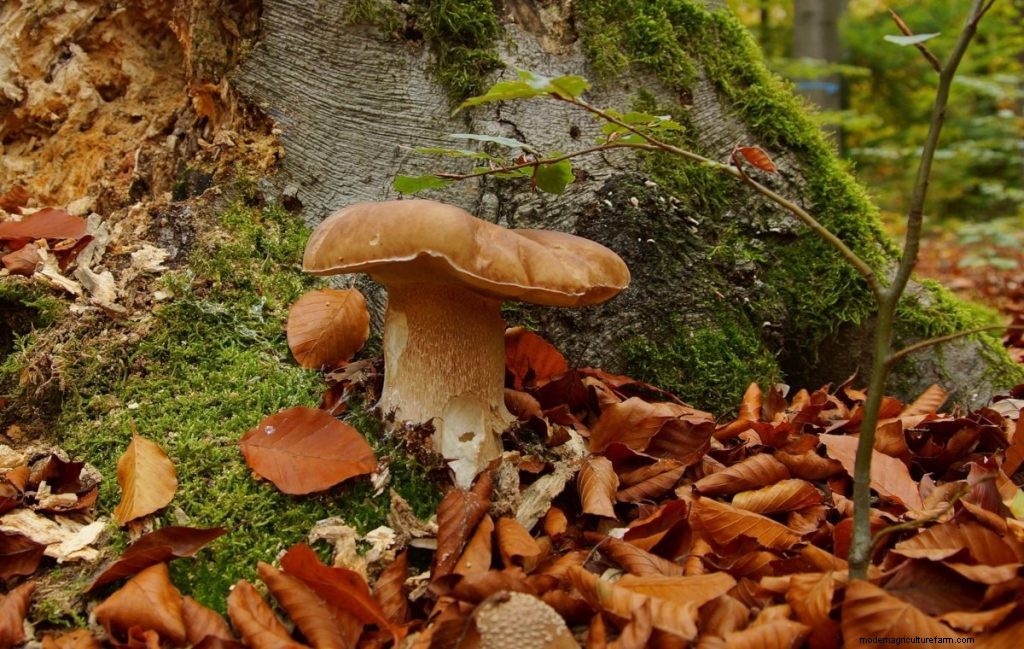
Not all fungi produce mushrooms and the fungi kingdom includes yeasts, molds, mildews, rusts and smuts.
But, researchers estimate that over 140,000 species of wild mushrooms thrive worldwide, and around 3,000 of these are edible.
One of the ways scientists classify these mushrooms is based on how they get their nutrition and what they eat. You can also use this information for mushroom identification.
Mushrooms classified this way fall into four groups:
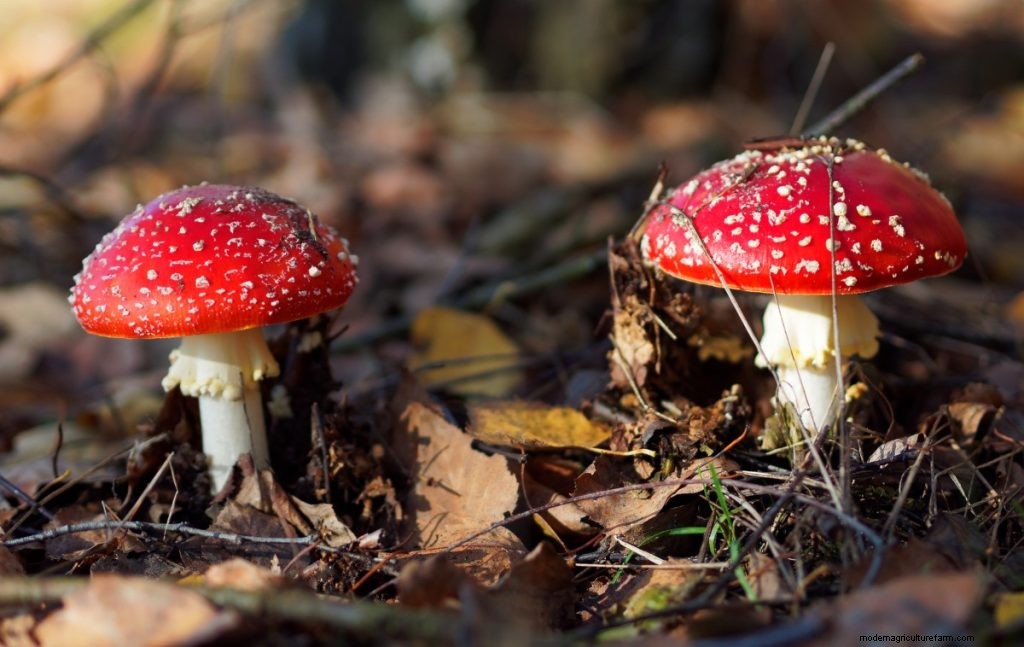
Saprotrophic mushrooms and toadstools thrive on decaying organic matter like wood, plants and even sometimes dead animals.
They’re decomposers who play a crucial role in the ecosystem by breaking down dead organic matter. They recycle the organic matter into compost that benefits the soil, trees and plants.
Many of the most popular culinary and medicinal mushrooms and are saprotrophs, including:
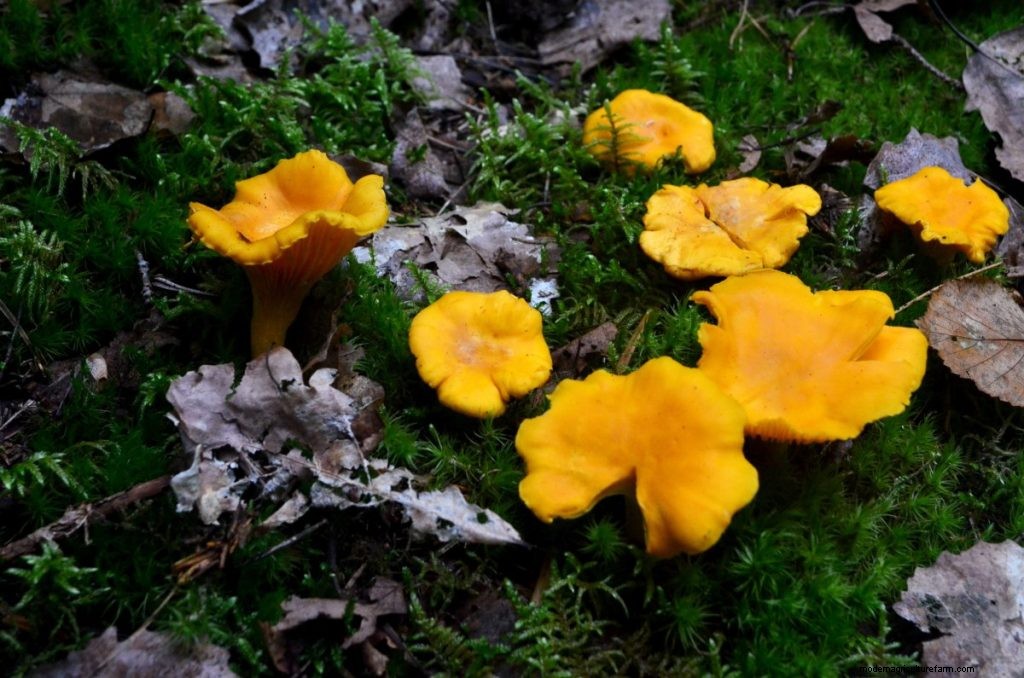
Mycorrhizal mushrooms have a symbiotic relationship with trees and plants. They use their underground network of mycelium to interact with the roots of the plants.
Some mycorrhizal mushrooms weave their mycelia into the plant’s root cells, while others wrap their mycelia around the roots.
The fungi extend the range of the plant’s roots and provide them with extra nutrients and moisture. In exchange, the trees and plants give the fungi simple sugars produced through photosynthesis.
Plants that form mycorrhizal partnerships with fungi grow faster and are bigger and stronger than other plants.
It’s not easy to cultivate mycorrhizal mushrooms as they need to partner with specific host trees and plants to thrive.
You will only find many seasonally in the wild, making them some of the most sought-after and expensive mushrooms in the world.
Here are some examples of mycorrhizae:
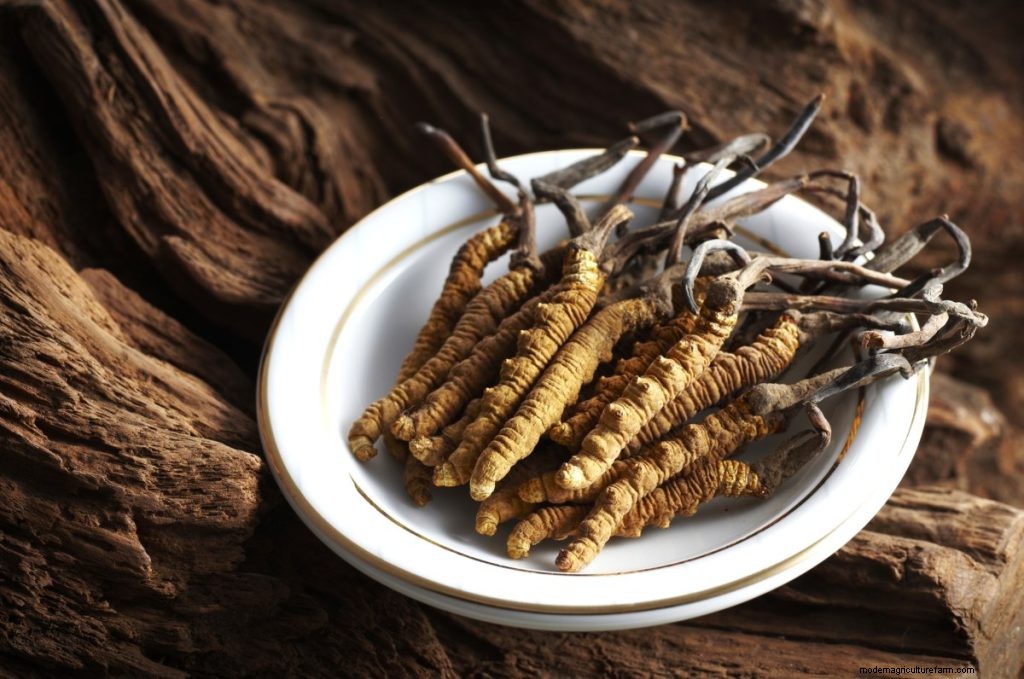
Parasitic mushrooms also need hosts, but unlike mycorrhizal mushrooms, they feed on the host without giving anything back.
And, they don’t limit themselves to plants and trees. Some parasitic mushrooms, like the caterpillar fungus (cordyceps sinesis), use insects as hosts.
Over time, parasitic fungi will completely infect the host plant or insect, causing it to die.
Most parasites don’t produce mushrooms, but here are some that do:
Endophytic fungi are a bit of a mystery and combine elements of all the other types of fungi.
Like parasites, they invade their host’s tissue. But, the hosts remain healthy and seem to benefit, showing increased pest resistance and better nutrient absorption.
This behavior would make you think they were mycorrhizal. But, unlike mycorrhizal fungi, most endophytes are easy to cultivate without a host.
Many species of endophytic fungi don’t produce mushrooms.
But, as scientists learn more, some parasites and saprophytes may be re-classified as endophytes.
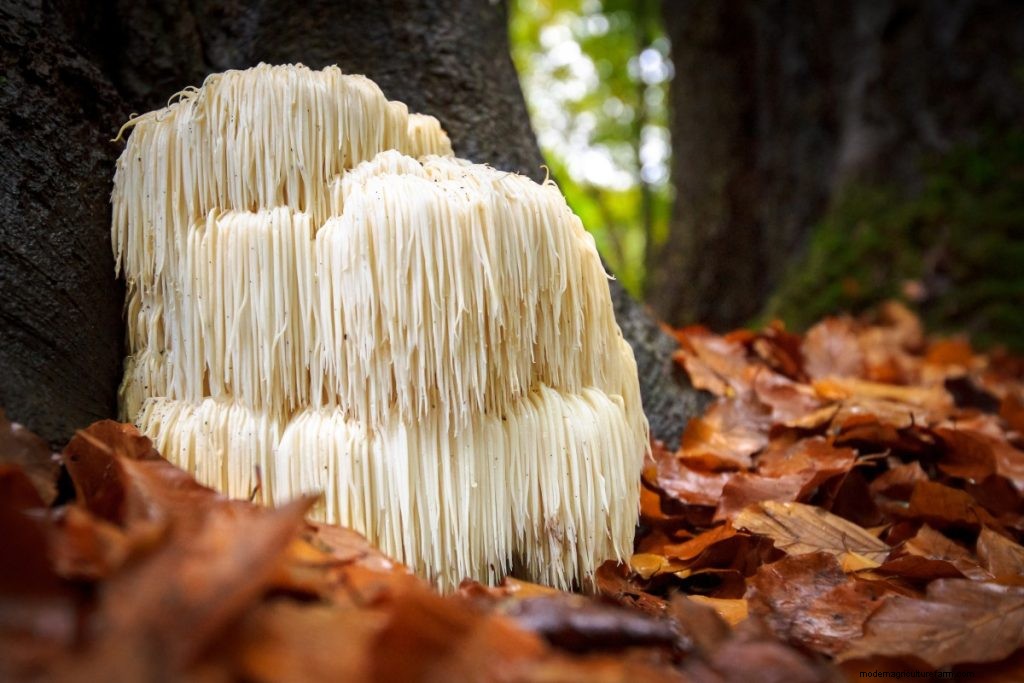
Fungi are heterotrophic, meaning they rely on food from the environment around them to get the energy to grow.
Fungi don’t have stomachs and need to digest their food externally before absorbing nutrients through the cell walls of the hyphae.
To do this, the long thread-like hyphae that make up mycelium release digestive enzymes into the dead or living organic matter around them.
These enzymes break down large organic molecules into smaller simple molecules that the hyphae can absorb.
Hyphae have a large surface area that’s well adapted for efficient nutrient absorption. Under the right conditions, they rapidly grow to access more nutrition.
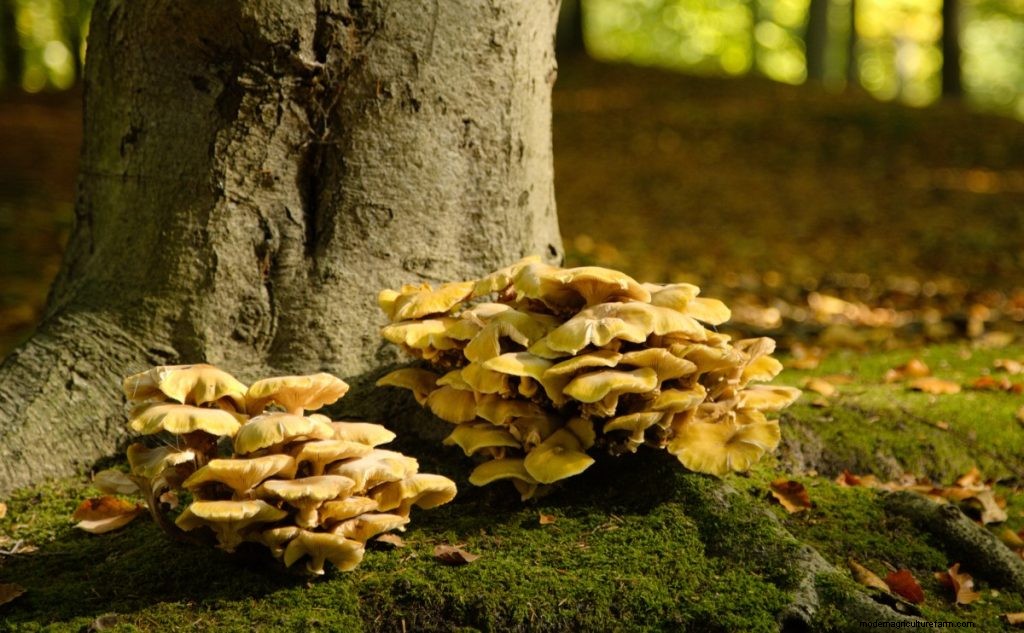
Different types of mushrooms need different food sources, and some are fussier than others.
Oyster mushrooms are some of the easiest mushrooms to grow, and you can use a wide range of substrates to grow them at home.
What’s more, oyster mushrooms can feed and grow on over 150 different agricultural byproducts.
But, not all mushrooms are this easygoing. Many are very specific to a particular type of substrate, host plant or insect species.
In the wild, you commonly find mushrooms in moist, humid locations without too much sunlight.
Forests and woodlands provide the ideal conditions, and you will often find mushrooms here, growing in leaf litter and on decaying logs or trees.
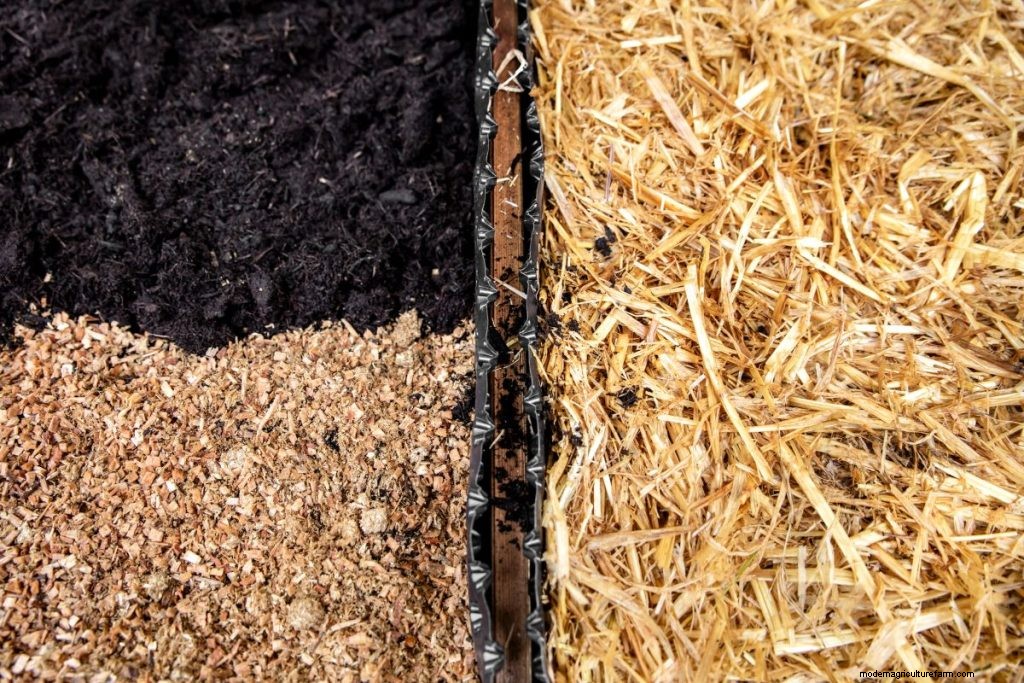
Mushroom growers replicate these conditions and grow mushrooms indoors or outdoors on logs or in beds, using a wide range of substrates, including:
Our complete guide to mushroom substrates has more information for you.
Above we explained how mycelium, made up of hyphae, releases digestive enzymes into the organic material around it to break it down into the nutrients the fungus needs.
But, you may be wondering how and why the underground fungus produces mushrooms.
We know fungi are remarkable and play a significant role in the decomposition of organic material. But, their main goal is to get enough nutrients to reproduce and keep their species going.
Many fungi produce fruit, in the form of mushrooms or toadstools, that they use to produce and distribute spores for reproduction.
Mushrooms produce spores in their gills, teeth or pores, and the stem elevates the spores so the wind can easily disperse them.
To fruit, fungi need suitable conditions and a substrate that provides the nutrients they need.
Here’s an example of the ideal substrate conditions and nutrients that saprophytic mushrooms need to grow:
Under these conditions, the mycelium grows and spreads, consuming all the organic material in a particular area or substrate.
It stores energy and waits for the right conditions to produce mushrooms.
Our article on the mushroom life cycle has more information on this, and you can also find answers to the question, “where do mushrooms come from?“
Fungi are unique. One of the things that set them apart is how they get their nutrition and what they eat.
Plants use nutrients from soil and sunlight to create their food, while fungi absorb food from their surroundings.
Animals also get food from their surroundings, but they ingest their food, digesting it internally.
Fungi, however, release enzymes into the organic matter around them and digest their food externally before absorbing the nutrients.
From this, you can see how important it is for fungi to have a nutritious substrate to feed on.
Visit our Mushroom Growing Hub to learn about the different ways you can grow mushrooms at home.
And, if you are thinking of growing your own mushrooms, consider a mushroom growing kit. It’s a great place to start while you learn more about the conditions required.


