
Welcome to Modern Agriculture!

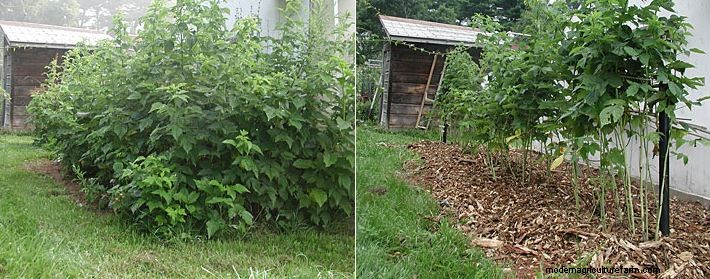 A row of Fallgold raspberries -- before and after pruning.
In summer, most berries demand nothing more than picking. But when it comes to raspberries, some pruning sets the stage for bountiful berries again next year.
Each raspberry cane is biennial, dying at the end of its second year. There are two types of raspberries:
When the midsummer raspberry crop ends, it's good practice to cut out the canes that bore fruit — right to the ground. This is the end of their second year, so they are beginning to decline anyway.
Cutting out these canes makes room for the young canes that will bear raspberries later in the summer or next year, depending on the type — everbearing or summer-bearing. This pruning technique also ensures that each cane will bask in abundant sunlight and get good air circulation, which limits the potential for fungus problems.
While you have your pruning shears in hand, also cut down any errant young canes. If you grow raspberries in rows, let them let grow no wider than about a foot, rather than creating a raspberry "patch." By keeping relatively narrow rows, you'll ensure that each cane will bask in sunlight and breezes.
You don't have to do any of this pruning in summer. You can actually do it anytime up until early the next spring. But why wait? It's quick, it's easy, it reduces the potential for disease, and it leaves your raspberry garden looking nice neat.


