Get more plants and save money by starting your own
I've been gardening and writing about gardening for more than 20 years, yet I find I'm always learning new things about the plants, insects and other critters that call my backyard home. That's the great thing about gardening — it's never boring! I've worked as a landscaper, on an organic farm, as a research technician in a plant pathology lab and ran a small cut-flower business, all of which inform my garden writing. Someone once asked me when I'll be finished with my gardens, to which I replied, "Never!" For me, gardening is a process, not a goal.
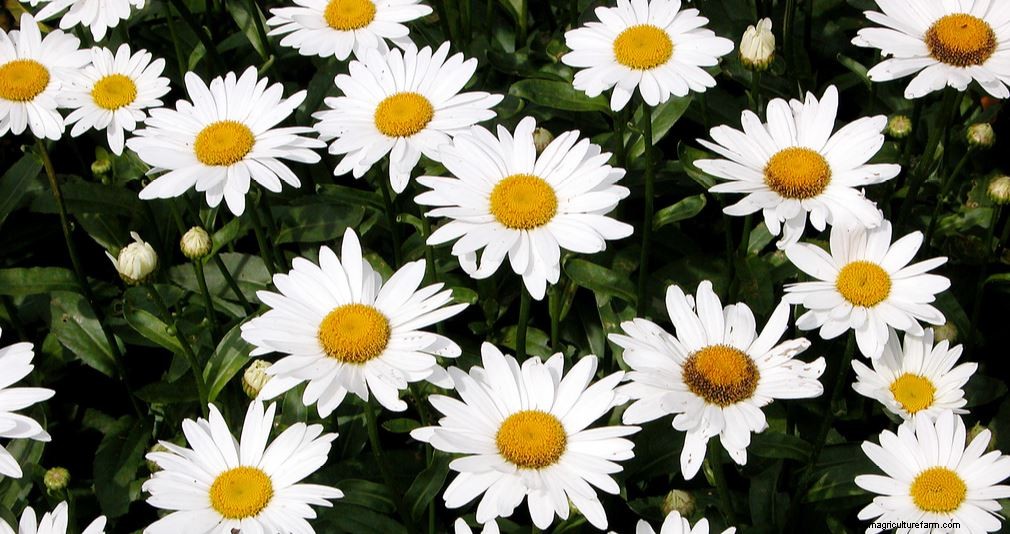
Shasta Daisies Photo: Carl Lewis
I can't help but cringe when I browse the perennial section of seed catalogs and see finicky flowers like Himalayan blue poppy without any comments about the challenges of starting them from seed or how many years it will take the plants to bloom. Some perennials are notoriously finicky to grow from seed; others are as easy to grow as cosmos and zinnias.
In this article you'll find ten easy-to-grow perennials that usually bloom in their first growing season if you give them a head start by sowing the seed indoors in early spring. Starting perennials from seed is similar to starting vegetables and annual flowers with a few exceptions, noted below. For general how-to information, see How to Start Seeds, which is a comprehensive guide.
Tips for Starting Perennials from Seed
Be patient. Seeds for the perennials in this list are typically slower to germinate than seeds you might be familiar with growing. Zinnias, for example, may germinate in less than a week, while some of these perennials may take up to a month to sprout. Start seeds eight to 10 weeks before your last frost date. It's a good idea to label pots with not only the type of seed, but also the date of sowing and the average days to germination. In most cases, give seeds at least a month to germinate.
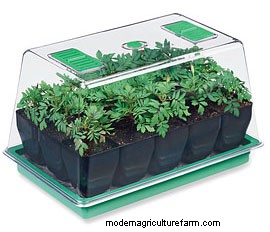
Deep-Root Seedstarting System
Provide the proper conditions. Most of the perennial seeds described below germinate best when exposed to light, so scatter a very thin layer of soil over the seeds or press them onto the surface to ensure good seed-to-soil contact. One of the keys to starting seeds is making sure the germinating seeds don't dry out; this can be especially challenging with surface-sown seeds. To maintain moisture, use a covered seedstarting kit, such as the Deep-Root Seedstarting System or place the pots in a loosely tied, clear plastic bag. Unless otherwise indicated on the seed packet, seeds germinate best at warm room temperature (70-75 degrees F); after germination, place pots in cool room temperature (around 65 degrees F) for best growth.
Use supplemental light. If you're hoping for flowers the first year, you need to give the seedlings plenty of light so they're in top form when you set them out in the garden. If you're starting seeds indoors, you will probably need to use grow lights. A well-made grow light stand, with adjustable-height, full-spectrum lights, is your best bet.
Purchase seeds from a good supplier. Although you might be tempted to create new plants from seed you've saved, keep in mind that plants might not look exactly like the parent plant, especially if the parent is a hybrid. There may be wide variation in plant size, flower color and other characteristics. For consistent results, use purchased seeds for hybrid varieties.
Ten to Start from Seed
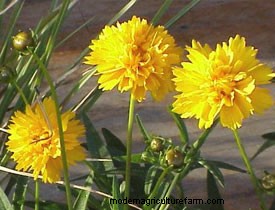
Large-Flowered Tickseed
Large-Flowered Tickseed (Coreopsis grandiflora)
This easy-to-grow plant forms a tidy clump and produces abundant flowers (usually golden yellow) starting in early summer. Flowers are beautiful in bouquets and attract butterflies and birds.
- Culture: Grow in full sun; tolerates dry soil once established. Individual plants are often short-lived but the plant will often self-sow (so much so that in some regions they can become a nuisance). Zones 4 to 9; native to central and southern U.S.
- Tips for starting seeds: Light aids germination, which should occur in one to two weeks.
- Varieties: Early Sunrise grows into a compact, 18″ tall plant and is covered with deep golden blooms. Sunfire grows 16 to 20″ tall with bright yellow blooms with a burgundy center.
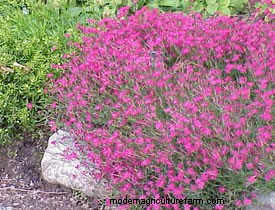
Maiden Pinks
Maiden Pinks (Dianthus deltoides)
Beautiful in rock gardens and other sites that have gooddrainage, maiden pinks form a low-growing mat of foliage topped by flowers in late spring. Foliage is evergreen year-round in mild climates. Flowers may be solid colors or have contrasting eyes.
- Culture: Plant in full sun (with some afternoon shade in hot climates); prefers neutral to slightly alkaline soil. Shear plants after bloom or allow to self-sow. Zones 3 to 9.
- Tips for starting seeds: Light aids germination; keep seeds in cool room temperature (about 65 degrees F); germination should take two to four weeks.
- Varieties: Arctic Fire grows about 6″ tall and forms a 12″ wide mat of foliage topped by white flowers with bright red eyes. Albus has white flowers.
Catmint (Nepeta nervosa)
Mounding plants with aromatic foliage are covered with flower spikes over a long season. Plants grow 10-14″ tall, are relatively carefree and the flowers attract hummingbirds and pollinators. Catmint is less attractive to (and less likely to be destroyed by) cats than its cousin, catnip (Nepeta cataria).
- Culture: Grow in full sun and well-drained soils; drought-tolerant once established. Makes an ideal ground cover in dry, infertile areas where little else will grow. Hardy in zones 4 or 5 to 9
- Tips for Starting Seeds: Light aids in germination, which usually takes two to three weeks.
- Varieties: Blue Carpet produces 10″ high plants with violet-blue flowers. Pink Cat produces pink flower spikes.
Oxeye, False Sunflower (Heliopsis helianthoides scabra)
This clump-forming perennial grows 3-4 ft. tall and bright golden yellow, sunflower-like blooms starting in midsummer and continuing into fall. Attracts butterflies; perfect for cut flowers.
- Culture: Very adaptable, the plant prefers full sun and tolerates dry soil once established. Zones 4 to 9.
- Tips for starting seeds: Light aids germination; seeds should germinate in 10 days to two weeks.
- Varieties: Summer Sun has semi-double, golden yellow flowers. Summer Nights has yellow flowers with dark orange centers; foliage is tinged with red.
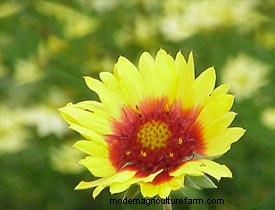
Blanket flower
Blanket flower (Gaillardia x grandiflora)
A cross between two native Gaillardia species, this blanket flower forms mounds of gray-green foliage topped by large, daisylike flowers in shades of yellow, orange and red. Flowers are attractive to butterflies and are beautiful in bouquets.
- Culture: Grow in full sun and well-drained soil; tolerates drought once established. Plants are somewhat short-lived but may self-sow. Zones 3 to 10.
- Tips for starting seeds: Light aids germination. Keep in warm room temperature (70 to 75 degrees F); seeds may take up to three weeks to germinate.
- Varieties: Mesa Yellow grows 18-20″ high with yellow blooms. Arizona Sun has dark red-orange and yellow flowers on compact, 12″ high plants.
Anise Hyssop (Agastache foeniculum)
- Anise hyssop is a fast-growing perennial in the mint family that grows 2-4 ft. tall. The spikes of lavender flowers bloom in mid to late summer and are irresistible to bees, butterflies and hummingbirds.
- Culture: Grow in full sun and well-drained soil; plants get top-heavy when in full bloom and may need support. Anise hyssop spreads by rhizomes and readily self-sows. Zones 4 to 9.
- Tips for starting seeds: Seeds can take as little as four days and as long as a month to germinate.
- Varieties: Golden Jubilee grows 2-3 ft. high with chartreuse green foliage, purple-blue flower spikes.
Rose campion (Lychnis coronaria)
With velvety silver-gray foliage and white, pink or magenta flowers, rose campion is a favorite in informal cottage gardens. Although individual plants are relatively short lived, they freely self-sow to form permanent stands. The plant grows to 2-3 ft. tall and blooms in midsummer.
- Culture: Grow in full sun (with some afternoon shade in hot climates) and well-drained soil; prefers neutral to slightly alkaline soil. Zones 4 to 8.
- Tips for starting seeds: Start seeds indoors eight weeks before last spring frost; seeds may take up to a month to germinate. Or sow seeds outdoors right in the garden about three weeks before your average last spring frost.
- Varieties: Alba has white flowers.
Gaura (Gaura lindheimeri)
Tall and airy, with delicate flowers on thin stems that resemble hovering butterflies, gaura blooms from late spring into fall. At 3-4 ft. tall, this North American native is ideal for planting behind and between shorter, larger-flowered perennials. Also excellent in bouquets.
- Culture: Grow in full sun and well-drained soils. Tolerates heat and humidity; can grow leggy and flop in overly rich soil. A short-lived perennial in anything less than perfect drainage, gaura readily self-sows. Zones 5 or 6 to 9.
- Tips for starting seeds: Seeds can take two weeks to a month to germinate. Use biodegradable pots that you can plant in the garden so you don't disturb the plants' taproots when transplanting.
- Varieties: The Bride has white flowers with a touch of pink.
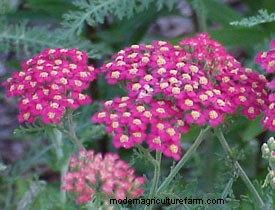
Yarrow
Yarrow (Achillea millefolium)
- Hardy and adaptable, yarrow produces large, flat-topped flower clusters in a variety of colors. With aromatic, feathery foliage and a long bloom season, yarrow is a hardy and reliable plant that will spread quickly in ideal conditions.
- Culture: Plant yarrow in full sun in well-drained soil; it performs and flowers best in soils that aren't too rich. Hardy in zones 3 to 10.
- Tips for starting seeds: Light aids in germination, which should begin about 10 days after sowing.
- Varieties: Cassis has cherry-red flowers; Cerise Queen has bright pink blooms. Bloom color is somewhat variable in when grown from seed.
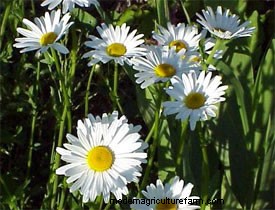
Shasta daisy
Shasta daisy (Leucanthemum x superbum)
- Boasting large, pure-white flowers with yellow centers, Shasta daisies are a perennial favorite. The plant forms a shrubby clump topped by flowers from early summer into autumn.
- Culture: Prefers full sun and neutral to slightly alkaline soils; hardy in zones 5 to 9.
- Tips for starting seeds: Light aids germination, which should begin within two weeks.
- Varieties: Alaska grows about 3 ft. tall with huge flowers up to 5″ in diameter; blooms for up to five months.
A Few More
Here are a few other perennials that may flower their first year from seed:
- Blue salvia (Salvia nemorosa)
- American vervain (Verbena hastata)
- Black-eyed Susan (Rudbeckia spp.)
- Joe-Pye weed (Eupatorium perfoliatum)
- Purple coneflower (Echinacea spp.)
- Beardtongue (Penstemon grandiflorus)
- Mallow (Malva sylvestris)


