
Welcome to Modern Agriculture!

I've been gardening and writing about gardening for more than 20 years, yet I find I'm always learning new things about the plants, insects and other critters that call my backyard home. That's the great thing about gardening — it's never boring! I've worked as a landscaper, on an organic farm, as a research technician in a plant pathology lab and ran a small cut-flower business, all of which inform my garden writing. Someone once asked me when I'll be finished with my gardens, to which I replied, "Never!" For me, gardening is a process, not a goal.
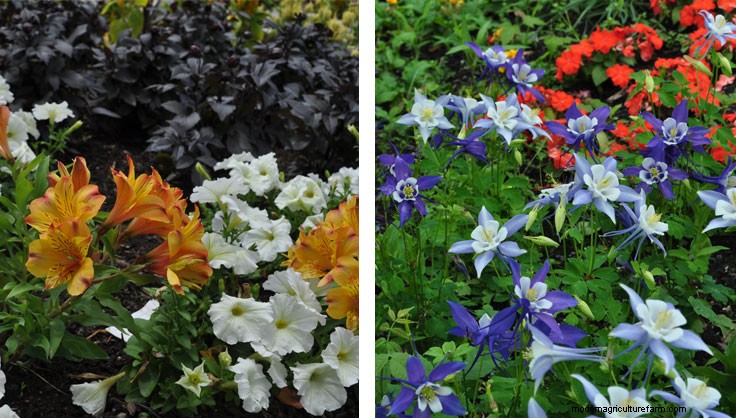
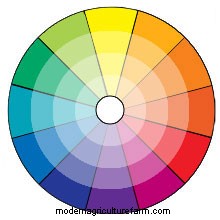
Color is usually the first thing people notice when they see a flower garden, and choosing plants in pleasing color combinations can be daunting to a new gardener. The color wheel is a helpful tool. It's based on three primary colors — red, yellow, and blue — and also depicts the colors in between.
The concentric bands show the colors in different degrees of saturation. Fully saturated colors are the most intense; as you move toward the center of the wheel, the colors become softer, more pastel.
Warm colors. Yellow, orange, red, magenta — these "warm" colors bring energy and excitement to a planting. When planted at a distance, they draw the eye in.
Cool colors. Purple, violet, and blue tend to be soothing and quieting. They can get lost at a distance and so are best for close-up viewing.
There are no hard-and-fast rules in choosing colors. A bold chartreuse green might fall into the "warm" category, while a softer, pastel shade of that same green might fit right in with a cool-color palette.
The most important design tip? Choose plants and colors that you love!
Designers use specific terms to describe color combinations. To help you get started, here are a few examples:
The most important design tip? Choose plants and colors that you love!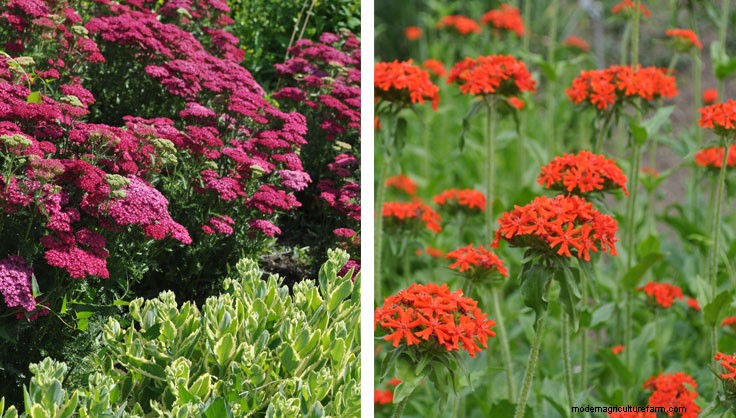
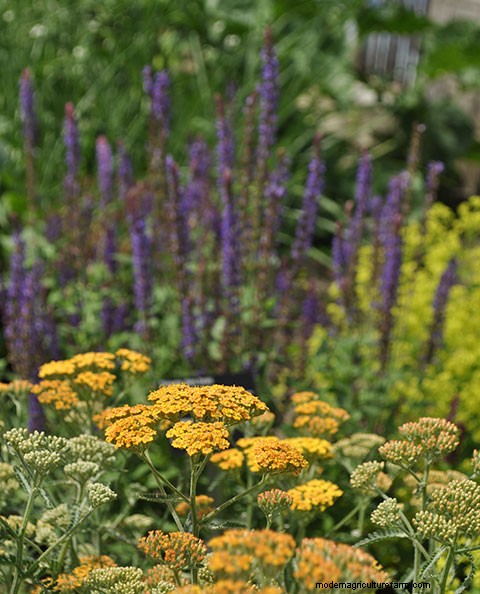
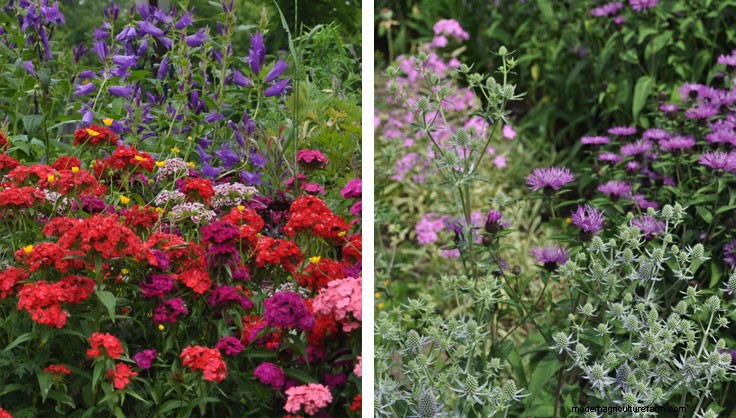
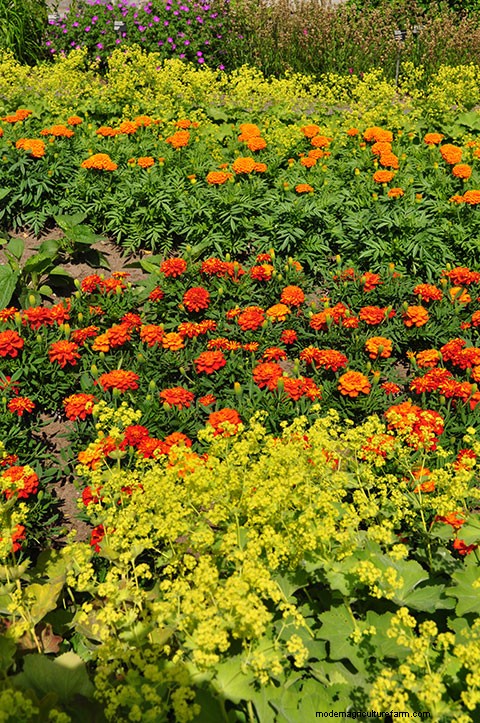
In complementary color schemes, two colors on opposite sides of the color wheel are combined.
To create an analogous color scheme:
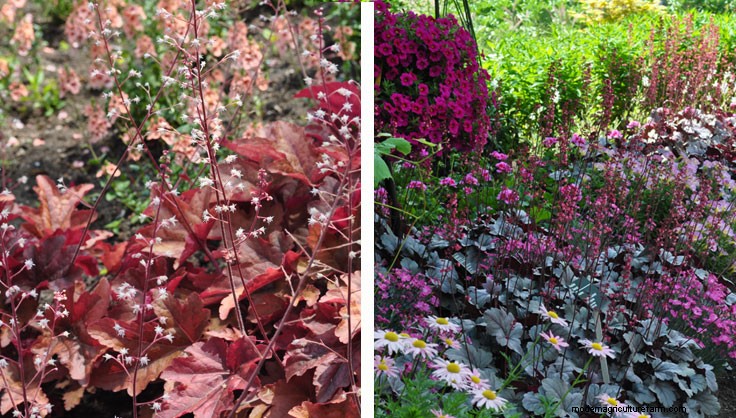
Another option for a monochromatic color scheme is a "moon garden." Gardens featuring all white flowers are especially beautiful when viewed by moonlight. Good choices include moonflower (Ipomoea alba), night-blooming jasmine (Cestrum nocturnum), and evening stock (Matthiola incana).


