
Welcome to Modern Agriculture!

Debra Prinzing is a Seattle- and Los Angeles-based outdoor living expert who writes and lectures on gardens and home design. She has a background in textiles, journalism, landscape design and horticulture. She speaks frequently at botanical gardens, horticultural societies and flower shows. She is also a regular radio and television guest. Her most recent book is the The 50 Mile Bouquet: Local, Seasonal and Sustainable Flowers (St. Lynn's Press, April 2012), which was photographed by David Perry. Her other books include Stylish Sheds and Elegant Hideaways (Clarkson-Potter/Random House, 2008), a Garden Writers Association Gold Award book, and The Abundant Garden (2005).
Debra is a contributing garden editor for Better Homes & Gardens and her feature stories on architecture and design appear regularly in The Los Angeles Times' Home section. She is also a contributing editor to Garden Design magazine and writes for top shelter and consumer publications, including Organic Gardening, Horticulture, Fine Gardening, Cottages & Bungalows, Metropolitan Home, Landscape Architecture, Sunset, Alaska Airlines Magazine, Old House Interiors, Seattle Homes & Lifestyles and Romantic Homes.
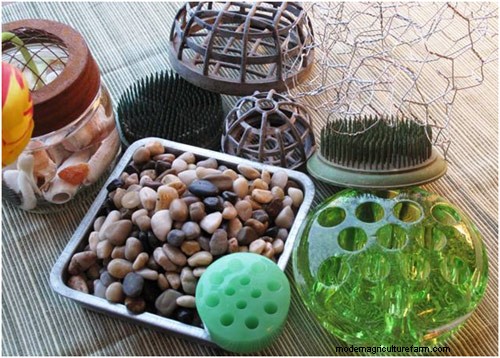 A selection of things I use to stabilize flower stems and avoid using traditional florist's foam.
In recent years, it's been easier to find sustainably grown flowers for bouquets. Many florists are offering them — if asked — and seasonal farmers' markets are abundant with gorgeous blooms. And, don't forget the harvest from your own backyard cutting garden.
For arrangements, florists often use a foam block to keep stems in place. I like to use a more eco-friendly way to stabilize flower stems because many of the blocks are formaldehyde-based and don't break down in landfills.
Pam Zsori of Ink & Peat Home + Floral in Portland, OR, discusses eco-friendly alternatives to traditional floral foam.
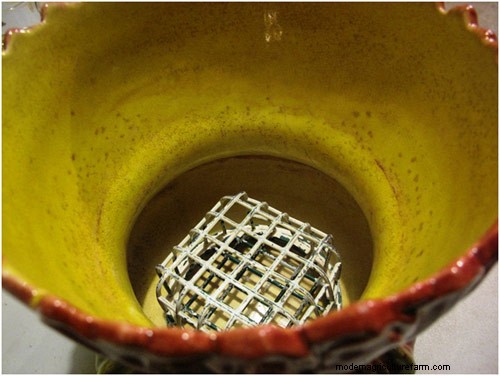
The flower frog sits at the bottom of the cachepot
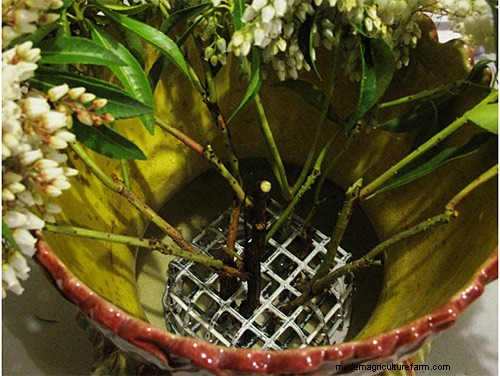
Stems of pieris are secured in the grid of the frog.
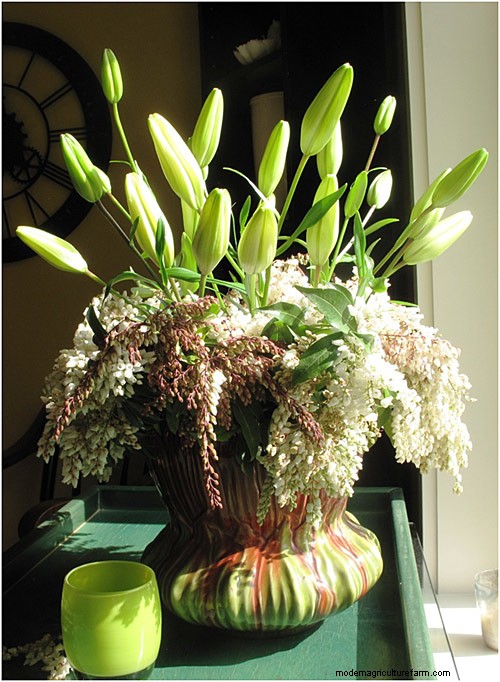
The finished result features pieris from my garden and lilies grown in a local greenhouse.
Photos: Debra Prinzing


