Battling mildew, mold and black spot
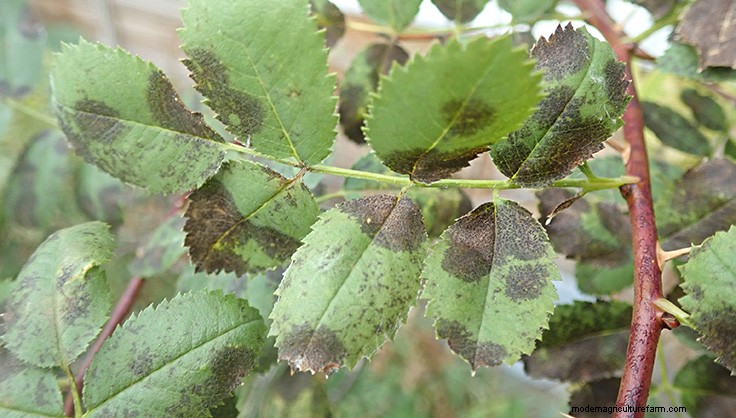
Black spot on rose foliage. Photo: Whitney Cranshaw, Colorado State University, Bugwood.org, author of
Garden Insects of North America
Mid- to late summer is when most plant diseases start becoming noticeable. Powdery mildew, black spot, and gray mold (Botrytis) are three of the most common flower diseases. Learn how to recognize them and what you can do to avoid them in your own garden.
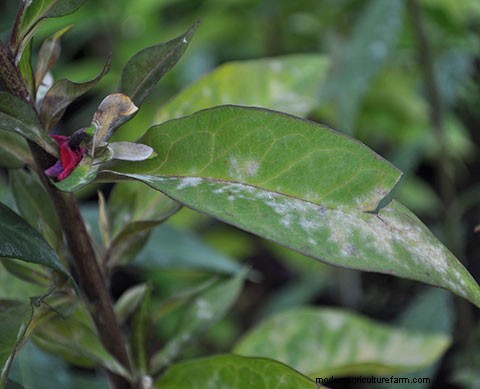
Powdery mildew on phlox. Photo: Suzanne DeJohn.
Powdery Mildew
Powdery mildew, as the name suggests, resembles a white, powdery coating on leaf surfaces. The term is used for several closely related fungal species, each of which affects one or more specific plants. So, the powdery mildew on your cucumbers may not be the same species as the one affecting your phlox.
If severe, in addition to leaf surfaces it also might appear on stems and the flowers themselves. Affected leaves eventually turn yellow, then brown. Dead foliage typically falls off the stem, though it will sometimes remain in place.
Although not fatal to plants, powdery mildew makes the foliage unattractive and repeated bouts of the disease will gradually weaken the plant. Annual flowers that are particularly susceptible to powdery mildew include zinnias, snapdragons, and verbena. Perennials that are commonly infected include delphiniums, lungwort, bee balm, and garden phlox.
Preventing Powdery Mildew
Unlike most fungal diseases, powdery mildew doesn't need water to spread; it can spread under conditions of high humidity.
- Keeping plants well-spaced and removing weeds will help ensure good air circulation and reduce the humidity around plants.
- Avoid overhead watering, which can increase the humidity in the plant canopy. Instead, water gently at the soil level, near the base of the plant. Or, better yet, use drip irrigation.
Controlling Powdery Mildew
- Choose varieties that have proven to be resistant.
- If you see just a few affected leaves, pluck them off and dispose of them.
- Use a horticultural oil, insecticidal soap or another spray. As with all fungus diseases, it is essential to begin application at the early onset of the disease — often late June or early July — and ensure that all susceptible foliage is treated. Repeated applications are usually necessary right through the duration of the growing season. Read and follow the instructions on the label. Options include:
- Neem oil, derived from the neem tree.
- Serenade Garden Disease Control is a spray that contains beneficial bacteria.
- Garden Dust, an insecticide-pesticide that contains copper.
- Try a home remedy with baking soda: Mix 1 teaspoon per quart of warm water; spray on plants every seven to 10 days.
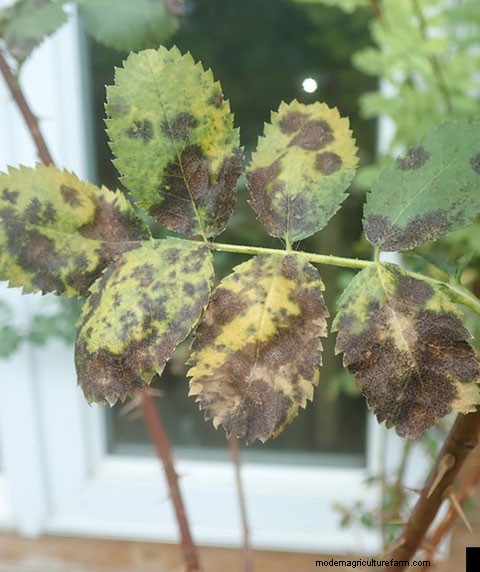
Black spot disease on rose foliage. Photo: Whitney Cranshaw, Colorado State University, Bugwood.org.
Black Spot
Black spot is another common fungal disease. It is a big problem with roses. (See photo at top.) The disease typically begins as black spots on the foliage. These spots are most prevalent on upper leaf surfaces, and may be up to 1/2" across. Leaves eventually begin to yellow around the spots, then become all yellow and fall off. The spots may also appear on rose canes, first being purple and then turning black.
Controlling and Preventing Black Spot
- Black spot requires at least seven hours of wet conditions for infection, and it is inhibited at temperatures about 85 degrees F. Although you may not be able to turn up the temperature in your garden, you can minimize the disease by keeping foliage dry through proper watering and good air circulation.
- Plant susceptible flowers, such as roses, in an open and sunny location and avoid watering during cloudy weather.
- Black spot fungus overwinters in fallen leaves and infected canes. Prune out infections and rake the fallen leaves at the end of the season.
- Rose varieties vary greatly in their resistance to black spot, so choose resistant ones. If this information is not indicated on plant labels, you can research the variety online or check with experts at your local nursery. Several of the shrub roses show resistance to black spot — and powdery mildew. Look for cultivars from the Meidiland, David Austin and Explorer series. Many of the other shrub roses and old-fashioned roses are resistant as well.
- Neem oil can help prevent black spot. Spray every 10 to 15 days during the growing season.
Gray Mold
Gray mold is perhaps the most common disease of flowers. It is especially problematic during periods of high rainfall and cool temperatures. Like powdery mildew, gray mold is well named. It appears as a gray mold, primarily on old and dying leaves and flowers. It begins as water-soaked spots and eventually develops into the characteristic gray, fuzzy coating.
Preventing and Controlling Gray Mold
- Remove diseased flowers and/or leaves right away.
- Spray with beneficial bacteria, such as those found in Serenade Garden Disease Control.
- Thin plants and keep flower beds weeded to allow plenty of air circulation around plants.
- Avoid overhead watering.
Shop for Natural Plant Disease Controls


