
Welcome to Modern Agriculture!

Arugula is also known as roquette or rocket and adds a delightful nip to salads. It is generally mixed in with other salad greens that complement its strong flavor. It is rich in vitamin C and potassium. Some describe it’s flavor as peppery, some as tangy or just nutty. Arugula is a member of the cabbage family, so keep it in with other cabbage family plants in your crop rotation. Arugula, like other brassicas, is a cool-season crop hardy to frosts and light freezes.
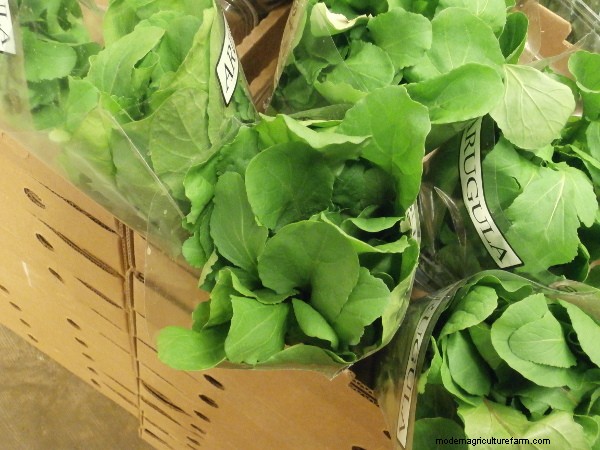
Arugula will grow almost anywhere. To provide the best possible growing conditions prepare the soil by working in some finished compost in the top 3 inches of soil.
Plant seeds outdoors in spring as soon as the soil can be worked. Make additional plantings every three weeks as long as the cool weather lasts. For winter harvests, sow seeds in mid-fall.
Dig a shallow trench with the tip of your garden spade to mark the row where you would like to plant the arugula. Sprinkle the seeds from the packet into the trench trying to space the seedlings out by somewhere between 1/4″ and 1″. If you want to harvest full-sized leaves, increase the spacing, or thin the plants out once they are established. Plant in rows approximately 6 inches apart. Cover lightly with soil, the arugula seeds need light to germinate. If they are deeply buried, they will not germinate.
| Temperature | |
| Germination | 40 - 55 F |
| Days to Germination | 5-7 days |
| For Growth | 50 - 65 F |
| Soil and Water | |
| Fertilizer | Generally not required |
| pH | 6.0 - 7.0 |
| Water | Moderate and even. Light in cold frame. |
| Measurements | |
| Seed Planting Depth | 1/4" |
| Root Depth | 12 - 18" |
| Height | 8 - 10" |
| Width | 8 - 10" |
| Space between plants | |
| Space between Plants | 1" |
| Space between rows | 6" |
| Average plants per person | 5 |
| Harvest | |
| Harvest arugula at any time the leaves are of a suitable size (generally around 2 inches long). Younger leaves are generally preferred. | |
| First Seed Starting Date: | 56 - 64 Days before last frost date |
| Last Seed Starting Date: | 59 - 69 Days before first frost date |
| Companions | |
| Companions | Bush beans, celery, carrots, nasturtium, mint, dill, lettuce, cucumbers, onions, rosemary, potatoes |
| Incompatibles | Pole beans, strawberries |
| Seed Longevity | 5 Years |
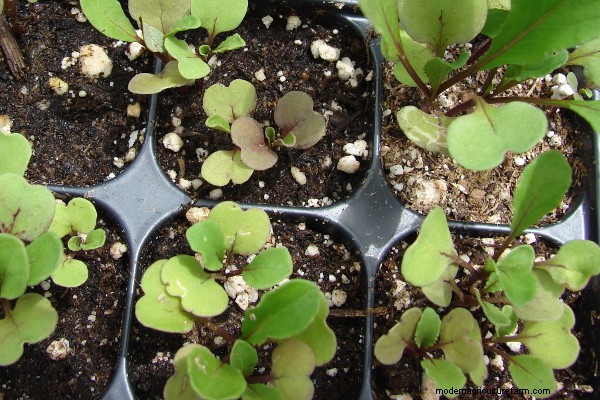
Arugula is a hardy plant and does not have any strong preferences with regard to growing conditions. It can be grown in any well-drained fairly fertile spot or container. Arugula prefers cool weather and is frost hardy enough that it will bear right through winter in a cold frame or unheated greenhouse. The arugula plant is grown as a longer leaved open lettuce. It is small, with a compact root system, so it is easy to grow in containers or in a flat on a sunny windowsill. It is also good for intercropping between longer season plants.
| Storage Requirements | ||
|---|---|---|
| Arugula does not store well for long periods and is best eaten fresh. Wash and dry then place in a plastic bag in the crisper drawer of the refrigerator. Placing a paper towel in the plastic bag may help control moisture. | ||
| Fresh | ||
| Temperature | Humidity | Storage Life |
| 32 - 40F | 80-90% | 2 - 3 days |
Arugula leaves can be harvested once they are about 2-3 inches long, which can be as soon as 2-3 weeks after the plants germinate under ideal conditions. Cut individual leaves or pull up whole plants. The leaves are best when young, but they retain good flavor until the plant starts to bolt. The flowers are also edible. If the plant does bolt, you can throw some of the flowers in with your salad greens. Once the flowers are set, the leaves will start to taste more bitter.


