
Welcome to Modern Agriculture!

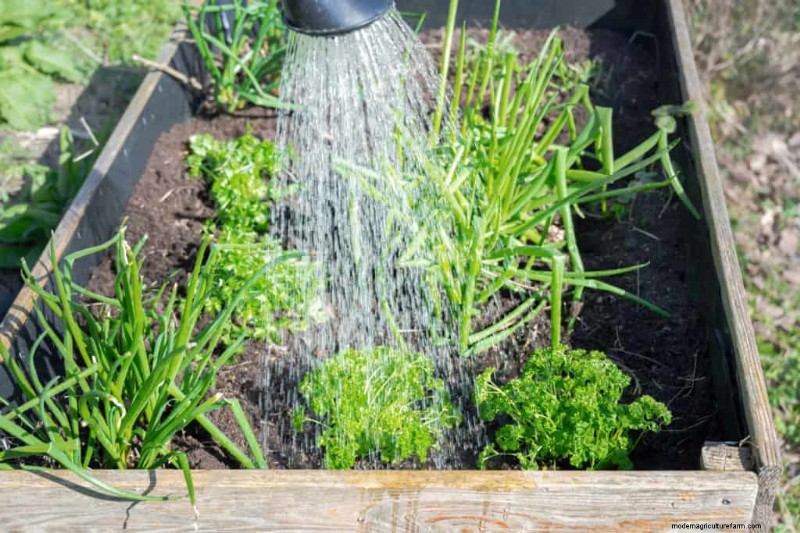
Watering the garden is one of those chores that seem so simple, yet it’s very easy for new gardeners to get wrong. You can overwater, underwater, or water at the wrong time of the day. During my first year of gardening, I often got watering wrong, especially when it came to seedlings. And one of the first questions I asked myself was: when is it best to water my vegetables?
The best time of the day for watering your plants is in the morning. It gives plants a chance to dry and resources to withstand the heat of the day. The second best time is the evening, although it can attract slugs at night in humid, temperate climates and promote mildew formation.
There’s no universal answer when it comes to how much water your garden needs and at what intervals. It depends on so many factors, like climate zone, season, soil properties, and the development stages of your plants. Watering frequency and timing are a subtle art that you should master based on your observation.
You really can’t go wrong with watering your plants in the morning. It’s universally accepted as the best time to water by most gardeners. And there’s a good reason for that.
Watering before the sun is too intense gives the plants a chance to absorb all that moisture and use it up as the day gets hotter. During heatwaves or at the peak of summer, watering in the morning protects plants by making them more robust and offering physical protection of the root system against heat and evaporation.
The soil has pockets of air that act as insulation. Gradually, during hot months, those air pockets and the ground itself begin to heat up. By thoroughly watering and filling up those air pockets with water, the soil temperature will drop, and the plants’ roots will stay protected for longer.
There’s a good reason for morning watering in cool, humid climates as well. It allows for plants’ leaves to dry and for the soil’s top surface to dry up before night time when slugs and mildew do the most damage.
In hot climates or during hot summer months, if you don’t get the chance to water your plants in the morning, there’s no harm in doing so in the evening. In fact, if the weather gets really hot, it’s not a bad idea to water your garden in the morning and in the evening.
It’s best to water your garden once thoroughly, and then leave it for a couple of days, instead of watering just a little bit each day.
Watering in the evening allows plants to hold on to moisture for longer before the sun’s heat starts evaporating water from the soil.
This is especially true when transplanting seedlings outside. You should plant your seedlings in the garden and water them in the evening so that they have a stress-free time to establish their roots and get hydrated throughout the night.
Unless you’re watering your garden in the middle of a heatwave, there’s hardly any chance of scorching your plants. It’s true, some plants, like tomatoes, hate water touching their leaves. But other than that, most plants are fine if you water them when the sun is high, as long as it’s not extremely hot outside.
There’s this widespread belief that watering your plants in the middle of the day will harm them, but, at least in temperate climates, this is simply not true. It would mean that any rainstorm during the day would scorch plants when, in fact, they thrive.
Considering our busy schedules, if we don’t have enough time to tend to our gardens, watering midday is not the end of the world. I’ve experienced this myself, and my plants hardly seemed to suffer.
The best time to water seedlings is in the morning. However, seedlings have slightly different needs when it comes to watering. You should provide water every day, and in hot summer months, twice a day. It’s important to make sure that the roots aren’t completely waterlogged – for this, you will need good soil and perhaps removing the tray from underneath the modules.
Be mindful of how much water your seedlings consume – tomatoes, for example, are very thirsty plants, and you need to water them often. You also need to keep trays underneath their pots and overwater until they’re soaking wet.
Basil seedlings, by contrast, hate having their roots in too much water at the beginning of their growth. They need aerated, moderately dry soil.
Watering your fully grown plants inside the greenhouse, where it obviously doesn’t rain, is also best done in the morning. But you don’t need to water every single day. In temperate climates, you should only water your greenhouse vegetables every 2-3 days or so. In late autumn and winter months, it’s even less than that – you shouldn’t be watering your plants more than once a week or once every two weeks.
Plants have different needs according to their stages of growth. Seedlings can be easily killed by overwatering, and in fact, that’s probably the most common mistake any new gardener will make. I’ve certainly killed my fair share of seedlings by overwatering and encouraging the damping-off fungal disease.
The time when plants need the most water during their development is the flowering stage. When vegetables are getting ready to fruit, they need a lot of energy and moisture to turn those flowers into fruits and pods. If they don’t get enough moisture, they will often drop their flowers, and your harvest will suffer. Make sure to give plenty of water to tomatoes, cucumbers, aubergines, and beans.
The type of vegetable also dictates how much watering you’ll need to do. Leafy greens like lettuce, kale, cabbage, basil, etc., generally need plenty of water; otherwise, they go dry and limp.
Fruiting vegetables will also need a lot of water, and if they lack moisture, they will develop dry spots on their leaves and sacrifice foliage so that their fruits don’t suffer. It’s important to be alert to these signs and stay on top of watering.
Root and bulb vegetables are the most drought-resistant because they grow slowly, over a long period. Some root vegetables like beets even get sweeter when they’ve received less water. This doesn’t mean to skip watering them entirely, but they don’t need as much attention as your other tender, water-thirsty plants.
Hand watering, especially in a small garden, is an excellent chance to observe things and be mindful of what’s going on in the garden.
You may notice that a bed needs weeding. You may discover pest damage or plant disease, and it will help you take action before it’s too late.
You’ll be able to preferentially water your plants, as some need more water than the others. Some plants only tolerate water at the roots, while others are fine with their leaves getting wet.
Gardening is about being mindful, returning to the present moment, and focusing on the task at hand. This means that you shouldn’t just dump water and move on.
Observe your soil: is it still dry after you’ve watered it? Often during summer, if you return to the same bed, you can notice that water quickly disappeared into the ground. In this case, you should keep watering the topsoil two or three more times until it’s saturated.
It’s not just wind and sun that evaporates water from the soil during summer months; it’s plants as well. They can consume a large amount of water, so don’t be afraid to soak the ground around them.
Hand watering is a process of connecting with your plants, giving them what they need, and learning a lot in the process. Of course, you could install a drip irrigation system and not worry about the timing or quantity of watering, but for small gardens, that’s rarely necessary.
As long as you have good soil, with plenty of organic matter, compost, and mulch on top, you shouldn’t worry about watering every single day. Your plants won’t need it – they’re sturdier than you think. So be wise and mindful, and learn to optimize watering for your garden.
I hope you’ve found these tips helpful. Until next time, happy gardening!


