
Welcome to Modern Agriculture!

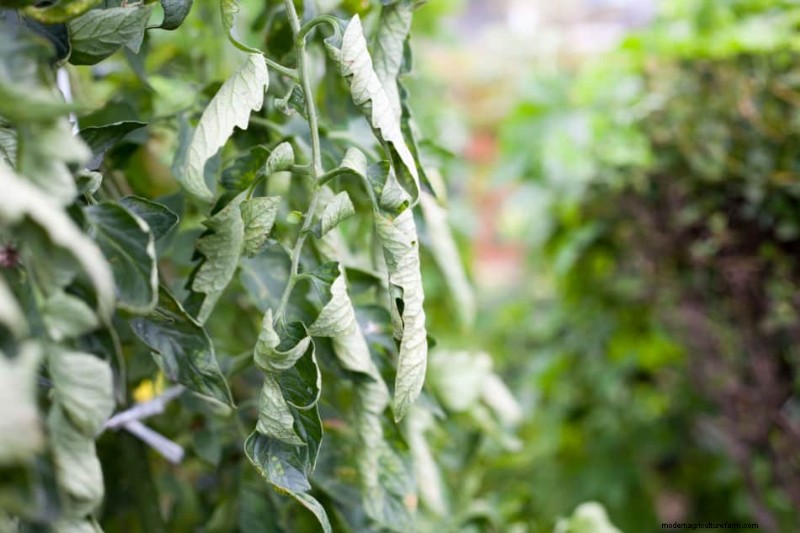
I’ve tried growing tomato plants outdoors before, and, because of my rainy climate, I’ve often lost them to blight. This year, I started my seedlings indoors, under grow lights. Before even setting them outside, I’ve noticed tomato leaves curling on many of my seedlings.
So why does this happen to tomato leaves, and are all types of leaf curl created equal? While tomato plants are very fast-growing, vigorous plants, they’re also susceptible to all kinds of environmental factors, viruses, and disease. And when they’re unhappy, they make it obvious.
Let’s better understand the difference between “unhappy” tomato plants and sick ones.
Tomato leaf curl looks just like it sounds. The leaves curl up and then inwards in, but sometimes they can curl down as well. The leaves can grow into irregular, malformed shapes, and appear small and stunted. You can sometimes see yellowing around the edges, or even blistering on the surface of leaves.
Tomato leaf curl isn’t a disease in and of itself, but rather a symptom of something that’s attacking the plant. This could be one of the nearly 20 identified viruses, a sign of herbicide damage, lack of nutrients, or environmental distress.
Viral infections and herbicide damage usually affect the new growth of tomato plants, while physiological leaf roll affects the mature lower leaves. That’s the main difference to remember.
While viral infections are something to be very worried about, physiological leaf roll rarely affects the tomato plant’s ability to grow and produce healthy fruit. Physiological leaf roll looks a bit different from the possible causes above:
So what causes curled tomato leaves? As I mentioned, it’s hard to pinpoint exactly what causes tomatoes to react in this way, but we can mostly attribute curling leaves on your tomato plants to environmental factors, herbicides, nutrient deficiencies, and viruses. Let’s address them one by one:
Leaf roll caused by environmental factors is very common, and shouldn’t be a cause for concern. We still aren’t sure what causes it exactly, because of so many variables, but it’s usually heat, as physiological leaf roll usually appears on tomatoes when the weather gets very hot.
Leaf roll can be caused by underwatering, overwatering, heat, wind, growing tomatoes in containers, and even overfertilizing.
If the weather is hot and you notice the bottom leaves curling on your tomatoes, the first instinct would be to water your plants. Resist the urge to water, though! Check the soil to see if it’s dry because you could be doing more harm than good with overwatering.
Often, tomatoes have access to enough water in the soil, but the heat is accelerating the rate of evaporation from their leaves, so they curl the leaves to reduce exposed surfaces.
Overwatering your tomatoes could lead to root rot, in which case your tomato leaves would be curling down. Tomato root rot is less common, but it can happen whenever you get an excessively rainy season or have poor drainage in your raised beds. Generally, if you stop overwatering or improve drainage, this problem will sort itself out.
One thing you could do to help with heat and sun damage is protecting your tomatoes with a shade cloth, and staying consistent with watering, but not overdoing it.
To sum it up, physiological leaf curl is nothing to worry about. It most likely occurs in mid-summer when the weather is dry, windy, and hot.
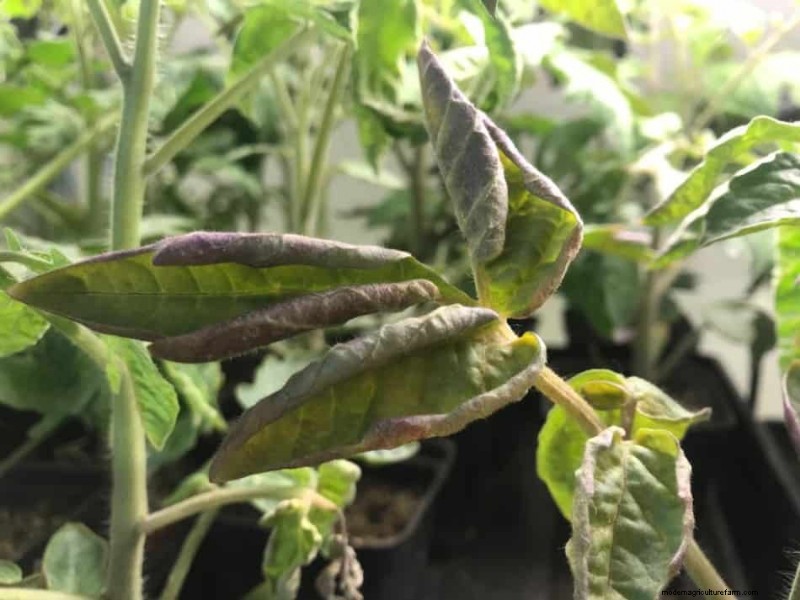
Tomatoes are extremely sensitive to some of the common herbicides used today. You may try your best to garden organically, but if you’re living close to a field, or if your neighbor sprays plants with harmful substances, those herbicides can travel through the air and affect the growth of your tomato plants.
The leaves affected by herbicide damage are usually found at the top of the plant. The stem part of the leaves will start bending down, while the leaves themselves will start curling and cupping inwards. The fruit may grow deformed.
The most common herbicides guilty of this kind of damage are 2,4-D or dicamba and glyphosate which can drift through the air. Sometimes, even compost may be guilty of affecting tomatoes, if it contains pasture herbicides such as aminopyralid, picloram, and clopyralid.
If the herbicide drift is transitory, the tomatoes will recover. While the damaged leaves will stay curled, new growth will appear normal. But sometimes, depending on the level of exposure, tomato plants may not survive.
Sometimes, tomato leaves curling and yellowing at the bottom of the plant are a sign of micronutrient deficiency. This could mean your soil is deficient in molybdenum or boron, but this is usually difficult to diagnose unless you order a soil test kit.
Overworked soil tends to become depleted in time, that’s why you should get into the habit of amending your garden soil at least once per year in the autumn, or twice per year, in between crops, if you’re practicing intensive gardening.
The same happens with bagged soil, purchased from big-box stores, which is nutrient defficient to begin with.
So how do you fix this? While it’s hard to figure out what micronutrient to add, the good news is that you only need small traces of micronutrients to make a huge difference. Give your tomatoes a boost by amending your soil with aged manure. Make sure the manure is aged for at least 3-4 years so that it doesn’t burn your tomato plants.
Worm tea, Azomite (for trace minerals) and Tomato granular fertilizer are all fantastic additions to your soil to enrich your ecosystem with minerals, nutrients, and microorganisms.
Overwatering your tomatoes could lead to root rot, in which case your tomato leaves would be curling down. Tomato root rot is less common, but it can happen whenever you get an excessively rainy season or have poor drainage in your raised beds. Generally, if you stop overwatering or improve drainage, this problem will sort itself out.
Tomatoes are thirsty plants, but when they get too much water, their vascular system constricts and shuts down. As a result, the tomato leaves become yellow and start to curl downward.
If overwatering or rainy seasons are paired with cold temperatures, tomato plants can become sure victims of fungal diseases like Septoria wilt, or other kinds of wilt. A simple fix to this is waiting to plant your tomatoes outside until the night temperatures are above 55°F (13°C). Any temperature consistently lower than that, and tomato plants will drop their flowers anyway.
Here are the most common viruses that cause tomato leaves to curl:
The Tomato Yellow Leaf Curl Virus (TYLCV) is transmitted by the Silverleaf whitefly. Signs of this virus are generally hard to spot at first, but keep an eye for:
What to do about TYLCV: Bag the affected tomato plants and remove them from your garden. Spray the remaining tomato plants for whiteflies with Neem or insecticidal soap.
The Tomato Mosaic Virus is an extremely virulent and easily spread virus among tomato plants and other plants as well. It can be spread through unwashed instruments, clothes, and garden workers’ hands, as well as insects such as aphids, leafhoppers, and whiteflies. This is how it usually manifests:
How to deal with the Tomato Mosaic Virus: remove sick plants and burn them; clean your garden shears in between pruning each plant; wash hands with soap; purchase seedlings from reputable sources.
This virus affects both peppers and tomatoes and causes their top leaves to curl, but it can also affect beans, squash, and pumpkins. The Curly Top Virus is vectored by the beet leafhopper, but it doesn’t transmit to other plants.
The tomato plants begin to look stringy and stunted, with light green, narrow, and upward curling leaves. This virus doesn’t seem to spread to neighboring plants, but it severely affects the development of the affected tomatoes.
Tomatoes affected by the curly top virus will still produce fruit, although there will be much less of it. There’s really not much you can do about this virus, except sow and transplant plenty of tomatoes in case some of them don’t make it.
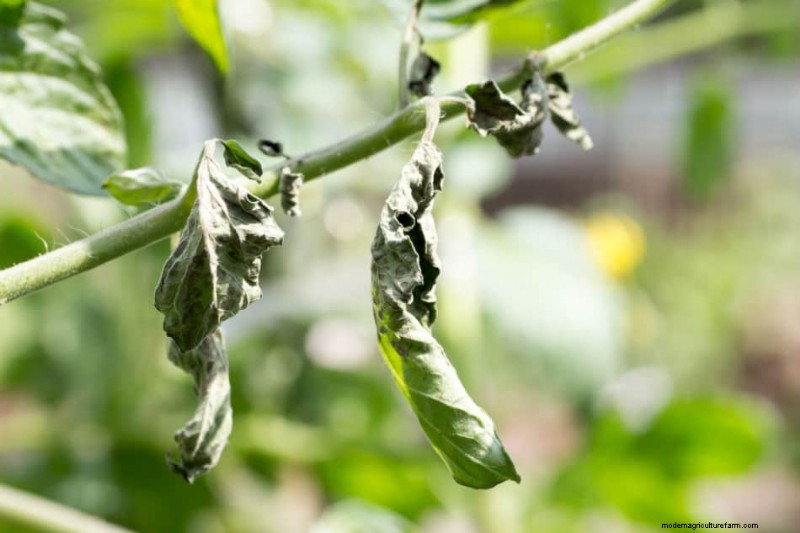
If you’ve identified your tomato leaf curl to be environmental, you should just ignore it. Make sure your tomatoes receive an adequate amount of water and nutrients throughout the season. Check the soil for good drainage and maintain good airflow by pruning tomato suckers and leaves regularly.
If you suspect herbicide drift, investigate this further. If your neighbor is to blame, kindly ask them to stop using the substance that’s harming your plants.
As for viruses, you can’t do much except prevent whitefly by regularly spraying your tomatoes with Neem, BT, insecticidal soap, and other organic remedies. You could also resort to netting, but because of how big tomatoes get, this is not a feasible solution.
Lastly, if you only notice a couple of individual curled leaves on your tomatoes, check to see what’s inside. You might be surprised to find a moth cocoon in there, as they like to hide and shelter themselves inside the leaf.
Learn to distinguish between these problems and know when to worry about tomato leaf curl or just leave it be. Until next time, happy gardening!


