
Welcome to Modern Agriculture!

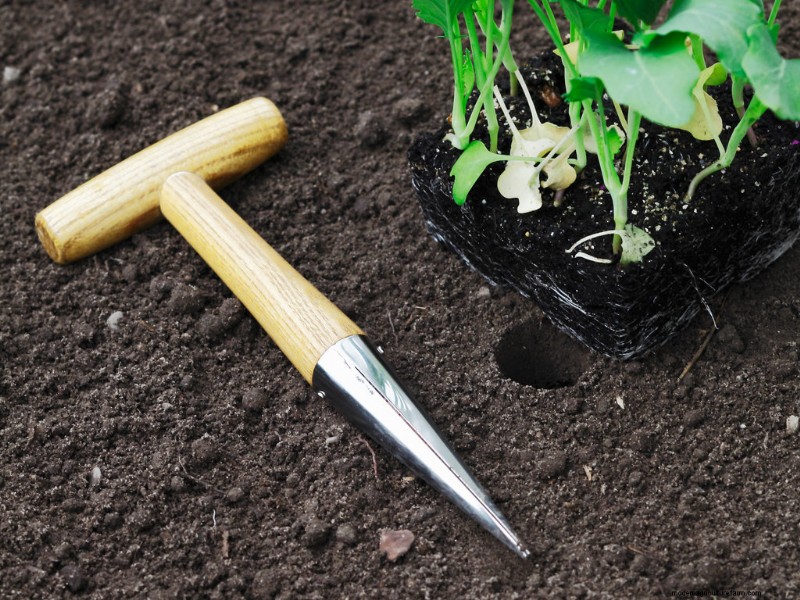
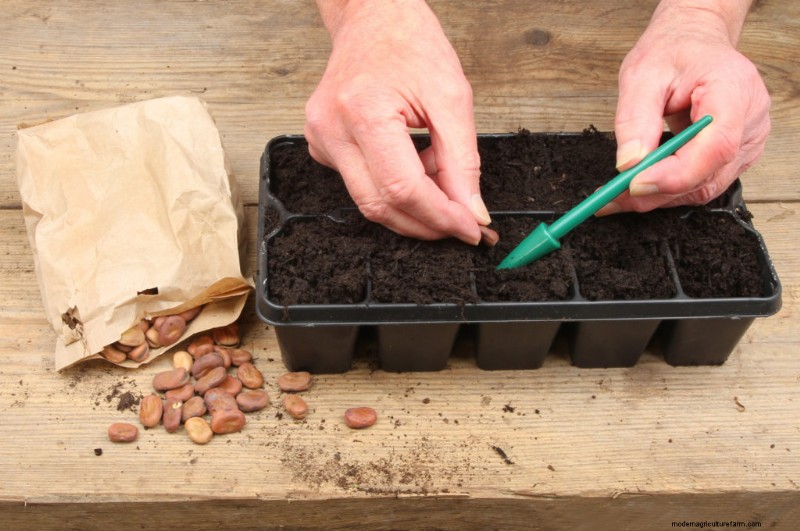
If you’re new to gardening, you’ve probably seen a dibber in YouTube videos or various resources online. This simple hand tool is essentially a stick used to poke holes when transplanting seedling plugs outside, or when sowing bigger seeds or smaller bulbs.
While sowing seeds doesn’t necessarily need a dibber, creating the perfect-sized hole for a seedling plug is the perfect job for this tool, especially when you need to plant hundreds of seedlings in your garden.
The dibber comes in many shapes and sizes, can be long or short, marked or not, with a straight, L, or T-shaped handle. To use it for sowing or transplanting, simply push to the desired depth and twist around to make the hole larger. Never use a dibber in hard, compacted soil.
Before we look into different scenarios on how to use a dibber, let’s first differentiate between the main kinds of dibbers out there – some are better used for transplanting, others for sowing. Some are small enough to use indoors, with your module trays, others are long and save you back pain in the garden.
There are 4 types of dibbers you can choose from:
Dibbers (or dibbles/dibblers in the UK) are ancient gardening tools that are traditionally made of wood, but you’ll often see metal or plastic dibbers – or a combination of materials. Materials matter less – it’s the tip of the dibber you need to pay attention to. Generally, metal pointed dibbers are a little too tapered for our everyday garden needs.
I recommend that you use the dibber primarily for making holes for transplanting your seedlings. In this case, a dibber that’s too tapered and too narrow may not work well.
Lastly, you can create your own DIY dibber out of a wooden garden tool handle and mark it yourself, or place a rubber band to help you create the depth you want.
Okay, so how do we use this glorified stick in our garden? And why shouldn’t we just use a hand trowel instead? Well, in no-dig gardening, the less we disturb the soil, the better. Using a dibber is very low impact – it will only poke a hole in the soil, as opposed to digging a hole that’s much too large for a small seedling.
You can use a dibber to plant bulbs in various areas of your garden and only leave minimal evidence that you were ever there.
Planting seedling plugs with a dibber is FAST – press and twist the dibber, pop the seedling in and you’re done. Some gardeners don’t even stop to compact the soil around the seedlings – in fact, this may be better for their growth, as water and rain will displace compost into the remaining spaces anyway.
When transplanting seedlings, don’t worry if your holes are too deep – most young seedlings can be buried deeper than soil level. If anything, it makes them stronger and fixes any legginess issues. With a little practice, you’ll soon figure out the depth you need.
Here are a few ways you can use a dibber in your garden:
Lastly, you should only use a dibber in healthy, loose soil. Poking holes in heavy clay soil or soil that’s already compacted can prevent your plants from thriving and expanding their root systems. In this situation, it’s better to dig organic matter into your soil to make it more friable and moisture retentive.
If you can, choose a rounded dibber over one that has a long, tapered metal tip. These long dibbers go deep and can create an air pocket at the base of your seedling plug. In loose soils, this isn’t an issue, but if you do have a pointed dibbler, be sure to add some soil (or compost) in the hole to fill any possible air pockets before adding your seedlings.
When it comes to gardening, anything to save us time and back pain is well worth the money spent. You can choose from the multitude of dibbers out there or create your own. Either way, don’t miss out on this tool – it can fool you with its simplicity, but you’ll soon rely on it.


