
Welcome to Modern Agriculture!

Habitat loss, climate change, and pesticide use have decreased butterfly populations.
Unbeknownst to many butterflies do not live on nectar alone, some species prefer, even require, overripe fruit to feed on. Decaying fruits have carbohydrates and minerals, necessary to most butterflies. Supply them with flowers, fruit, water, and plants for their caterpillar stage, and you will hopefully have a large and happy, diverse population.
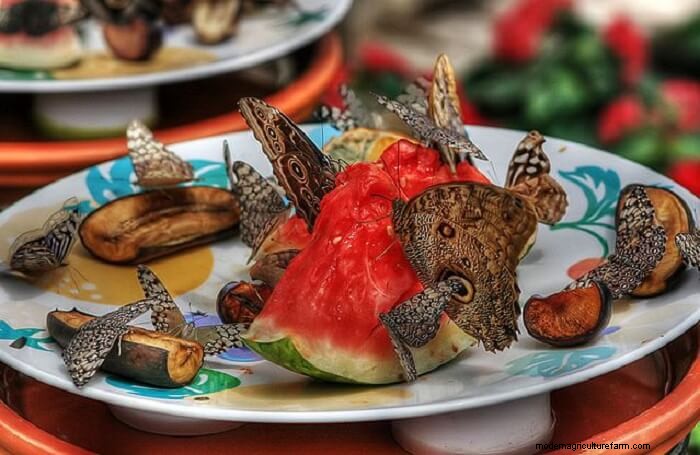
Watermelon turns rather rapidly, feeding overripe fruit to butterflies, seems like a perfect purpose for it. There are approximately 20,000 species of butterflies in the world. About 725 species can be found in North America/north of Mexico, approximately 2000 species in Mexico, 3500 in Peru, 275 species in Canada and 440 in Europe.
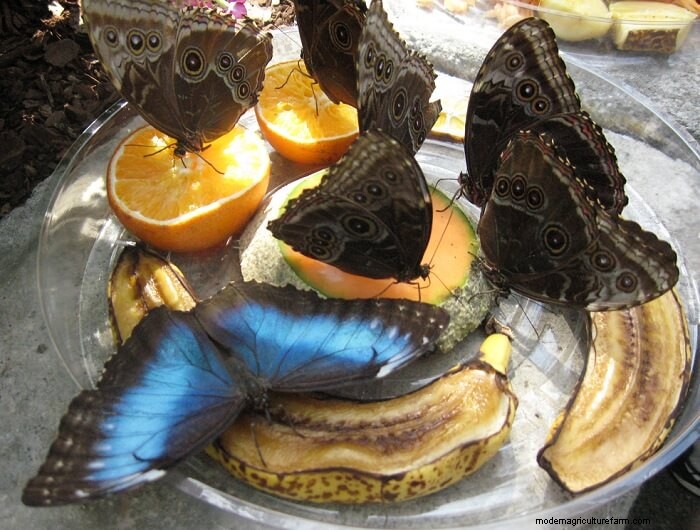
Fruit dehydrates and seals up, therefore slices need to be cut into the fruit daily, making more juice available. A Blue Morpho drinking banana juice at Lewis Ginter Botanical Gardens.
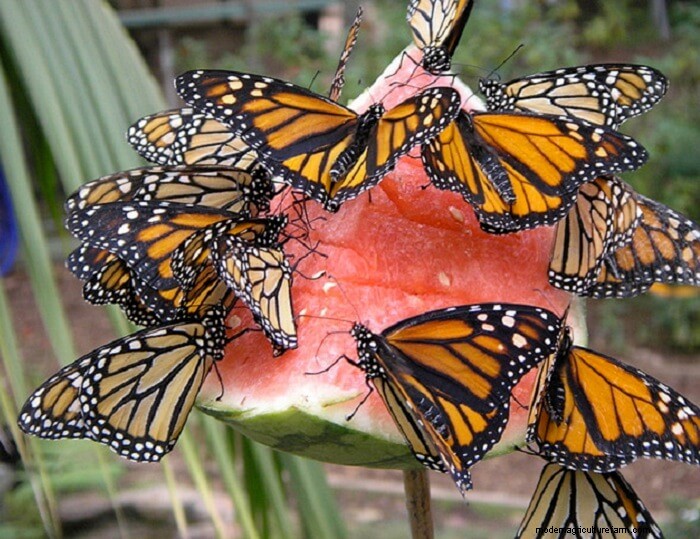
Watermelon on a stick. Monarchs can live up to nine months. Monarch larvae only eat milkweed, see bottom of page.
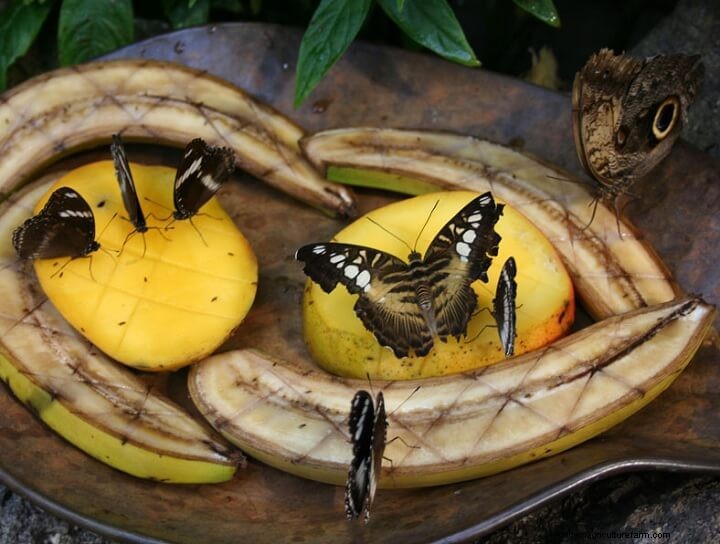
Making cuts across the fruit allows more juice to be available.
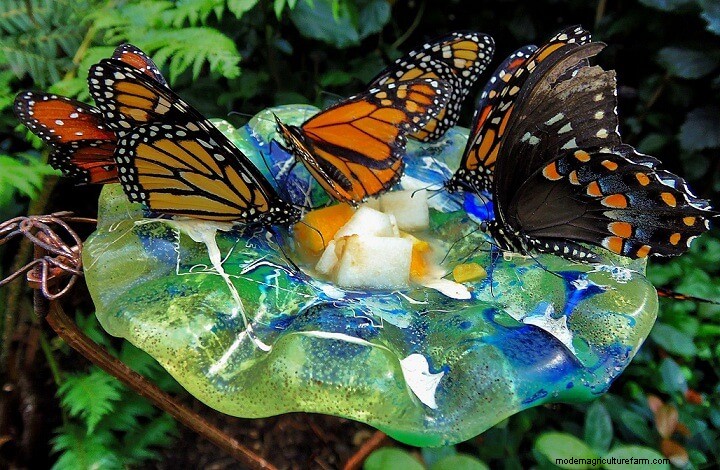
Fruit salad for butterflies.
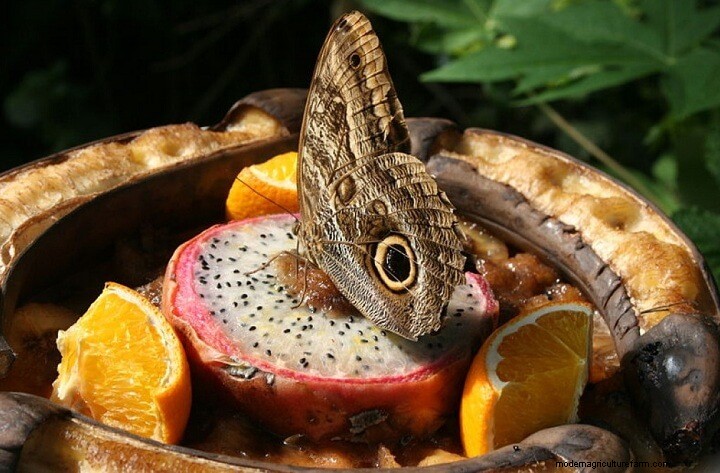
A butterfly enjoying some dragon fruit.
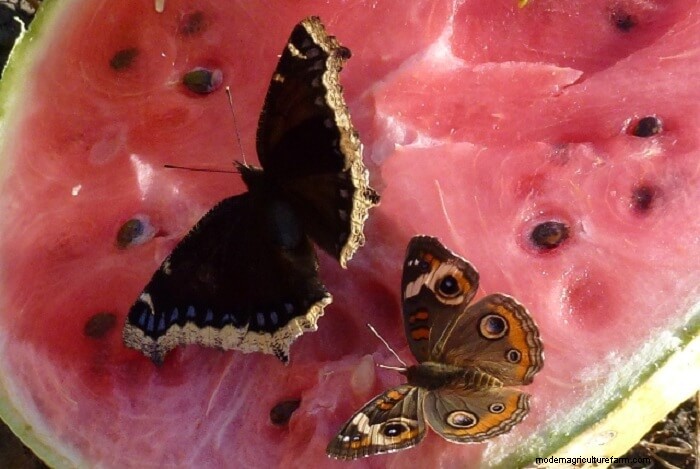
Many species seem to love watermelon. Unlike bees, butterflies can see the color red.
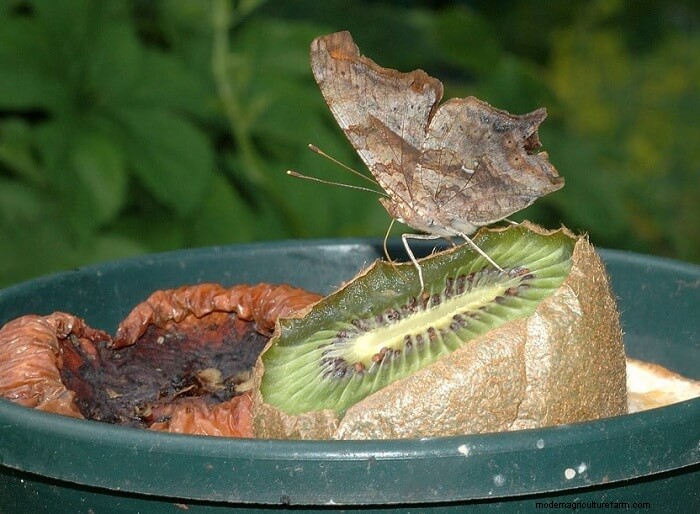
A Question Mark butterfly eating kiwi in a saucer set on a post.
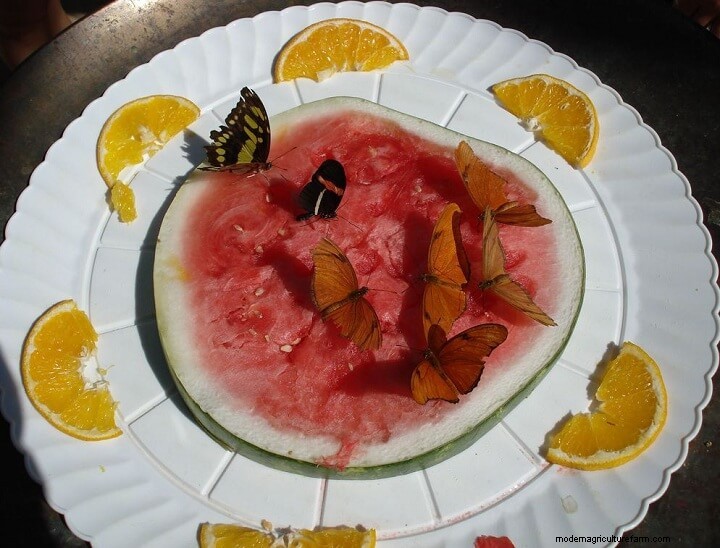
Water, minerals, and taste.
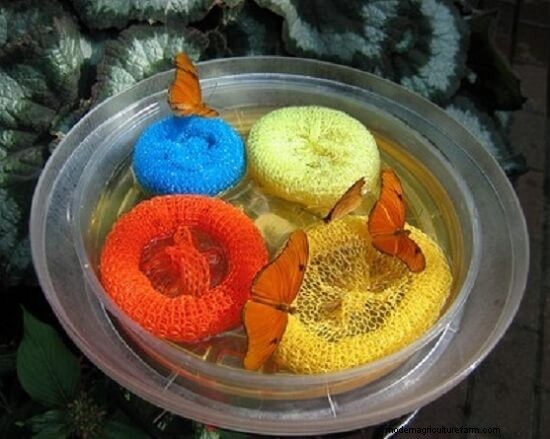
Butterflies love red, orange, purple, and yellow. Butterflies have good color vision, sensing more “wavelengths” than either humans or bees.
Butterflies are particularly fond of oranges, grapefruits, cantelope, strawberries, peaches, nectarines, kiwi, apples, watermelon, and bananas, especially mushy bananas that have been stored in the freezer and then thawed. Some species love a “brew” of rotting fruit, molasses, beer, and brown sugar. Some like moist mushroom compost.
Hummingbirds and some species of butterfly like simple sugar syrup: mix 4 parts water to 1 part sugar, boil mixture just untill the sugar dissolves, then be sure to allow the sugar mixture to cool before feeding butterflies. Adding soy sauce gives a dose of minerals and salt. Do not feed butterflies this sugar mix or honey during very cold or very dry weather as the sugar could re-crystallize inside them before being digested. Fructose is the safest bet for those times as it does not crystallize. A recipe: butterflyboutique.net. Lots of recipes here: faq.gardenweb, although I question the long term effects of the food coloring in the Gatorade that so many people have success with.
Aster, Borage, Butterfly Bush, Calendula, Cosmos, Delphinium, Lilac, Lupines, Sweet Alyssum, Verbena, Yarrow, Zinnias. See the Pollinator Planting Guide: pollinator.org
Plant some milkweed in your garden, and don’t pick off the caterpillars! ‘Milkweeds and nectar sources are declining due to development and the widespread use of herbicides in croplands, pastures, and roadsides. Because 90% of all milkweed/monarch habitats occur within the agricultural landscape, farm practices have the potential to strongly influence monarch populations.’ Spraying Round-Up and herbicides on roadsides reduces monarch populations. More information can be found at Monarch Watch.
Black Swallowtail larvae eat the leaves of dill, parsley, carrot, and fennel. Painted lady larvae eat thistle leaves.
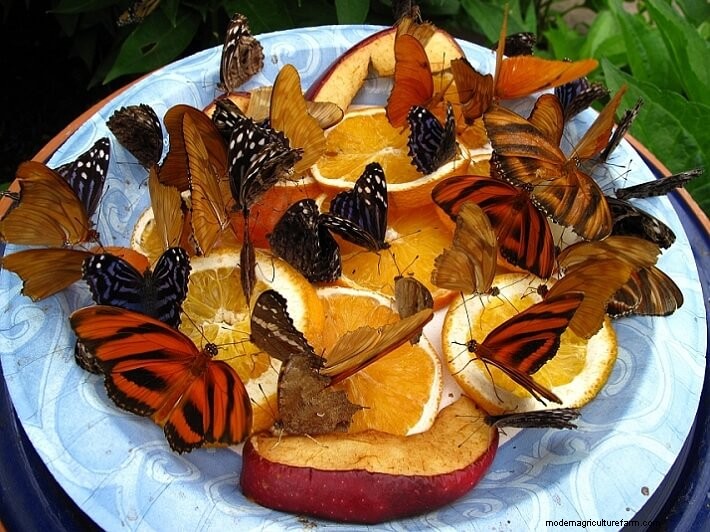
Putting a plate inside a larger plate or saucer that is filled with water will keep ants away from the fruit. Butterflies have a good sense of smell, they have scent receptors at the ends of their antennas, and taste receptors on the bottoms of their feet.
Make your own or purchase a butterfly feeder. Originally found for $25 at www.decor4u.com/petals-butterfly-feeders-c-94-p-2-pr-814.html.
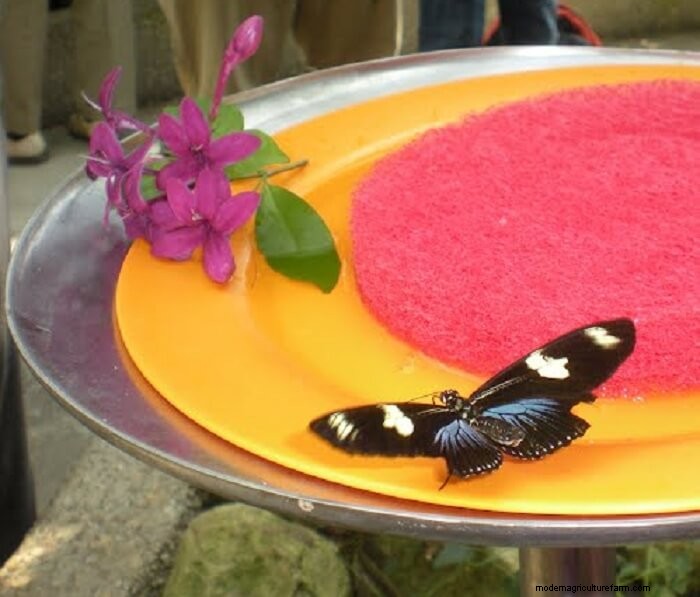
To attract butterflies add neon pink, red, and orange plastic scrubbers to your plate or bowl. Butterflies are restricted to an all-liquid diet due to their straw-like proboscis.
These butterflies are wasting no time to drink from these orange slices. The sign behind them is a great reminder to be gentle with these delicate beauties.
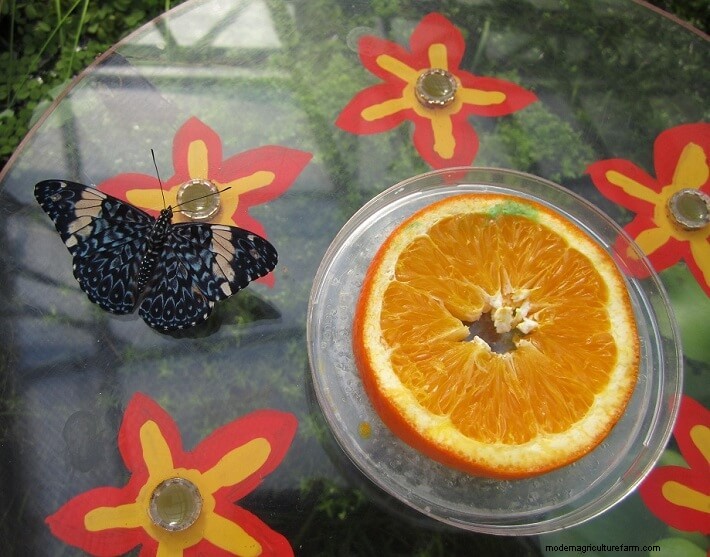
Painting flowers on a tray helps the butterflies locate the fruit. This picture features a portion of the Munich Botanical Gardens from hollyopnshk.blogspot.
Increase your chances of the butterflies finding their offering by having flowers close by, or paint or tape colorful flowers (real or fake) to the plate or hanging apparatus. To hang, cut three holes in a saucer, string with wire or chain and hang.
Male Butterflies need extra minerals and enjoy mud puddles. The extra sodium and amino acids are transferred to the female along with the spermatophore during mating. This nutrition enhances the survival rate of the eggs. The minerals also help in the production of pheromones which attract females. To make butterfly puddles, bury a container and then fill with sand or gravel. Fill with water, a sweet drink or stale beer.
At night and during wet weather, butterflies take shelter underneath leaves, among grass blades, or in a crevice of a rock.
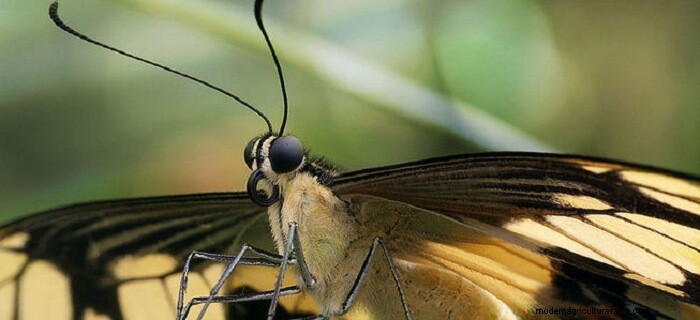
When not in use, butterflies keep their proboscis coiled up, then unfurl it to suck up nectar, pollen, tree sap, rotting fruit, dung, or other foods that are in a liquid state. The proboscis is discussed further in the article by AskNature, where this photograph was found.
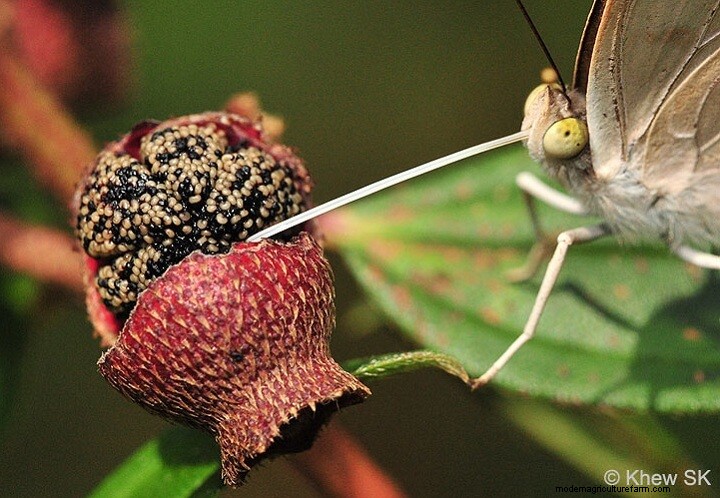
When unwound their proboscis acts as a straw. A Purple Duke extends its proboscis deep into the fruit of the Singapore Rhododendron. At Butterflies Of Singapore you can discover more about the relationship between the butterflies and the Singapore Rhododendron.
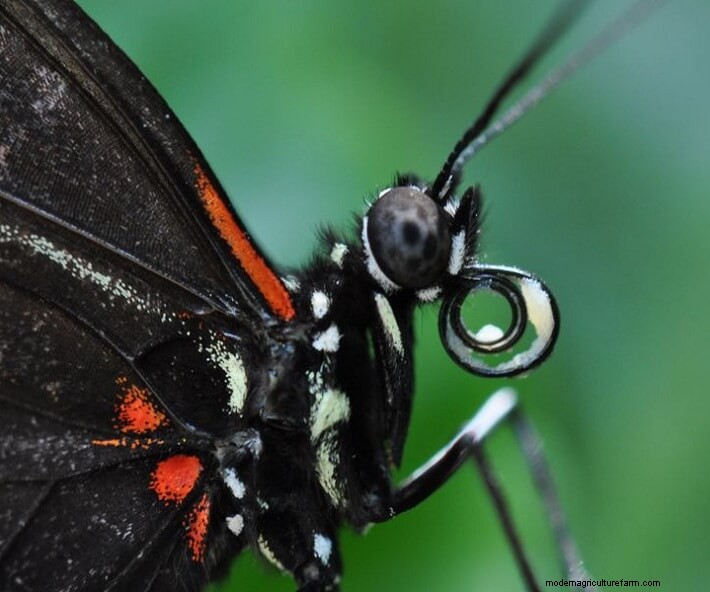
Close-Up of a butterfly’s proboscis (coiled straw) coated with pollen. Due to their long legs, nectar eating butterflies pick up only small amounts of pollen on their visits to flowers. Many moths are actually better pollinators than butterflies.
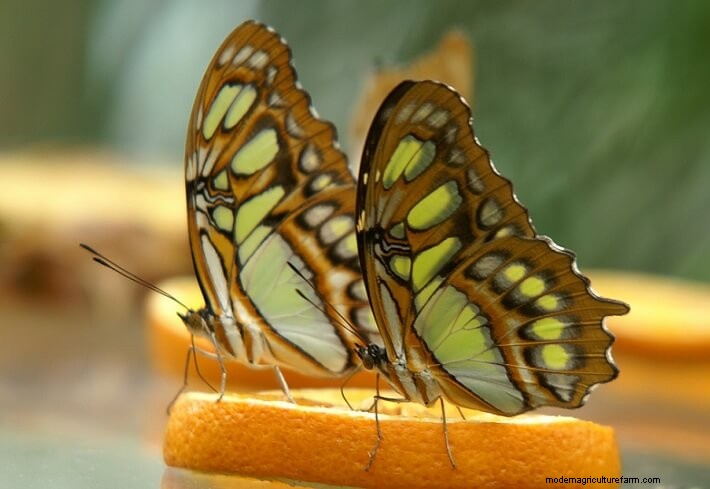
Due to the butterflies’ fragility to ecological change, they are an excellent indicator of an ecosystem’s health. Malachite butterflies feeding at a butterfly farm in Germany,
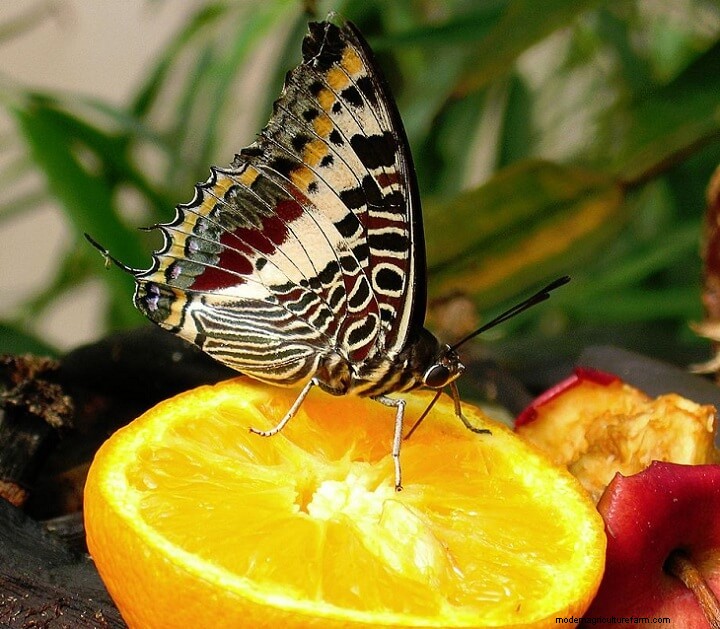
Two Tailed Pasha drinking from an orange.
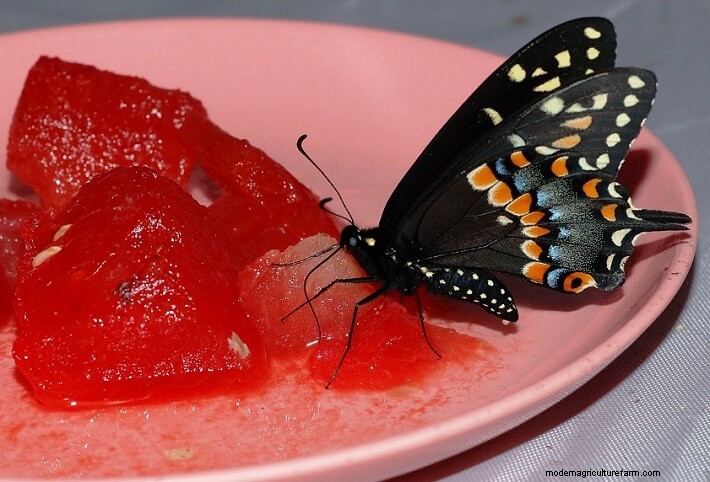
Butterflies taste with their feet. A Black Swallowtail drinking watermelon juice.
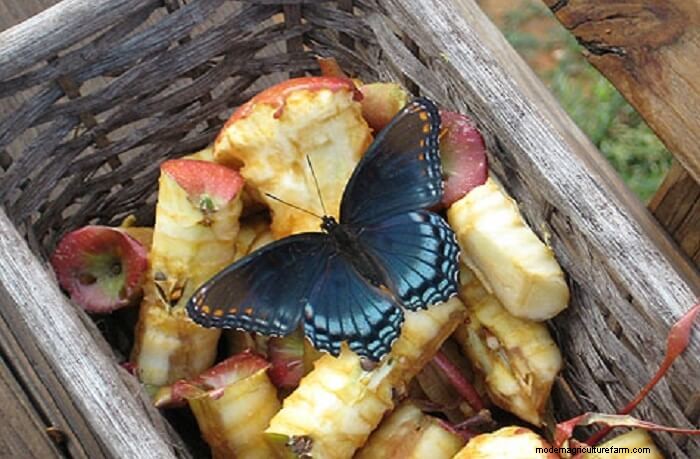
Because butterflies are cold blooded, they cannot fly if their body temperature is less than 86 degrees, so keep the fruit in the sun and out of strong winds. If your thinking about adding flowers to attract butterflies, Buena Vista Butterfly Farm has a great list of plants that you can look at.


