
Welcome to Modern Agriculture!

Musa is a large genus of flowering plants that may produce either plantains or edible bananas. Species within this genus are commonly known as banana plants, edible bananas, plantain plants, and dessert bananas — but they are most often referred to as banana trees.
That’s because despite the fact that these are not woody plants at all, and their “trunks” consist of leaf stalks (and are therefore not technically trees at all), they do have the ability to grow as tall as many trees.
The Musa genus is one of three genera in the Musaceae family of huge herbaceous plants that often appear to be trees, due to the overlapping sheathes of their foliage.
Musa acuminata is one of the most famous species within the Musa genus, and it includes both wild banana plants and cultivars, which are often grown with seedless fruits to increase their appeal to consumers. There are, however, numerous species and cultivars, and we don’t want to highlight a single one. That’s because there’s a banana plant out there just waiting to slide into your life — if you live in the right climate, you can grow banana trees outdoors in your garden, but if not, much more compact varieties can also make for absolutely delightful houseplants.
If you are interested in getting yourself a banana plant, however, know what you are getting into. These are not exactly low-maintenance plants, but they’re worth the love and care you’ll offer them.
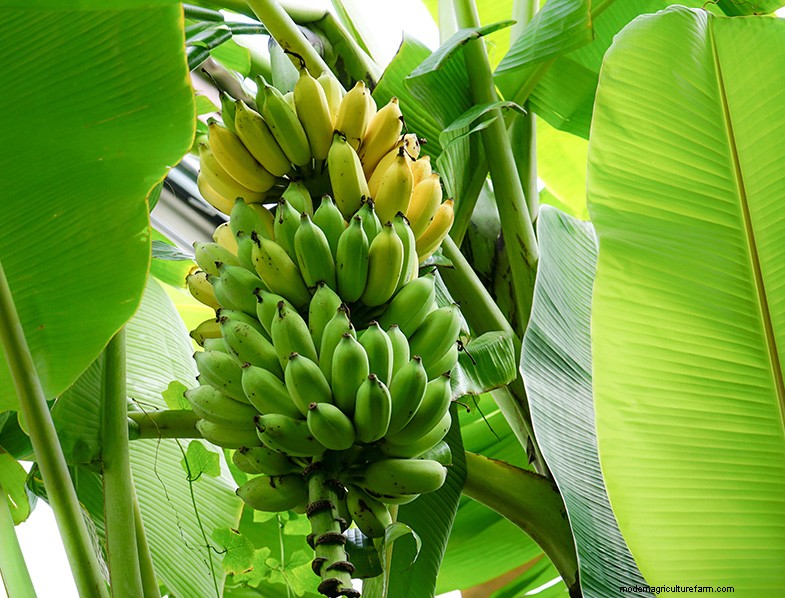 Musa Acuminata
It is important to emphasize that banana plants or banana trees encompass an entire genus — Musa. There are not only numerous species, but also a multitude of subspecies, hybrids, and cultivars. Most of these thrive in rather similar conditions, but there are notable exceptions. Before you bring a banana plant into your garden or your home (as a houseplant), research which particular variety is best suited to your climate conditions and your personal preferences.
Almost all banana plants favor warm climate conditions and, being native to tropical and subtropical regions, they do not usually tolerate frost at all well. Banana plants need at least six hours of daily sunlight to thrive, and ideally more. However, when deciding where to plant them (if you are intending to do so outdoors), you also need to keep in mind that banana trees cannot cope with heavy winds, which will irreparably damage their leaves.
In terms of temperature, even the most hardy banana plants don’t do well in temperatures below around 75 °F (24 °C). If you live in a region where temperatures dip below that, and especially if your area enjoys frost, you should not plant banana trees in the garden. You can still, however, enjoy these beautiful plants as houseplants.
Bestseller No. 2
Musa Basjoo Banana Tree - 1 Ft. Tall Cold Hardy Banana Plant - Rapid Growth - Easy Care (1 ft)
Bestseller No. 3
Banana Trees Grand Nain (4 Pack) | Easy to Grow Banana Plants | Edible Fruit Live Plant for Sustainable Living | Grow Your own Food on Your Edible Organic Garden| Live for Planting|
Last update on 2025-11-28 / Affiliate links / Images from Amazon Product Advertising API
Musa species need rich soil, and prefer acidic conditions. They prefer moist but well-draining soil and are vulnerable to fungal diseases if their root systems become waterlogged.
These plants absolutely require an ongoing fertilizer regime, and a balanced regime is best here. In addition, to ensure that the soil remains rich, give these hungry plants compost regularly throughout their growing season. This is true whether you are growing banana trees indoors as houseplants, or outside in the garden.
In terms of pruning, gardeners are recommended to prune the banana tree heavily before bananas appear, making sure than one central stem remains in place. Once the fruit season is over, the plant’s suckers will replace the current plant. Prune the plant so that one sucker has the opportunity to thrive and take over.
Banana pests and diseases, once present, are extremely difficult to get under control. Gardeners can try to keep their plants healthy by sterilizing tools used for their care, and spacing plants appropriately so that if one plant becomes infected, others can remain healthy. Pesticides are notoriously ineffective at treating banana pests.
Banana trees are native to the tropical areas of Asia, Africa, Australia, and Oceania, which means that they thrive in warm and moist conditions. Banana plants thrive in humid climates, which allows them to absorb moisture from the air. You bet that your banana plant, whether grown in the garden in the right climate or indoors are a houseplant, is a very thirsty plant, too! Just how much water will you need to give your banana tree, though, will depend on several factors. Especially during the growing season, their thirst will never be quenched.
If you’re growing a banana plant in a container or large planter indoors, your banana plant will need frequent watering whenever the soil is dry — you can feel the top layer of soil to see if it is nearly dry and water accordingly, without ever allowing the soil to dry out completely. Those banana trees grown in containers will certainly appreciate a deep watering once in a while, too.
Growing banana plants outside, however, requires a slightly different approach when it comes to deciding just how much you need to water them. Banana plants that get just about an inch of rainfall each week won’t need any extra water. If it hasn’t rained in a while, however, and you feel the soil around it is nearly dry, definitely water your banana tree.
While banana trees need moist soil to survive, they do not cope well with soggy conditions. This is why it is so important for the soil to be well-draining.
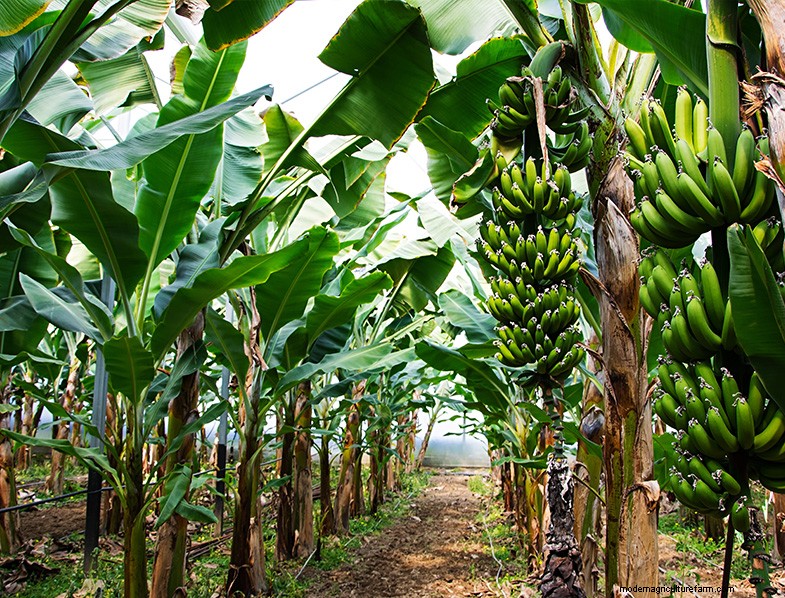 Musa Acuminata
To keep your own banana plant growing in the same location, you only need to prune it. The suckers will replace the current banana growth. To propagate the banana plant, you have a few different options. They are division, tissue culture, and sometimes from seed (although some varieties are seedless).
Tissue culture propagation is an extremely technical process and you’ll even need lab supplies, making it a bad choice for the regular gardener. Propagating from seed, however, is usually not even possible as most bananas are sterile and won’t have any seeds you can use for propagation. This makes propagation through division the best choice and it is actually a fairly easy process.
To propagate your banana plant through division you need to detach the suckers from the rhizome, for which you can use a spade or other sharp and fairly large instrument. The sucker now needs to be allowed to dry, until it is no longer shiny, and can be planted in spring in the right location in the garden, or in a planter or container. If you are planning to plant a new banana tree in your garden, keep in mind that the leaves retain moisture more effectively when several plants are grouped fairly closely together. On the other hand, also leave some space to protect each individual from pests if another is affected.
Banana plants — members of the Musa genus more commonly called banana trees — are delightful plants that can be grown outdoors in warm and humid climates that do not receive frost, and can be grown successfully as houseplants in cooler climates.
If you are looking for the right banana to grow as a houseplant, choose a more compact species and impede is growth through pruning. Before you add a banana plant to your home or garden, take some time to learn about the many different species, subspecies, and cultivars, and choose one that appeals to you visually, once you know you can meet its needs. Banana plants are high-maintenance in terms of watering and fertilizer, but give a lot in return, too. Depending on the species you choose, that may well include its famous edible fruits — which can be delicious even if they look nothing like the bananas you see in the supermarket!
140


