Petunias are one of the most popular summer bedding plants. There are hundreds of colorful cultivars. Petunias come in a wide range of plant sizes and forms. Some are suited for massing flower beds and borders; others trail and sprawl; others are compact and well-suited for hanging baskets and window boxes.
Petunias are available in red, pink, lavender, purple, white, and pale yellow; many are striped in contrasting colors. Flowers range from the size of a penny to the size of a saucer.
Petunias bloom from early summer to the first frost in autumn. There are 35 species of petunia, but almost all that can be found in garden centers and nurseries are free-flowering F1 hybrids derived from two species.
Petunias are half-hardy perennials that bloom in their first year and are commonly treated as annuals.
Grow petunias outdoors in window boxes, hanging baskets, and other containers as well as in beds and borders. Petunias also can be grown indoors as houseplants.
Flower Garden Success Products at Amazon:
- Wildflower Seed Mix Attracts Hummingbirds and Butterflies
- Eden Brothers All Perennial Seed Mix
- 10 pcs Stainless Steel Garden Hand Tool Set
- Gorilla Cart 4 Cu. Ft, 300-pound Capacity
- Neem Bliss 100-% Cold Pressed Neem Oil
- Safer Brand Insect Killing Soap
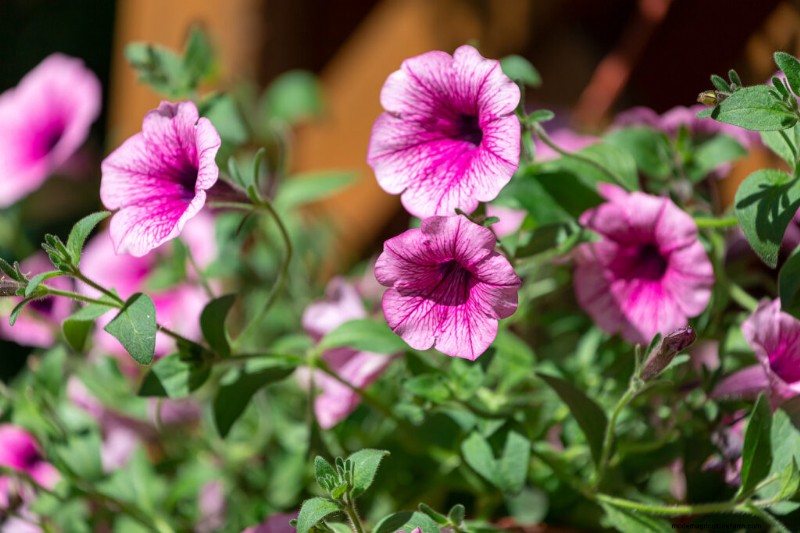 Petunia
 x
hybrida–Multiflora Group
Eight ways to use Petunias in the garden
Petunias are a popular, versatile flowering plant that adds vibrant color to any garden. With a variety of sizes, shapes, and colors, petunias can be used in many ways to create stunning garden displays. Here are some ideas on how to use petunias effectively in your garden:
1. Hanging Baskets and Containers
- Usage: Petunias are a classic choice for hanging baskets and containers. Their trailing varieties, such as Wave and Surfinia, create lush, cascading displays that spill over the sides and add an eye-catching vertical element to porches, patios, and balconies.
- Benefit: The continuous, abundant blooms add color and texture to outdoor spaces and can be mixed with other trailing plants like lobelia or ivy for a varied look.
- Tip: Use well-draining potting mix and fertilize regularly to promote healthy growth and prolific flowering.
2. Mixed Flower Beds
- Usage: Plant petunias in mixed flower beds for a burst of color. Their bright blooms pair well with other annuals and perennials like marigolds, zinnias, and daisies.
- Benefit: Petunias bloom from spring until frost, ensuring long-lasting color throughout the growing season. Their wide range of colors—from deep purples and reds to light pastels and bi-colored blooms—allows for creative combinations.
- Tip: Place petunias toward the front of beds where their mounded growth habit can be easily enjoyed and won’t be overshadowed by taller plants.
3. Edging and Borders
- Usage: Petunias work well as border plants, framing garden paths, walkways, and the edges of flower beds. Their low-growing varieties create neat, defined edges that bring a pop of color.
- Benefit: Using petunias as an edging plant helps draw attention to garden pathways and outlines the garden layout with a consistent splash of color.
- Tip: Plant in groups for a more uniform appearance and choose colors that complement the surrounding landscape.
4. Window Boxes and Planter Boxes
- Usage: Petunias are perfect for window boxes and rail planters, where their spreading varieties can trail beautifully over the edges.
- Benefit: They add curb appeal and bring vibrant color up to eye level, making outdoor spaces more welcoming and cheerful.
- Tip: Pair petunias with other plants like geraniums, sweet alyssum, or trailing bacopa for added interest and variety.
5. Pollinator Gardens
- Usage: Include petunias in pollinator gardens to attract bees, butterflies, and even hummingbirds. The trumpet-shaped blooms are a good source of nectar, making them a beneficial addition to wildlife-friendly spaces.
- Benefit: Encourages pollinators that contribute to a healthy garden ecosystem and improves pollination for other nearby plants.
- Tip: Choose fragrant varieties or those with bright, nectar-rich blooms for maximum pollinator attraction.
6. Rock Gardens
- Usage: Plant petunias in rock gardens or slopes where their spreading growth can fill gaps between stones and add bursts of color to a rocky landscape.
- Benefit: The plants’ resilience and ability to thrive in well-draining, sometimes poorer soil make them ideal for these conditions.
- Tip: Use compact varieties that won’t become too leggy and will stay neat and tidy among the rocks.
7. Mass Plantings
- Usage: Create striking visual displays by planting large groups of petunias en masse. This is especially effective in public gardens, large flower beds, or when designing seasonal garden themes.
- Benefit: The concentrated use of one or two complementary colors makes a bold statement and maximizes the visual impact.
- Tip: Space petunias evenly to allow them to grow into a dense mat of flowers, and keep up with deadheading to encourage continuous blooming.
8. Companion Planting
- Usage: Use petunias as companion plants in vegetable gardens. Their scent can help deter certain pests, such as aphids, and they can attract pollinators that benefit vegetable crops.
- Benefit: Adds color to a functional garden space and can support natural pest control efforts.
- Tip: Plant petunias near crops like tomatoes, peppers, or beans for an added layer of pest deterrence.
General Care Tips for Petunias:
- Light Requirements: Petunias thrive in full sun, requiring at least 5-6 hours of direct sunlight daily for optimal blooming.
- Watering: Keep the soil consistently moist but not waterlogged. Container plantings may need more frequent watering.
- Soil: Use well-draining soil, enriched with organic matter for best results.
- Maintenance: Deadheading spent blooms can help promote continuous flowering. Some newer varieties are self-cleaning, but removing dead flowers still helps maintain appearance.
Petunias are versatile, easy to care for, and come in a dazzling array of colors, making them a staple for gardeners looking to add long-lasting beauty to their outdoor spaces. Whether used in hanging baskets, flower beds, or as border plants, petunias bring a cheerful and classic touch to any garden.
Get to know Petunia
- Plant type: Annual
- Growing zones and range: All zones in summer
- Hardiness: Tender; hardy from about 30°F to 90°F (-1.1–32°C).
- Height and width: 6 to 24 inches (15-61cm) tall; 12 to 24 inches (30-61cm) wide
- Foliage: Thick, broad leaves are slightly sticky to the touch
- Flowers: Flowers vary from funnel-shaped single blooms to densely double, heavily ruffled flowers that resemble carnations; flowers range in size from 1 to 6 inches (2.5-15cm) across
- Flower colors. Nearly every color except green, many pastels, shades of pink, red, salmon, coral, yellow, cream, blue, purple, and white; also bicolor and picotee flowers
- Uses: Mass in beds and borders; hanging baskets, containers, window boxes
- Bloom time: Summer until frost; all year in frost-free, mild-winter regions; grow in spring in Zones 9-11 where summers are hot
- Common name: Petunia
- Botanical name: Petunia hybrida
- Family: Solanaceae
- Origin: South America
Where to plant Petunia
- Plant petunias in full sun.
- Grow petunias in rich to poor, well-drained soil; petunias tolerate alkaline soil. An over-rich soil or excessive shade can encourage leafy growth at the expense of blooms.
- Petunias prefer a soil pH of 6.0 to 7.0.
Petunia uses
- Use petunias in beds and borders; interplant petunias with annuals and perennials in mixed borders.
- Use Petunias to edge borders and walkways.
- Use petunias in containers and hanging baskets.
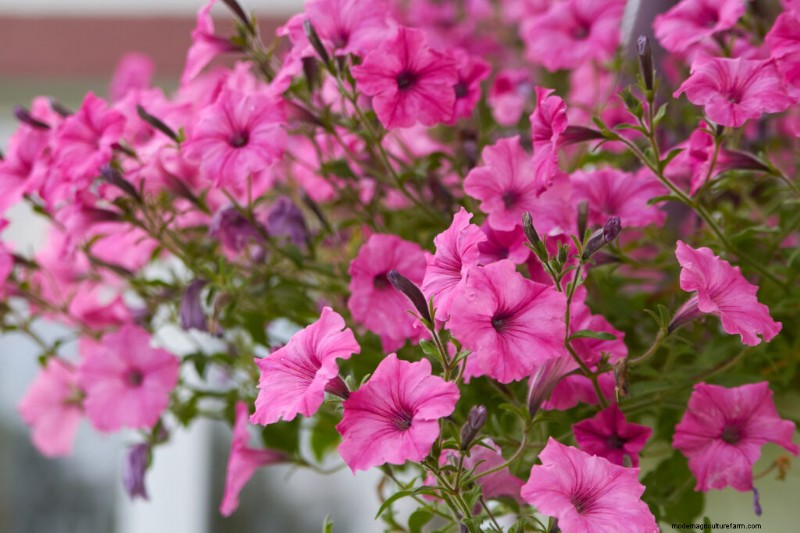
Pink petunias hybrids from the Multiflora Group
When to plant Petunia
- Start seeds indoors 10-12 weeks before the last frost; in zones 9-11 start seeds indoors in late summer or early autumn for winter bedding.
- Start seeds at 68° to 77°F (20°-25°C) for best germination success. Seeds commonly germinate in 7 to 10 days.
- Grow seed indoors in flats of moist potting soil; start in the bright sunlight or a few inches below fluorescent lights; give 12 hours of light each day to germinate the seed.
- Set petunias in the garden in spring after all danger of frost has passed.
- Plant petunias in fall in zones 10 and 11.
Planting and spacing Petunia
- Prepare outdoor beds by adding aged compost; humus-rich soil is best.
- Sow seed outdoors after all danger of frost has passed; mix the seed with dry sand and plant sparsely without covering and water. The seed is tiny and difficult to see.
- Space petunias from 4 to 12 inches (10-33cm) apart depending on the cultivar.
- Thin seedlings to avoid crowding; thin when plants are 3 to 4 inches (7.6-10cm) tall; thin plants to 6 to 12 inches (15-30cm) apart.
- Harden off plants before setting them outdoors; an air temperature of 55°F (12.8°C) or warmer is best.
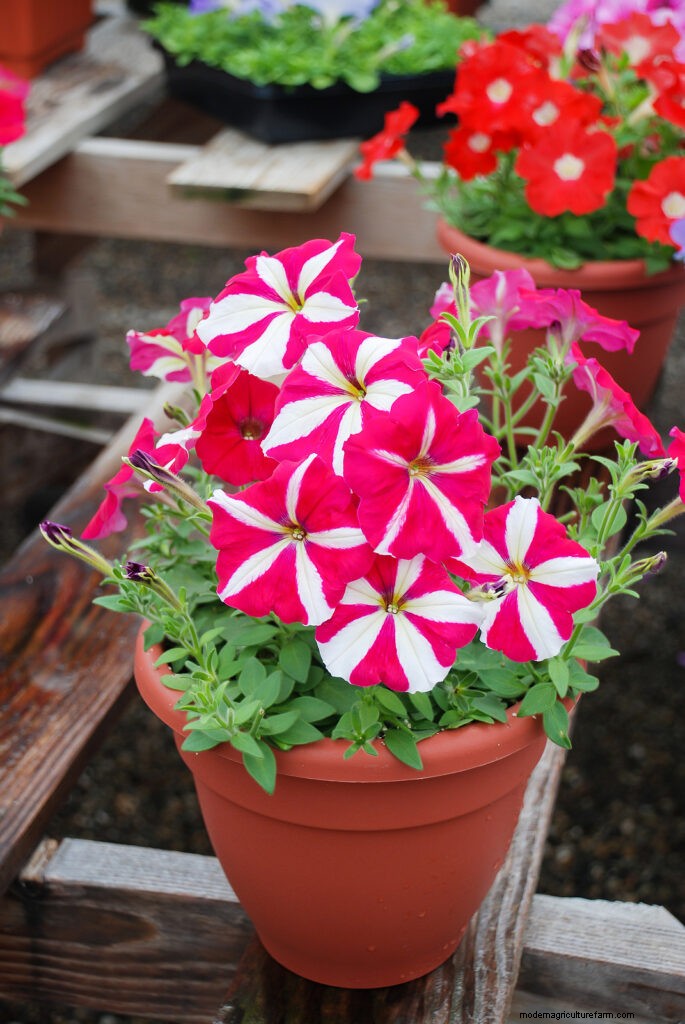
Petunia from Grandiflora Group
How to water and feed Petunia
- Petunias need moderate water. Do not let plants dry out, but do not overwater. Avoid wetting flowers and foliage; this can cause rot.
- Fertilize petunias every 2 to 4 weeks with an all-purpose liquid fertilizer or work a slow-release fertilizer into the soil at planting time.
Petunia care
- Water as needed; do not let the soil dry out, especially during hot weather.
- Water container-grown plants regularly and frequently.
- Feed with a dilute solution of fish emulsion or kelp meal; when flower buds form feed with a high phosphorus liquid fertilizer such as 5-10-10.
- Mulch around petunias to conserve moisture and keep sticky leaves clean.
- Deadhead spent blossoms to encourage more blooms.
- Deadhead as the flowers fade to encourage more blooms.
- Pinch back plants regularly to encourage compact growth.
- Cut back leggy plants from mid to late summer; cut back to one-third the size to keep plants tidy and rejuvenate them.
Good Products for Seed Starting Success at Amazon:
- Jump Start Germination Station w/Heat Mat Tray, 72-Cell Pack, Dome
- Espoma Seed Starting Mix
- 200 Count- Jiffy 7 Peat Soil Seed Starting Plugs
- Seed Starter Kit with Humidity Dome (120 Cells Total Tray)
- AgrobriteT5 Fluorescent, 2-Foot, Grow Light System
Petunia pests and diseases
- Petunias can be damaged by botrytis disease in humid weather.
- Viral diseases that can attack petunias include cucumber mosaic, tobacco mosaic, and potato viruses. Use virus-free seed.
- Crown rot can occur in soil that stays wet and is not well-drained
- Slugs and aphids are occasionally a problems
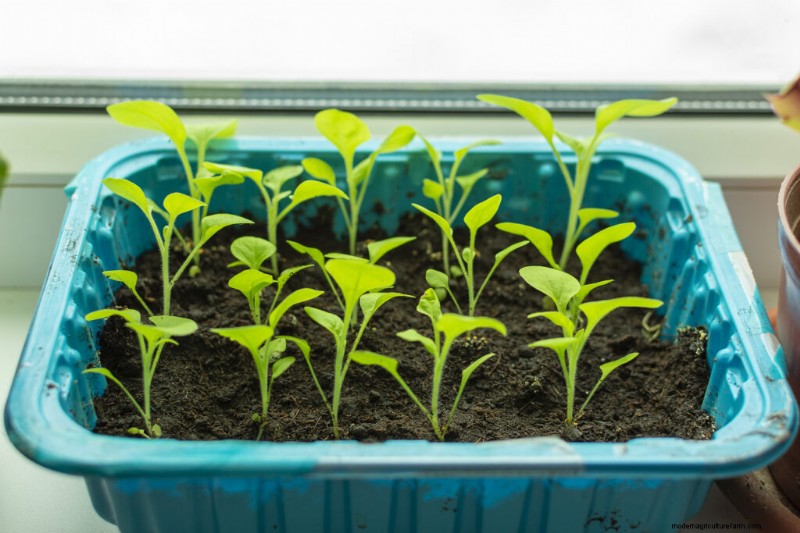
Young petunia seedlings.
Petunia propagation
- Petunias can be propagated by seeds or cuttings; seeds are the most common method.
- Take cuttings about 5 inches (12.7cm) long and root them at 60-80°F (15.6-26.7°C).
- Petunias can be started from seed; the seed is tiny; grow in flats, small pots, or six-packs.
- Seeds germinate in 10 to 12 days at 70° to 80°F (21°-27°C). Plant flowers 8 to 10 weeks from sowing.
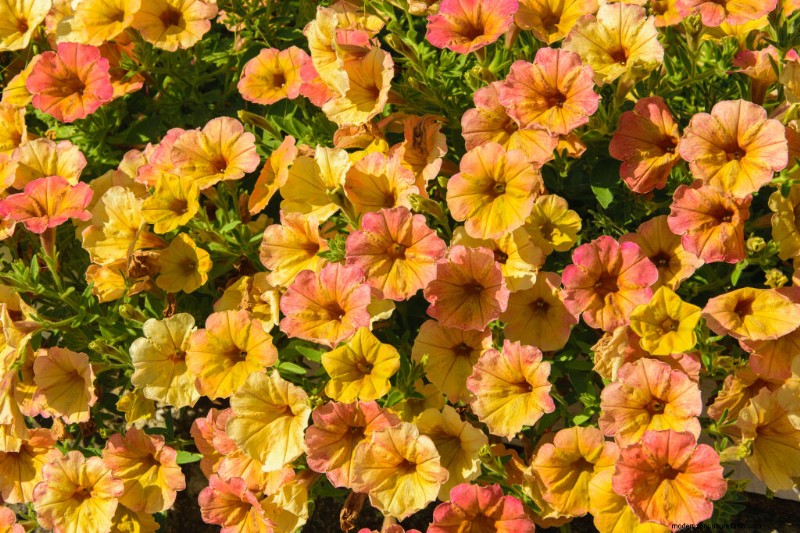
Petunia Spupertunia in the Milliflora Group
Petunia varieties to grow
Visit a local nursery to see the wide selection of cultivars. Visit several nurseries to see what different vendors are growing. There are three basic types of petunia: multiflora, grandiflora, and milliflora.
- Multiflora Group: bushy plants grow 8 to 12 inches (20-30cm) tall; bear a large number of flowers 2 inches (5cm) across; flowers are smooth-edged single or double; neat compact growth for bedding and mass planting; bloom colors include pink, rose, salmon, yellow, white, ad blue; this is the most widely grown and weatherproof group; cultivar series strains include Joy, Plum, Carpet, Delight, Duo, Mirage, Cascadia, Solana Royal, and Surfinia. Wave petunias, round cover petunias, are included in this group.
- Grandiflora Group: fewer flowers than multiflora group plants but larger blooms to 4 inches (10cm) across; the largest flowers of all three groups; plants grow 15 to 27 inches (38-68cm) tall; flowers can be single, ruffled, or fringed; bloom colors include pink, rose, salmon, red, scarlet, blue, white, pale yellow, or striped combinations; cultivar series strains include Magic, Supermagic, Cloud, Daddy, Pirouette, Super Fanfare, and Supercascade.
- Milliflora Group: smallest flowers of any group to 1.25 inches (3cm) across; dwarf and compact plants grow to 6 inches (15cm) high and wide and spreading; a good choice for pots, hanging baskets, and window boxes; cultivar series strains include Fantasy, Carillon, Million Bells, and Supertunia.
Petunia frequently asked questions
Q: What are the best-growing conditions for petunias?
A: Petunias will do well in a sunny location in well-drained garden soil. Petunias love hot and dry weather. The display can be disappointing in wet weather.
Q: How can I get petunias to grow full?
A: When the stems are 4 to 6 inches tall, pinch out the tips This will keep petunias compact and full.
Q: How can I start my own petunias?
A: Sow seed indoors 8 to 10 weeks before the last frost. Seeds do not germinate easily. Provide bottom heat or a warm spot at 70° to 75°F. Do not cover the seed when sowing.
Q: Can I grow petunias as a house plant in winter?
A: Petunias make good houseplants. Left plants from the garden in late summer, cut back the tops, and set them in a small pot. Set them in a bright sheltered place for a week. When they recover from transplanting set them in a sunny widow. New shoots and new buds will develop by mid-winter.
Related Articles:
- 20 Perennials That Bloom for 6 to 8 Weeks
- Shrubs with Showy Flowers Season-by-Season
- Trees in Garden Design
- Growing Annuals for Summer Bloom
- Trees—click here for more articles
- Shrubs—click here for more articles
- Perennials—click here to see more
- Annuals—click here to see more


