
Welcome to Modern Agriculture!

Hello Mushroom growers, today we are back with coffee ground hack to grow mushrooms overnight. Not only are coffee grounds a powerful substrate for growing mushrooms, but they are also much more than just a waste product that is produced after brewing coffee. The scientific explanation for this is that they have a unique composition. In order for mushrooms to be able to support the growth of their mycelium, discarded coffee grounds contain a high concentration of nitrogen, which ranges from two to four percent. In contrast to other substrates such as straw or sawdust, coffee grounds have a naturally acidic pH ranging from 5 to 6.5. This naturally acidic pH provides mushrooms with a competitive advantage while also inhibiting the growth of mold and other harmful diseases. Because of its acidity and porosity, coffee is able to retain an appropriate amount of moisture without causing waterlogging, which is a common risk in mushroom gardening.
Additionally, coffee grounds are a decision that is environmentally smart. Each year, more than six million tons of waste coffee are disposed of in landfills around the world, where they degrade and release methane into the atmosphere. You are not only increasing the amount of food you produce, but you are also lowering your carbon footprint by reusing this trash. If you want the greatest results, use freshly brewed coffee grounds (avoid waste that is moldy or has been sitting about for days) and combine them with species that develop quickly, such as oyster mushrooms, which flourish in the specific nutrient profile of coffee.
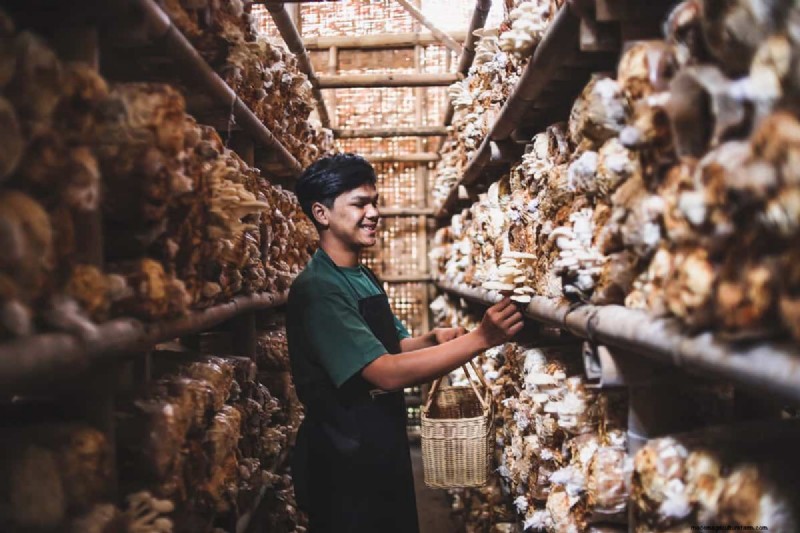
The following materials are required:
Procedure:
1. Sterilize Your Workspace
To get rid of impurities, use isopropyl alcohol to clean your container and desk. This is a crucial step since airborne mold spores can ruin your grow.
2. Mix Spawn and Coffee Grounds
Mix your coffee grounds with mushroom spawn in a 1:4 ratio (5 parts grounds to 1 part spawn). To guarantee even distribution and prevent overcompaction, mix gently. Mycelium can breathe because of the loose texture.
3. Incubate at Optimal Temperature
Close the container and keep it somewhere warm (70 to 75°F) and dark. The mycelium will spread throughout the grounds in 12 to 24 hours, creating a network that resembles a white web.
4. Initiate Fruiting
Remove the cover after colonization and sprinkle the substrate with water. Because mushrooms require very little light to fruit, place the container in indirect light. Within 12 to 36 hours, tiny pins, or baby mushrooms, may appear.
5. Harvest and Enjoy
Harvest the mushrooms by twisting and pulling them after the caps curl upward, which should happen 1-2 days after pinning. Refrigerate for up to 5 days or use right away for maximum flavor.
Three things make it possible for mushrooms to grow quickly in coffee grounds: spawn that has already been invaded, caffeine’s ability to kill microbes, and the right amount of moisture. Mycelium, or mushroom spawn, quickly spreads through the rich, nutrient-rich soil like a starting culture. As a natural antibacterial, caffeine stops rival organisms from growing, which lets mycelium grow freely. At the same time, the absorbent nature of coffee keeps the humidity high without smothering the fungi.
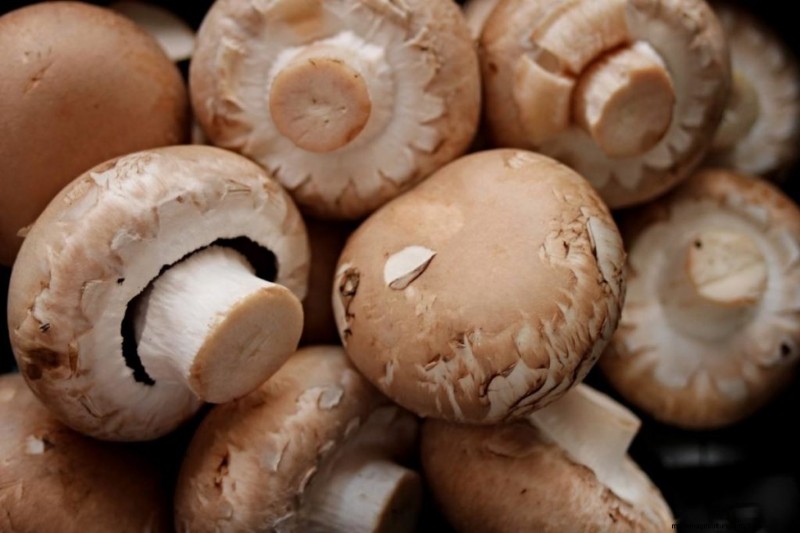
Oyster mushrooms cultivated in coffee grounds yielded 20% more than those grown in straw, according to a 2022 study published in the Journal of Fungal Biology. The reason for this, according to researchers, is that caffeine inhibits Trichoderma, a common fungus that afflicts mushroom growers.
Even experienced growers face pitfalls with this method. Here’s how to avoid them:
Coffee grounds deliver superior performance in comparison to traditional substrates such as sawdust or straw in a variety of different ways. On the other hand, straw must be soaked and then heated before it can be used, whereas coffee grounds can be used immediately after the brewing process. As a result of the high nitrogen content that they possess, they do not require any additives such as bran or gypsum. It was shown in a study that was conducted in 2023 that coffee-based grows create 1.5–2 pounds of mushrooms for every 5 pounds of ground, whilst straw grows produce 1–1.5 pounds of mushrooms, respectively.
In case you are interested in: Hydroponic Mushroom Farming.
The pricing is still another advantage. Unlike straw, which may cost anywhere from $5 to $10 per bale, coffee grounds are completely free. This is a win for the environment. Coffee is a more environmentally friendly choice because it reduces the amount of garbage that is sent to landfills.
Stunted growth or contamination can stem from several issues:
Once you’ve had experiences with small-scale grows, scaling up is very simple:
In addition to being efficient, this method is also groundbreaking in terms of its capacity to be sustainable. Every ton of coffee grounds that is prevented from being disposed of in landfills results in the avoidance of one thousand pounds of carbon dioxide emissions. In order to finish off the closed-loop system, residual grounds can also be composted after picking has been completed. Even communal projects have been initiated by urban farmers in locations such as Portland and Berlin, with the goal of transforming the waste obtained from cafés into food that is produced locally.
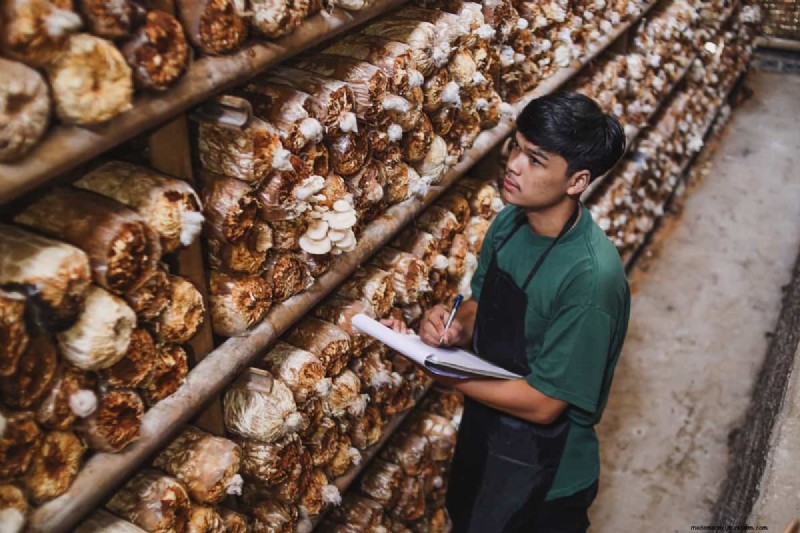
Harvesting is only the first step; the subsequent handling has a significant impact on the flavor, texture, and shelf life of the product. The mushrooms should be stored in a jar lined with paper towels to absorb moisture once they have been picked. Once plucking, the extra grounds should be carefully brushed off. Preventing oxidation can be accomplished by either vacuum-sealing them or submerging them in cold water with a splash of lemon juice. This will allow for long-term storage of up to two weeks. It is recommended to dehydrate mushrooms at a temperature of 120 degrees Fahrenheit for six to eight hours and then store them in sealed jars.
Utilize wasted grinds as a natural preservative by spreading them between mushrooms in storage containers; this method increases the freshness of the mushrooms by three to five days without compromising their quality.
In case if you miss this: 12 Reasons Mushroom Farms Fail in Year One.
Coffee-ground mushrooms are able to flourish in indoor environments that are consistent; yet, fluctuations in temperature and humidity might have an effect on their growth. During the winter, you can counteract dry air by placing containers on a pebble tray filled with water or with a humidifier in close proximity to them. During the summer, you can keep plants from scorching by moving them to cooler locations (such as basements) and spraying them three to four times per day.
A tiny grow tent equipped with a thermostat and humidistat is an investment that will ensure uniformity throughout the year. Combine this with a do-it-yourself incubator, which is a cooler with a heating pad, to keep the temperature between 70 and 75 degrees Fahrenheit even in the most severe conditions. These changes ensure that harvests continue without interruption, regardless of whether you are dealing with heatwaves or snowstorms. Hope this “coffee ground hack to grow mushrooms overnight” benefits you in crop.

![Best Trellis Plants for Walls, Pergolas & Arbors | [Year]](https://modernagriculturefarm.com/article/uploadfiles/202211/2022111617032276_S.jpg)
