
Welcome to Modern Agriculture!


Glen Chandler brings more than a decade of real‑world experience to every article, translating hands‑on gardening knowledge into clear, actionable guidance.
Latest posts by Glen Chandler (see all)
When selecting artificial lights for indoor gardens, color temperature—measured in Kelvins (K)—is a primary consideration. The 5000K spectrum is frequently debated, but it offers a proven balance that mimics morning sunlight and supports vegetative growth.
Quick Takeaway
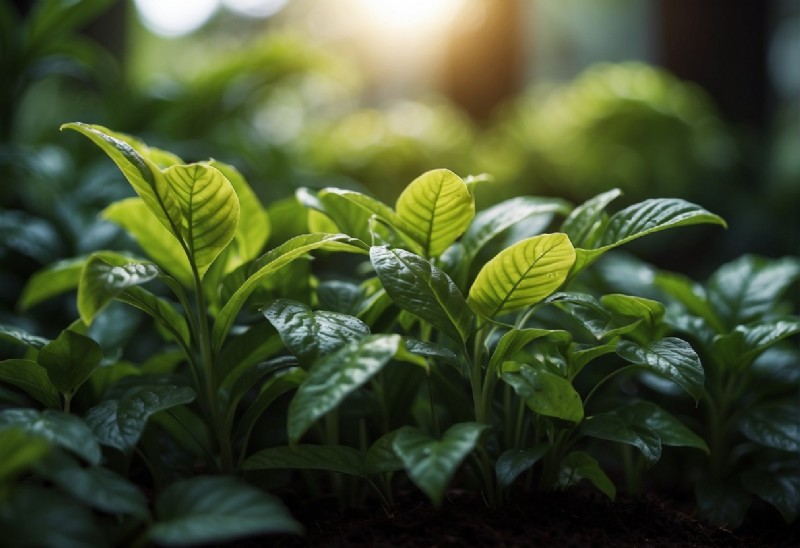
From extensive testing, 5000K light delivers a soft white glow rich in blue wavelengths, which is especially effective during the vegetative phase.
In practice, 5000K lighting promotes robust root development, healthy leaf tissue, and sturdy stems—key traits of a thriving plant. It is particularly well‑suited for seedlings and young plants that are preparing to flower or bear fruit.
Plants rely on light to trigger biochemical reactions—a process known as photosynthesis—which is the foundation of their growth, known as a plant‑in‑situ process. Artificial LEDs at 5000K can emulate natural sunlight sufficiently to support indoor cultivation.
Photosynthesis converts incoming light into chemical energy, enabling plants to restructure and repair themselves. This makes it the linchpin of every growth phase.
The vegetative stage focuses on leaf and stem development, forming the essential structure of the plant. Subsequent flowering and fruiting stages, often called fruit‑set or reproductive stages, rely on optimal lighting to produce high‑quality outputs.
Indoor growers aiming to replicate natural daylight typically select lights between 5000K and 6500K, offering a balanced spectrum for both vegetative and reproductive phases.
Effective plant growth hinges on the right mix of light quality, intensity, and temperature. This section details how to harness these variables for maximum benefit.
Lighting within the 5000K–6500K range aligns closely with natural daylight, delivering the appropriate chromatic cues for plant development. 5000K resembles early morning light, while 6500K matches midday conditions.
Full‑Spectrum LED lights are the gold standard, providing a comprehensive range that matches the sun’s energy profile.
Light intensity, measured in lumens, must support photosynthesis without causing damage. Too bright, and you risk photobleaching; too dim, and the plant fails to grow.
Spectral quality, especially the ratio of blue to red wavelengths, is critical. Blue light promotes vegetative growth, whereas red light is vital during the flowering stage.
PAR (Photosynthetically Active Radiation) is the metric that truly captures how light affects plant tissues.
LED grow lights combine energy efficiency, longevity, and tunability. A 5000K LED is ideal for seedlings and leafy plants, while 6500K may better support flowering stages.
| Growth Stage | Light Temp (Kelvin) | Light Type |
|---|---|---|
| Vegetative | 5000K | Blue‑rich, Cool White |
| Flowering | 6500K | Full Spectrum |
Successful indoor cultivation starts with the right lighting and a supportive environment.
Choosing the appropriate bulb—whether T5/T8 fluorescent tubes or LED fixtures—depends on energy output and heat emission. A 5000K LED often offers the best balance for vegetative growth.
Kelvin Temperature Recommendations
When installing lights, consider wattage, lumens, and distance from the canopy. Placing lights closer to seedlings and gradually increasing the gap as the plant matures helps avoid heat damage and ensures even illumination.
Temperature control between 65–75°F (18–24°C) during daylight and slightly cooler at night is optimal for most indoor plants. Humidity should remain in the 40–60% range for a healthy environment.
| Condition | Day | Night | Humidity |
|---|---|---|---|
| Temperature | 65–75°F (18–24°C) | Slightly cooler | 40–60% |
Plants convert light into chemical signals—a process called electromagnetic induction. Blue light at 5000K–6500K stimulates vegetative growth, while red light at 2700K–3000K enhances flowering.
Key Insight: Blue wavelengths are essential for leaf formation, whereas red wavelengths trigger the plant’s reproductive functions.
![Meet Our Community of Garden Enthusiasts | [Company Name]](https://modernagriculturefarm.com/article/uploadfiles/202207/2022070917484332_S.jpg)

