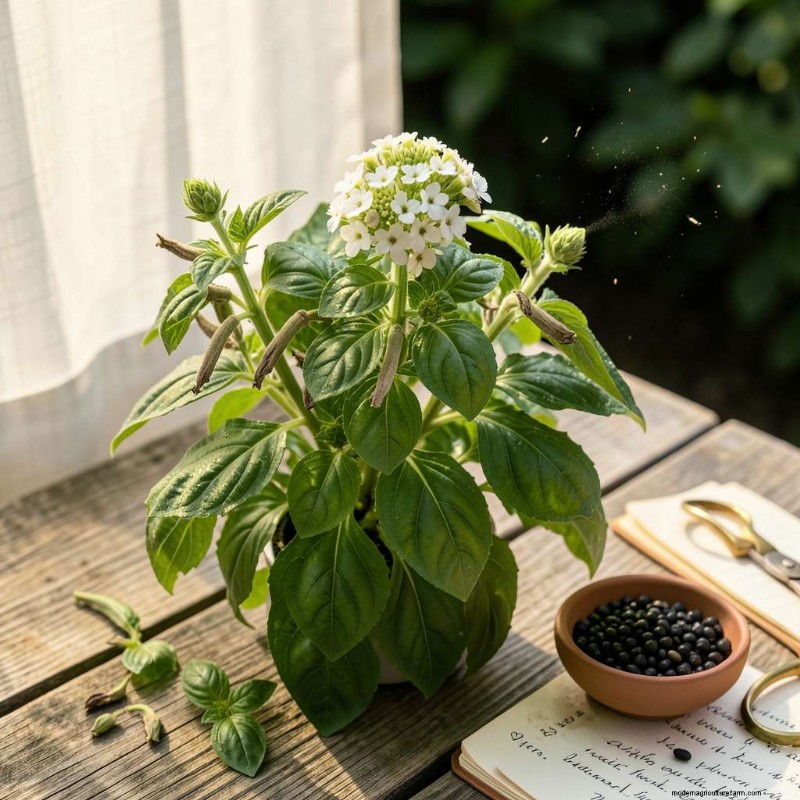
Elevate your herb garden by saving your own basil seeds. Our expert‑backed guide walks you through every step—from selecting the right plants to storing seeds for years—ensuring high germination rates and thriving seedlings.
Why Save Basil Seeds?
Harvesting basil seeds gives you heirloom quality, fully adapted plants that perform better than store‑bought seedlings. The process is quick—under 15 minutes—and eliminates the cost of annual purchases.
What You’ll Need
- 1–2 mature basil plants (at least 50% of flowers turned brown/dry)
- Sharp scissors or pruners, sterilized with rubbing alcohol
- 2–3 small breathable paper bags or clean envelopes for drying
- Optional: fine‑mesh sieve or colander, tweezers, labeling supplies
- Sunny windowsill or warm, dry spot (70–80°F ideal) for drying
Step‑by‑Step Instructions
Follow these stages for reliable seed collection:
- Monitor Maturity: After 6–8 weeks of growth, let the first flower buds on the stem bloom naturally. This promotes pollination and seed development.
- Watch for Pods: Once the blossoms fade, green pods appear. Allow 2–3 weeks for pods to fully dry and turn brown. When a pod crumbles easily between your fingers, it’s ready.
- Cut and Dry: Trim the entire flower stem with clean scissors, place it in a paper bag, and let it dry for an additional 3–5 days in a warm, dry area. This extra drying eliminates residual moisture.
- Crush and Separate: Gently crush the dried stems over a clean bowl or paper. Blow or sift the mixture to remove chaff, leaving tiny black seeds.
- Store Properly: Place seeds in a labeled paper envelope or small glass jar with a silica gel packet. Keep them in a cool, dark location (pantry or refrigerator). Seeds remain viable for 3–5 years when stored correctly.
Tips & Common Mistakes
- Patience Is Key: Harvesting too early (e.g., after 4 weeks) yields immature seeds that won’t germinate. Wait until pods are fully dry.
- Drying Matters: Skipping the 3–5 day bag drying can cause mold during storage. Ensure complete dryness before storing.
- Use a White Surface: Work over a light background when crushing pods to better see the black seeds.
- Control Humidity: Adding a silica gel packet extends seed viability beyond 5 years.
Frequently Asked Questions
- How long does it take for basil seeds to mature after flowering?
- Seeds typically mature 4–6 weeks post‑flowering. Look for dry, brown seed heads and harvest on a sunny, dry day.
- Can I harvest seeds from store‑bought basil?
- Yes, but only if the plant is organic and non‑GMO. Hybrid or treated basil may not produce viable seeds. Heirloom varieties like Genovese or Sweet Basil are recommended.
- Why aren’t my basil seeds germinating?
- Common causes include immature seeds, insufficient drying, or old seeds. Test viability by soaking a few in water—sinkers are viable, floaters are not.
- Do basil seeds need fermentation?
- No. Unlike tomatoes, basil seeds should be dried thoroughly (1–2 weeks) before storage; fermentation can reduce germination.
- Best long‑term storage method?
- Use a paper envelope or glass jar with a silica gel packet in a cool, dark spot. Avoid plastic bags, which trap moisture.
By following these simple steps, you’ll build a renewable supply of basil seeds, saving money and cultivating plants that thrive in your local climate. Start your own herb garden today and share the bounty with friends and neighbors.