
Welcome to Modern Agriculture!

Blackberries are one of the most rewarding soft fruits for home gardeners. They grow quickly, produce abundant fruit, and can be trained into tight, vertical systems that save space. This guide draws on Royal Horticultural Society recommendations and decades of growing experience to help you grow healthy, tasty blackberries whether you have a garden bed, a wall, or a container.
Blackberries thrive in the UK’s temperate climate. For best results plant them in full sun (at least 6‑8 hours of direct light) on fertile, loamy soil amended with well‑rotted compost or manure. Most cultivars produce long, vigorous canes that need a support system – either a trellis, a fence, or a simple wire frame. If you’re limited on space, choose a compact variety that stays under 1 m tall and train it to grow vertically.
While seed propagation is possible, it can take 3–4 years before a seedling bears fruit. For quicker results, purchase a named variety from a reputable nursery. If you prefer seed, buy fresh seeds or harvest from a ripe berry of a specific cultivar. Sow in a loam‑based seed compost with grit or sand for drainage, cover lightly, and keep in a cool, sheltered spot. Germination may take several months, so patience is key.
Prepare a support system first: run wires 30 cm apart, with the lowest wire 90 cm above the ground. Autumn is the ideal planting season, allowing roots to establish before the growing season. For bare‑root plants, trim stems to 30 cm, soak roots for a couple of hours, and plant to the “tide mark” on the rootball. For pot‑grown plants, plant so the top of the rootball sits at soil level. Firm soil gently, water well, and mulch with compost in spring.
Plant spacing depends on the cultivar’s ultimate size. Compact varieties such as Loch Ness can be spaced 2 m apart; vigorous types may require up to 4 m. In pots, use containers at least 30 cm wide and deep, and choose dwarf cultivars like Coolaris Late or Opal that do not need support wires.
During the first season, water during dry spells to help the plant establish. In that first year, prune all flowering shoots to focus energy on root development. From the second year onward, water only during droughts, unless the plant is in a pot. Tie new canes to the support as they grow, and mulch spring soil with compost or manure, keeping mulch clear of stems to keep the canopy dry.
Pot‑grown blackberries need regular watering—about three times a week during the growing season—and a fortnightly feed of liquid tomato food. In spring, replace the top 5 cm of compost with fresh material to replenish nutrients.
Prune annually after fruiting has finished, removing all two‑year‑old canes down to soil level. This frees space for the next crop’s new canes, which should be tied into the support framework. Keep new growth separate from fruiting canes by grouping them on the ground or using a fan‑shaped arrangement on the wires. Pruning removes spent canes, improves airflow, and boosts overall yield.
Blackberries are generally pest‑resistant, but fruit can become mouldy if left on the plant during prolonged wet weather. Remove mouldy berries promptly to protect the cluster. In hot summers, fruit can scorch; shade the canopy if temperatures exceed 30 °C. Birds often target ripe berries—protect with a fruit cage or netting, but avoid loose netting that could entangle birds.
Hybrids such as loganberries, tayberries, tummelberries, and boysenberries are crosses between raspberries and blackberries. They typically flower and fruit earlier and are grown under the same conditions.

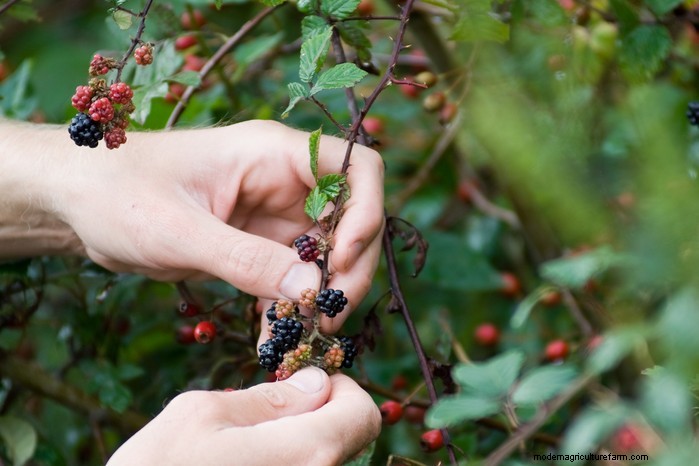
Wait until berries are fully ripened—dark, evenly coloured, and firm. Gently pull them from the cane, placing them in a shallow dish to avoid crushing. Handle with care to keep juice from staining clothing.
Blackberries bruise easily and are best kept refrigerated for 2–3 days. For longer storage, wash, drain, and spread them in a single layer on trays before freezing. After a few hours, transfer to airtight bags or tubs to preserve individual fruit integrity.
After washing, remove stems and hulls. Blackberries can be used in smoothies, jams, pies, crumbles, and homemade wine. For a quick treat, try an apple and blackberry crumble using the recipe below.
Blackberry plants:
Blackberry seed:
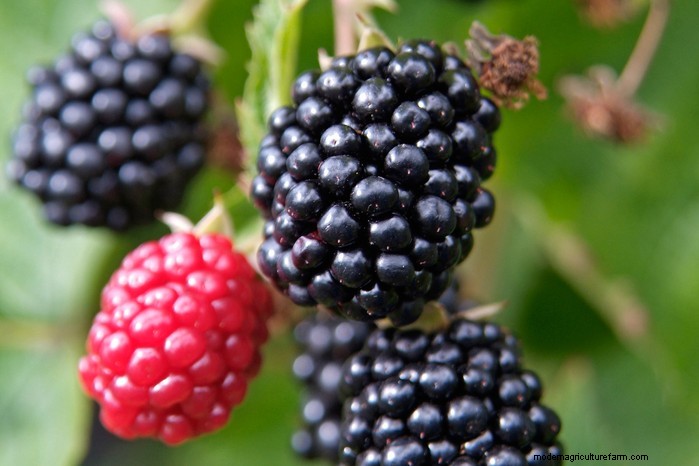
Adrienne – delicious fruit on strong, thornless stems. Height × Spread: 2.5 m × 2.5 m
Coolaris Late – extremely compact, ideal for containers. H × S: 1.2 m × 1.2 m
Loch Katrine – large, sweet fruit on a fairly compact bush. H × S: 2 m × 2.5 m
Loch Ness – moderate size, high yields on thornless canes. H × S: 2 m × 2.5 m
Merton Thornless – large crops on thornless stems. H × S: 2.5 m × 3 m
Obsidian – early fruiting in June/July, moderate size. H × S: 2 m × 2.5 m
Can I grow a blackberry bush from a blackberry?
Seeds from a single berry can germinate, but seedlings from cultivated varieties will not match the parent’s quality. Buying a named variety guarantees a reliable crop.
How long does it take to grow a blackberry?
Blackberries fruit on two‑year‑old canes, so it takes at least two years from planting before a harvest begins. Allow the first year for root establishment.


