
Welcome to Modern Agriculture!

Hi GPODers!
Planning a single peak of color is straightforward, but achieving a seamless, year‑long tapestry of blooms demands careful planning and hands‑on experience. Heidi Weirether of Redding, Connecticut exemplifies this skill. Since her first 2024 submission—Heidi’s Colorful Garden in Fairfield County, Heidi’s Flowers in Connecticut, Peak Season in Heidi’s Connecticut Garden, and More of Heidi’s Fabulous Flowers in Connecticut—she’s shared a succession of stunning photographs that showcase the endless stream of color that fills her landscape each growing season.
I wanted to share these photos of my garden with you, capturing how much it has changed over just a few short days. I’ve attached pictures taken between May 30 and June 4, and it has been incredible to watch the color palette shift in real time.
When the period began, the garden was dominated by the cool, serene blue of the lupines. However, as you’ll see in the progression, the landscape has since transformed into a much more vibrant display. The space is now filled with a mix of warm and cool tones, thanks to the blooming of the poppies, peonies, columbines, foxgloves (Digitalis purpurea, Zones 4–9), geraniums, and irises.
It’s always a highlight of the season for me to see how quickly the garden shifts from one mood to the next. I hope you like these photos as much as I enjoyed watching the transition happen!
Happy Gardening!

Heidi’s borders are a feast of colors and textures. As she mentions in her introduction, spires of blue lupines and bright purple Siberian iris (Iris sibirica, Zones 3–9) create a predominantly cool palette at the end of May, but striking red poppies (Papaver orientale, Zones 3–7) and pink peonies signal the impending color shift.
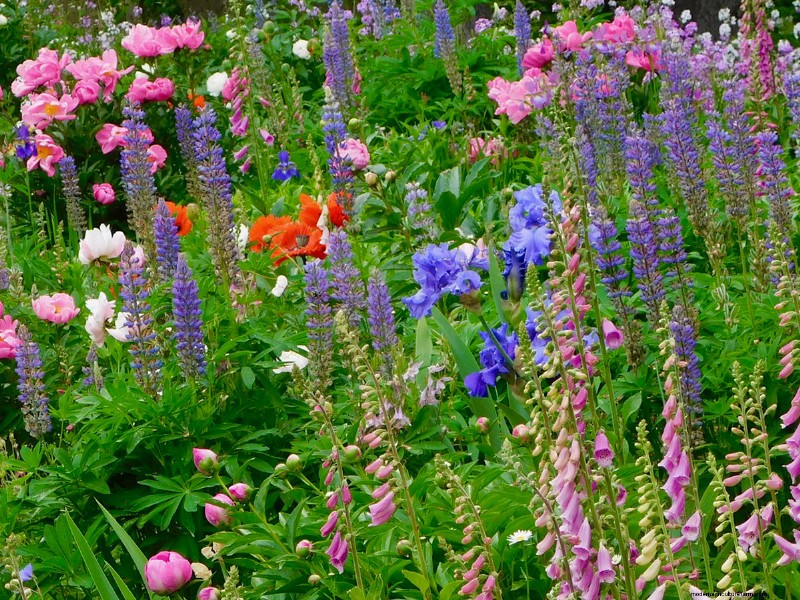
As the lupines fade, pink foxgloves (Digitalis purpurea, Zones 3–9) begin their grand entrance. A splash of blue irises keeps the palette balanced, while the border shifts toward warmer hues.

Once color starts in Heidi’s garden, it doesn’t stop until the growing season concludes. Her diverse array of flowers not only provides an interesting mix of colors and textures but also ensures a continuous succession of vibrant blooms.
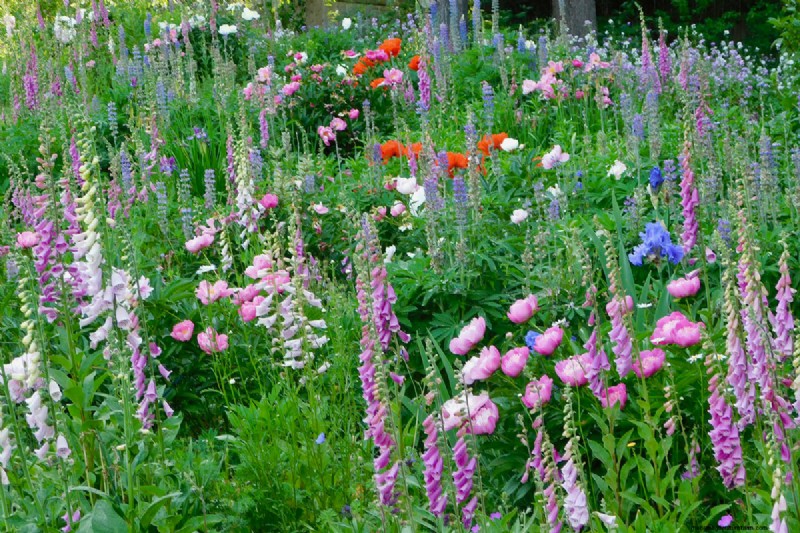
In less than a week, Heidi’s garden has transformed, offering a multitude of combinations and colors.
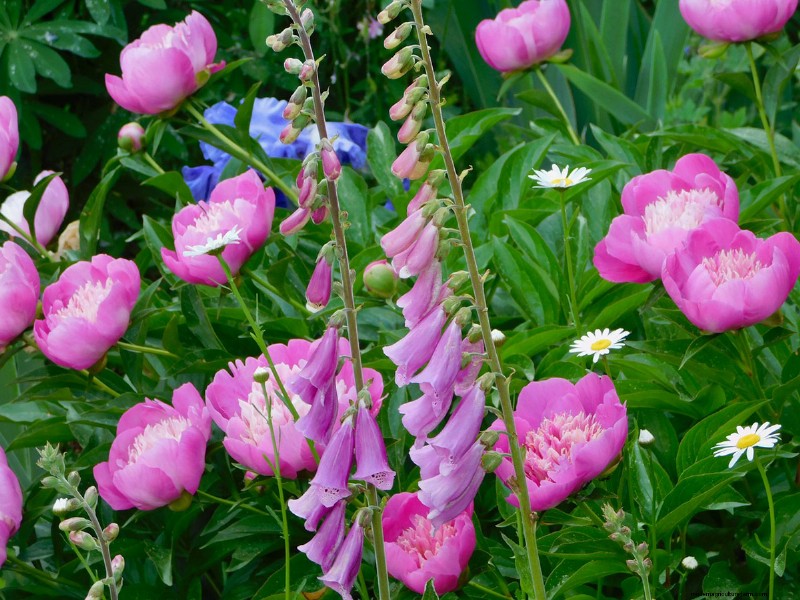
One of those combinations was the pretty pink pairing of foxgloves with ‘Bowl of Beauty’ peonies (Paeonia lactiflora ‘Bowl of Beauty’, Zones 3–8).
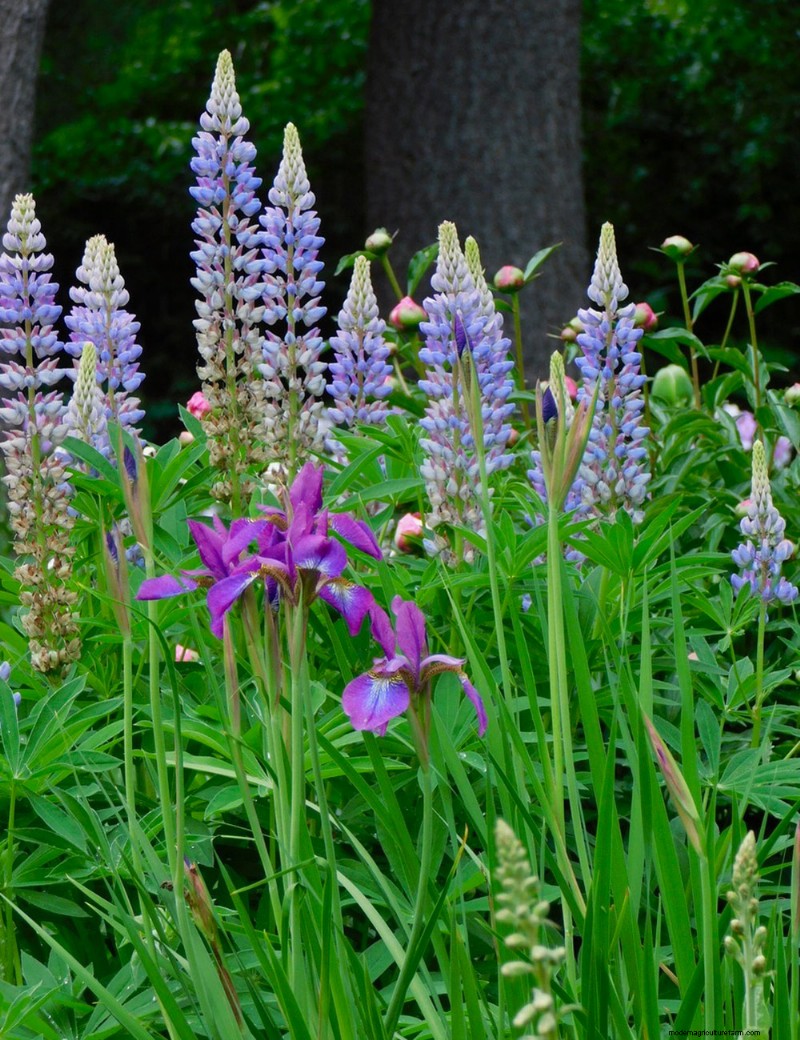
A cooler color combination of Siberian iris and lupines.
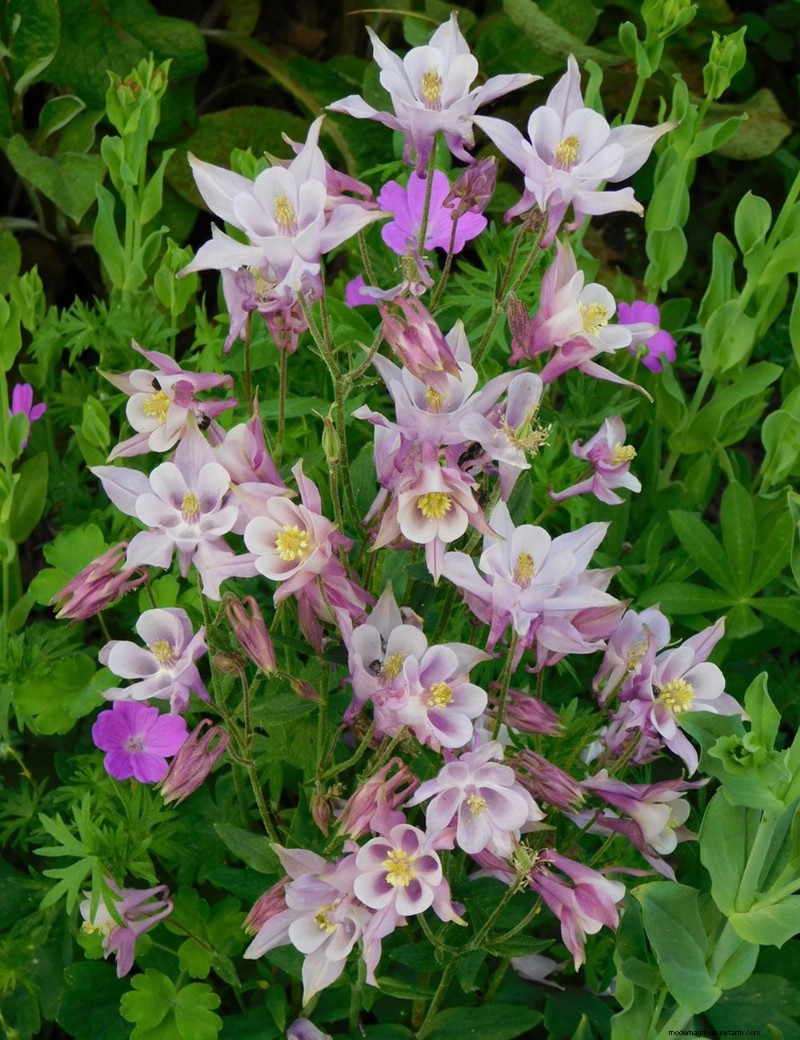
Mixed among all of these blooms are plants that bridge the gap between bright pink and cool blue hues. This dusty pink columbine, likely the ‘Winky Pink’ cultivar (Aquilegia vulgaris ‘Winky Pink’, Zones 4–8), shifts between pink and purple depending on surrounding colors.
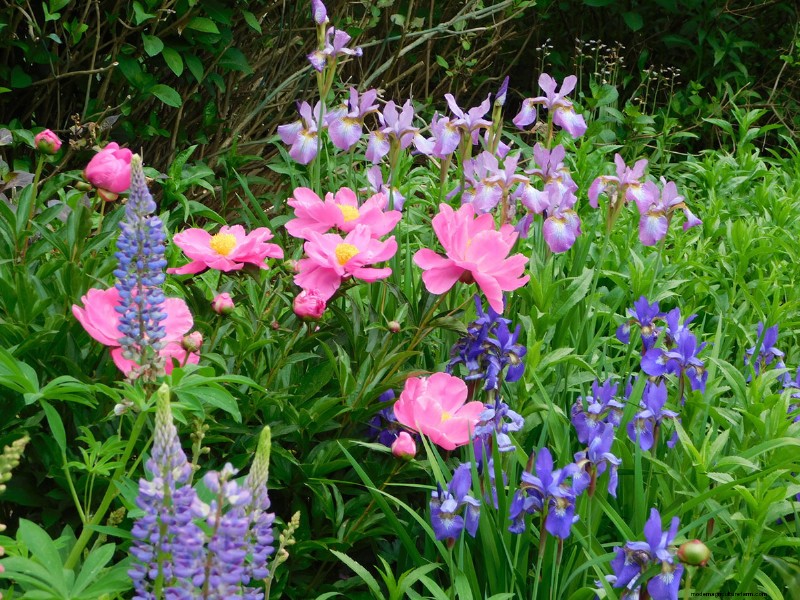
Another bridge plant is the light purple Siberian iris at the top of this vignette. Its pinkish‑purple shade complements the deeper purple irises below, creating a subtle color blend.
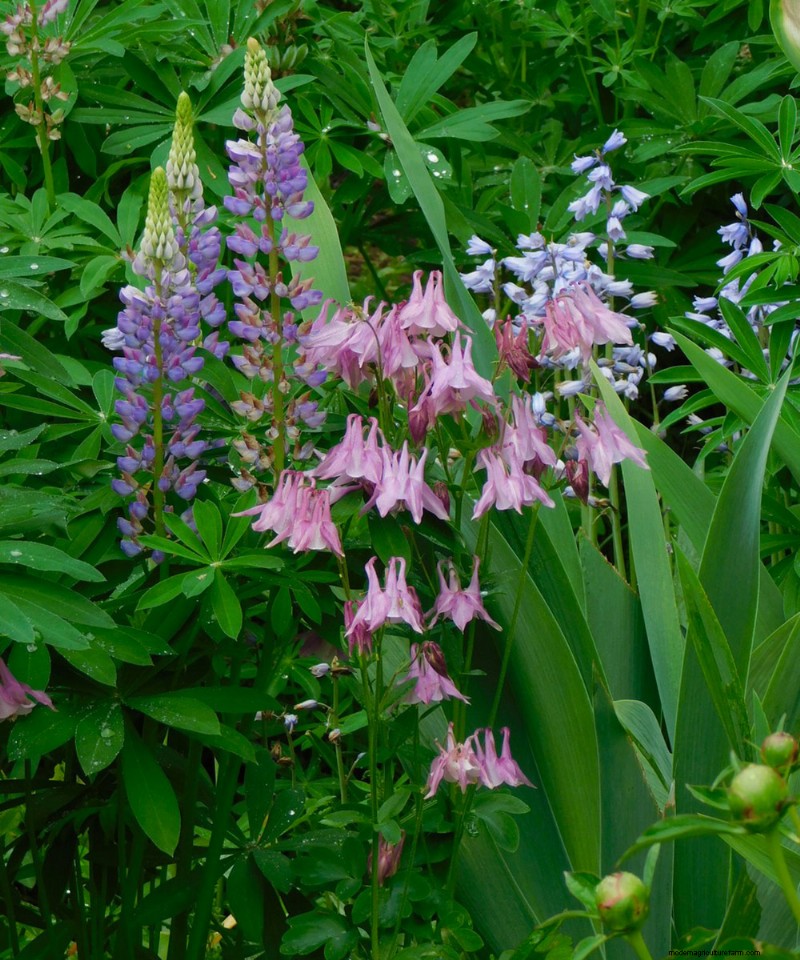
One last photo shows more columbines pairing wonderfully with lupines.
Thank you so much for sharing another view of your flower garden with us, Heidi! We’ve seen a decent amount of the color you cultivate in your beds and borders, but I was still amazed by the changes you documented during this short May‑to‑June transition.
How does your garden evolve from early‑spring blooms to the frenzy of color that arrives closer to summer? Whether over the course of a week or a month, we would love to see your succession of blooms and color palette changes. Follow the directions below to submit your photos to Garden Photo of the Day!
Have photos to share? We’d love to see your garden, a particular collection of plants you love, or a wonderful garden you had the chance to visit!
To submit, fill out the Garden Photo of the Day Submission Form.
You can also send 5–10 photos to [email protected] along with some information about the plants in the pictures and where you took the photos. We’d love to hear where you are located, how long you’ve been gardening, successes you are proud of, failures you learned from, hopes for the future, favorite plants, or funny stories from your garden.
Do you receive the GPOD by email yet? Sign up here
ARS Telescoping Long Reach Pruner – a 4‑to‑7‑foot reach, lightweight (2.3 lb.) tool with drop‑forged blades for long‑lasting sharpness and perfect balance for easy pruning.

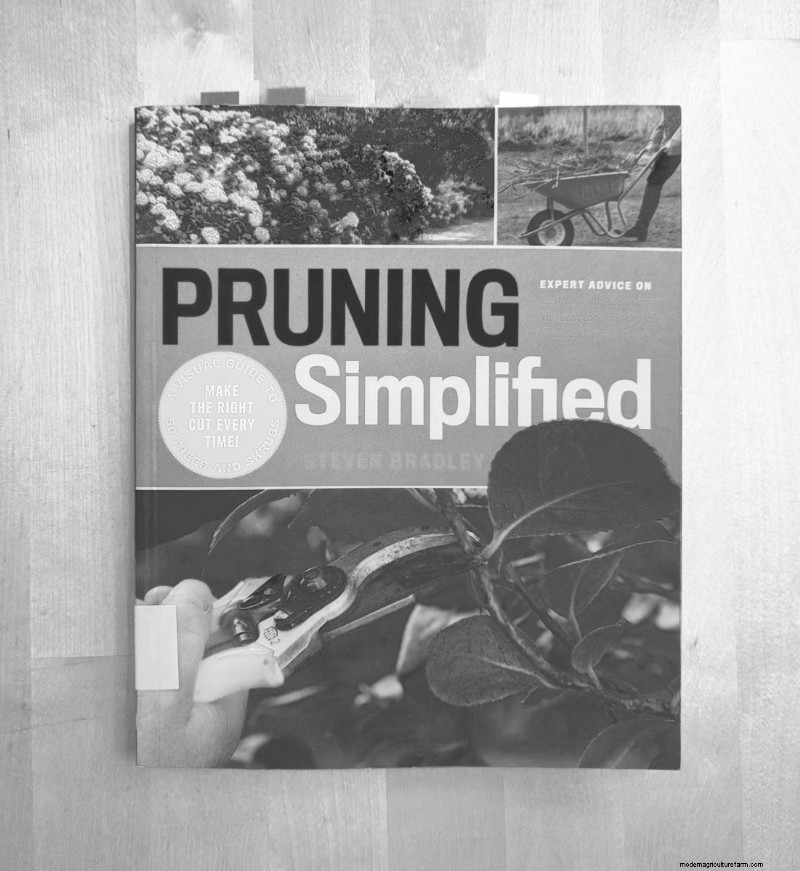
Pruning Simplified: Step‑by‑Step Guide to 50 Popular Trees and Shrubs – offers expert advice on tools, timing, and detailed, illustrated instructions for 50 common trees and shrubs.
Buffalo‑Style Gardens – a quirky design book showcasing inventive gardens and unique ideas for small‑space gardening.
Fine Gardening receives commissions for items purchased through links on this site, including Amazon Associates and other affiliate programs.


