
Welcome to Modern Agriculture!

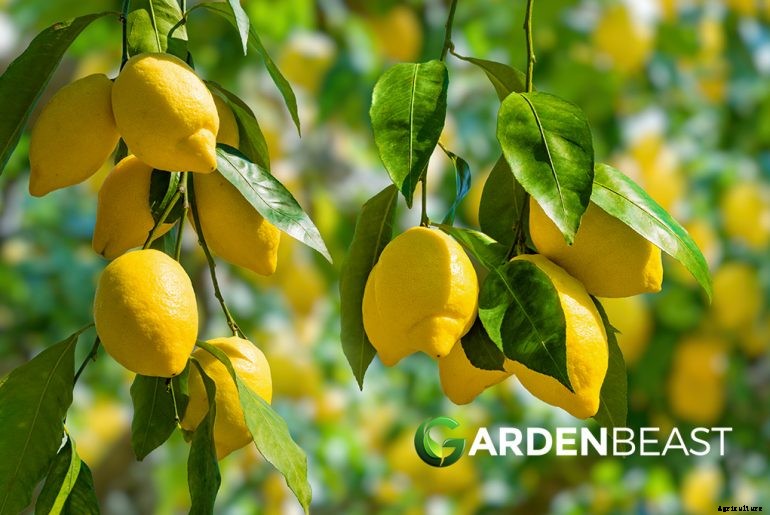
There’s nothing quite as refreshing as the taste of lemon. Whether it’s freshly squeezed lemonade or a lemon juice squeezed on your favorite seafood dish, the taste and aromatic scent of this citrus fruit is delightful.
Wouldn’t it be nice to just grab a ripe lemon from a tree in your own garden instead of having to run to the grocery store whenever you get the craving for this delicious fruit?
If you’re interested in planting lemons, you’re in the right place! In this guide, we share some helpful tips that you can use to successfully plant and grow your very own lemon trees.
Before we share tips on how to plant and grow any type of produce, flower, tree, or shrub, we always like to provide a brief history of the flora we’re discussing. We feel that knowing more about the plant you’re growing helps you gain a better appreciation it.
Though the exact origin of the lemon tree isn’t known, historians believe that the first lemons grew in China, northern Burma, or Assam, a region of northeast India.
According to scientists, the very first citrus fruits began growing around 8 million years ago. Eventually, those trees created the first lemons. The results of a genomic study revealed that the citrus fruit is the cross between citron and sour oranges.
Archeologists estimate that lemons spread into Europe, southern Italy, specifically, in the second century AD; however, they were not widely cultivated, so they were quite rare and considered a valuable commodity. In ancient Rome, for example, the citrus fruit was so ubiquitous that it was considered a luxury that was only available to the elite.

In about 700 AD, lemon trees spread into Persia, and from there, the travels to Egypt and Iraq. The first literary recording of the citrus fruit dates back to the 10th century, where it was written about in an Arabic dissertation about farming.
In addition to being used for food, lemon trees were also used in Islamic gardens as a decorative plant. From 1000 and 1150 AD, the plants were widely distributed throughout the Arabian and Mediterranean regions.
It wasn’t until the 15th century AD that the first notable cultivation of lemon trees took place, where they were widely grown in Genoa for their food and ornamental value. In 1493, Christopher Columbus brought lemon seeds with him during his voyage to Hispaniola.
Thanks to the conquests of the Spanish, lemon seeds were spread throughout the New World. At first, lemons were primarily used for medicinal and decorative purposes. Fast forward to the 1800s, and lemon trees were extremely popular in warm U.S. locations, such as California and Florida.
The name of this citrus fruit is believed to be Middle Eastern, but it is known that the name lemon is derived from the word limon, an Old French word, and then the Italian word limone.
Now that we have some background information about lemons, let’s take a look at how you can successfully plant and grow this beloved citrus fruit. In this section, we share some handy tips that you can use to help you yield a healthy lemon crop in your own yard.
Like many other fruits, it’s pretty easy to propagate lemons from seed. However, while the process is rather simple, do note that you will need to have a bit of patience, as it does take time.
Also worth noting is that there’s a chance that you would get the exact same lemon as the fruit that you propagated the seed from.
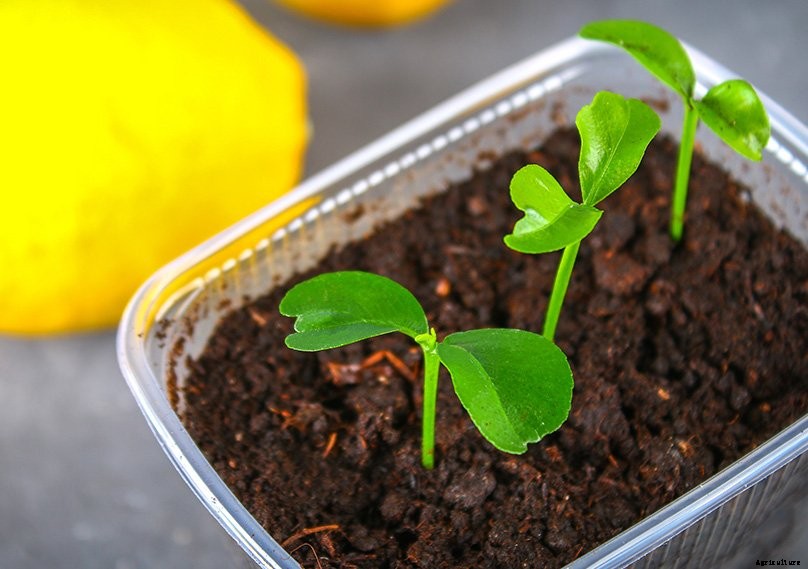
With that said, here are some simple yet effective seed propagation tips:
It is possible to keep your lemon trees inside. As long as they receive the proper care, lemon trees make wonderful houseplants and will be quite happy as long. When grown indoors, lemon trees typically grow between 3 and 5 feet tall.
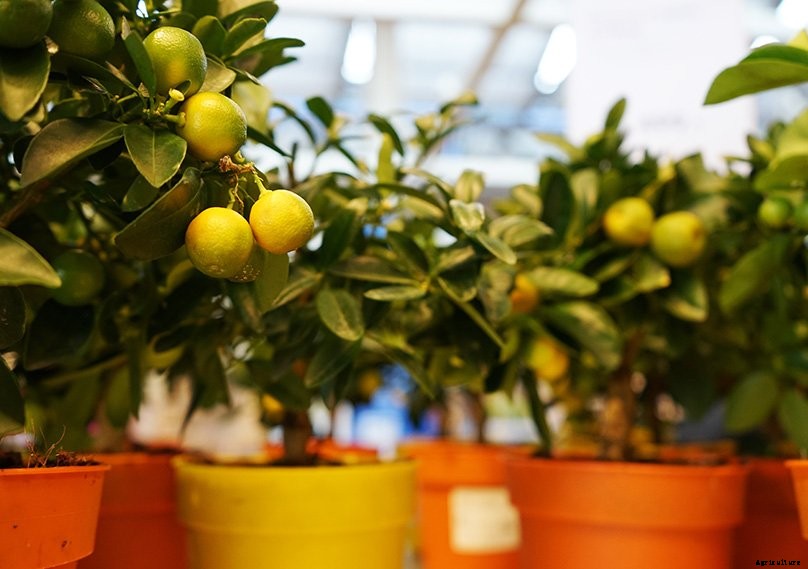
You can also grow your propagated lemons in your garden. Choose a location that receives adequate sunlight. Make sure that the soil is well draining.
If it’s clay-based, mix perlite or sand into organic, nutrient rich fertilizer and set the mixture into the hole you dig in the ground. The hole you set the plant in should be slightly shallower than the length of the root ball.
Once set into the hole, cover the root ball with soil and lightly tamp it down. Water the newly planted tree so that the soil is sufficiently wet. Place mulch over the top of the soil-covered root ball to increase moisture retention.
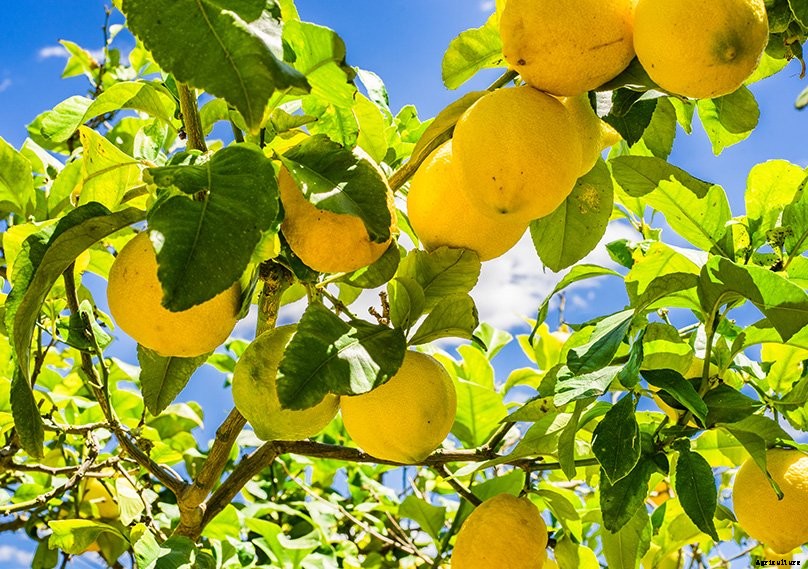
Once a week, deeply water your outdoor lemon tree. Remember, lemons like plenty of water, but they cannot become water-logged.
You can prune the tree to maintain its shape and height. Pruning should be done in the spring, before the height of the growing season. Do not prune an outdoor lemon tree in the winter, as doing so could leave the plant vulnerable to frost damage.
Lemon trees are prone to certain types of diseases and pests, which are the same as the diseases and pests that attack most varieties of citrus fruits.
European brown rot is a common disease that can affect lemons. If your tree is infected, the lemons will rot while they are still on the tree.
Scale insects are a common type of pest that can infest lemon trees. They colonize ono the leaves of the plant and appear as large white masses. Aphids can be another problem. These pests eat the base of the leaves, and as they munch, the leaves will start to curl and dry and eventually, they will fall off.
Lemons are ready to harvest when they turn a yellowish green or a solid yellow color, they are firm to the touch, and they are about 2 to 3 inches in size.
When it comes to harvesting, the size of the fruit is more important than the color. If you pick lemons before the reach an adequate size, even if they are yellow or greenish yellow, they won’t be as juicy and they’re likely to be extremely sour.


