
Welcome to Modern Agriculture!

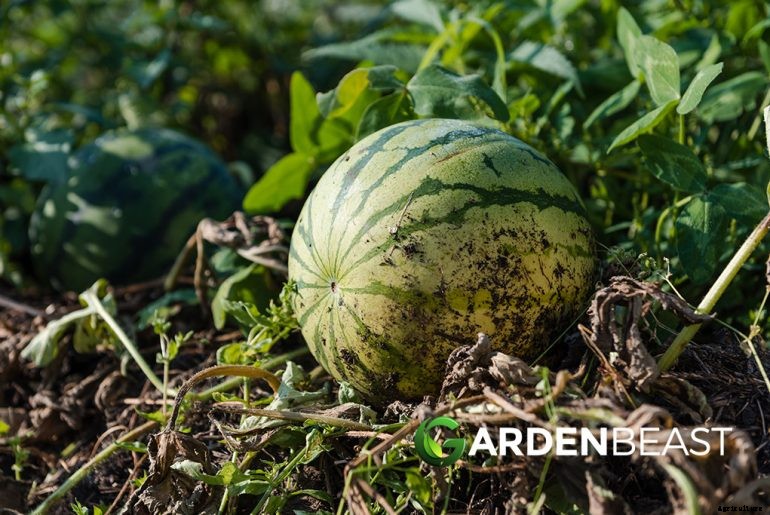
Are you trying to decide what to grow in your summer garden? If so, make sure you include melons.
They’re juicy, sweet, packed with nutrients, and are a wonderful thirst quencher. Growing melons isn’t really hard, but you do need to know a few tips to ensure a healthy crop.
In this guide, we provide some handy tips that will help you successfully grow a garden full of delicious melons.
Before we share our melon growing tips, we’d like to give you a little background about these fruits. We always find that knowing about the food you’re cultivating will help you gain a better appreciation for not only the plant, but the food that you’re eating.
Melons are a fruit that belongs to the Cucurbitaceae family. They’re close relatives to cucumbers and squashes. They grow on vines that spread across the ground; however, they can also be grown upright if they’re given the proper support.
Melons are native to Africa. In fact, many varieties of wild melons still grow across the continent today. While it isn’t known when the fruits were first cultivated, historians believe that prehistoric humans may have collected and saved the seeds, which lead to the cultivation of the fruit.
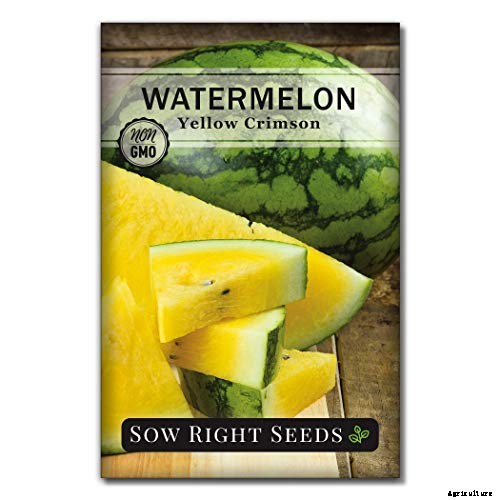
Yellow Crimson Sweet Watermelon Seeds, From Amazon
Seeds and wall paintings that depict melons have been found in Egyptian tombs, which indicate that they were being cultivated as a source of food some 4,000 years ago. About 3,000 years ago, melons were introduced to the continent of Asia and became extremely popular in the locations that include India, Afghanistan, Iran, Iraq, China, Japan, and southern and central Russia.
It’s believed that the Ancient Romans and Greeks brought melons to Europe. On his second voyage, Christopher Columbus brought melons to the new world and the fruits were cultivated in Haiti by the year 1494. By the 1500s, melons were grown and harvested for food across North, South, and Central America.
There are several different types of melons. Some of the most popular varieties include:
Melons vary in their appearance and taste. Some, such as muskmelons and cantaloupes, feature netting on their rinds, while others have smooth rinds.
The color and sweetness of the skin can vary, as well. Watermelons, for example, have pink or yellow flesh and are rather sweet, while some varieties, such as Persian melons, have white or green flesh and may not be as sweet, though some white- and green-fleshed melons can be sweet, too.
There are even melons that are curved and resemble and taste like cucumbers, such as the Armenian cucumber.
The type of melons you decide to grow depends on the taste you’re looking for. To determine which type you should grow, read up on the different types of melons to learn more about their characteristics and flavor.
As you can see above, there are many different types of melons. The requirements for successful planting will vary and depend on the specific type of melons you are planning on growing.
However, with that said, there are some general growing tips that apply to all varieties of melons. In this section, we provide an overview of the general growing tips for all types of melons.
All types of melons grow best in well-drained, sandy loam, slightly acidic soil. They do best in soil that has a pH level between 6.0 and 6.8, so it’s a good idea to have your soil tested to determine if the pH level is suitable to support melons.

If the levels are below 6.0, the plants will produce yellow foliage and will sew very little fruit, if any. If you need to increase the pH level of your soil, you can do so by adding organic compost or well-rotted manure to your garden bed.
Fresh manure should be avoided, as it can contain high levels of harmful bacteria that could affect the plants. Additional fresh manure can increase the risk of weeds, which can absorb the moisture that melons need to grow.
Another note on soil: melons need well-drained soil to thrive, otherwise the will rot. If your soil doesn’t drain well, we recommend planting your melons in raised beds to ensure proper drainage.
You can direct seed melons into the soil or you can transplant melon plants that have been started indoors.
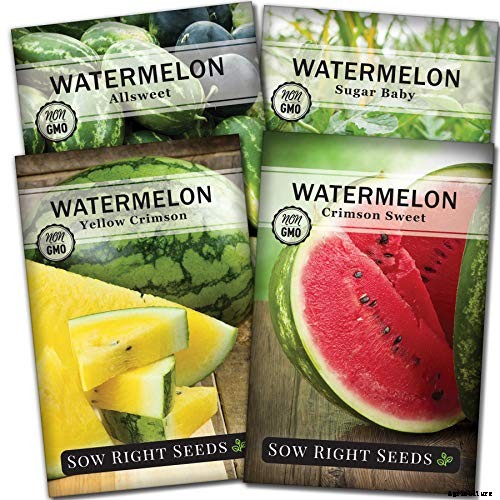
Watermelon Seed Collection, From Amazon
If you live in a location that has a short growing season, sowing melon seeds indoors and then transplanting them when the weather is warm enough to accommodate their growth is recommended.
However, do note that melons are sensitive to root disturbance, so take care when transplanting, as damaged or broken roots can kill the plant or impede proper growth.
If you are sowing your seeds indoors, do so around 2 to 4 weeks before the average date of the last spring frost. To avoid root disturbance when transplanting, we recommend sowing the seeds in biodegradable containers or peat pots that can be placed directly into the ground when the melons are ready to be transplanted. Select larger pots to allow the root system to develop properly.
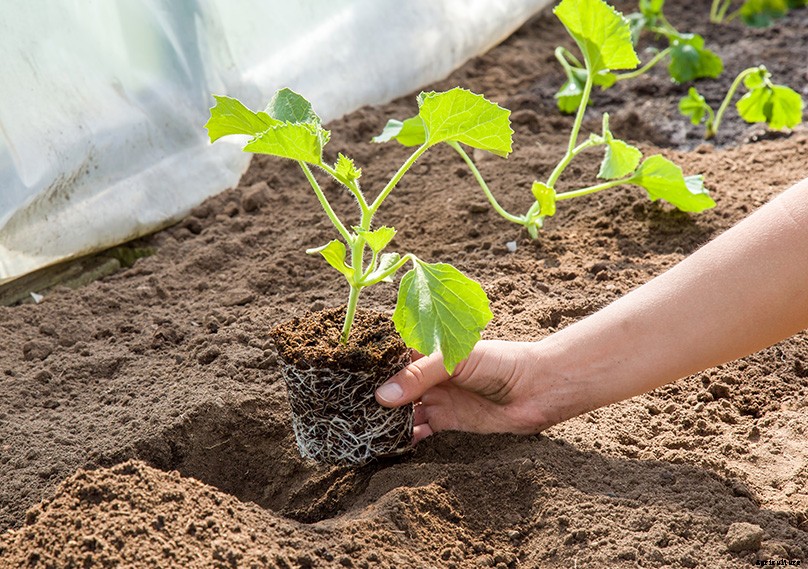
Fill your pots or containers with a nutrient-rich, slightly acidic potting soil (see above). As mentioned, melons like heat, so after you’ve planted your seeds, set the containers on heat mats in bright location.
In addition to waiting until there is no more risk of frost and the ground temperature is 65 degrees F, you should also wait until the plants have two to three leaves before transplanting them in your garden.
When planting your potted melons, space them approximately two feet apart in rows that are five feet apart.
Melons don’t need frequent watering, but they should be watered deeply. Watering your plants about one to two inches deep each week is ideal.
When watering, avoid getting the leaves wet. We suggest using a soaker hose or a drip hose to control the flow of water; avoid using a sprinkler, as the leaves will become soaked.
Always make sure that the soil is thoroughly wet when watering your melon plants. As the fruit begins to ripen, slowly reduce watering frequency to improve their flavor; too much water during the final two weeks of ripening can result in the melons splitting open.
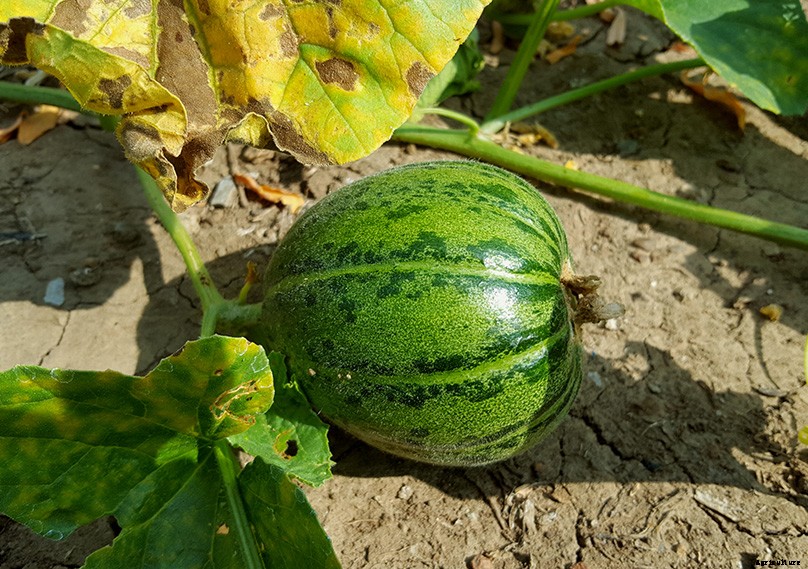
There are three types of insects that can attack melons, including:
There are also several types of disease that can affect melons, including:
The proper time to harvest melons depends on the specific variety that you are growing.
However, generally speaking, you can tell when they’re ripe enough to be picked by smelling the skin.
If you can smell the scent of the melon through the skin, it’s time to harvest. Additionally, several types of melons will naturally break free from the vines they grow on when they are ripe enough to eat.


