Welcome to Modern Agriculture!

Miscellaneous ●
Moist woodland soil well enriched with organic matter.
Dappled shade, such as an opening in the woods.
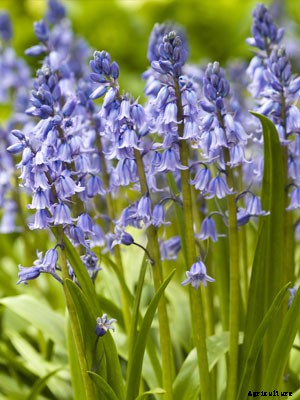
Good. Native English bluebells (Hyacinthoides non-scripta) are hardy to -20F (-30C).
Topdress with a balanced organic fertilizer in spring, when new growth appears.
Daylily. Ferns and primroses make lovely neighbors, but bluebells are often planted in large swaths for a natural look.
Single Plants: 3" (10cm) each way (minimum)
Rows: 3" (10cm) with 3" (10cm) row gap (minimum)
Set out dormant bulbs in the fall, planting them 4 inches (10 cm) deep. Set out container-grown plants in spring. Plant in large groups.
Our Garden Planner can produce a personalized calendar of when to sow, plant and harvest for your area.
Bluebells naturalize with a little encouragement. They are especially well suited to growing near beech trees. All plant parts are poisonous to pets and people.
Cut bluebells to use in arrangements when half the bells are open. Allow flowers to ripen until they shed mature seed if you want the plants to increase in number.
Bluebells have few problems with pests and diseases.