Welcome to Modern Agriculture!

Miscellaneous ●
Well-drained alkaline soil.
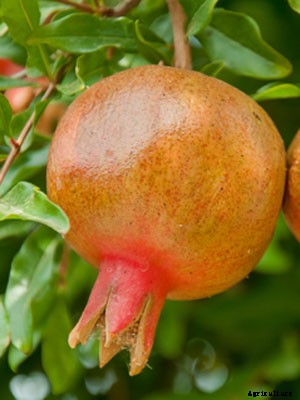
Sunny, sheltered spot. In cooler climates grow under cover to ensure fruiting. Requires lots of heat to ripen fruits. Pomegranates are self-fertile, so single plants fruit well.
Pomegranates tolerate cold to 10°F (-12°C).
Fertilize with a balanced organic fertilizer in November and March.
Coreopsis, Lavender, Cosmos, Zinnia, Sunflower and Nasturtium. Pomegranates grow into tall, dense shrubs that shade out other plants.
Single Plants: 9' 10" (3.00m) each way (minimum)
Rows: 9' 10" (3.00m) with 9' 10" (3.00m) row gap (minimum)
Set out plants grown from rooted cuttings in late winter or early spring. Named cultivars such as ‘Wonderful’ produce better than pomegranates grown from seeds.
Our Garden Planner can produce a personalized calendar of when to sow, plant and harvest for your area.
Prune outdoor plants in spring, and indoor plants in early winter. Remove dead, broken or crossing branches as well as any suckers that have appeared at the base of the plants.
Harvest when ripe, which is usually in early fall. The fruit stores well in the refrigerator.
Pomegranates often do not start bearing until they are five years old.