Welcome to Modern Agriculture!

Miscellaneous ●
Any sunny site with good drainage.
Full sun.
None. Zinnias cannot tolerate cold temperatures.
Mix a light application of a balanced organic fertilizer into the soil prior to planting. In midsummer, drench plants with a high-nitrogen liquid fertilizer to stimulate strong reblooming.
Dill, Beans, Swiss Chard, Cosmos and Zucchini. Dill, fennel and other upright herbs, bush snap beans, chard. Tall, single-flowered varieties attract butterflies.
Single Plants: 11" (30cm) each way (minimum)
Rows: 11" (30cm) with 11" (30cm) row gap (minimum)
Plant zinnias in late spring, after the last frost has passed and the soil is warm. Start seeds indoors in individual containers, set out purchased plants, or direct-sow into warm soil. Poke seeds into the soil about one-half inch (1 cm) deep and 3 inches (8 cm) apart. Thin to 12 inches (30 cm) apart in all directions for dwarf varieties. Zinnia varieties that grow more than 24 inches (60) cm) tall require 18 inches (45 cm) between plants.
Our Garden Planner can produce a personalized calendar of when to sow, plant and harvest for your area.
Frequent cutting of blossoms helps many varieties to rebloom constantly for many weeks. Butterflies prefer flat, single zinnia blossoms over "double" varieties that are packed with petals.
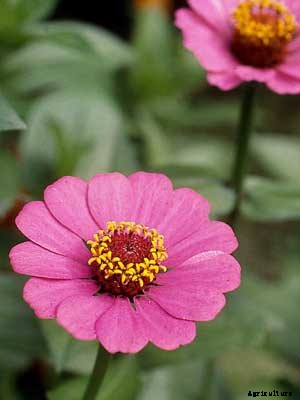
Gather zinnias for use in arrangements just as the petals open. The true flowers are the tiny yellow florets, which pump out nectar for butterflies.
Older zinnias often become infected with powdery mildew. Pull up and compost diseased plants. Many hybrids offer some resistance to powdery mildew.