
Welcome to Modern Agriculture!

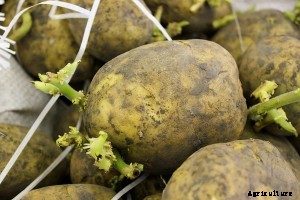
Grow potatoes from whole potatoes, small potatoes, or a cut piece of a larger potato. Potatoes grow from the dormant buds–called “eyes”–on the surface of other potatoes.
When the buds sprout, they develop into new plants. About two weeks after sprouting, the main stem and first leaves of the new potato plant will appear above ground.
• Trench planting: Plant seed potatoes in 4 to 6 inch-deep furrows. Space furrows or trenches (rows) about 36 inches apart. Sow the seed potatoes cut side down every 10 to 12 inches; don’t plant seed potatoes too close or the yield will drop. Between each seed potatoes put a half-handful of aged compost or 5-10-10 fertilizer–such as bulb food–into the trench. Cover the seed potatoes with 3 to 4 inches of soil and continue to keep the tubers covered as they grow.
• Surface planting: turn or till the soil and sprinkle on compost or 5-10-10 fertilizer; rake the bed level. Plant seed potatoes about 10 inches apart in all directions; set the cut side of the seed potato on the planting bed and push it down until the top is even with the ground level. Cover the planting bed with 18 inches of mulch–straw, hay, leaves. The potatoes will grow under the mulch.
• Container growing: Line a bushel basket, large bucket, half wine or whiskey barrel, or garbage can (a container at least 18 inches deep) with plastic, punch holes in the bottom, and place a layer of stones or gravel at the bottom for drainage. Add 4 to 6 inches of potting mix to the bottom of the container and set the seed potatoes six to eight inches apart. Add another 2 to 4 inches of soil over the seed potatoes. As the plants grow add potting mix, straw, or compost–keep the plants covered except for the top leaves.
Hilling Potatoes. Keep the developing tubers covered. New potato tubers form above the buried seed piece or seed potato. To give the new potato tubers room to expand and grow, soil should be mounded up around the stems of growing potato plants. This process is calling “hilling.” Hilling should happen once or twice during the growing season. Use a hoe to draw soil up around the stem of the growing potato plant–leave just the top leaves exposed. Hilling keeps the shoulders of new potatoes from poking up through the soil. The skins of exposed potato tubers turn green (called “greening”); green potatoes contain a bitter-tasting, slightly toxic substance called solanine. Hilling also keeps weeds from growing up around potatoes and it ensures that water does not sit on top of growing potatoes, but runs off the hills. Once potato plants flower, stop hilling up soil. Apply thick mulch to save water and fight weeds.
Watering Potatoes. Keep the potato patch evenly moist but not soggy. Take special care to keep plants well-watered from six to ten weeks after planting as tubers are starting to develop. While potatoes demand well-drained soil, the development of the tuber is dependent on even watering throughout the season. Deep watering is the best practice; the soil should be moist eight to ten inches below the surface. Uneven watering will cause potato tubers to form knobby growths or crack. If the soil is dry, there will be little if any tuber growth.
Harvesting Potatoes. When flowers open, harvest “new” potatoes. Use your hands to pull aside the hilled-up earth around the base of the plants and gently pluck out the new small, round, smooth tubers. Once the top foliage starts to wither and die back potato tubers are full-grown. Mature tubers can be lifted with a multi-pronged garden fork. If the weather is not too warm or wet, full-grown tubers will keep in the ground for several weeks. But, be sure to get your crop up before the first frost. Don’t let freshly dug potatoes sit in the sun for too long–not more than a hour or two. A cloudy day after a period of little or no rain is ideal for potato harvesting. Nicked or bruised potatoes won’t store well, so eat them first.
Storing Potatoes. After freshly dug potatoes have set and dried for an hour, dust away any soil left on them and put them into a dark place for storage. Keep them at temperatures around 55° to 60°F. Let them cure for two weeks; this will allow cuts and bruises to heal. Once cured store potatoes at 35° to 40°F in a well ventilated basement or root cellar. If the storage temperatures are higher, the tubers may sprout and shrivel. Store potatoes where they get plenty of air circulation. Don’t pile them higher than six to eight inches. Remember not to expose stored potatoes to light; the skin will start to green.
More growing tips at How to Grow Potatoes.
Grow 80 vegetables: The Kitchen Garden Grower’s Guide


