
Welcome to Modern Agriculture!

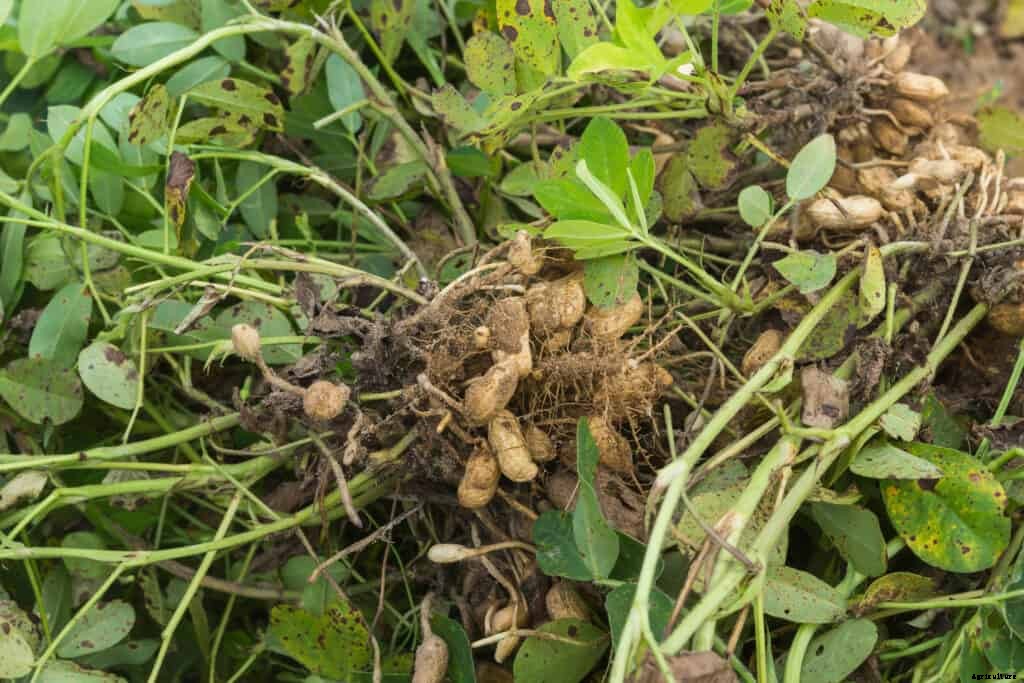 The peanut is a warm-weather perennial vegetable that requires 120 to 130 frost-free days to reach harvest. Sow peanuts in the garden 3 to 4 weeks after the average last frost date in spring, when the soil has warmed to at least 65°F (18°C). To get a head start on the season start peanuts indoors 5 to 8 weeks before transplanting seedlings outdoors.
Description. The peanut is a tender perennial usually grown as an annual, a member of the legume family. The peanut plant grows from 6 to 30 inches (15-76cm) tall, depending on the type; some are upright and erect in habit, others are more spreading. Plants form two sets of opposite leaves on each stem and yellow, sweet-pea-like, self-pollinating flowers. The flowers occur on elongated, pea-like stems just above the soil and after pollination, they dip and push into the ground 1 to 3 inches (1.5-7cm) to develop underground seed ends called pegs or peduncles; these are the seed pods we call peanuts.
There are four basic types of peanuts:
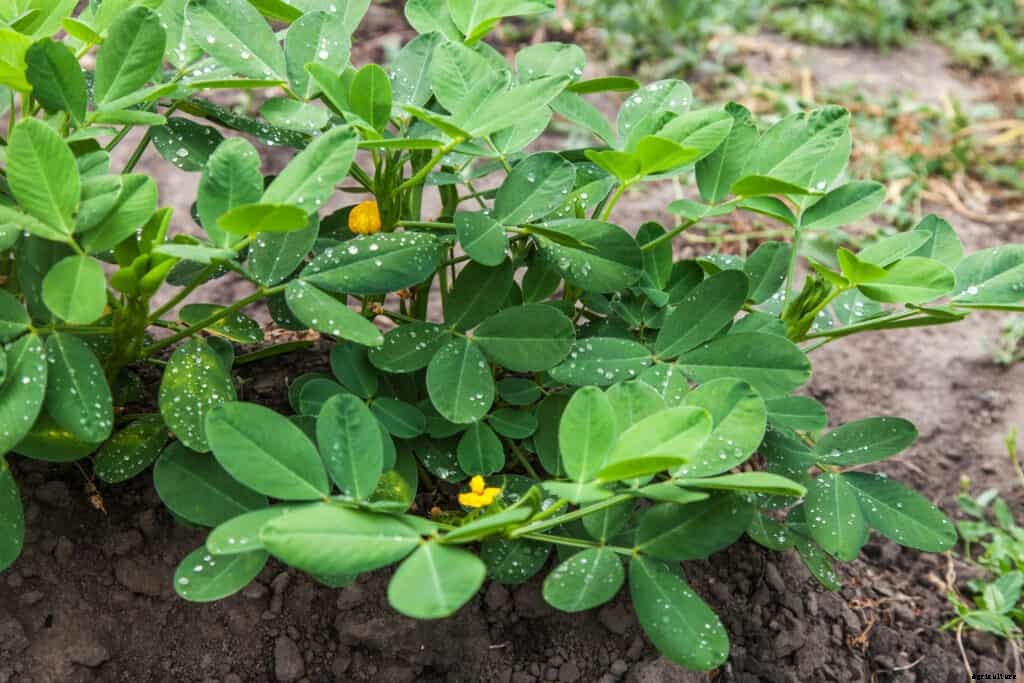
Site. Plant peanuts in full sun. Peanuts grow best in loose, well-drained soil rich in organic matter. A sandy-loamy soil is best. Double-dig clay soil and add gypsum and aged compost. The soil must be loose so that the pegs can penetrate and grow. Peanuts prefer a soil pH of 5.8 to 6.2.
Planting time. Peanuts require at least 120 frost-free days to reach harvest. Sow peanuts in the garden 3 to 4 weeks after the average last frost date in spring, when the soil has warmed to at least 65°F (18°C). To get a head start on the season start peanuts indoors 5 to 8 weeks before transplanting seedlings outdoors. Peanuts require nearly all of the growing days to have an air temperature greater than 85°F (29°C).
Planting and spacing. Sow peanuts in the whole shell or in the papery skin surrounding the seed. Sow seed 1½ to 3 inches (4-7cm) deep; set seed 6 to 8 inches (15-20cm) apart; thin successful plants or set transplants 18 inches (45cm) apart. Plant peanuts in double rows to save space, staggering the seeds 18 inches (45cm) apart. Single rows can be spaced 12 to 24 inches (30-61cm) apart. When the plants are 12 inches (30cm) tall, mound earth up around the base of the plant so that faded flowers can set pegs down into the hill. For a head start on the season, start peanuts indoors in individual biodegradable peat or paper pots which can be set whole into the garden.
More tips at Peanut Seed Starting Tips.
Yield. Grow 10 to 12 peanut plants per household member.
Companion plants. Beets, potatoes. Do not grow peanuts in the shadow of tall plants such as corn or pole beans.
Container growing. Peanuts can be grown in containers but allow enough room for flower stems to dip into the soil to set pegs; choose a container at least 18 inches (45cm) across and at least 12 inches (30cm) deep.
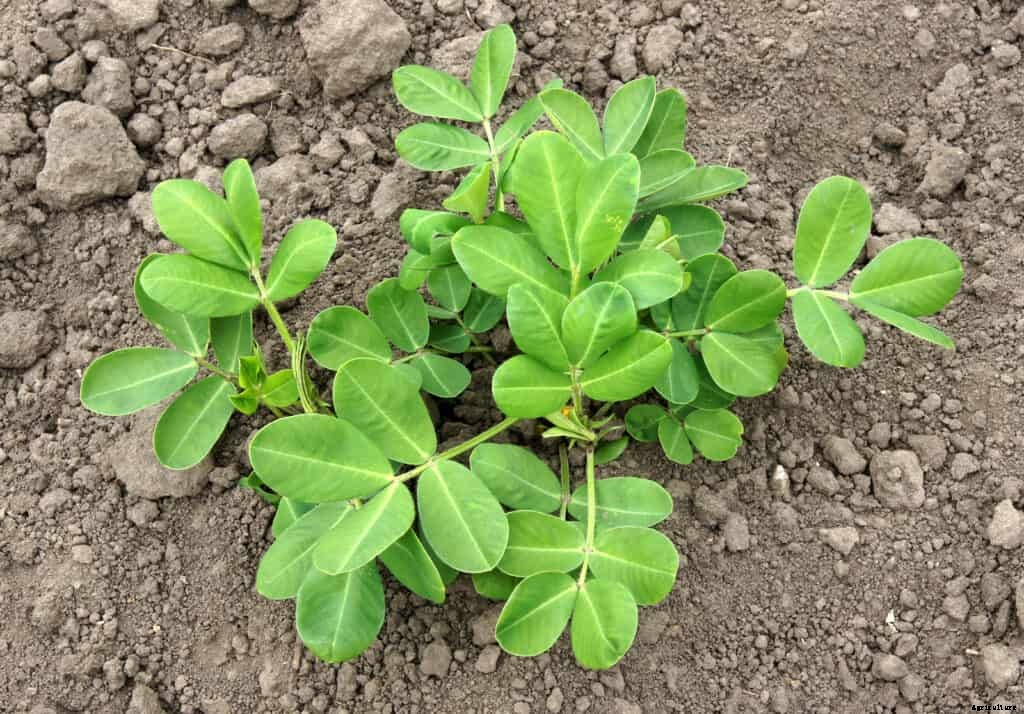
Water and feeding. Peanuts prefer regular, even watering. Keep the soil moist until the plants begin to flower, then waterless. Once plants are established, allow the soil to dry between waterings. Empty pods, sometimes called “blind” pods, are the result of too much rain or humidity at flowering time. Prepare planting beds with aged compost; peanuts, like other legumes, supply their own nitrogen.
Care. Mulch around peanuts to keep the soil surface from crusting and becoming hard; this will allow pegs to penetrate the soil. Keep the planting beds weed-free and cultivate lightly to keep the soil loose. Mulching around peanuts will make harvesting easier.
Pests. Peanuts have no other serious pest problems. Fence rodents out of the garden.
Diseases. Peanuts have no serious disease problems.
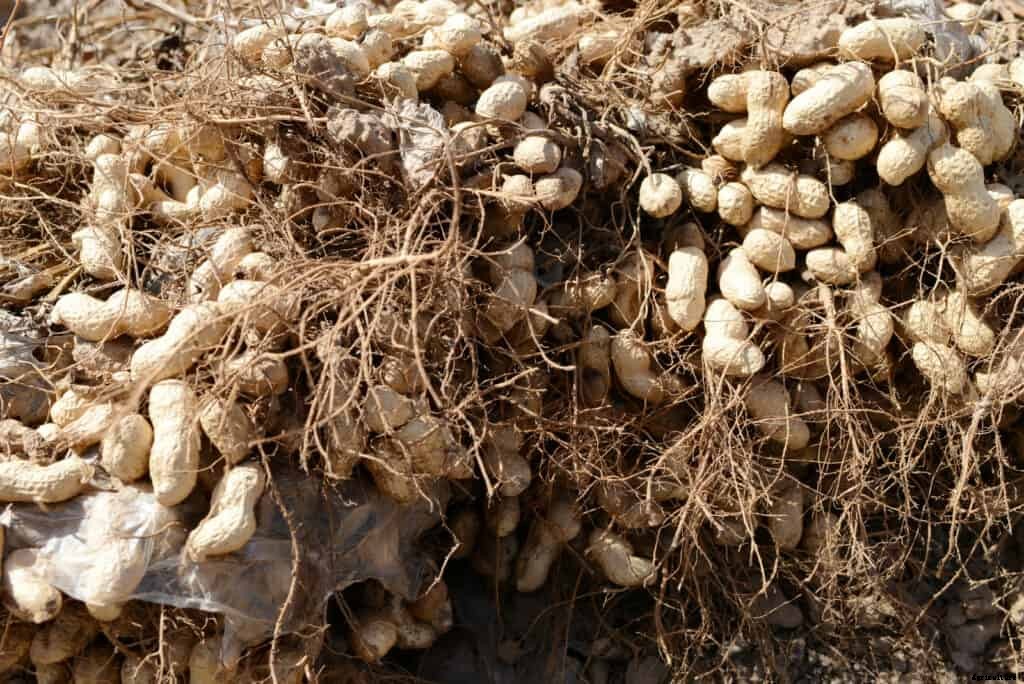 Harvesting and Storing Peanuts
Harvest. Peanuts will be ready for harvest when the leaves turn yellow and begin to wither, usually 120 to 150 days after planting. Lift pods with a garden fork, pulling up the whole plant. Shake away loose soil and hang the whole plant to dry for about two weeks in a warm, dry place. Seeds can be removed when the hulls are completely dry.
Storing and preserving. Raw, unshelled peanuts can be kept in a dry, dark, well-ventilated place for up to 3 months. Dried shelled peanuts can be stored in a cool, dry place for 10 to 12 months. Shelled peanuts can be sprouted, frozen, or used for peanut butter, or roasted for snacks.
Common name. Peanut
Botanical name. Arachis hypogaea
Origin. South America


