
Welcome to Modern Agriculture!

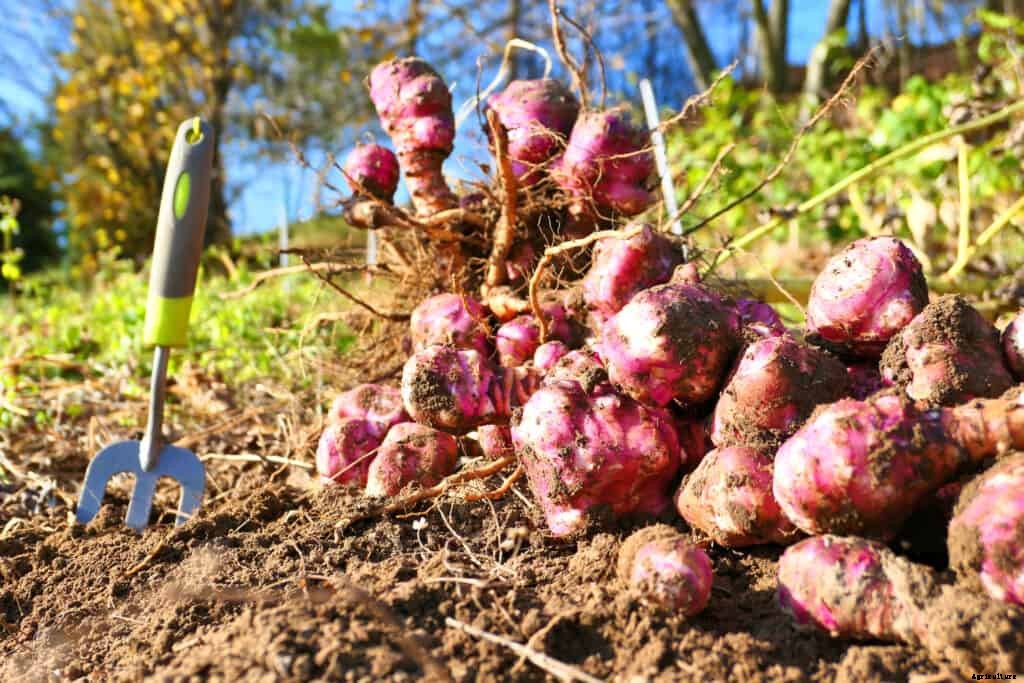 The sunchoke, also called Jerusalem artichoke, is a variety of perennial sunflowers grown for its edible low-starch tuber which looks much like a small potato but tastes like a water chestnut. Sunchoke tubers can be planted in the garden as early as 2 to 3 weeks before the average last frost date in spring. They are best planted in soil that has warmed to 50°F (10°C). In warm-winter regions, sunchokes can be planted in winter. Sunchokes require 110 to 150 days to reach harvest.
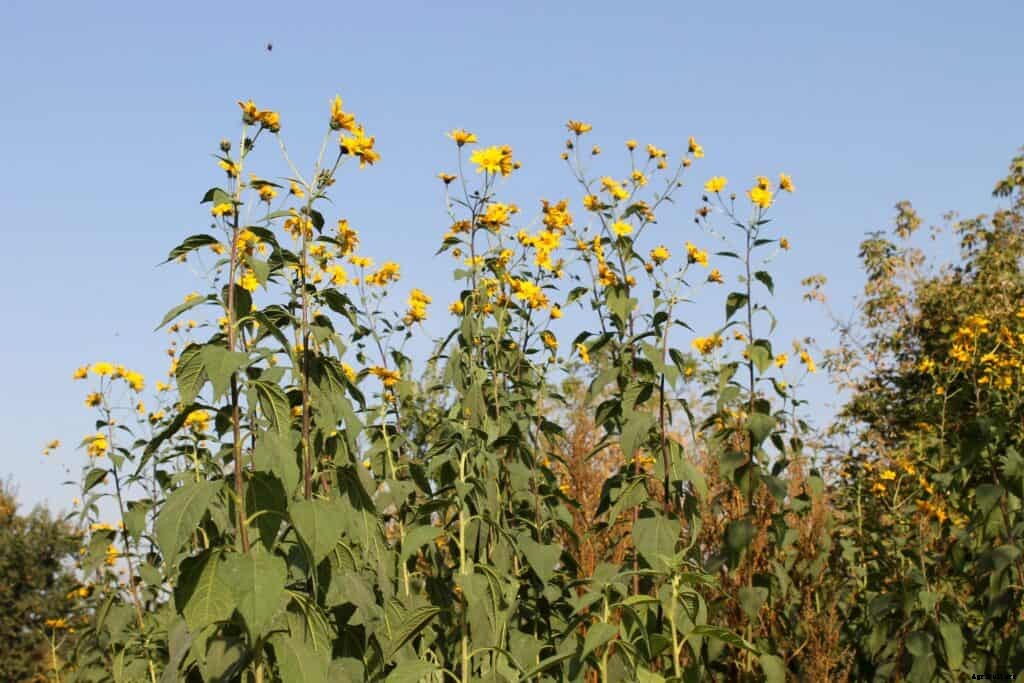
Description. The sunchoke is a hardy perennial that grows from 5 to 10 feet tall. The plant has rough-textured leaves 4 to 8 inches (10-20cm) long and is topped with small yellow flowers 2 to 3 inches (5-7cm) across. Sunchokes will survive a hard freeze if protected by a layer of soil or mulch. Tubers rapidly spread and divide but can be controlled by root barriers.
The name Jerusalem artichoke is a misnomer: the plant is not related to the artichoke, though the sunchoke’s flavor may be reminiscent of the artichoke. The plant is not from Jerusalem: the name is probably derived from the Italian name for sunflower, girasole, which means turning to the sun.
Yield. Plant 5 to 10 sunchokes for each household member.
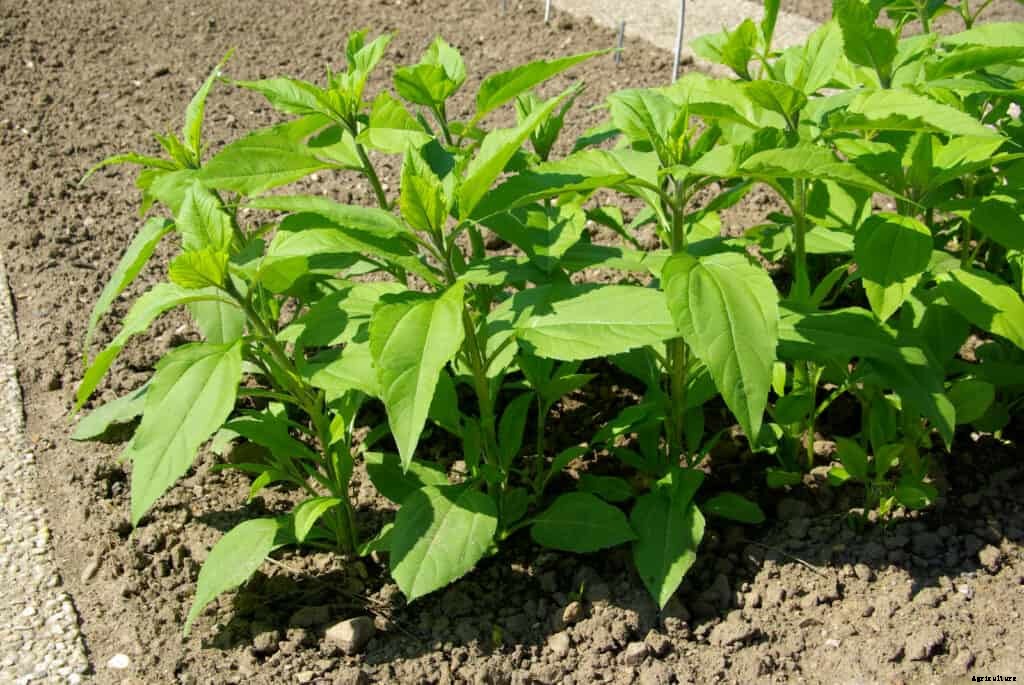
Site. Plant sunchokes in full sun. The sunchoke prefers loose, well-drained soil but will grow almost anywhere. Add aged compost or sand to planting beds before planting; loose soil will make tuber harvesting easier. The sunchoke prefers a soil pH from 5.8 to 6.2. It is best to set sunchokes in a dedicated bed; once established they will spread rapidly and may require some effort to remove. The sunchoke can be planted densely to form a screen or windbreak.
Planting time. Sunchoke tubers can be planted in the garden as early as 2 to 3 weeks before the average last frost date in spring. They are best planted in soil that has warmed to 50°F (10°C). In warm-winter regions, sunchokes can be planted in winter. Sunchokes require 110 to 150 days to reach harvest. Sunchokes grow best in temperatures ranging from 65° to 90°F (18-32°C).
More at Jerusalem Artichoke Plant Starting Tips.
Planting and spacing. Plant sunchoke tubers 2 to 6 inches (5-15cm) deep, 12 to 18 inches (30-45cm) apart. Space rows 36 inches (91cm) apart.
Container growing. Sunchokes can be grown in containers but will quickly fill a small container. Choose a container at least 18 inches across for one plant.
Companion plants. Corn, rhubarb, peanuts. Avoid planting sunchokes with tomatoes.d
Water and feeding. Sunchokes grow best with an even, regular supply of water but can survive long periods of drought once established. Sunchokes require no extra feeding; they grow best in soil rich in organic matter.
Care. Sunchoke tubers grow, divide, and easily spread. To contain sunchokes install wood, plastic, metal, or masonry barriers at least 24 inches (61cm) deep in the soil. Avoid deep cultivation near sunchokes; they are shallow-rooted and spread to 18 inches (45cm) away from the main stem.
Pests. Aphids may attack sunchokes. Pinch out infested foliage or hose the aphids off the plants.
Diseases. Sunchoke tubers can rot in wet soil but are generally disease-free. Plant in well-drained soil and quickly remove diseased plants.
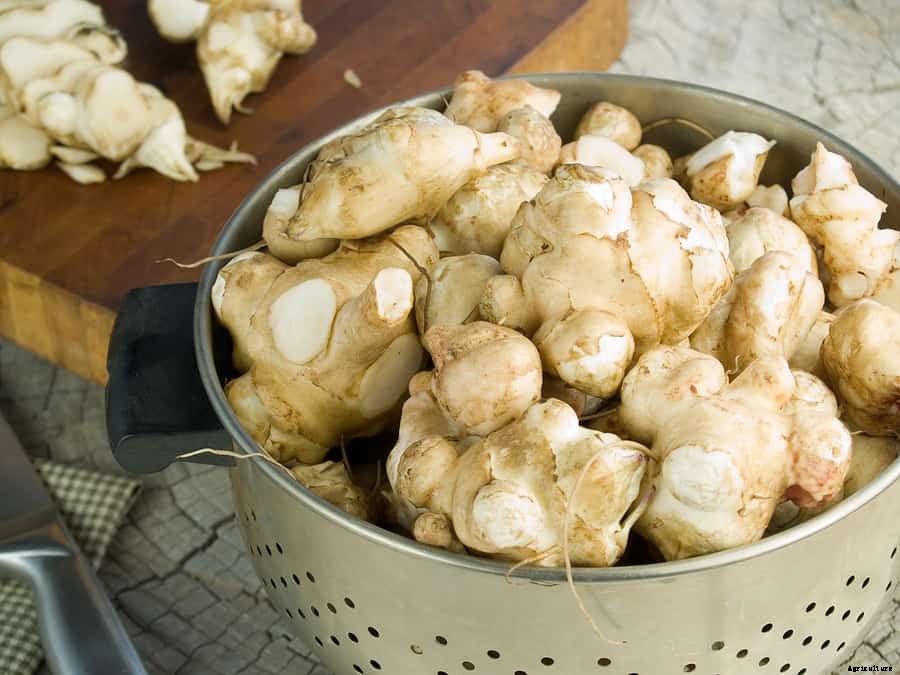 Harvesting and Storing Sunchokes
Harvest. Sunchoke tubers will be ready for harvest is 120 to 150 days after planting. Cut off flower stalks as soon as they appear to encourage tuber, not seed, production. Plants also can be “lodged” once flowers appear; step on stems at soil level and bend them to the side diverting energy to the tubers. Sunchokes harvested after a light frost will be sweeter tasting. Sunchokes are ready for harvest when leaves die back; lift tubers with a spading fork. Tubers left in the ground will regrow the following season.
More at How to Harvest and Store Jerusalem Artichokes.
Storing and preserving. Sunchokes will keep in the refrigerator for 7 to 10 days, or set them in a cold moist place for 2 to 5 months. Sunchokes can be frozen or left in the ground until needed; protect over-wintered sunchokes with a layer of mulch.
Varieties. ‘Stampede’.
Common name. Jerusalem artichoke, sunchoke
Botanical name. Helianthus tuberosus
Origin. North America


