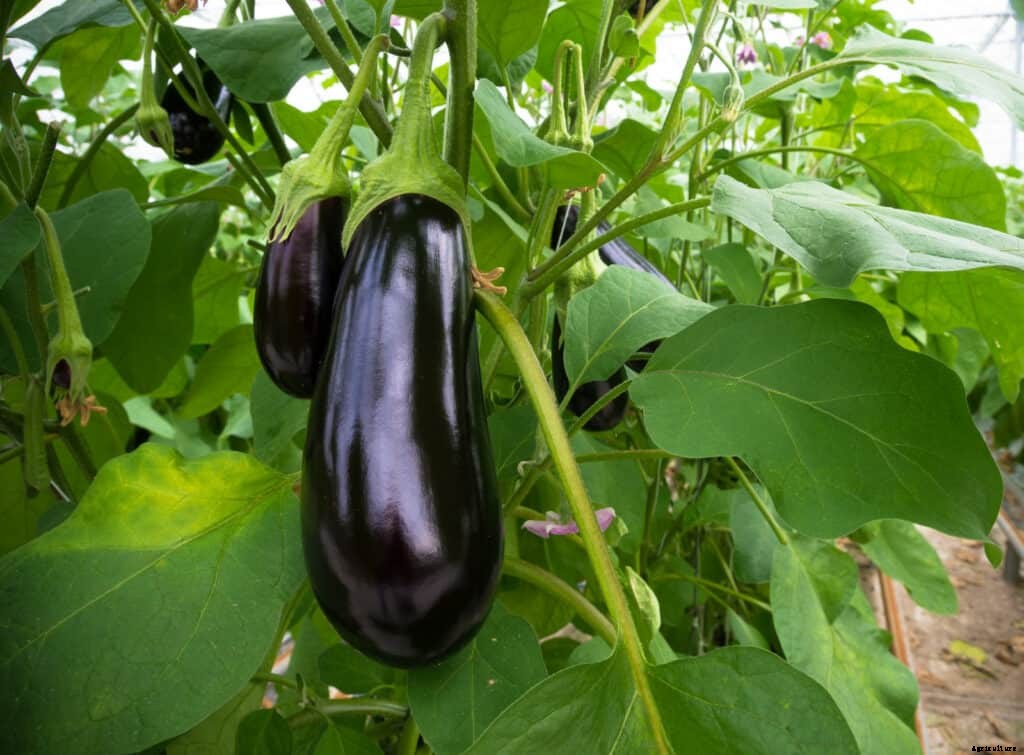
 Eggplant is a very tender perennial grown as an annual. Grow eggplant in the warmest, frost-free time of the year.
- Eggplant requires 100 to 140 warm days with temperatures consistently between 70° and 90°F (21-32°C) to reach harvest.
- Eggplant is best started indoors and later transplanted into the garden; sow eggplant indoors 6 to 8 weeks before setting plants into the garden.
- Transplant seedlings into the garden no sooner than 2 to 3 weeks after the last frost in spring.
- Eggplants planted too early will not develop.
Starting Eggplants Indoors
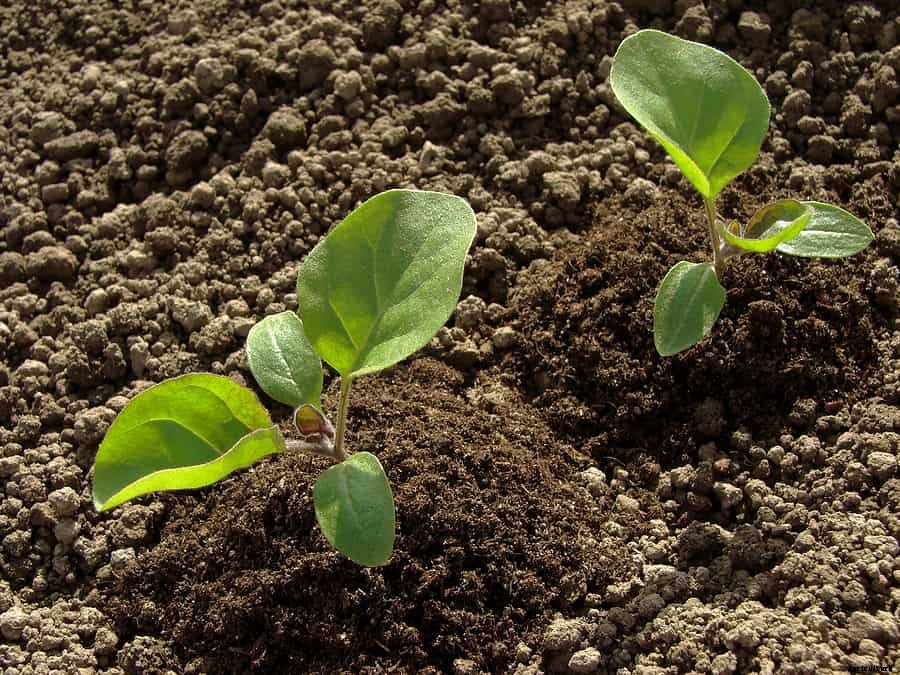
- Start eggplants from seed indoors about 8 weeks before setting seedlings in the garden.
- Sow seed in individual containers or flats. Sow eggplant seed ¼ to ½ inch (12mm) deep spaced 4 to 5 inches (10-12cm) apart.
- Eggplant seeds germinate in about 5 to 6 days.
- Give seedlings started indoors 12 hours of light each day; use a grow light or fluorescent lights.
- Start seeds on a heat mat then grow seedlings on at about 70°F (21°C).
- Transfer seedlings to 4-inch (10cm) pots when seedlings are 3 to 4 inches (7-10cm) tall and then into gallon containers if the weather does not allow transplanting as seedlings grow 5 to 6 inches (12-15cm) tall or taller.
- Ahead of transplanting, lay black plastic across garden planting beds to pre-warm the soil.
Where to Plant Eggplant
- Grow eggplants in full sun.
- Eggplants grow best in well-drained soil rich in organic matter. Add aged compost or commercial organic planting mix to planting beds ahead of planting and turn the soil to 12 inches (30cm) deep.
- Eggplants prefer a soil pH of 5.5 to 6.8.
- Warm the soil in advance of planting by laying black plastic over planting beds for two weeks.
Transplanting Eggplants to the Garden
- Transplant eggplants into the garden 2 to 3 weeks after the last spring frost.
- Make a hole twice the width of the root ball and half again as deep. Moisten the hole before transplanting.
- Sprinkle a 5-10-5 or 5-10-10 organic fertilizer in the bottom of the hole and cover lightly with aged compost or planting mix. Then set the seedling in place.
- Set eggplant seedlings into the garden at the same depth they are growing in their containers.
- Firm the soil around the root ball and gently water the plant. Create a small basin around the seedling to direct water to roots at watering time.
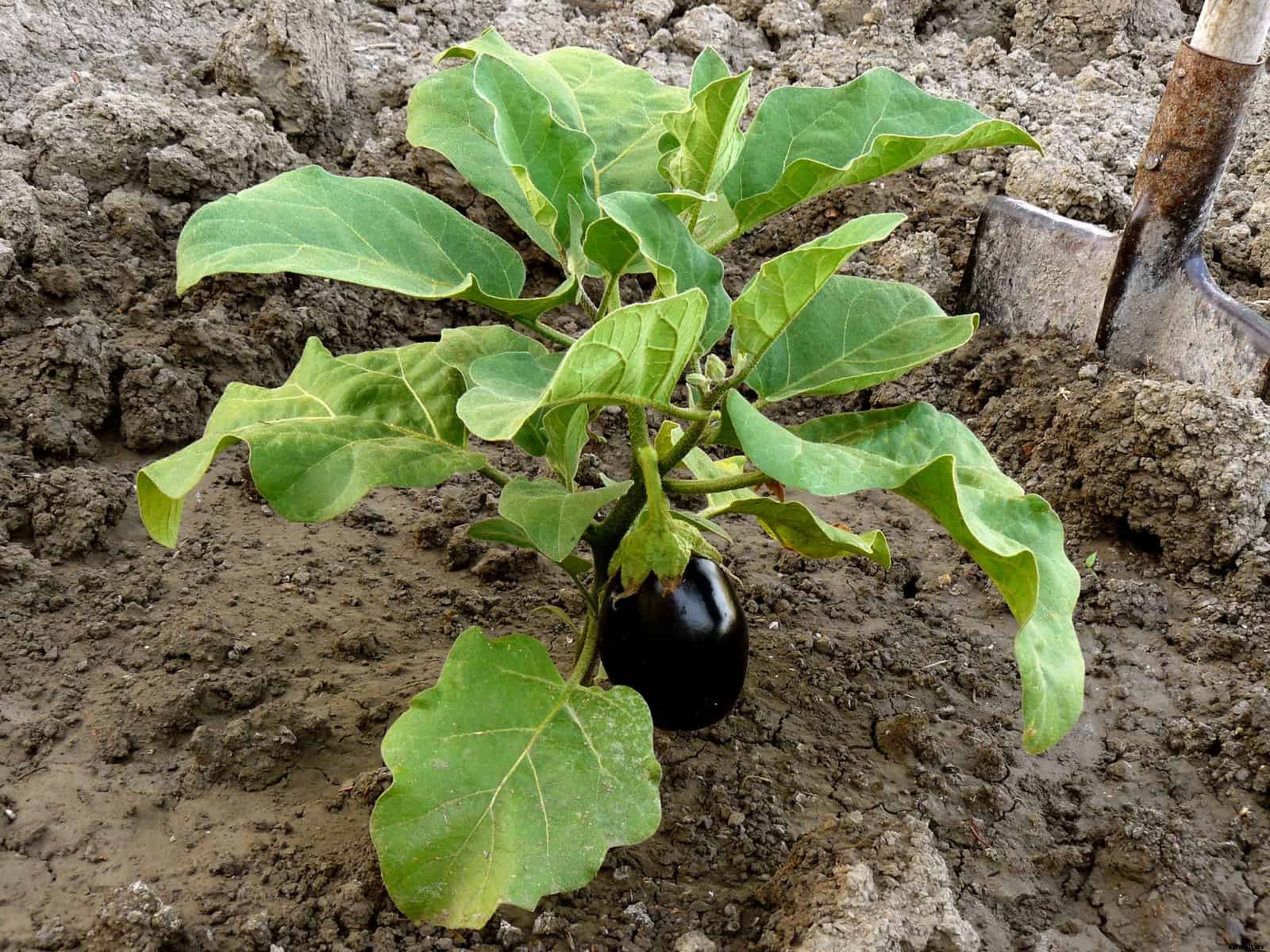
- Set a stake or small tomato cage in place to support the plant as it grows. Eggplants loaded with fruit can tip or fall over; it’s best to support them.
- Space eggplants 24 to 36 inches (61-91cm) apart. Space rows 24 to 36 inches apart.
- Protect young plants with polyethylene row covers if days or nights are cool. Lift row covers during warm afternoons so that bees can pollinate plants.
Container Growing Eggplants
- Eggplants are easily grown in containers.
- Grow eggplants in pots at least 12 inches (30cm) across and as deep. Choose a smaller growing variety for container growing.
- Be sure to keep the potting soil just moist through the season. Do not let the soil dry out.
- Feed eggplants in containers every two to three weeks with compost tea or dilute solution of fish emulsion.
- Container grown eggplants are easily moved out of cold weather; so you can extend the season in spring and autumn by moving plants indoors when frost threatens.
 Watering and Feeding Eggplants
- Eggplants are heavy feeders prepare planting beds with aged compost and side-dress eggplants with compost tea or a dilute solution of fish emulsion every 2 or 3 weeks until the fruit has set and then every 3 to 4 weeks after.
- Eggplants require evenly moist soil to ensure the best and fastest growth. Do not allow the soil to dry out and do not overwater.
- Set drip irrigation or a soaker hose in place after transplanting seedlings to the garden. Give plants at least 1 inch of water every week.
- Inconsistent soil moisture can result in misshapen fruits.
- After the soil has warmed to 70°F (21°C), mulch around eggplants to retain soil moisture and to keep down weeds.
Companion Plants for Eggplants
- Plant eggplants with bush beans, southern peas, and nitrogen-fixing crops. Do not plant eggplant with tomatoes or corn.
Caring for Eggplants
- Protect eggplants from an unexpected late frost. Provide protection at night until all danger of frost is past. Cover plant with spun poly row covers.
- Chilly weather and lack of moisture can inhibit pollination.
- In hot summer climates, the soil temperature may become too warm for the roots; mulch plants about 4 weeks after setting them in the garden.
- Where temperatures grow hot in the summer to 100°F (37°C) or greater, protect eggplants with shade covering.
- Tall varieties and those with heavy fruit should be staked or caged.
Eggplant Pests
- Eggplants can be attacked by cutworms, aphids, flea beetles, Colorado potato bugs, spider mites, and tomato hornworms.
- Cutworms will be discouraged by collars set around the plants at the time of transplanting.
- Control aphids and flea beetles by handpicking or hosing them off the plant and pinching out infested areas. Spray infestation with insecticidal soap or spinosad.
- Spider mites can be difficult to control; use an insecticidal soap spray.
- Handpick hornworms off the plants or spray with Bacillus thuringiensis.
Protect eggplants: Eggplant Growing Problems: Troubleshooting.
Eggplant Diseases
- Eggplant is susceptible to fungal and bacterial diseases.
- Planting disease-resistant varieties when possible.
- Keep the garden clean of debris.
- Verticillium wilt can attack eggplants; spray-mist leaves with compost tea to prevent and slow fungal diseases.
- Diseased plants should be removed immediately before the disease spreads to healthy plants.
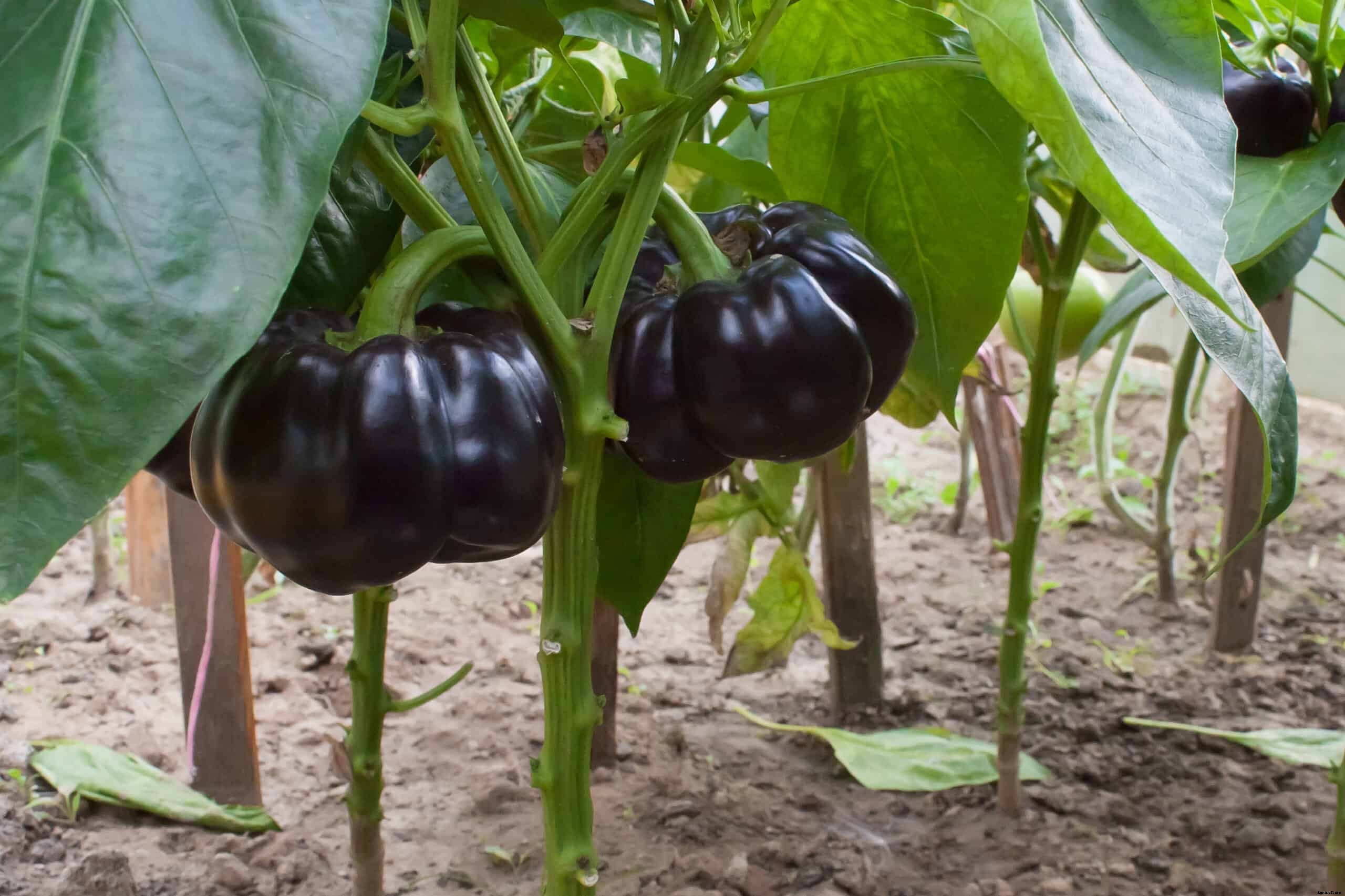
- Protect the plants against soil-borne disease by rotating corps; do not plant eggplant family members including tomatoes, potatoes, and peppers in the same spot two seasons in a row.
Harvesting Eggplants
- Time from planting to harvest is 100 to 150 days from seed, 70 to 85 days from transplants.
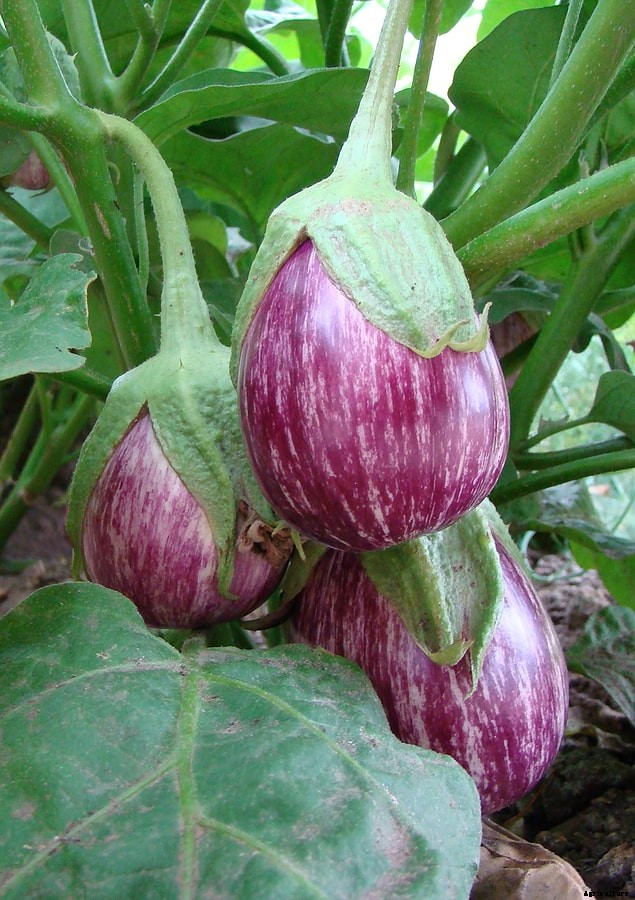
- Harvest eggplant young before the flesh becomes pithy.
- Eggplants are ready for harvest when the fruit is glossy, firm, and full-colored.
- Eggplants with no seeds are immature. Fruits with hard, dark seeds are overripe.
- Eggplants that are under or overripe will be bitter tasting.
- Cut eggplants from the stem with a pruning shear or sharp knife. Leave a short stub of stem attached to the fruit.
Harvest tips: How to Harvest and Store Eggplant.
Storing and Preserving Eggplants
- Eggplants will keep in a well-ventilated place for up to 1 week at 50°F (10°C) or slightly warmer.
- It is best not to refrigerate eggplant but if you do wrap the fruit in plastic to prevent cold burn. Do not wash or cut eggplants before refrigerating.
- Eggplant can be frozen or dried.
Eggplant Varieties to Grow
Four classic eggplant varieties to grow are:
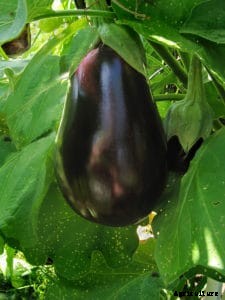
- Black Beauty: grows glossy black, bell-shaped fruit 4 to 6 inches (10-15cm) long.
- Ichiban: grow slim, deep purple fruits 6 inches (15cm) plus long.
- Little Fingers: small, dark purple fruits, 3 to 4 inches (7-10cm) long.
- Easter Egg: small pastel yellow or orange fruits the size of an egg.
Here’s a full list of eggplant varieties to grow:
- Bell-shaped eggplant: Black Beauty (73-80 days); Black Bell (68 days); Blacknite (61 days); Imperial Black Beauty (80 days).
- Long, cylindrical eggplant: Agora (68 days); Dusky (61 days); Ichiban (60 days); Millionaire (55 days); Osaka Honnoga (65 days); Slim Jim (65 days); Tycoon (54 days); Vernal (70 days); Violetta di Firenze (65 days); Vittoria (61 days).
- Small eggplants: Bambino (45 days); Mini Fingers (68 days).
- Non-purple eggplants: Alba (60 days); Casper (70 days); Easter Egg (60 days); Italian Pink (75 days); Listada de Gandia (75 days); Louisiana Long Green (100 days); Osterei (80 days); Rosa Bianca (75 days); Turkish Italian Orange (85 days); White Beauty (70 days).
Learn more at: Eggplant Varieties–Short, Mid, and Long Season and Eggplant Varieties: Best Bets and Easy to Grow.
About Eggplants
- Eggplant is a small- to medium-size bush vegetable that produces smooth, glossy-skinned fruit that can vary in length from 5 to 12 inches (12-30cm) long.
- Eggplants have large, fuzzy, grayish-green leaves and produce star-shaped lavender flowers with yellow centers.
- The edible fruit can be long and slender or round or egg-shaped fruit. The fruit is creamy-white, yellow, brown, purple, or sometimes almost black.
- Eggplants can grow 2 to 6 feet tall (.6-1.8m), depending on the variety.
- Eggplant Yield. Plant 1 to 2 eggplants per household member.
- Common name: Eggplant, aubergine, guinea squash
- Botanical name: Solanum melongena
- Origin: East Indies, India


