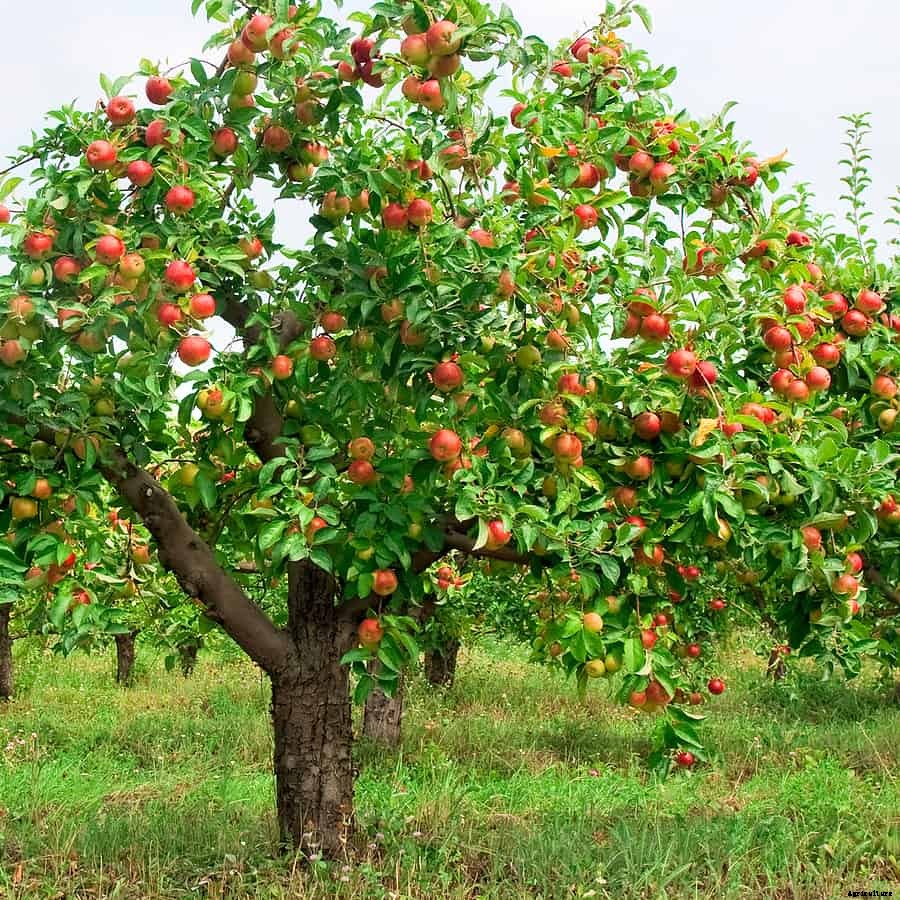
 The apple is a hardy, deciduous woody perennial tree that grows in all temperate zones. Apples grow best where there is cold in winter, moderate summer temperatures, and medium to high humidity.
There are apples for fresh eating, some for cooking, and some for preserving. Some apples are sweet and some are tart. Some apples come to harvest in summer, some in autumn.
Apples can grow from 10 to 30 feet tall and nearly as wide. They are moderately fast-growing, but growth slows with age. Apple trees can live for 100 years or more.
Apple trees bloom in the spring, set fruit, and take from 100 to 200 days to reach harvest depending upon the variety.
Best Climate and Site for Growing Apples
- Apples grow in Zones 3 to 9. Some can tolerate winter temperatures as low as -40°F. Choose an apple tree suited for winter temperatures where you live. See Chilling Hours below.
- Apples generally do not grow well close to the ocean where temperatures remain moderate most of the year.
- Apples grow best in full sun. An apple tree planted in partial sunlight will not bear as many fruits like an apple planted in full sun.
- Apples grow best in well-drained loamy soil, although they will grow in more sandy soil or in soil with some clay.
- Apples grow best in a neutral soil pH of 6.0 to 7.0.
- Plant apples sheltered from a prevailing wind or breeze. Avoid planting apples in a low spot where cold air or frost can settle.
- Late spring frosts can kill apple flowers. Apples bloom in late spring after peaches, cherries, and almonds. Early fall frosts can damage the fruit. Choose a variety suited to your growing region.
- Avoid planting in the same spot where apple trees have previously grown. Pests and diseases that attack apple trees may still live in the soil.
 Choosing the Right Apple for Your Garden
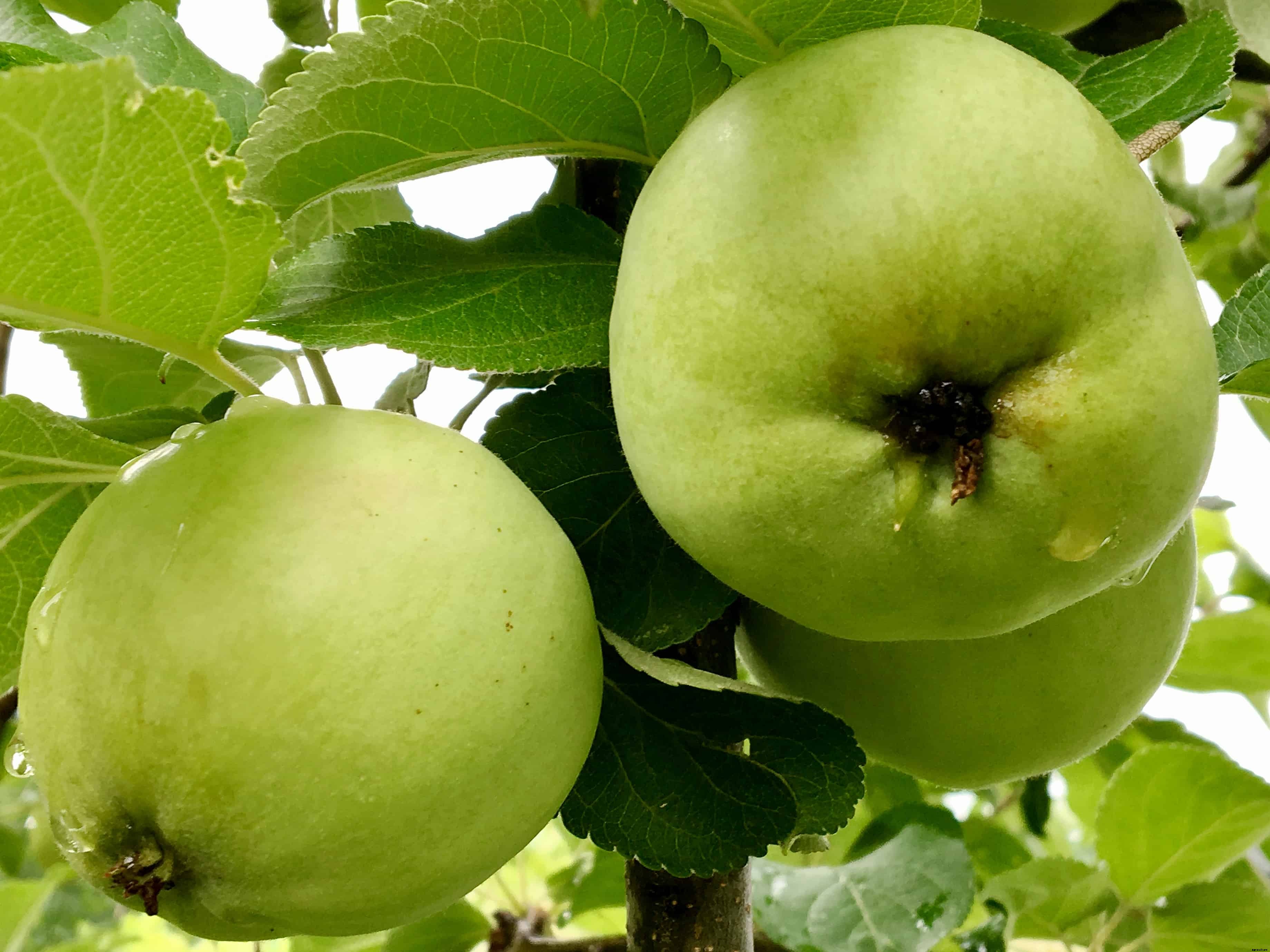
- There are nearly 10,000 different varieties or cultivars of apples. About 7,000 varieties or cultivars grow in North America. Only about 1,000 are grown commercially or in home gardens. Contact the nearby Cooperative Extension Service or a nearby garden center to learn which varieties grow well in your area.
- When choosing an apple or apples to plant consider how you want to eat your apples; some cultivars are for fresh eating, some for cooking, and some for preserving.
- When choosing an apple or apples consider when the fruit will come to harvest; some apples ripen midsummer, some in late summer, and some in autumn. If you have room, you may want to plant one of each to extend the harvest.
- Check to see if the apple you want to grow needs a pollinator; many cultivars require a pollinator. You may need to plant two or more trees to get fruit.
- Check the rootstock of the apples you want to grow; some rootstock are suited for very cold regions, some tolerate drought, some tolerate wet soil, some are dwarfing or semi-dwarfing. The nursery or grower can tell you if the rootstock is suitable for your garden and needs.
- Some apple varieties are “sports” or accidental mutations of another variety and others are bred–meaning they are created by apple breeders through cross selection. Not every sport is productive and worthy of growing.
See also: How to Choose an Apple Tree
Spur-Type and Branching-Type Apple Trees
- Apples can be divided into spur-type or branch-fruiting type trees.
- Spur-type trees bear fruit on short twigs called spurs.
- Branch-bearing trees bear fruit along branches.
- Spurs tend to grow close together and so spur-type cultivars bear more fruit than the branch-bearing or non-spur trees. Spur varieties tend to bear fruit earlier in life than branching varieties.
- Individual spurs may bear fruit for ten years or more. Standard non-spur trees bear on twigs that tend to be short-lived.
- Spur-type apples are pruned differently than branch-fruiting apples.
Apple Chilling Requirements
- Apples have chilling requirements or chilling hour requirements. This is the number of hours at 45°F (7°C) or less than the cultivar or variety requires each winter in order to flower and leaf out in the in spring. Chilling hours can vary from 1,000 or more to as few as 400 hours.
- It is important to choose an apple variety with chilling hours suited to your climate and winter temperatures.
Apple Pollination
- Most apple varieties have flowers that contain male and female parts and so are self-pollinating. These trees will set fruit without cross-pollination. However, there are some varieties that are self-infertile and require a pollenizer.
- Even trees that are self-pollinating may have a better fruit-set if there is cross-pollination.
- Apples can be pollinated by bees and insects or by pollen that floats on the wind.
- Plant your apple tree within 40 to 50 feet of another apple tree that blooms at the same time or graft a branch from a suitable pollinator onto your tree.
- Flowers that are only partially pollinated will tend to bear fruit that prematurely drops.
Apple Pollination Groups
Not all apple trees flower at the same time; some flower early in spring, some in early middle spring, some in late middle spring, and others in late spring. Apples are divided into three flowering groups–A, B, C; the apples in each group flower at the same time. To ensure pollination—even if an apple is self-fertile—plant two or more apples in the same group; some may flower at the same time as an apple in an adjoining pollination group.
- Group A flowers in early spring and includes the varieties: ‘Gravenstein’, ‘Egremont Russet’, ‘Idared’.
- Group B flowers in mid-spring and includes the varieties: ‘Cortland’, ‘Cox’, ‘Granny Smith’, ‘Honeycrisp’, ‘Jonagold’, ‘Baldwin’, ‘Braeburn’, ‘Fuji’, ‘Gala’, ‘Golden Delicious’, ‘Rome Beauty’.
- Group C flowers in late spring and includes the varieties: ‘Court Pendu Plat’, ‘Edward VII’, ‘Mother’, ‘Sheepnose’.
Apple Rootstock and Tree Size
- An apple tree can be a standard or full-sized tree which grows to 30 feet tall; standard trees can take up to 6 years to bear first fruit.
- An apple tree can be a dwarf or semi-dwarf tree that grows less than half the size of a standard. A dwarf will grow 6 to 10 feet tall; a semi-dwarf will grow 12 to 20 feet tall. Most dwarf and semi-dwarf trees are grafted onto a rootstock which keeps them small. Dwarf and semi-dwarf trees produce full-sized apples in about three years.
- A grafted apple tree has a root system that is different from the fruit-producing portion of the tree. Some apple trees have more than one graft; they will produce more than one variety of fruit on the same tree.
- Apples are dwarfed as a result of the type of root system onto which they are grafted. Many apple varieties can be purchased as either standards or dwarfs or semi-dwarfs depending upon the rootstock. Root systems are identified by their growth at maturity and planting needs. Here are some, but not all, examples:
- ‘Seedling’: this is a full-growth tree with strong roots.
- ‘M.27’: this tree makes 15 percent of full growth and is good for containers.
- ‘M.9’: this tree makes 25 to 35 percent full growth; plant in moist, well-drained soil.
- ‘M.26’: this tree makes 30 to 40 percent full growth; plant in well-drained, dry soil.
- ‘MARK’: this tree makes 30 to 40 percent full growth and is very cold hardy and resistant to fireblight.
- ‘M-7’: this tree makes 40 to 60 percent full growth and can be grown in wet soil.
- ‘MM.106’: this tree makes 45 to 65 percent full growth; it can be planted in wet soil but may be susceptible to root rot.
- ‘MM.111’: this tree reaches 65 to 85 percent full size, tolerates a wide range of soil and is drought resistant and fireblight resistant.
- Many apple dwarfing rootstocks were originated in England at the Malling Research Station; this accounts for the “M” in their names.
Apple Yield
- An apple tree can yield from 75 to more than 130 pounds of fruit each year.
Spacing Apples
- Space apple trees according to their height.
- Standard apples that can grow to 20 or 30 feet tall; they should be spaced 25 to 30 feet apart.
- Semi-dwarf trees that can grow to 12 to 15 feet tall; they should be spaced 15 feet apart.
- Dwarf trees that can grow 6 to 10 feet tall; they should be spaced 8 to 10 feet apart.
- Allow enough room for sunlight and air circulation to reach all parts of the tree.
- If you are short on space, plant dwarf trees.
Planting Apples
- Apple trees can be purchased either bare-root, balled-and-burlapped, or in a container.
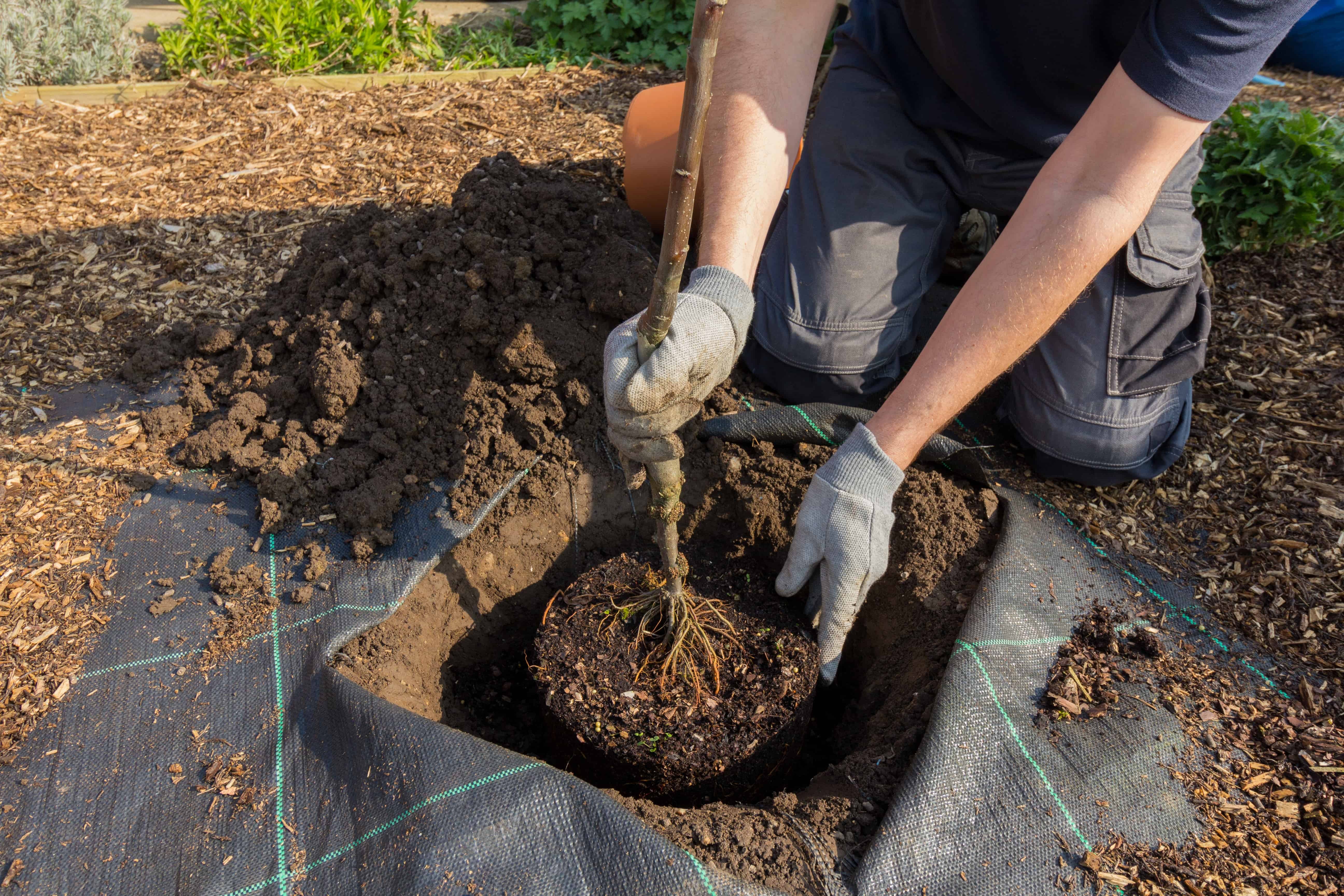
- Bareroot trees are available in the winter and early spring when the trees are dormant and without leaves. Plant bare-root trees in spring as soon as the soil can be worked and before the trees begin to significantly leaf out. Bareroot trees are commonly grafted and without branches, and so are called whips. Make the planting hole large enough that the roots can be spread out fully. Look for the soil line on the tree and plant the tree at that level or an inch or two deeper. If the tree is grafted, set it in the hole so that the graft is visible when planted, an inch or so higher than the surrounding soil.
- A balled-and-burlapped tree is a tree whose roots are in soil; the roots are enclosed in burlap. Balled-and-burlapped trees are commonly available in spring; however, they may be found later in the year. Plant a ball-and-burlapped tree by positioning the tree in the planting hole at the same depth that it was growing at the nursery. After positioning the root ball into the hole, remove all twine or rope used to hold the burlap and ball together. Then open the top of the burlap and slide it out of the hole. Lightly tamp in soil around the root ball; see General Planting Instructions below.
- A container-grown tree can be planted at any time during the growing season. Remove the container carefully and plant the root ball at the same depth as in the container.
- Avoid planting apple trees in hot, dry weather.
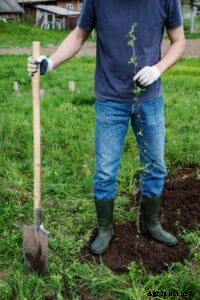
General Planting Instructions
- Prepare a planting site in full sun that is sheltered from a prevailing breeze or wind.
- Work well-rotted compost or manure into the soil and add a cupful of all-purpose fertilizer to the bottom of the hole.
- Dig a hole half again as deep and twice as wide as the tree’s roots.
- Put a tree stake in place before planting. Drive the stake into the ground to the side of the hole to at least 2 feet deep.
- Set the tree in the hole so that the soil mark on the stem is at the surface level of the surrounding soil. Remove all twine and burlap from balled and burlapped trees. Spread the roots out in all directions.
- Re-fill the hole with half native soil and half aged compost or commercial organic planting mix; firm in the soil so that there are no air pockets among the roots. Water in the soil and create a modest soil basin around the trunk to hold water at watering time.
- Secure the tree to the stake with tree ties.
- After planting, water each tree thoroughly and fertilize with a high-phosphorus liquid starter fertilizer.
Container Growing Apples
- Dwarf apple trees can be grown in containers.
- Choose a large pot or tub at least 18 inches wide and deep that is well-drained.
- Plant trees in a commercial organic potting mix.
- Keep the soil evenly moist but not wet.
- Feed apples growing in containers with an all-purpose fertilizer that is slightly higher in potassium.
- Repot the tree after two years into a container that is 24 inches wide and deep.
Apple Care, Nutrients, and Water
- Newly planted apple trees require moderate watering weekly. Set the water on low and allow it to seep into the soil; roots will follow deep watering and become well established.
- An established apple tree requires only infrequent watering but be sure to water all trees during prolonged dry periods.
- Feed apples with a mulch of aged compost applied liberally around the base of the tree once or twice a year, in spring or in late fall after leaves have dropped.
- Feed an apple tree a half-pound of balanced 10-10-10 fertilizer for each year the tree has been alive to a maximum of 10 pounds per tree per year.
- Low levels of potassium, calcium, or boron can reduce growth and fruit quality. Test the soil for its nutrient content. Spread gypsum on the soil to raise the calcium level.
- Yields can be improved with a foliar feeding of seaweed extract when buds begin to show color, again after petals fall, and once again when fruits are less than 1 inch in diameter.
- A young apple tree will grow 12 to 24 inches in a year. A mature, fruit-bearing apple tree will grow 8 to 12 inches each year.
Care of Young Apple Trees
- Allow the roots of a young apple tree to become well-established before allowing the tree to fruit.
- The first two years handpick off flowers and young fruit not allowing them to develop; this will give the tree increased energy to establish its roots.
- The third year allow the tree to bear a small crop. Do not allow a limb to become so burdened with fruit that it will bend or break.
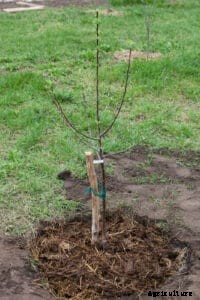
Training Apple Trees
- Freestanding apple trees can be trained in three ways: (1) central leader, (2) modified central leader, and (3) open center. Apple trees tend to be naturally vase-shaped having no central leader or a weak central leader but several potential scaffold branches. Training an apple tree should begin soon after planting.
- Central leader: A mature central-leader tree has a somewhat conical shape. The main stem is the central leader; from the central leader even spaced lateral branches are selected to grow as the tree’s scaffold branches. At planting a one- or two-year-old whip is cut off at about 30 inches above the ground; four even spaced lateral branches are selected to become the scaffold branches; all others are removed. In the second year, even spaced sub-lateral branches are selected to grow on; other sub-laterals are removed. Each year the central leader is shortened by one-third of the previous summer’s growth until the conical shape of the tree is established.
- Modified central leader: A modified central leader tree does not have a central main stem or trunk; the main stem is shortened in the second or third year and lateral-scaffold branches are encouraged to grow. Follow the training directions for a central leader form tree; once 4 or 5 strong scaffold branches have formed, cut back the central leader to just above the topmost scaffold branch. Sub-laterals will grow from the scaffold branches; prune these to keep the form of the tree and remove any vertical sub-laterals.
- Open center, also called multi-leader: A mature open-center tree has a vase-like shape. At planting time, the top of the whip is cut off at about 30 inches above the ground. In the first year select four even spaced lateral branches; these should be spaced along the trunk about 4 to 8 inches apart and should be growing in different directions from the central stem/trunk (these will become the main scaffold branches); cut off all other small branches. At the end of the second season, cut off the main trunk or leader just above the top lateral branches—above the branches you have selected to become the scaffold branches; you have just created an open center. At the same time, shorten the laterals by one-third to one-half to encourage sub-lateral branching; cut all other small branches back to four or five buds. In the next two years, prune back the laterals and sub-laterals by one-quarter to encourage strong growth. Allow even spaced smaller side branches (sub-sub-laterals or side shoots) to grow even spaced; prune the sub-laterals and their side shoots to two or three buds. In the following years as the tree begins to fruit, pruning can be lighter.
Pruning Mature Apple Trees
- An apple tree that has been trained (see above) will be near maturity in the fourth and fifth years. Then training pruning gives way to maintenance pruning.
- Mature apple trees, like most trees, will benefit from pruning. Pruning will allow the tree to produce quality fruit.
- Prune an apple tree so that plenty of sunlight and air can penetrate into the center of the tree. One guideline is to prune so that a bird can fly directly through the tree without touching its feathers on a branch. That means pruning out dense, crossed branches.
Maintenance Pruning Step-by-Step
- Remove all diseased, dead, or broken branches.
- Remove all water sprouts. Water sprouts are fast-growing vertical branches that usually have no side branches.
- Remove all suckers. Suckers are the fast-growing shoots that grow out of the soil from the roots below the soil surface.
- Remove a branch that creates a tight V-branch crotch, a crotchless than 45 degrees. These branches will not support the weight of a full crop of fruit.
- Remove crossing or rubbing branches. If two branches cross and rub against each other they can cause a wound that may allow insects or fungal disease to attack the tree. Remove the least desirable branch.
- Never prune away more than one-third of the total tree in a single growing season.
- Always prune to a growth bud or flush to a main branch or trunk. Remember that spur-bearing apple trees produce fruit on the same spurs several years in a row.
- Tip-bearing apples bear fruit on last year’s growth, so be careful not to remove too much recent growth that will bear fruit next season; lightly tip-prune the leaders of the main branches; cut back sub-laterals to a strong bud but not more than 12 inches; do not prune any sub-laterals shorter than 12 inches.
- Spur-bearing apples bear fruit on the same spurs for years and years. Be careful not to remove or damage fruiting spurs unless you mean to. Prune new side shoots to encourage the growth of new spurs; cut back shoots to buds facing the direction laterals and fruits should grow.
- Prune every year. Once a tree has been well pruned, it will need less annual pruning; only the removal of crossing branches and twiggy growth.
- Prune in late winter when the tree is dormant and before buds appear. A light maintenance pruning can be done in summer working around the fruit set.
See also: Apple Pruning
Thinning Apples
- Thinning fruit will ensure the quality and size of the crop. Thinning will also reduce the tendency of some apple varieties to alternate-bear that is bear fruit every other year. When a tree bears a heavy crop one year, it will produce a much, much smaller crop the next year; this is called alternate bearing.
- A few weeks after fruit sets, some fruit on the tree will naturally drop off. This is called “June drop”; it is nature’s way of thinning the crop. Apple trees produce more blossoms and fruit than is necessary for a full crop.
- Additional thinning will benefit the tree. The rule of thinning fruit is to allow plenty of room for fruit to develop. Look for clusters of fruit and remove smaller apples in each cluster before the fruit reaches one inch in diameter. On larger trees, you can leave two fruits on each spur and on dwarf trees leave one fruit on each spur. One thinning method is to remove all the fruit on every other spur. It is probably best to reduce fruit clusters leaving just a single fruit. Fruit that touches another fruit can be susceptible to disease or pest attack.
See also: Thinning Apples
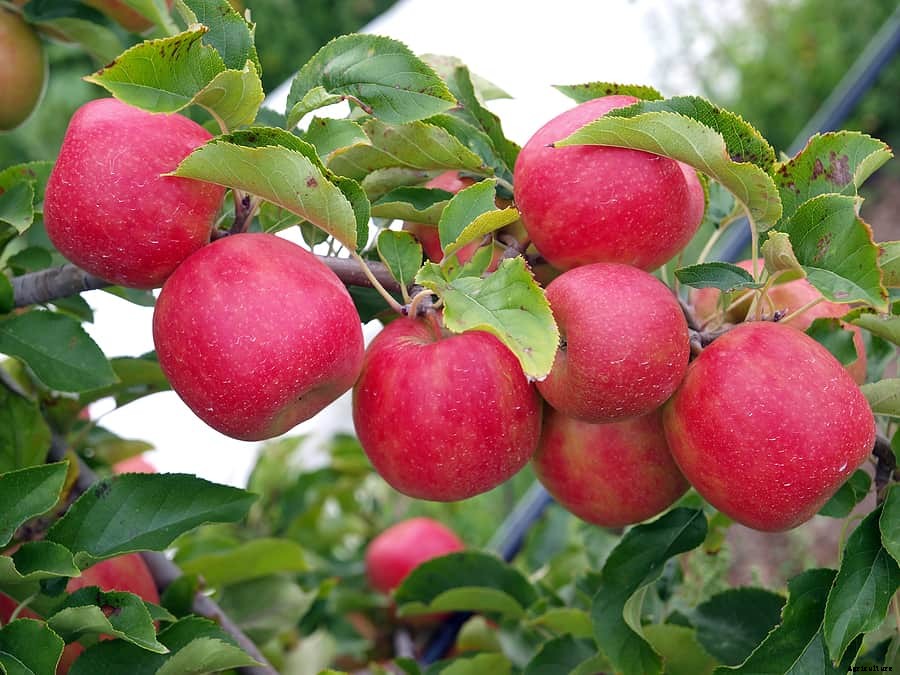 Harvest and Storing Apples
- Dwarf cultivars begin to bear fruit in one to three years.
- Standard cultivars begin to fruit in five to ten years.
- Apples come to harvest from midsummer through late fall; fruit ripens 100 to 200 days after fruit set depending on the variety.
- The best way to know if apples are ready for harvest is to taste them; select one and try it. Also, consider skin color and fruit drop. Apples are usually ready for harvest when they reach full color; full color may vary according to the variety.
- A mature apple will come away from the tree easily; lift the apple up and twist in a rotating motion. It should not be necessary to cut an apple from the stem.
- Late ripening apples usually come to harvest more quickly than long-maturing early and mid-season varieties.
- Storing and preserving. Apples will keep for 6 to 8 weeks in a cool place; a refrigerator just above 32°F is best. Late-maturing apples are better keepers than summer apples. Commercial growers often place apples in cold storage for 6 to 12 months.
- Apples kept in storage should not be diseased or damaged or other fruit may be affected. Apples are often wrapped individually in paper to avoid spoilage.
See also: Apple Harvest Time by Variety
Also of interest: Apples: Kitchen Basics
Propagating Apples
- Propagate apple trees by grafting scions (fruiting wood) onto rootstocks.
Apple Pest and Disease Control
- The best preventative approach to apple diseases is to choose varieties that are resistant to the diseases in your region.
- Apart from disease-resistant cultivars, prune trees regularly to allow for ample sun and air penetration into the crown of the tree and prune out any diseased branches, leaves, or fruit.
- Keep the garden or orchard clean of dead leaves and branches and plant debris.
- Pests that sometimes attack apples include: aphids, apple tree borers, apple fruitworms, apple leafminers, apple maggots, birds, Codling moths, European apple sawflies, European red mites, flathead borers, roundhead borers, leafrollers, oriental fruit moths, plant bugs, plum curculio, scale, spider mites, tarnished plant bugs, tortrix moths, wasps, white apple leafhoppers, winter moths.
- Diseases that sometimes attack apples include apple canker, apple scab, bitter pit, black rot, blossom blight, brown rot, cedar apple rust, powdery mildew, fireblight, fly speck, sooty blotch.
Apple Spraying Schedule
- Apples are commonly sprayed to combat diseases and pests.
- Apply a dormant oil spray before buds open and when the temperature has been above 33°F for 48 hours. Dormant spray oils help kill overwintering pests and diseases.
- Apply a multipurpose fruit tree spray when the buds begin to break. Multipurpose fruit tree sprays help control both pests and diseases during the growing season.
- Do not spray when the tree is in bloom.
- When nearly all the flower petals have fallen begin applying a multipurpose fruit tree spray every 10 to 14 days.
- Discontinue all spraying two weeks before harvest.
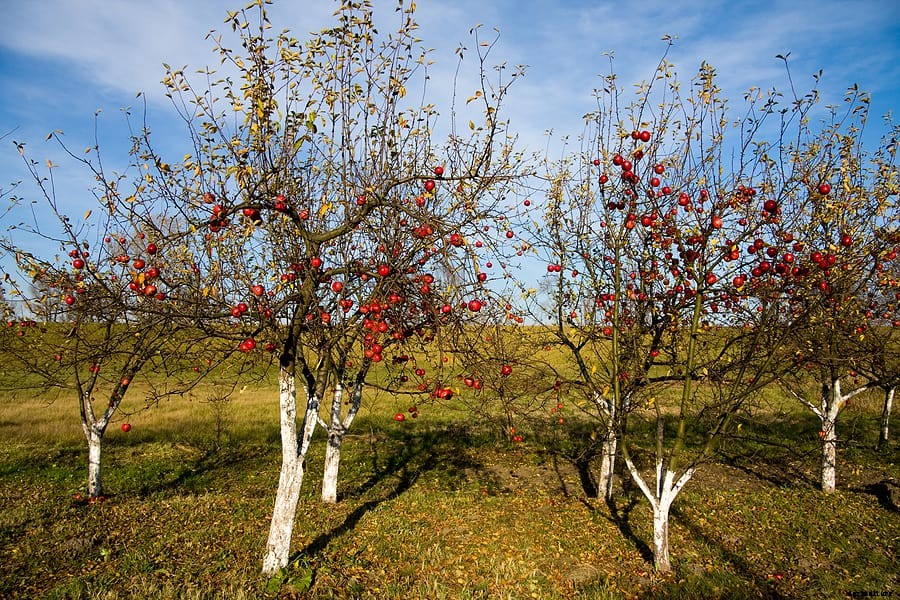 Fall and Winter Apple Care
- Prune trees in winter; the best time is just before buds break in late winter or early spring.
- Fruiting spurs can be thinned; remove crowded spurs and also remove unproductive spurs.
- Place hardware cloth around tree trunks to protect them from rodents and rabbits.
- Paint trunks with diluted latex to protect the bark from sunscald.
- Hang deer deterrents from tree branches; bars of deodorant soap will repel deer.
Apple Varieties to Grow
- There are hundreds of apple varieties to choose from. Consider first your region and the number of chilling hours. Next, consider the space you have to grow an apple tree. Then consider how you plan to use the fruit and when you want the fruit to come to harvest, early, mid-season or late.
- Choose two apples from the same pollination group to ensure the best fruit yield. See Pollination Groups above.
- Very good pollinators: ‘Golden Delicious’ pollinates almost every other variety and is self-fruitful. ‘Winter Banana’ good pollinator, especially for ‘Red Delicious’.
- Varieties that are not self-fruitful (they need a pollinizer): ‘Red Delicious’, the ‘Winesaps’, ‘Red Gravenstein’, ‘Rhode Island Greening’, and triploid crosses including ‘Mutsu’, ‘Spigold’.
- Varieties for cold northern cold regions: ‘Duchess’, ‘Gravenstein’, ‘Haralson’, ‘McIntosh’, ‘Cortland’, ‘Macoun’, ‘Spartan’, ‘Empire’, ‘Wealthy’.
- Varieties for all regions except southernmost areas and the coldest regions: ‘Baldwin’, ‘Golden Delicious’, ‘Grimes Golden’, ‘Jonathan’, ‘Jonagold’, ‘Liberty’, ‘Lodi’, ‘Mutsu’, ‘Northern Spy’, ‘Paulared’, ‘Prima’, ‘Red Delicious’, ‘Rhode Island Greening’, ‘Rome’, ‘Rome Beauty’, ‘Sir Prize’, ‘Winesap’, ‘Yellow Newton’, ‘Yellow Transparent’, ‘York’.
- Varieties that will grow southern regions: ‘Granny Smith’.
See also: Winter and Late Season Apple Varieties
Botanical name. Malus pumila
Origin. Southwestern Asia


