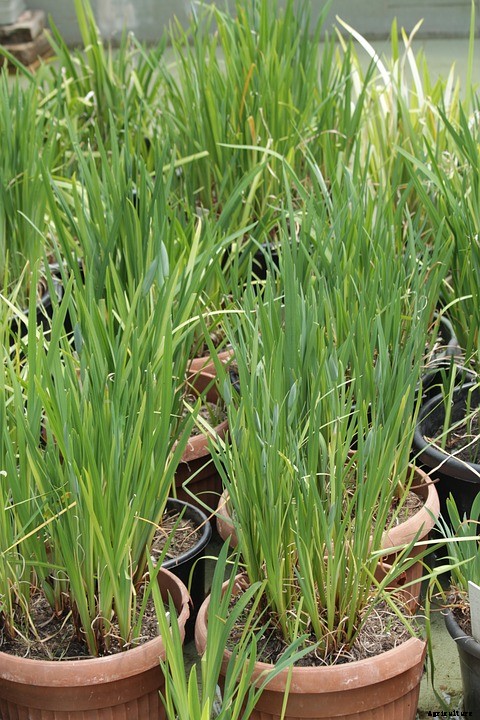
Growing Lemongrass from Seed, Cuttings in Pot, Indoors
A step by step guide for growing lemongrass indoors
Today, we detail about growing lemongrass from seed, cuttings, stalks along with winter care of lemongrass. As you know the lemongrass is easy to grow in pots, indoors, terrace, balcony, and backyard, you will have fun and profits in lemongrass gardening. Lemongrass is a tropical plant in the grass family and it is a perennial grass. It is commonly grown for used in cooking because of its scent and subtle citrus flavor. It is also used as medicinal herbs. The scientific name for lemongrass is Cymbopogon. India is the highest producer of lemongrass that is producing over two million pounds per year, where it is cultivated along with the mountain range of the Western Ghats and beside the foothills of Arunachal Pradesh and Sikkim in the Himalayan Mountains. In the garden, lemongrass forms a tall, grassy clump 3 feet to 5 feet tall.
Growing lemongrass is very easy. Once the plants are established, it will propagate itself; new plants will begin growing by the side of existing stalks. Lemongrass will grow into a hefty shrub in about 4 to 6 months and ready for harvest. The benefits of lemongrass are numerous and contain relief from insomnia, stomach disorders, respiratory disorders, fever, pain, swelling, and infections. Lemongrass is generally used in Asian cooking. It is also used in soups, curries and making teas.
Types of lemongrass
There are mainly two common types of lemongrass which are native to the Indian and Southern Asian regions:
West Indian Lemongrass (Cymbopogon citratus): It is the more commonly used type for cooking (chopped or crushed stalks), in teas (leaves) and in perfumes. It grows very easily in any warm climate and gets up to 90cm.
East Indian Lemongrass (Cymbopogon flexuosus): It grows taller (up to 1.5m), has purple tinges to the stems and prominent pinkish/purplish seed heads. It can be used in cooking and teas.
The basic requirements for lemongrass production:
Let us discuss how to grow lemongrass indoors;
Growing lemongrass indoor garden is a necessity in colder climates, as lemongrass grown outdoors will not survive the winter.
Soil requirement of lemongrass:
The lemongrass will grow in a wide range of soils but grows best in well-draining, fertile loam with a pH between 5.0 and 8.4. It will tolerate poor soils if provided adequate moisture and provide good drainage. Waterlogged soils must be avoided.
You may also be interested in Seedbed Preparation.
Soil preparation of lemongrass:
Before planting lemongrass, amend soils with 2 to 4 inches of organically rich compost. Work it four to six inches deep into the soil. For growing potted plants, apply a ½ strength solution of a nutrient balanced water-soluble fertilizer every week to 10 days to maximize growth.
Temperaturerequirement of lemongrass:
Growing lemongrass prefers tropical or subtropical climates. It grows good at a temperature range of 10 to 33 °C, and it needs enough sunshine for the development of oil in the plant. The lemongrass is sensitive to cold weather and cannot withstand frost.
How to propagate lemongrass
It does extremely propagate lemongrass from stalks, seeds, and cuttings.
How to grow lemongrass from stalks:
Lemongrass requires lots of sunlight and water supply. Step-by-step procedure for growing lemongrass from stalks in containers;
If you’re growing lemongrass indoors in containers, you’ll want to pick the right container. Lemongrass spreads and grows to be a few feet high, so choose a container for growing lemongrass that’s as big as you can stand to have in your house. Make sure that it has ample drainage holes.
Root Lemongrass in water for one week. Replace the water every day to avoid rotting, new roots and leaves will start to grow after 2 to 3 days. The stalks will create roots better in water than in soil.
Tiny roots will start to increase after a few days. Once roots start developing, the growth rate can be staggering. Avoid direct sunlight at this period.
After one week in water, place the stalks cutting in a pot with good soil mix.
Water the lemongrass plant twice a day for a few days after planting so that the new plant is not under stress before more roots establish.
Lemongrass will grow into large or hefty shrub and ready for harvest after 4-6 months. Harvesting lemongrass can be done anytime throughout the year, just twist and pull the stalks from the ground.
How to grow lemongrass from seeds
Usually, growing lemongrass from seeds is very easy and requires little to no care, once established. However, the plants should be kept in warm and humid conditions in the first few weeks after germination.
Lemongrass can be grown from seeds for very little money and with little supplies, most of which can be found right near your home. The best time to begin lemongrass growing is mid-February to early March, however, with the right care; you can grow them any time of year.
The step-by-step procedure for growing lemongrass from seeds;
Purchase seeds:
Choose a one-gallon container for every plant you’d like to grow, as well as sterilized seed starting mix, potting soil, and some seed starting trays with plastic domes and plastic bags also can work as a substitute.
Seeds are sometimes harder to find at garden stores, but you can buy them online at multiple nurseries.
If seeds will not be constantly at least 70 degrees while they are germinating, consider buying a seedling heat mat as well to help nurture seeds at a constant temperature as they grow.
You may also check How to Grow Mustard Greens at Home.
Germinate your seeds:
At this stage, the seeds are too fragile and vulnerable to go directly into the soil, so you want to give them 1 to 2 weeks in a dark, warm place to sprout by tending to them very carefully. This is very easier in a warm environment, but it’s possible to do in a colder place as well.
Put seed starting mix into your seedling trays, inserting them about ¼ of an inch deep.
Place the domes, or plastic bags, over the seeds so they are covered.
If the area around the seeds is cold, place seedling heat mat beneath the trays.
Spritz the seeds with water every day, keeping them moist but not wet, replacing the dome or plastic bag each time.
When green seedlings appear from the seeds, remove the dome from the trays and move them into full sunlight.
Transplant the seedlings:
Seedlings require more room and nutrients in order to grow into stalks, and each will need their own one-gallon container to do this properly. So when your seedlings are roughly six inches long, it’s time to transplant.
Fill each of your 1-gallon containers with one gallon of rich, well-draining soil.
If you purchased fertilizer, mix a ½ cup of this with soil before filling your container.
Move each seedling to its own pot or container, placing it roughly a ¼ of an inch down into the soil.
Water the plants at least 2 or 3 times every week, or a few times more if the weather is over 80 degrees and the soil feels dry like sand.
How to grow lemongrass from cuttings:
Let us discuss step by step procedure for how to grow lemongrass from cuttings;
Reserve 4 inches above the cutting base and use the rest for cooking. Prepare a glass with about one inch of water.
Place the lemongrass cuttings on the glass and keep it in a warm place. For example, the kitchen windowsill is a perfect spot for this.
Add extra water if it evaporates after a few days. The lemongrass cuttings will have roots within 2 to 3 weeks.
When it has a good root system per stalk, arrange the container with a proper drainage hole and potting soil.
Transplant the lemongrass on a container. You can plant 2 to 3 stalks for the 6-inch container. Then, later on, repotting it to 5 gallons or larger container as lemon grass can spread up to 2 feet wide and form a big clump of grass.
Growing lemongrass needs a warm and sunny spot for proper growth.
Fertilize it with an all-purpose balance fertilizer or organic fish or kelp emulsion is an excellent choice.
When the temperature gets cold, dig up the lemongrass and repot it into a container and get it ready to develop indoors.
If the plant forms a big clump, you can separate it by dig up the root with the spade, and split the cluster into several sections, then transplant each bunch into an individual container.
You can grow lemongrass indoors all winter long by placing it in the warm sunny spot for example south facing a window or under grow light.
If space is limited, not to worry, you can harvest it from the garden and use lemongrass for cooking, tea or essential oil. Then start over to root the stalk in the next spring for the next gardening season.
Watering the lemongrass:
Water is a very important aspect when it comes to growing lemongrass. The lemongrass plant needs lots of water, thus it has to be made sure that the soil is always moist but not waterlogged.
Fertilization:
Like other grasses, lemongrass requires lots of nitrogen during the summer season. It must be feed weekly with a half-strength solution of a balanced soluble fertilizer from June through September. Provide a similar fertilizer monthly for plants in the ground.
Pruning lemongrass in colder climates:
If you live in a colder climate, your lemongrass can go dormant over the winter, with all of the lemongrass leaves turning brown. If this is the case, wait until early spring for lemongrass pruning and cut all the plant leaves away, right down to the tender white part of the stalk. This could look extreme when you do it, but before long, fresh growth should come in to replace all that lost material.
You may also like Growing Moneyplant in Pots, Indoors.
Lemongrass plant care
Lemongrass requires plenty of water and sunlight, place them in a bright spot. Under ideal conditions, the plants are ready for harvest in 4 to 6 months.
Water frequently in the spring and summer season, and use a less heavy hand with the garden hose or watering can in the winter. Use a spray bottle to generate humidity if you do not live in a humid climate.
Pests, weeds, and diseases:
The high levels of essential oil in lemongrass can protect it from most pests and diseases. Snails sometimes hide in the tightly folded inner leaves of mature plants, so careful searching can be needed if your plants look chewed.
How and when to harvest lemongrass
Lemongrass comes to harvest 90 days after planting and subsequently it is harvested at 50 to 55 days interval. The lemongrass is cut 10 cm above the ground level and 5 to 6 cuttings can be taken in a year subject to the climatic conditions. Depending upon the planting period, one or two cuttings are taken in the first year and from second year onwards, 3 to 4 cuttings are available. Harvesting consists of fresh leaves and the dry or semi-dried leaves at intervals of 60 days.
Some facts about lemongrass:
The main reason for a lemongrass plant turning brown would be lack of water and nutrients. Lemongrass is native to areas with regular rainfall and high humidity so they could need more water in the home garden than other plants.
Lemongrass is a perennial,
Lemongrass is a perennial. Lemongrass is very forgiving and can be cut back drastically. Cut it down to as little as three feet high and prune it regularly to keep it that size if you so desire.
Do not allow the plant to freeze, but protect it from warm temperatures that could encourage it to make new growth. Water your dormant lemongrass only once every 6 to 8 weeks throughout the winter.
In colder climates, lemongrass goes dormant in the winter season. The best time to prune lemongrass is while it’s dormant, but not until temperatures start to warm up in the spring.
The best time for trimming lemongrass is early spring when the lemongrass plant is still dormant.
Generally, lemongrass will need to be grown undercover and, likely, kept indoors in a humid, warm space over the winter months, but other than its requirement for heat, this is a plant that is relatively easy for the UK gardener to grow.
Normally, lemongrass is a tropical plant that freezes to death where winter temperatures drop below 15F (-9C). In all climates, potted plants are easy to maintain through winter indoors.
In moderately cooler zones, lemongrass may survive the winter season and return in the spring even though the plant’s leaves die back. Lemongrass roots are typically hardy in USDA zones 8b and 9, and in these zones, the plant can return year after year.
You may be interested in Chilli Farming Profits, Project Report.