
Welcome to Modern Agriculture!

Chinese cabbage (Brassica pekinensis) is an oriental vegetable that is mostly used in sandwiches and salads instead of lettuce. The Chinese cabbage leaves are tender like lettuce even though it is a cabbage. Unlike regular cabbage, the thick veins in the leaves are really sweet and tender. Growing Chinese cabbage is a very great addition to any vegetable garden.
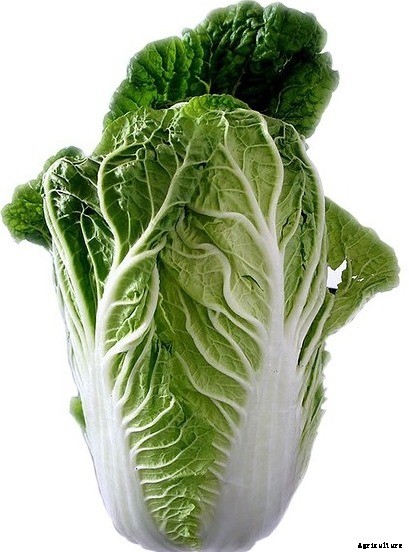
Chinese cabbage sometimes referred to Napa cabbage as because it is believed to have originated near the Beijing region of China, is a large, puckered, tight-headed, fresh green with a flavor that is sweeter and milder than other traditional cabbage.
Chinese cabbage is also called as some other names such as Napa cabbage, Pak choi, Bok choy, Peking cabbage, Celery cabbage, flowering cabbage.
Some of the varieties of Chinese cabbage are explained below;
The heading types of Chinese cabbage form heads that could be blocky to elongate in shape, depending on the variety. Elongated types include Rocket and Michili. Medium-shaped heads consist of Jade Pagoda, while blocky short-headed types include China Pride, Early Hybrid G, and WR60. Non-heading types contain Pak Choi varieties and are harvested for their white leaf stalks with bright green leaves.
Napa cabbage can grow in full sun or partial shade provided it gets at least 4 to 5 hours of suns each day and plenty of water.
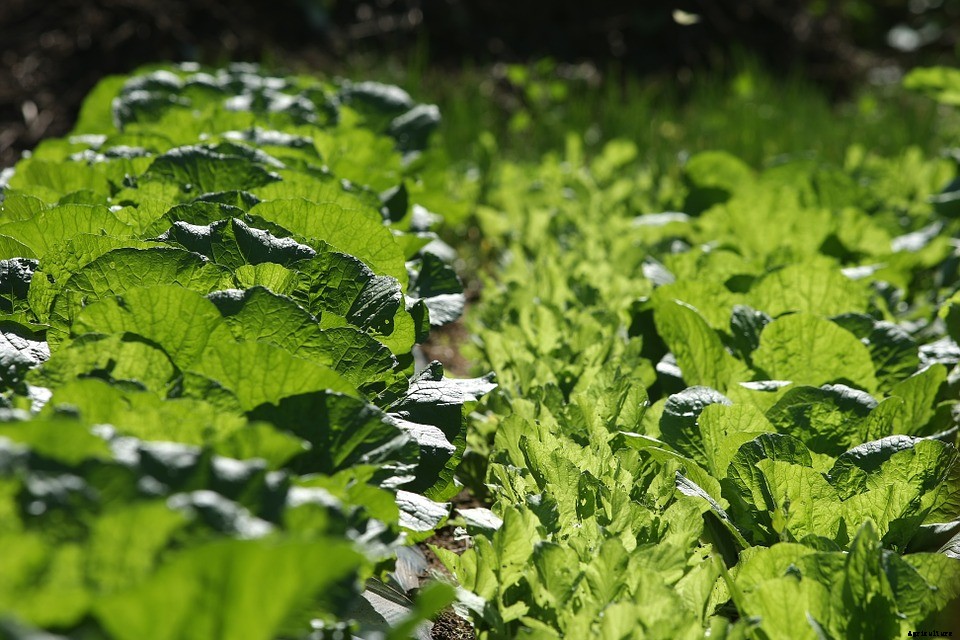
Since Chinese cabbage has a relatively long growing season, you will want to start with rich, well-amended soil. Begin by digging in several inches of organic matter, such as compost or well-rotted manure. Soil pH is not a big concern but aims for something from 6.5 to 7.0. A good Chinese cabbage crop needs this ideal garden soil.
It is not worth growing Chinese cabbage unless the plants absorb water and nutrients steadily during their growth. The first thing that you should keep in mind before growing this vegetable in your garden or greenhouse is the climate. Chinese cabbage doesn’t tolerate hot weather so if you want to obtain good results from production then you must start its cultivation before extreme hot weather. Cool temperature seems to be great for the production of cabbage. It grows well when it exposes to direct sunlight though it can tolerate shade as well. Plant Chinese cabbage carefully in well-worked, well-drained but moisture retentive soil rich in organic matter.
You may be interested in the How to Grow Moringa from Cuttings, Seeds.
Chinese cabbage or Napa cabbage is propagated from the seed.
The land must be clean cultivated eight weeks before planting and the ground must be plowed deeply, immediately before planting, with a disk harrow or other proper implement to a depth of 450 to 600 mm. The soil must be fumigated two weeks before planting time if necessary, to control nematodes.
If you choose to plant in the spring, either direct sow or start seed indoors about four to six weeks before your last frost date. Hold off sowing outdoors until after your last frost date or be arranged with some type of row covers. Plant seed 1/4 to 1/2 inch deep, spaced 6 inches apart. Thin and eat the thinned plants they are a couple of inches tall. If you are growing full-sized plants, thin to 12 to 18-inch spacing. Sow in spring through the soil is still cool. Plant again in late summer suited for harvesting in the fall.
Chinese cabbage is a very excellent crop for late summer when days are long and nights are warm. At other seasons it bolts readily and is satisfactory as mini leaves. Sow in very fertile soil and water carefully to ensure excellent growth and to suppress bolting. Sow thinly outdoors from June to August month, every three weeks for succession crops, 1cm (½in) deep in rows 38cm (15in) apart. Thin seedlings to 30cm or 12inches apart for large heads or to 15cm apart for ‘cut and come again’ salad leaves.
Chinese cabbage is a cool-season crop, and it will bolt and go to seed speedily in warm weather and long days. So you must consider growing Chinese cabbage during the colder months. Temperature ranging from 7 to 24° C is considered the best time for growing Chinese cabbage.
Seedlings are generally grown in trays which hold 100 plants and the individual cell-pack may have a diameter of only 15 mm and a depth of 10 mm. Transplant start when the seedlings are 15 cm tall.
Now let us find out about How to grow Chinese cabbage, When considering planting Chinese cabbage, you have to remember that you can produce an early winter or mid-winter crop or a spring crop. Just don’t plant Chinese cabbage too late or it will send up flower stalks before making heads, which robs the plant of nutrients. One of the steps to grow Chinese cabbage is to prepare the soil carefully. Planting Chinese cabbage wants heavy soil that holds moisture. You do not want the soil too wet, though, because it can rot the plant. To keep your Chinese cabbage growing well during the season, you must fertilize the soil before planting. Also, make sure plants get enough water, but not too much, all over the season.
You may check this as well, Growing Jalapenos, Planting, Care.
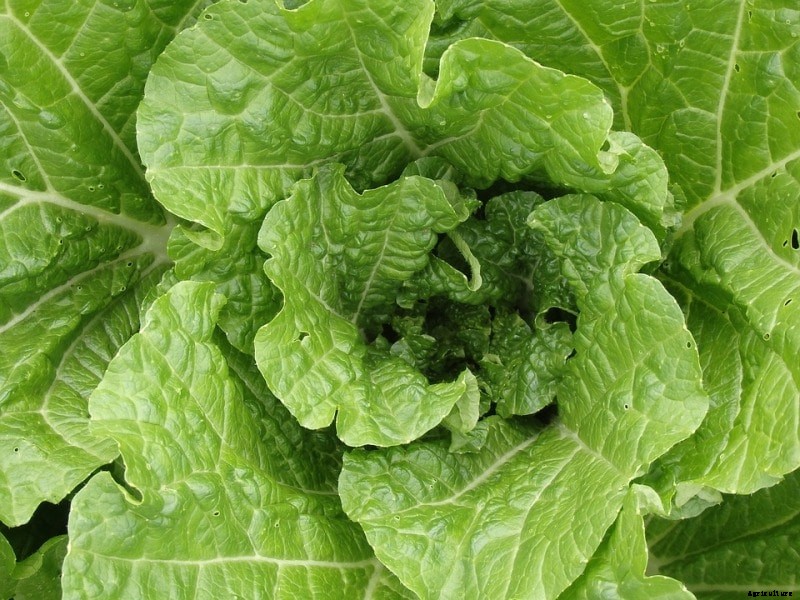
Planting Chinese cabbage can be ready in late summer to fall that is August through October for early winter or mid-winter crop, or in winter (January) for a spring crop. It all depends on when you want your Chinese cabbage to be harvested. When you plant in winter, you want growing Chinese cabbage where it is protected from cold, ice and frost as it matures.
Growing Chinese cabbage is done best when the plants are ten inches apart. This result gives smaller heads which are great for home use. Also, you want two- to three-pound heads, so plant them in double rows to maintain the size of the heads smaller. If you plant Chinese cabbage from seed, be sure to put the seeds 1/4 to 1/2 inch (.6 to 1.2 cm.) deep and 3 inches (7.6 cm.) apart. When the growing Chinese cabbage is 4 inches to 5 inches (10-13 cm.) tall, you can thin the plants to about 10 inches (25 cm.) apart.
Chinese cabbage is fast growing and can be ready for cutting in as little as six or seven weeks. There are three main types of Chinese cabbage they are tall cylindrical, hearted or barrel-shaped and loose headed.
If you have prepared the soil perfectly by adding old compost and well-rotted aged manure, then you don’t have to give additional fertilizers for the plants. While using an organic fertilizer high in nitrogen (such as fish emulsion or soy meal) will help the plants to boost.
Keeping the soil moist constantly is important for proper growth of the Chinese cabbage plants. Regular watering helps the plant to stay tender.
Mulching not only helps to keep the soil moist but helps to control weeds from the garden. Mulching helps to keep the roots of the plants cool. Organic materials such as homemade compost, grass clippings, dry leaves or hay will be very good for using as mulch.
You may be interested in reading Summer Gardening Ideas and Tips.
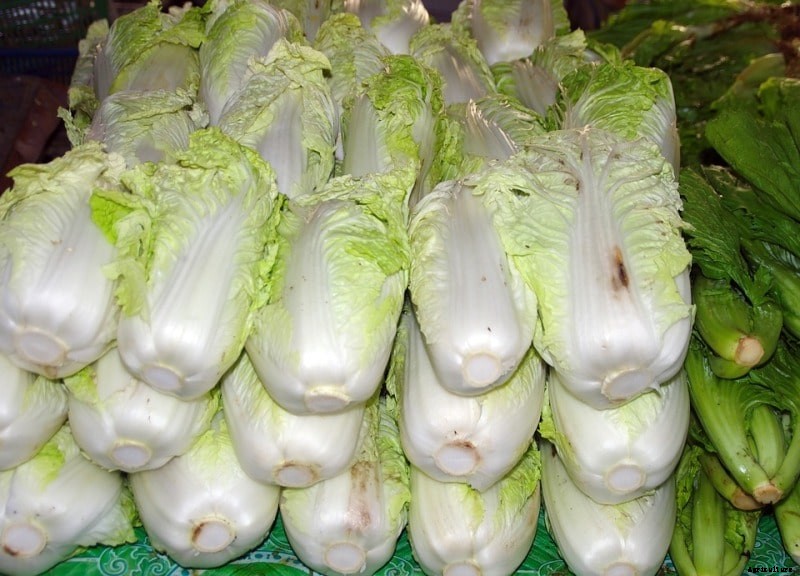
When you harvest the Chinese cabbage, be sure to pick Chinese cabbage growing from the first planting you started, if you have staggered plantings for continuous crops. Take the heads and fresh them of browning or bug damaged leaves on the outside and wrap them in plastic firmly so they keep in the refrigerator for several weeks. Chinese cabbage is a great vegetable to include in all salads.
Generally, the Chinese cabbage becomes ready for harvesting after 70 to 80 days from planting (although exact time can vary depending on the variety).
If Chinese cabbage is slow to grow and that its leaves start wilting, they are probably under attack by the cabbage fly.
Chinese cabbage plant can fall victim to downy mildew. Moisture is the first cause of downy mildew spread.
The Chinese cabbage leaves are washed to remove the soil immediately after harvesting for preparation for marketing.
Chinese cabbage will keep in the vegetable compartment of the refrigerator for about four weeks. Chinese cabbage can be blanched and frozen for three to four months.
Read: How to Grow Coriander on the Terrace.


